Physiology Wescott Chapter 2
 Call Kai
 Learn
 Practice Test
 Spaced Repetition
 Match
 Flashcards
 Knowt Play
1/87

There's no tags or description
Looks like no tags are added yet.
88 Terms
What is matter?
Matter is anything that has mass and occupies space. It exists in different states, primarily solid, liquid, and gas.

What is an ionic bond?
An ionic bond is a type of chemical bond formed through the transfer of electrons from one atom to another, resulting in the attraction between positively and negatively charged ions.

What is a covalent bond?
A bond formed when atoms share electrons.
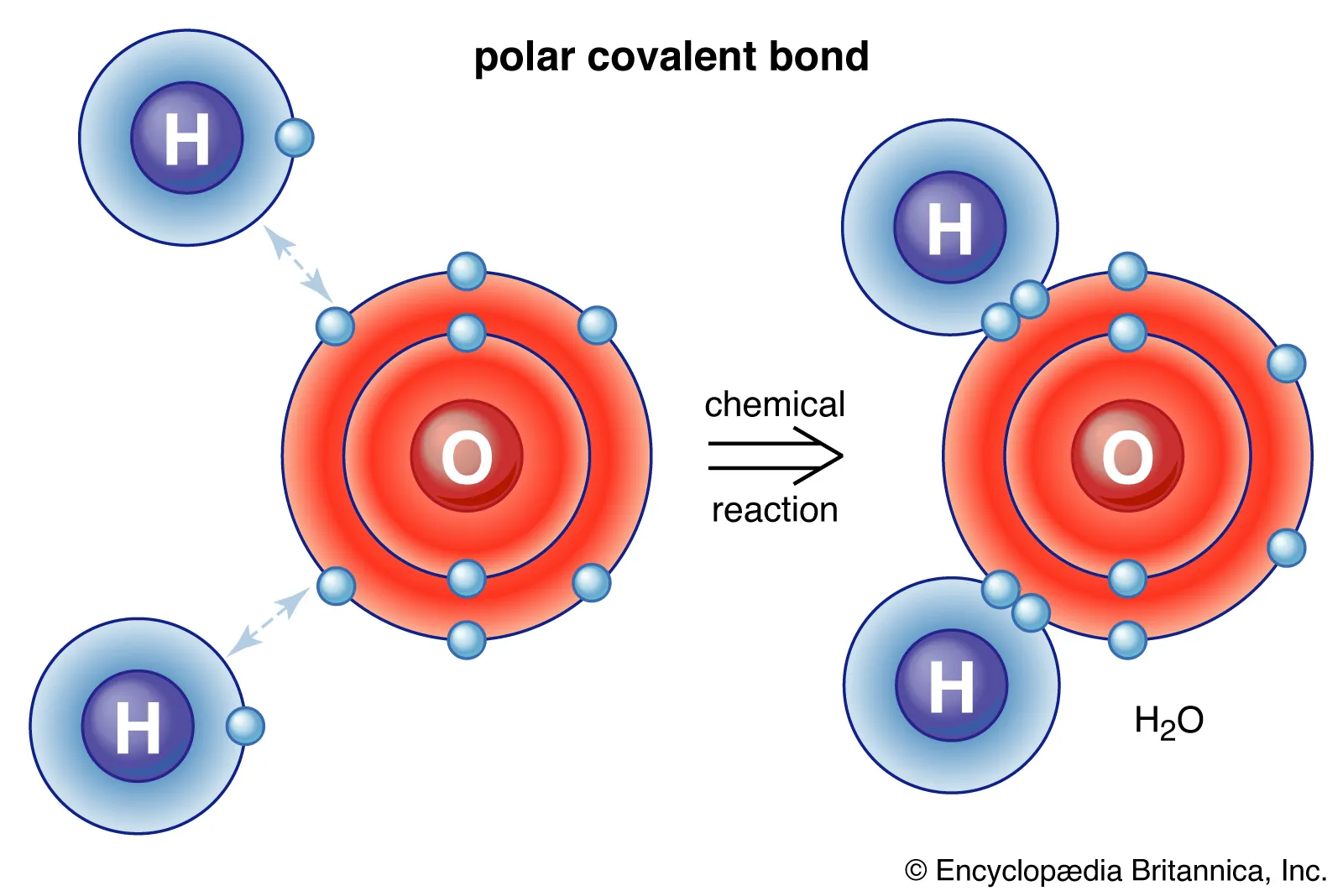
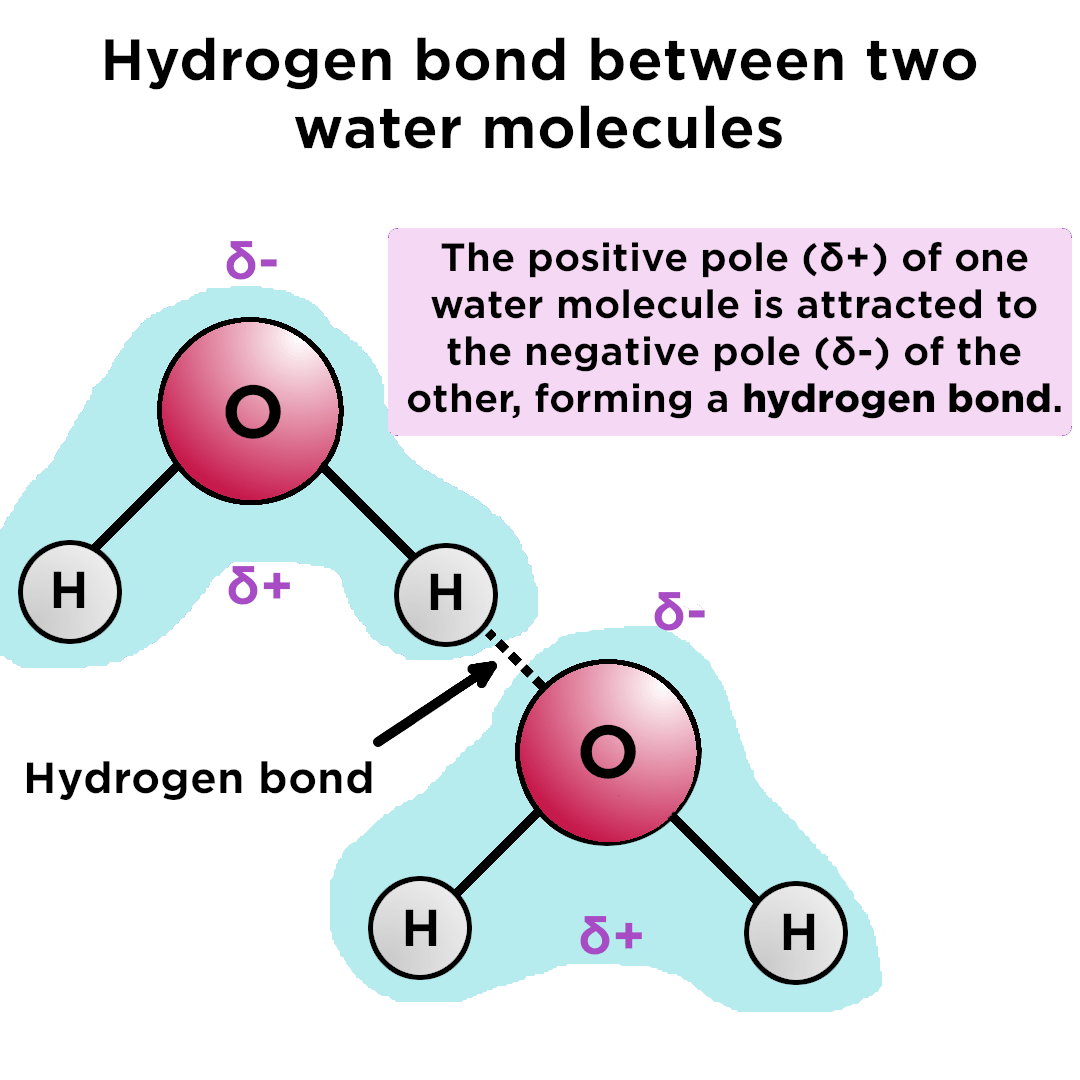
What is a hydrogen bond?
A weak bond that occurs between a hydrogen atom and a more electronegative atom, typically involving polar molecules.
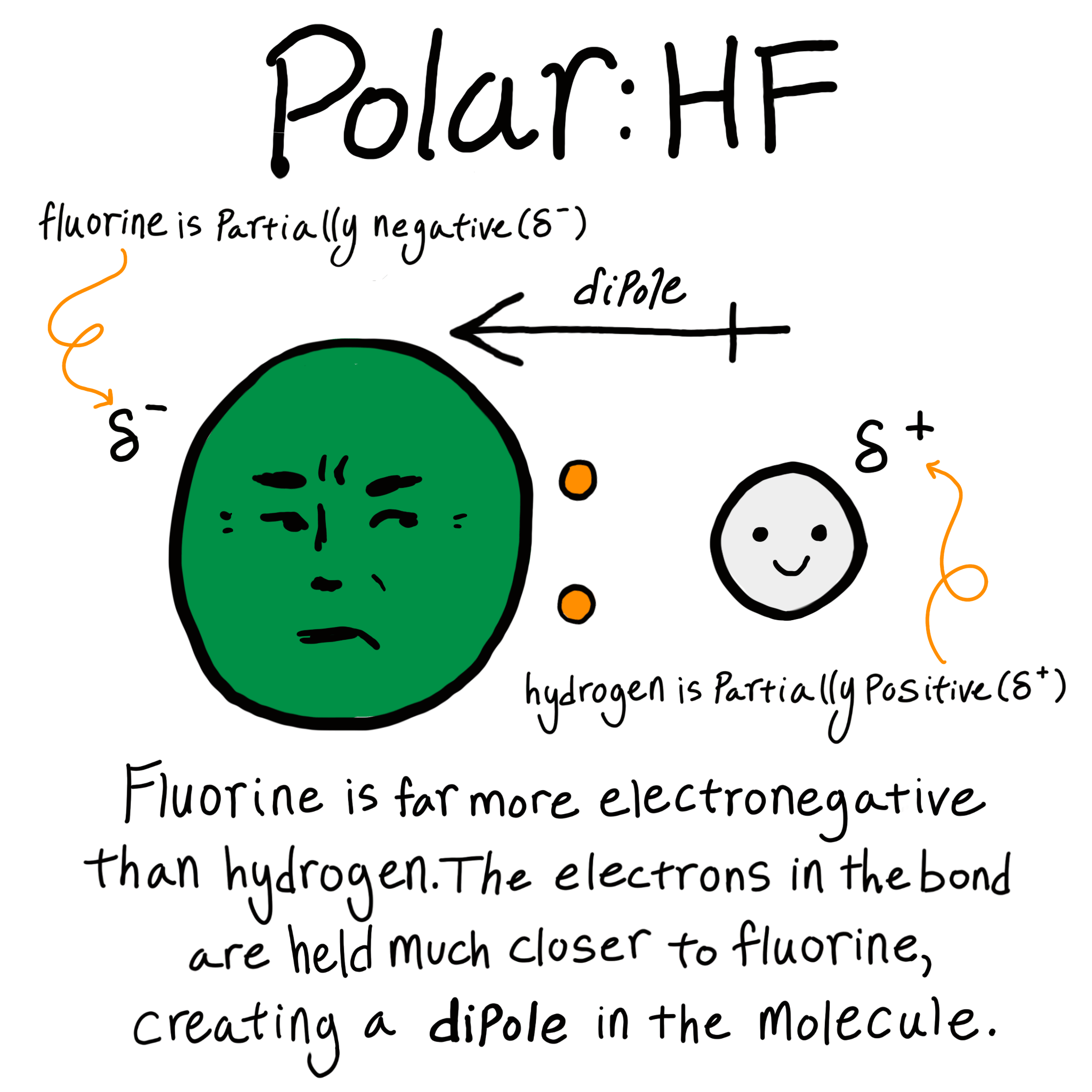
Nonpolar
Molecules have equal sharing of electrons, leading to no charge separation.

Polar
Molecules have unequal sharing of electrons, resulting in a charge separation.
Mass number
sum of the number of protons and neutrons in the nucleus of an atom
Element
subatomic particle having a negative charge and nearly no mass; found orbiting the atom’s nucleus

Compound
substance composed of two or more different elements joined by chemical bonds.

What is an atom?
smallest unit of an element that retains the unique properties of that element

What are the three subatomic particles and their charges?
Proton (+), neutron (0), electron (–).

Proton
heavy subatomic particle having a positive charge and found in the atom’s nucleus.

Atomic number
number of protons in the nucleus of an atom

What is mass number?
Protons + neutrons.

What is an isotope?
one of the variations of an element in which the number of neutrons differ from each other

Radioactive isotope
unstable, heavy isotope that gives off subatomic particles, or electromagnetic energy, as it decays; also called radioisotopes.
An isotope whose nucleus decays and emits particles/energy. (“A radioactive isotope is an isotope whose nucleus readily decays, giving off subatomic particles and electromagnetic energy.”)

Electron Shell
area of space a given distance from an atom’s nucleus in which electrons are grouped

Valence Shell
outermost electron shell of an atom

What makes an atom stable vs reactive?
Full valence shell = stable; incomplete = reactive.
Why do atoms form bonds?
To fill their valence shells and become stable.
Molecule
two or more atoms covalently bonded together

Ion
Atom with an overall positive or negative charge
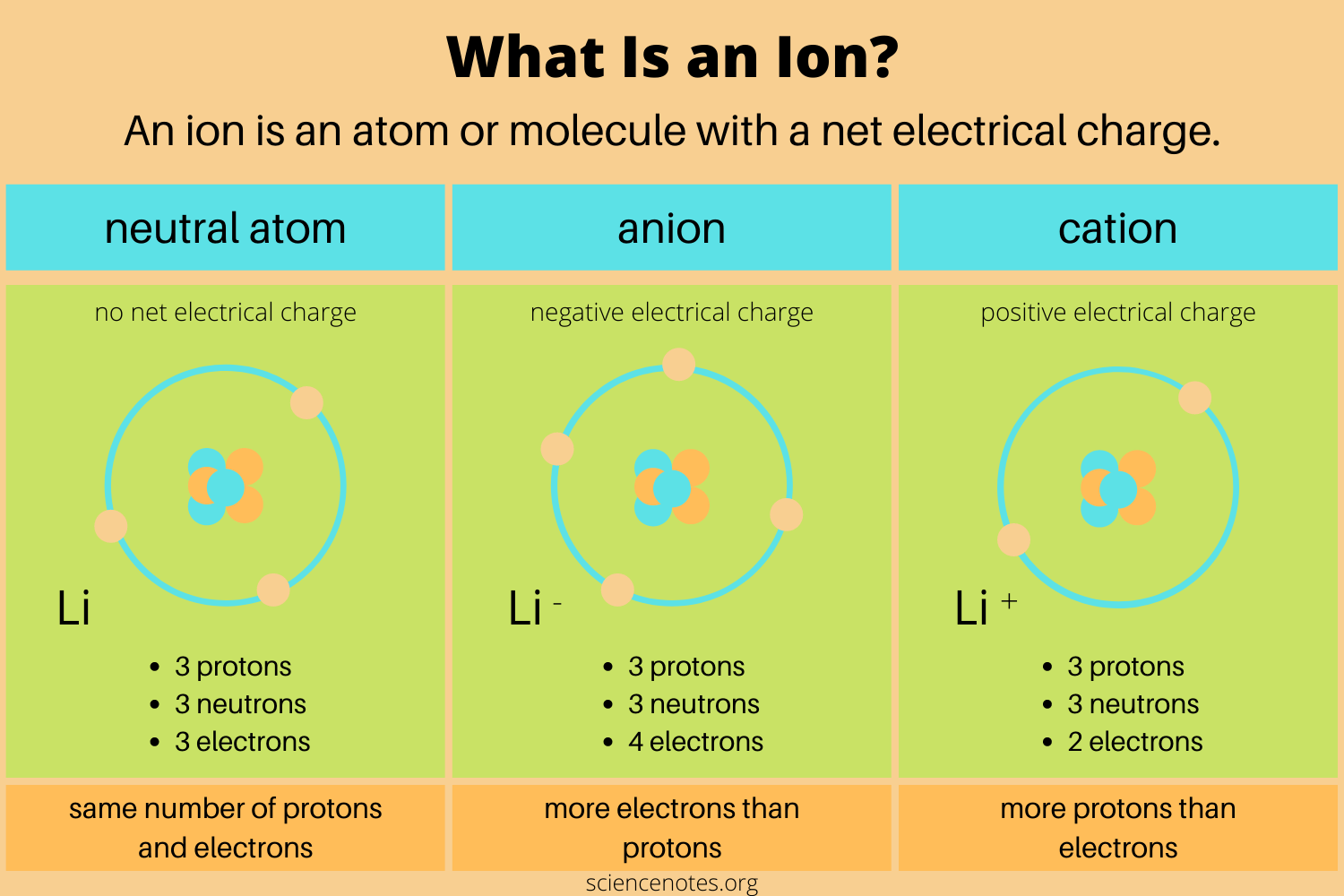
Cation
atom with a positive charge

Anion
atom with a negative charge

Why do water molecules stick together?
Hydrogen bonds form between the slightly positive H and slightly negative O of different water molecules.
Why does salt dissolve in water?
Water’s polarity attracts and separates ions.
Why don’t oil and water mix?
Water repels nonpolar molecules.
Kinetic energy
Energy of motion.
Potential energy
stored energy matter possesses because of the positioning or structure of its components
Chemical energy
is the form of potential energy in which energy is stored in chemical bonds. When those bonds are formed, chemical energy is invested, and when they break, chemical energy is released.
Exergonic reactions
Chemical reactions that release energy.
Endergonic reactions
Chemical reactions that absorb energy.
Mechanical energy
is the sum of potential and kinetic energy in a system used to do work. For example, mechanical energy is what powers machines and bodily movements.
Radiant energy
is energy that travels in waves, such as light, heat, and electromagnetic radiation. It is essential for processes like photosynthesis and vision.
Electrical energy
supplied by electrolytes in cells and body fluids, contributes to the voltage changes that help transmit impulses in nerve and muscle cells.

Reactant
one or more substances that enter into the reaction

Product
One or more substances produced by a chemical reaction
Synthesis reaction
type of anabolic reaction in which two or more atoms or molecules bond, resulting in the formation of a larger molecule

Decomposition reaction
type of catabolic reaction in which one or more bonds within a larger molecule are broken, resulting in the release of smaller molecules or atoms

Exchange reaction
type of chemical reaction in which bonds are both formed and broken, resulting in the transfer of components

What does a reversible reaction look like?
A reaction shown with a double arrow (⇄).
How does surface area affect reaction rate?
More surface area → faster reaction.
How does temperature affect reaction rate?
Higher temperature → faster reaction.
How does concentration/pressure affect reaction rate?
More particles or higher pressure → more collisions → faster reaction.
What is a catalyst?
substance that increases the rate of a chemical reaction without itself being changed in the process
What is an enzyme?
protein or RNA that catalyzes chemical reactions
What is activation energy?
The energy needed to start a reaction.
Threshold
The minimum level of stimulus required to trigger a response in a cell or organism.
Inorganic compound
substance that does not contain both carbon and hydrogen
Organic compound
substance that contains both carbon and hydrogen
Solution
homogeneous liquid mixture in which a solute is dissolved into molecules within a solvent
Homogeneous
having a uniform composition throughout
Colloid
liquid mixture in which the solute particles consist of clumps of molecules large enough to scatter light
Suspension
liquid mixture in which particles distributed in the liquid settle out over time
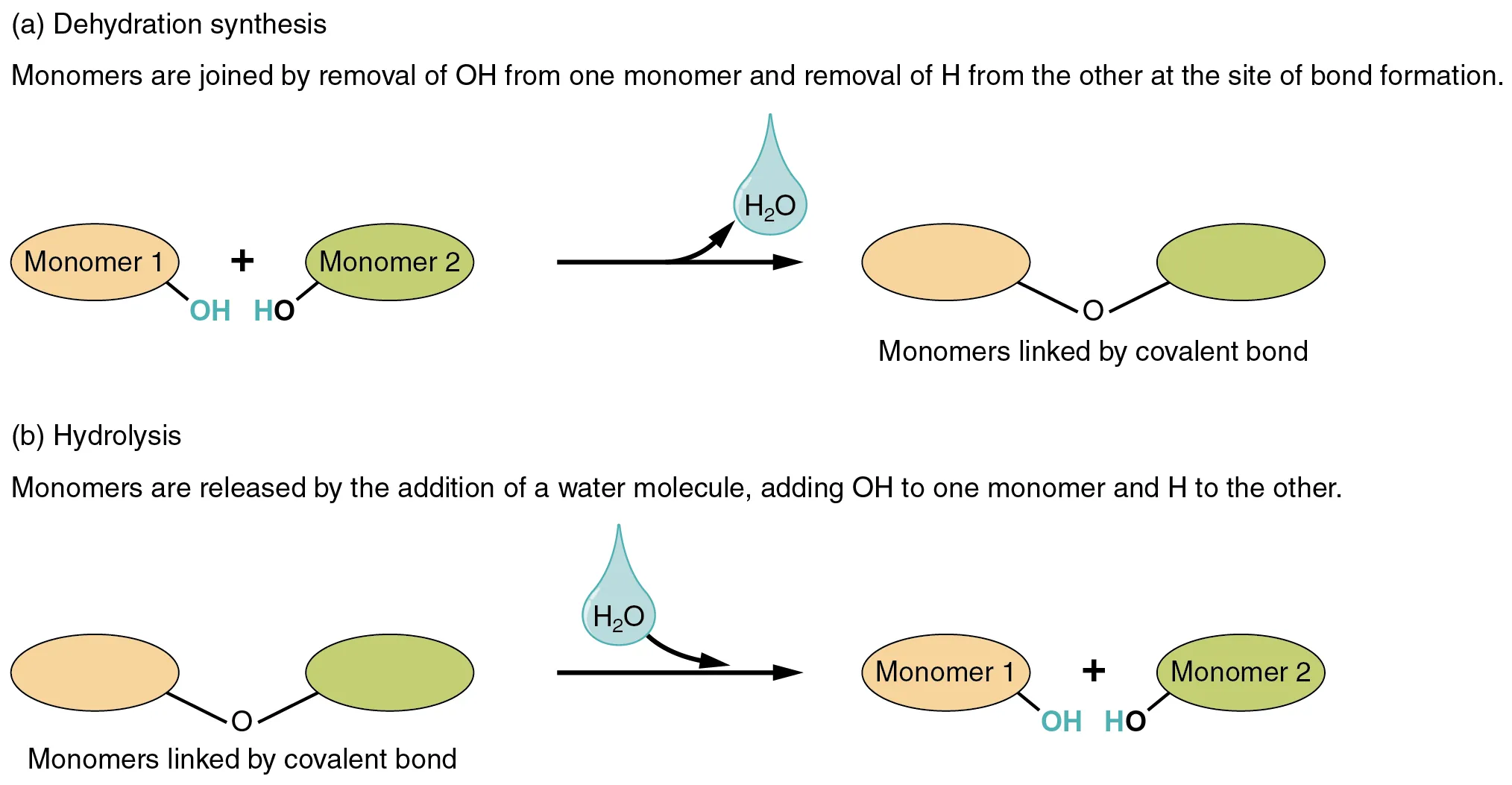
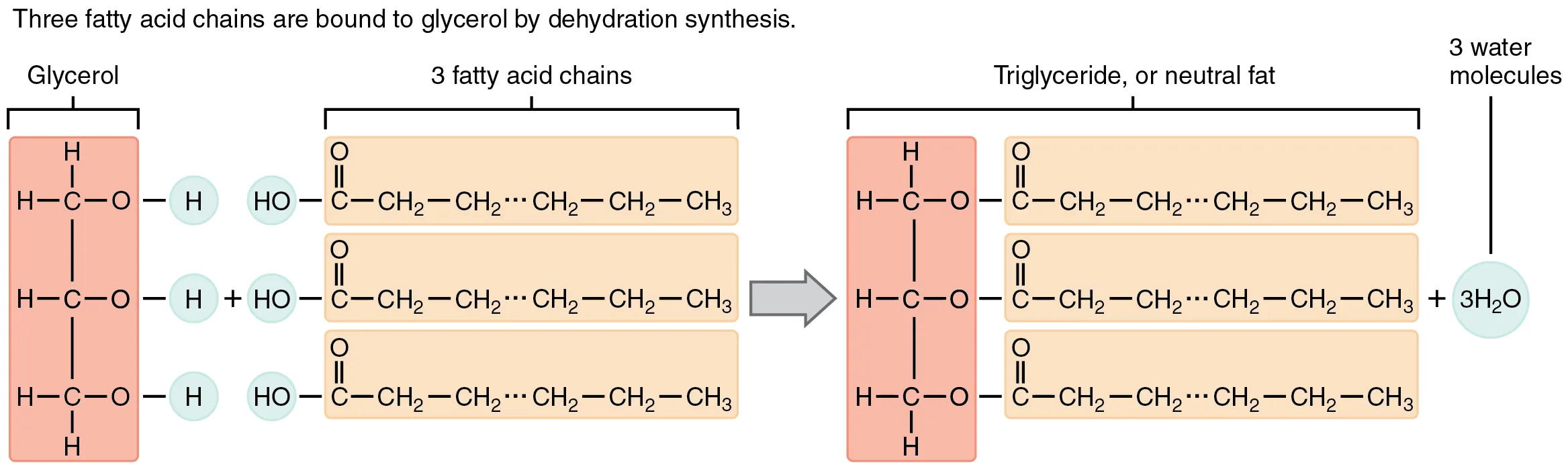
What is dehydration synthesis?
Two molecules join and release water.
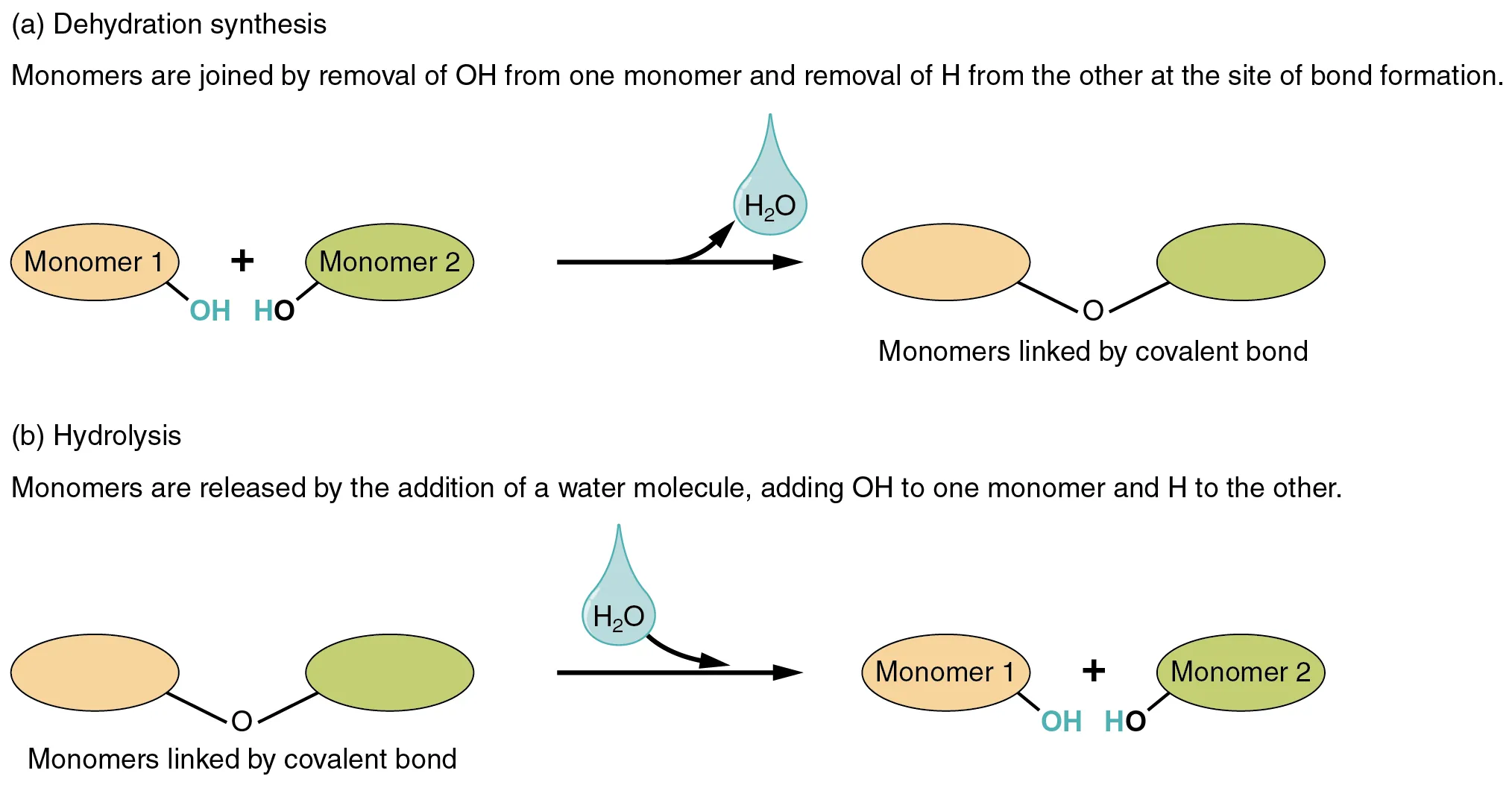
Hydrolysis
Water is added to break a bond.
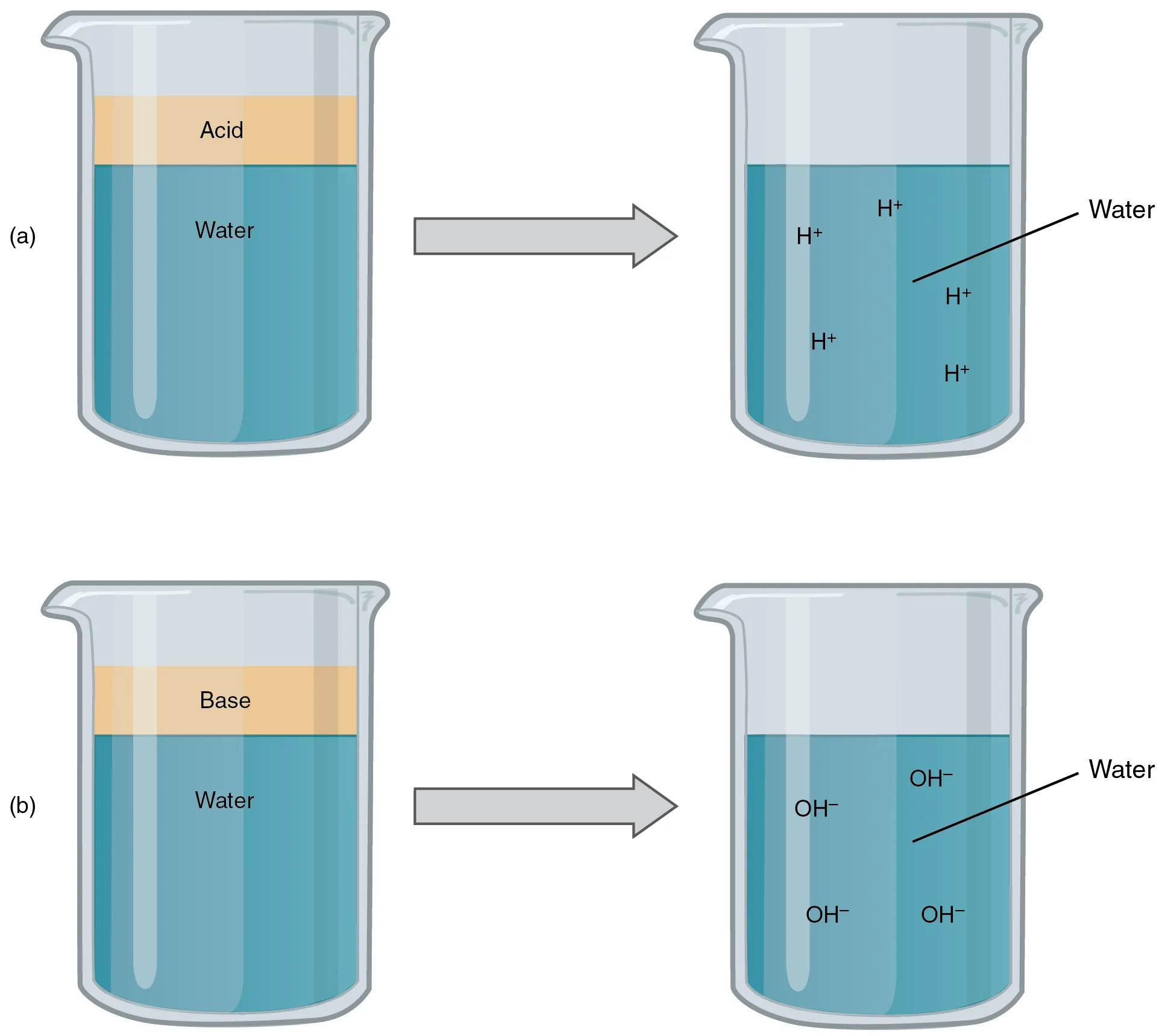
What is an acid?
compound that releases hydrogen ions (H+) in solution
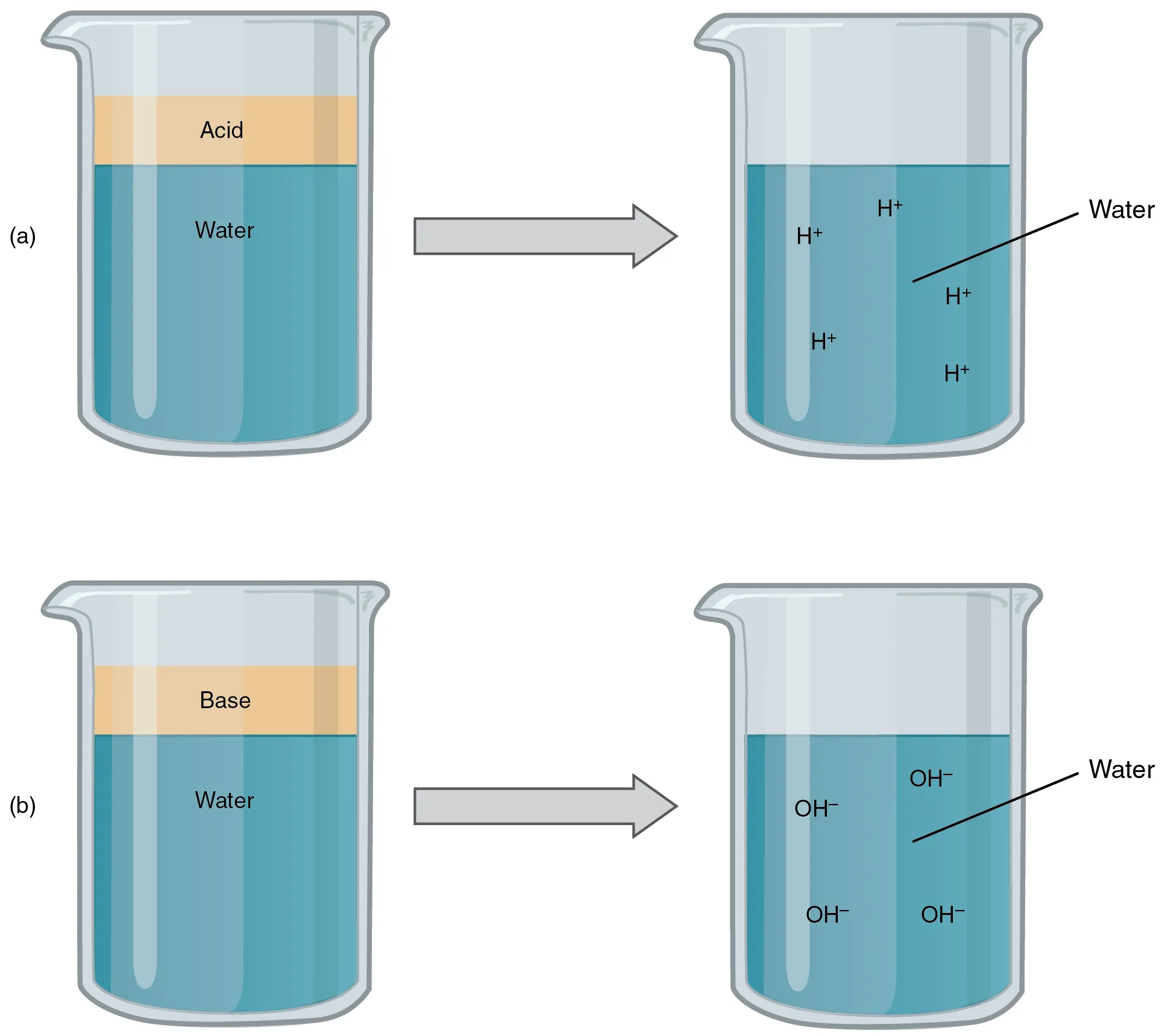
Base
compound that accepts hydrogen ions (H+) in solution
What is pH?
negative logarithm of the hydrogen ion (H+) concentration of a solution
Buffer
solution containing a weak acid or a weak base that opposes wide fluctuations in the pH of body fluids.
What does a low pH mean?
More acidic, more H⁺.

What does a high pH mean?
More basic, fewer H⁺.
A functional group
group of atoms linked by strong covalent bonds that tends to behave as a distinct unit in chemical reactions with other atoms

macromolecule
large molecule formed by covalent bonding
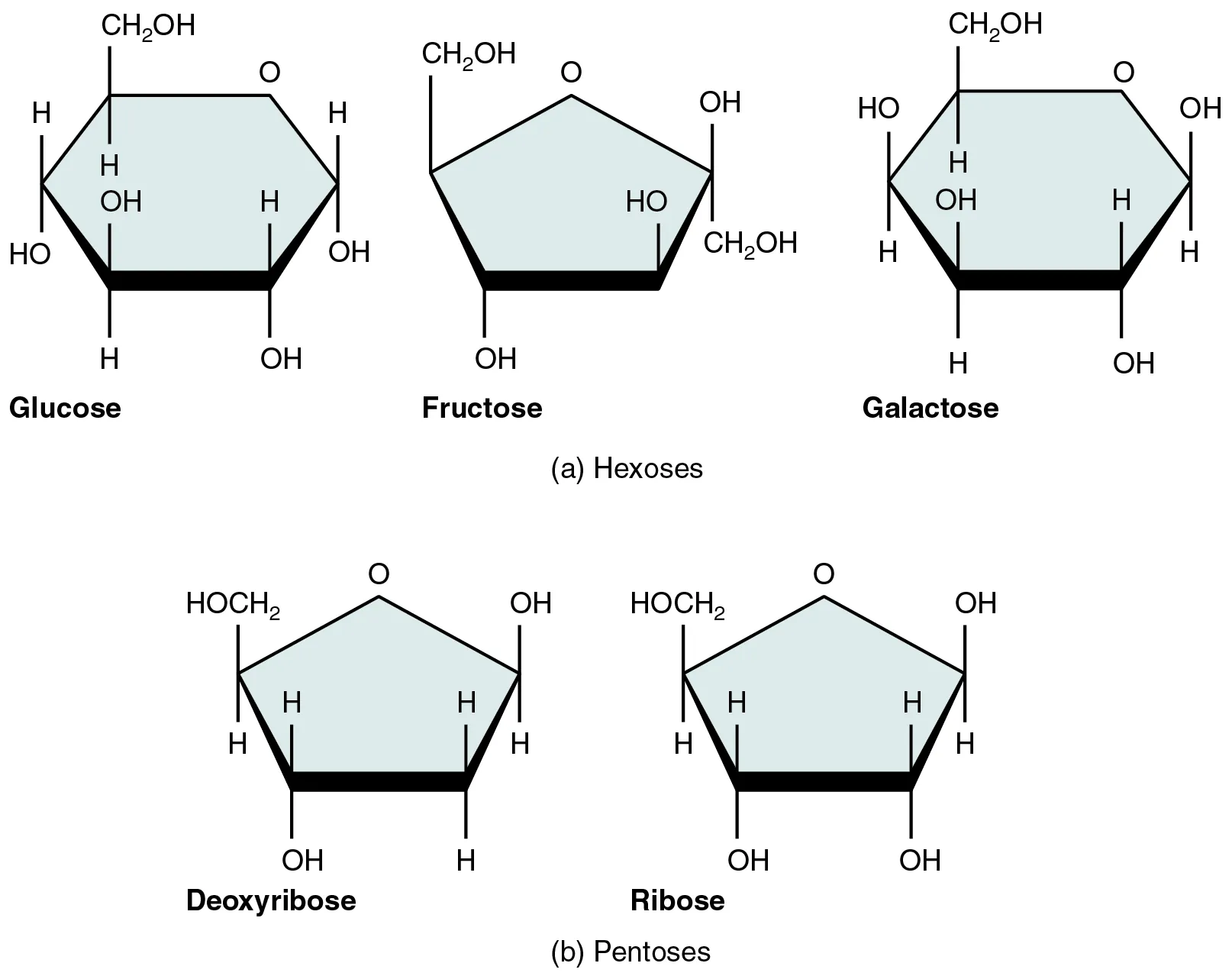
carbohydrate
class of organic compounds built from sugars, molecules containing carbon, hydrogen, and oxygen in a 1-2-1 ratio
monosaccharide
monomer of carbohydrate; also known as a simple sugar
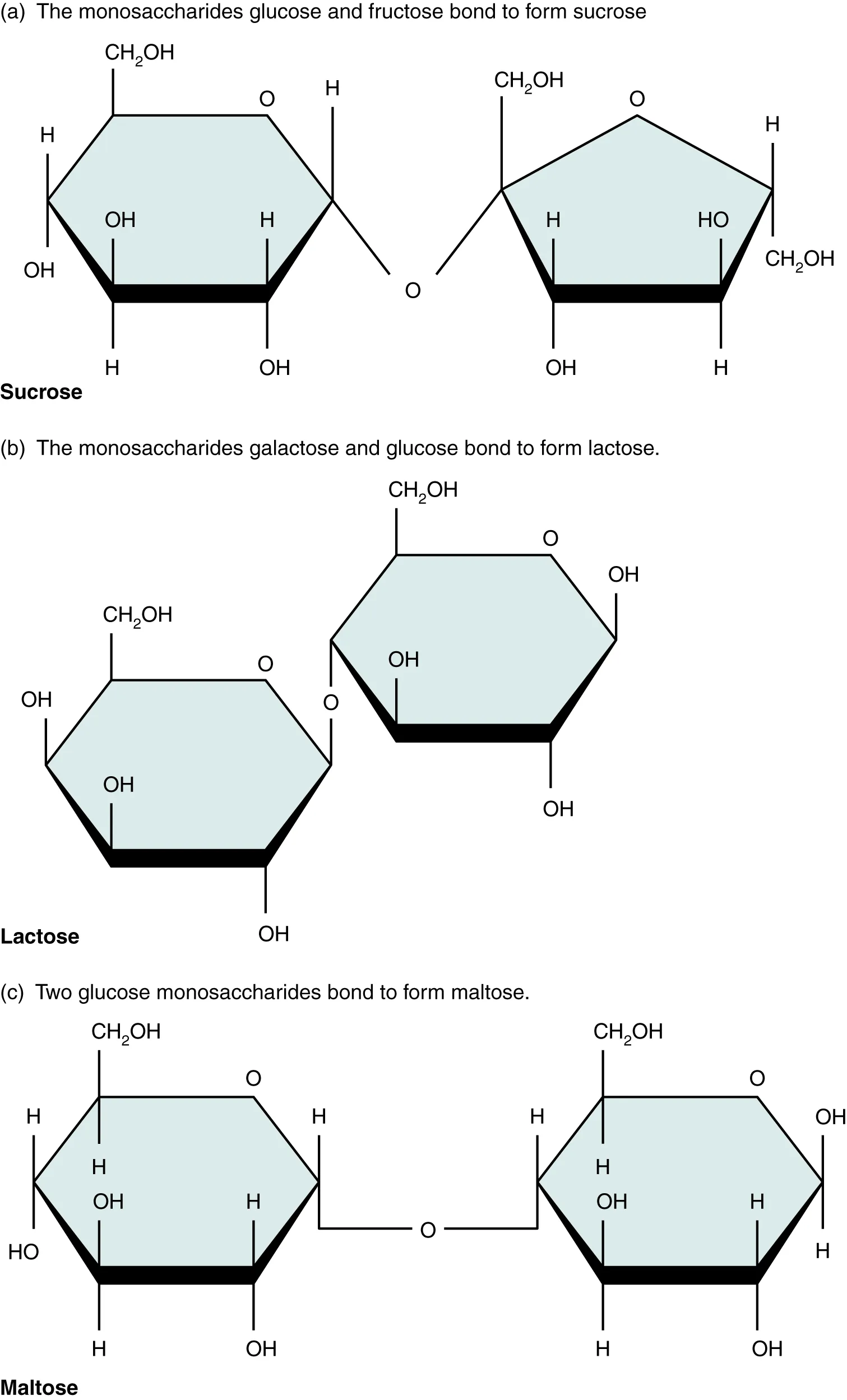
disaccharide
pair of carbohydrate monomers bonded by dehydration synthesis via a glycosidic bond
Polysaccharides
compound consisting of more than two carbohydrate monomers bonded by dehydration synthesis via glycosidic bonds

Adenosine triphosphate (ATP) is
is composed of a ribose sugar, an adenine base, and three phosphate groups. ATP releases free energy when its phosphate bonds are broken, and thus supplies ready energy to the cell. More ATP is produced in the presence of oxygen (O2) than in pathways that do not use oxygen.
lipid
class of nonpolar organic compounds built from hydrocarbons and distinguished by the fact that they are not soluble in water
triglyceride
lipid compound composed of a glycerol molecule bonded with three fatty acid chains
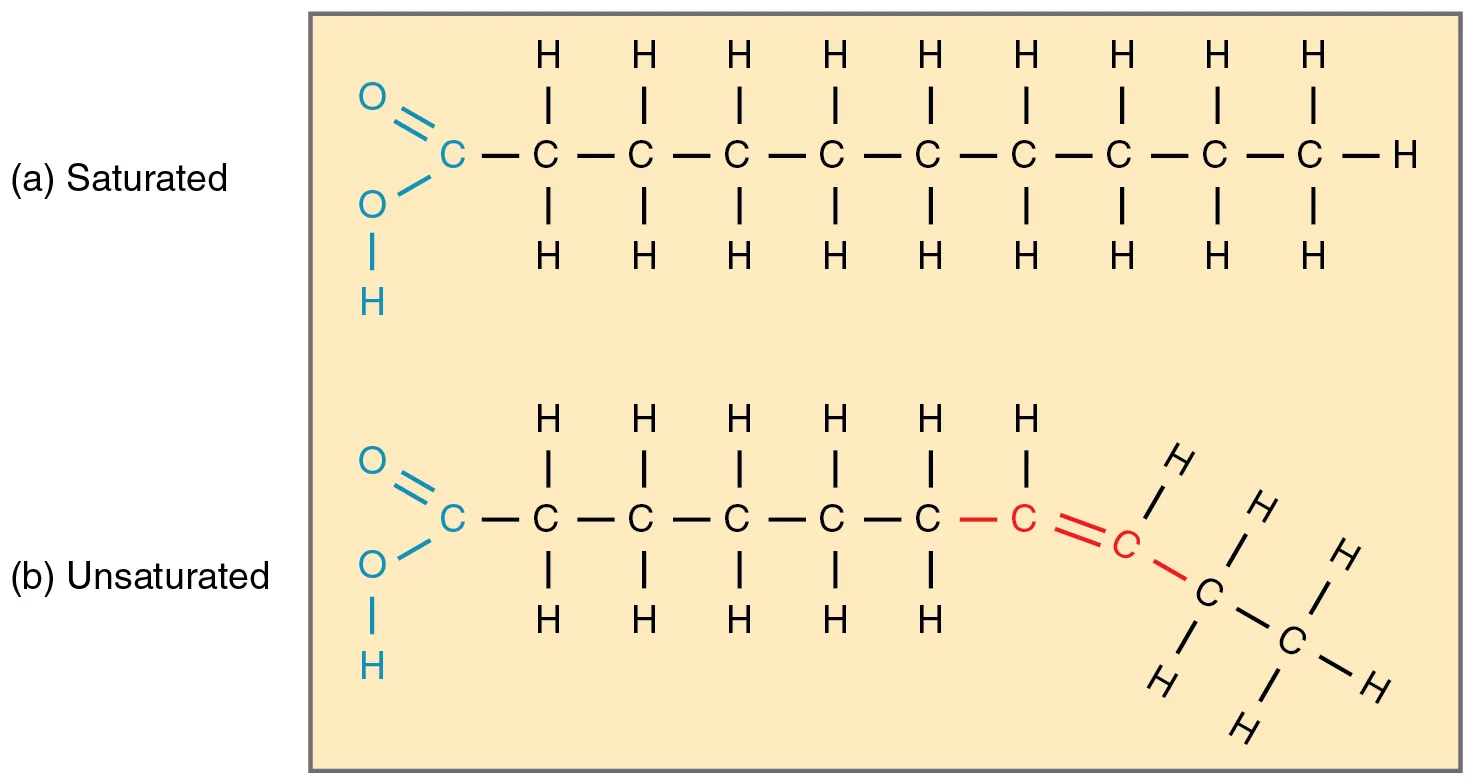
Saturated Fatty Acids
fatty acids are a type of lipid that contain no double bonds between carbon atoms in their fatty acid chains, which means they are saturated with hydrogen atoms. This results in a solid state at room temperature.
Unsaturated fatty acids
fatty acids that contain one or more double bonds between carbon atoms in their chains, resulting in a liquid state at room temperature.
phospholipid
a lipid compound in which a phosphate group is combined with a diglyceride
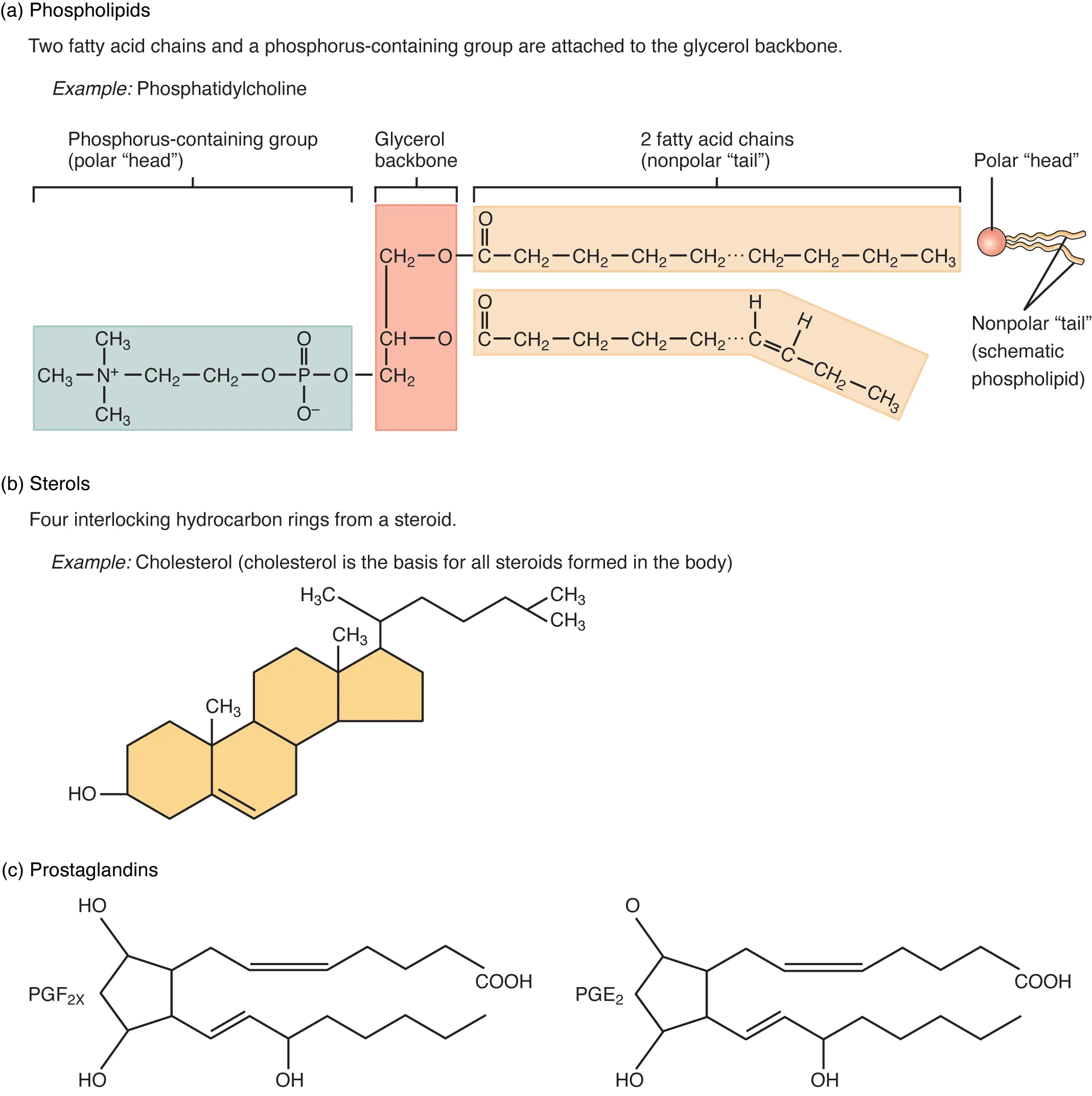
steroid
(also, sterol) lipid compound composed of four hydrocarbon rings bonded to a variety of other atoms and molecules
prostaglandin
lipid compound derived from fatty acid chains and important in regulating several body processes
protein
class of organic compounds that are composed of many amino acids linked together by peptide bonds
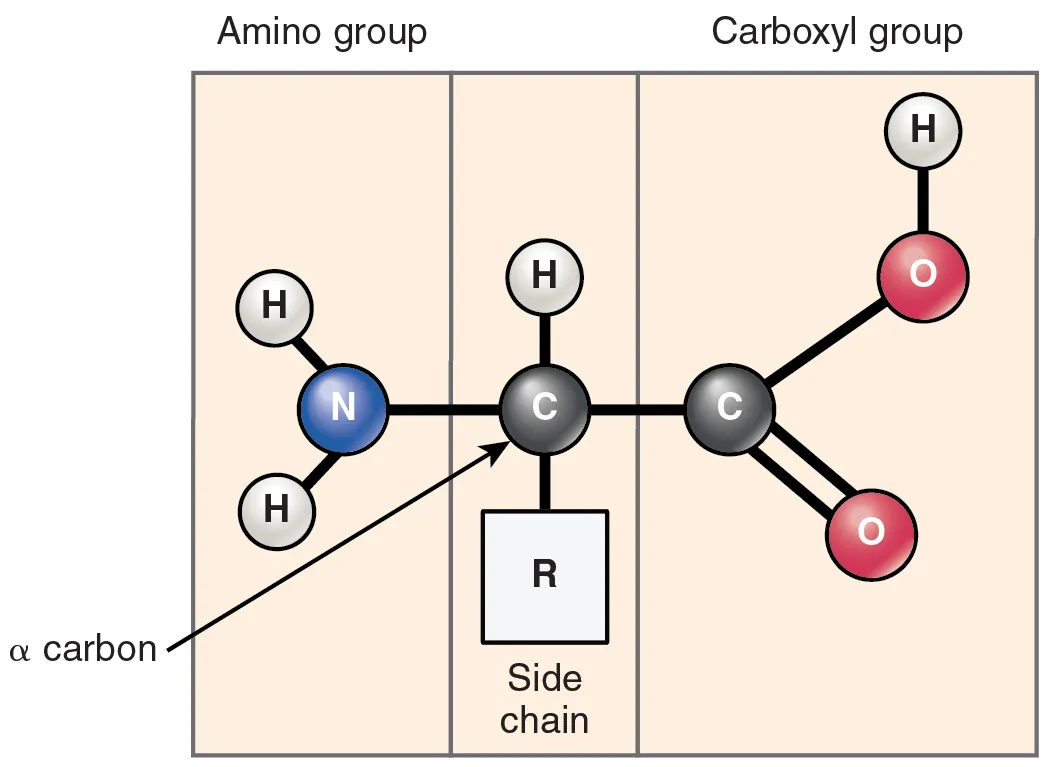
amino acid
building block of proteins; characterized by an amino and carboxyl functional groups and a variable side-chain
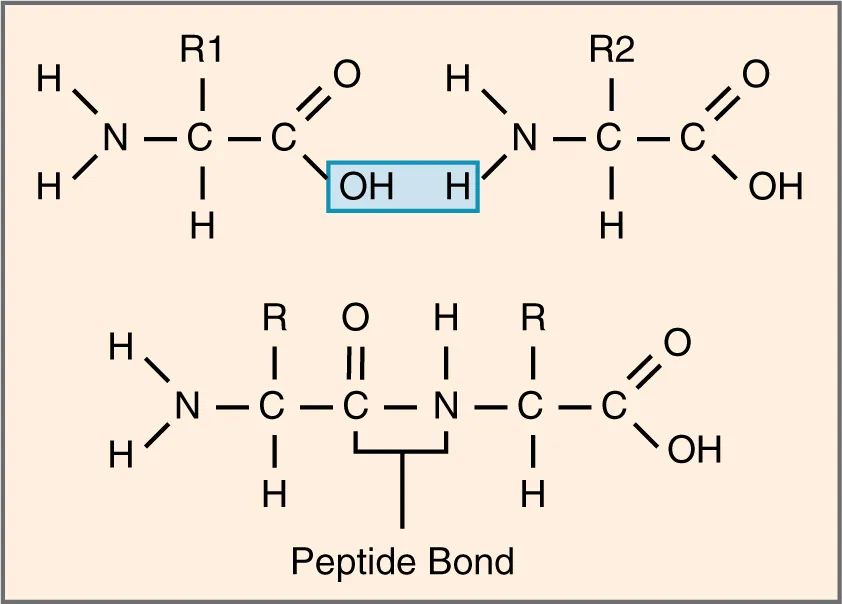
peptide bond
covalent bond formed by dehydration synthesis between two amino acids
disulfide bond
covalent bond formed within a polypeptide between sulfide groups of sulfur-containing amino acids, for example, cysteine
Denaturation
change in the structure of a molecule through physical or chemical means
substrate
reactant in an enzymatic reaction
nucleotide
class of organic compounds composed of one or more phosphate groups, a pentose sugar, and a base
Deoxyribonucleic acid (DNA)
deoxyribose-containing nucleotide that stores genetic information
Ribonucleic acid (RNA)
ribose-containing nucleotide that helps manifest the genetic code as protein
purine
nitrogen-containing base with a double ring structure; adenine and guanine
pyramidine
nitrogen-containing base with a single ring structure; cytosine, thiamine, and uracil
Phosphorylation
addition of one or more phosphate groups to an organic compound.