BIOL 111 Protists- self made
 Call Kai
 Learn
Learn Practice Test
 Spaced Repetition
 Match
Match Flashcards
 Knowt Play
1/26

There's no tags or description
Looks like no tags are added yet.
Name | Mastery | Learn | Test | Matching | Spaced | Call with Kai | Chat |
|---|
No analytics yet
Send a link to your students to track their progress
27 Terms
protist
is any eukaryote that is not a plant, animal, or fungus. are the eukaryotic “junk drawer.”
earliest protists
1.5 billion yrs ago (1st eukaryotes)
Protist features
Eukaryotic
• Most are microscopic
• Can be unicellular or multicellular; some may exist in colonies
• Found in soil, ocean, and freshwater habitats
• Huge variety in structure (e.g. plasma membrane only vs. cell walls made of cellulose, silica, or calcium carbonate)
• Usually reproduce asexually
• Some are parasitic (e.g. Plasmodium, Toxoplasma)

euglena

amoeba

diatoms

Volvox
autotroph
make their own food usually via photosynthesis
heterotrophs
consumers, cannot produce their own food
mixotrophs
both autotroph and heterotroph
Autotrophs are…
the base of most food chains with fuel from the sun
Phytoplankton
are unicellular photosynthetic protists that live suspended in water
Phytoplankton contribute up to % of the oxygen in the atmosphere and over % of organic matter on earth!
50%
what is ocean mixing?
The physical process that stirs and blends seawater, transporting heat, salt, oxygen, and nutrients between different layers of the ocean. [NITRGN and PHSPRS] and global warming disrupts^
Diatoms are…
Appearance: Beautiful geometric shapes, often circular, rectangular, or elongated with intricate patterns.
Nutrition: Autotrophs — use photosynthesis to make their own food.
Cell type: Unicellular.
Movement: Most do not actively move; some can glide slowly.
Special structures: Have a hard, glass-like shell made of silica called a frustule.
Key characteristics: Contain chloroplasts and are important producers in aquatic food chains.
ameobas are…
Appearance: An irregular, constantly changing blob with no fixed shape.
Nutrition: Heterotroph — engulfs food and digests it.
Cell type: Unicellular.
Movement: Uses temporary extensions called pseudopodia (false feet).
Special structures: Pseudopodia, food vacuoles, contractile vacuoles, and a nucleus.
Key characteristics: Engulfs food through phagocytosis and uses a contractile vacuole to remove excess water.
Volvox are…
Appearance: A hollow, round, green colony that looks like a tiny ball covered in dots.
Nutrition: Autotroph — makes food through photosynthesis.
Cell type: Multicellular colony of individual cells.
Movement: Uses flagella to swim and rotate.
Special structures: Chloroplasts, flagella, and daughter colonies inside the sphere.
Key characteristics: Lives in freshwater and demonstrates cooperation between cells. Daughter colonies allow it to reproduce.
Euglina are…
Appearance: An elongated, green, spindle-shaped organism.
Nutrition: Mixotroph — can photosynthesize and can obtain nutrients from its environment.
Cell type: Unicellular.
Movement: Uses a flagellum (whip-like tail).
Special structures: Chloroplasts, eyespot, flagellum, and contractile vacuole.
Key characteristics: The eyespot detects light, helping it move toward light for photosynthesis.
paramecium are…

Appearance: Slipper-shaped, elongated cell with a rounded front and narrower back.
Nutrition: Heterotroph.
Cell type: Unicellular.
Movement: Uses many tiny hair-like structures called cilia.
Special structures: Cilia, oral groove, food vacuoles, contractile vacuoles, and two types of nuclei (macronucleus and micronucleus).
Key characteristics: Cilia help it move and sweep food into its oral groove.
formanifera are…
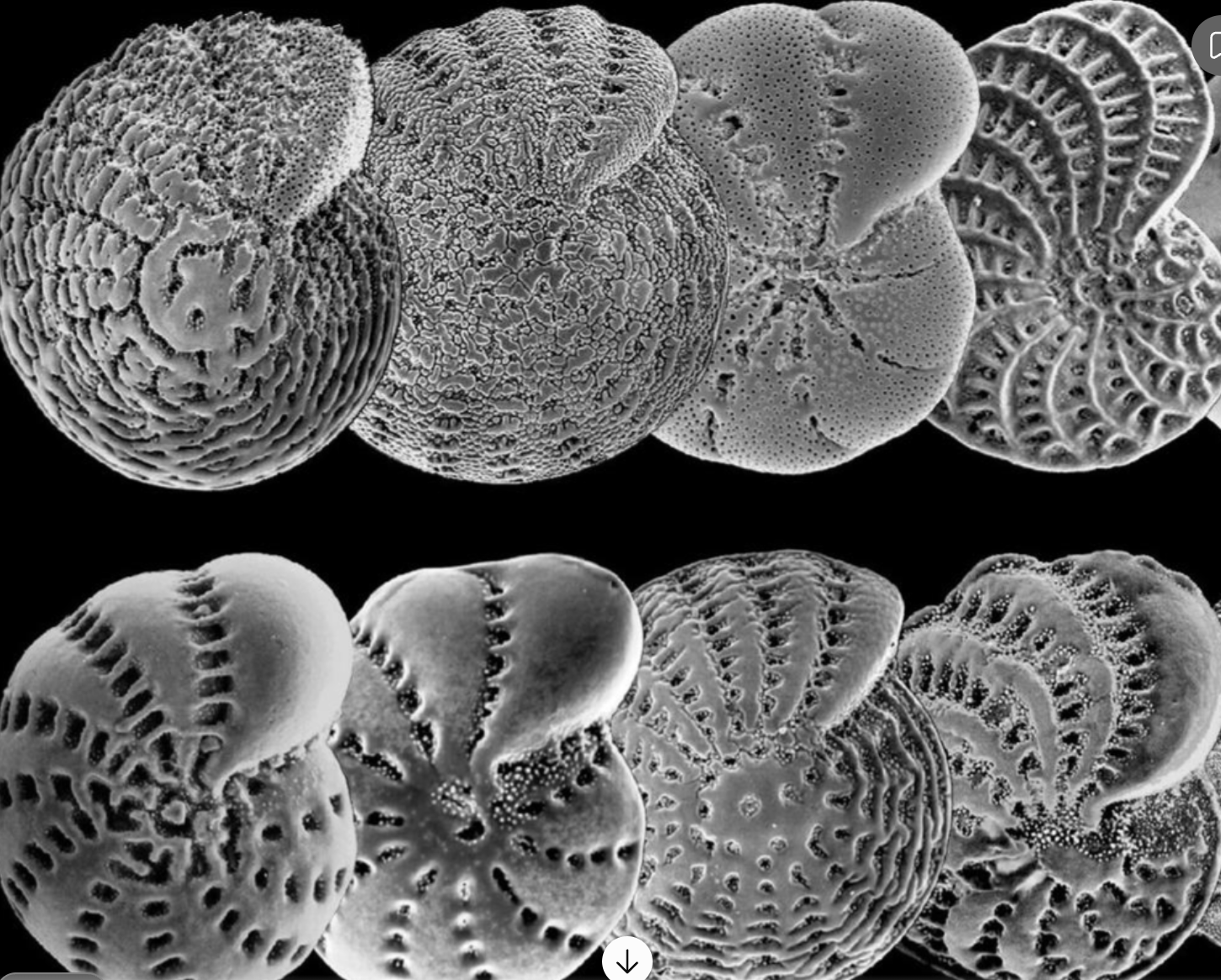
Appearance: Often looks like a tiny spiral shell with multiple chambers or a bumpy, round shell.
Nutrition: Primarily heterotrophs; some species have symbiotic algae.
Cell type: Unicellular.
Movement: Extend thin, branching pseudopodia through openings in the shell.
Special structures: A hard outer shell called a test, often made of calcium carbonate, and branching pseudopodia.
Key characteristics: Mostly marine organisms; their shells are useful for studying past environments and climate.
Saprolegnia are…
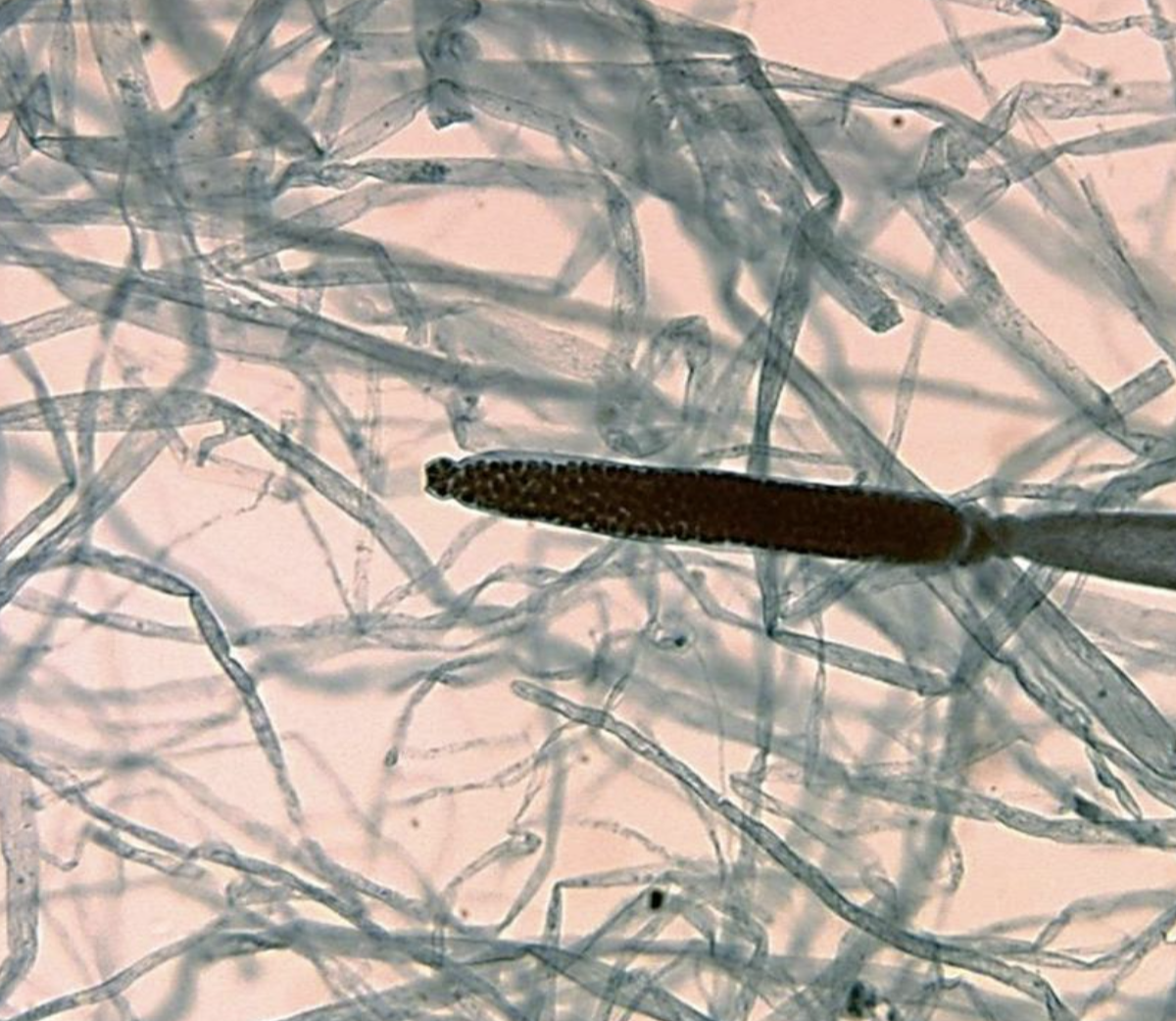

Appearance: White, fuzzy, cotton-like growth in water, often on dead organic matter or fish.
Nutrition: Heterotroph — absorbs nutrients from organic material or living hosts.
Cell type: Multicellular, filamentous organism.
Movement: The main body does not move; certain reproductive cells called zoospores can swim using flagella.
Special structures: Thread-like filaments called hyphae, which form a network called a mycelium, and sporangia that produce spores.
Key characteristics: A water mold, not a true fungus. It commonly decomposes organic matter and can cause diseases in fish and fish eggs.
Trypanosoma
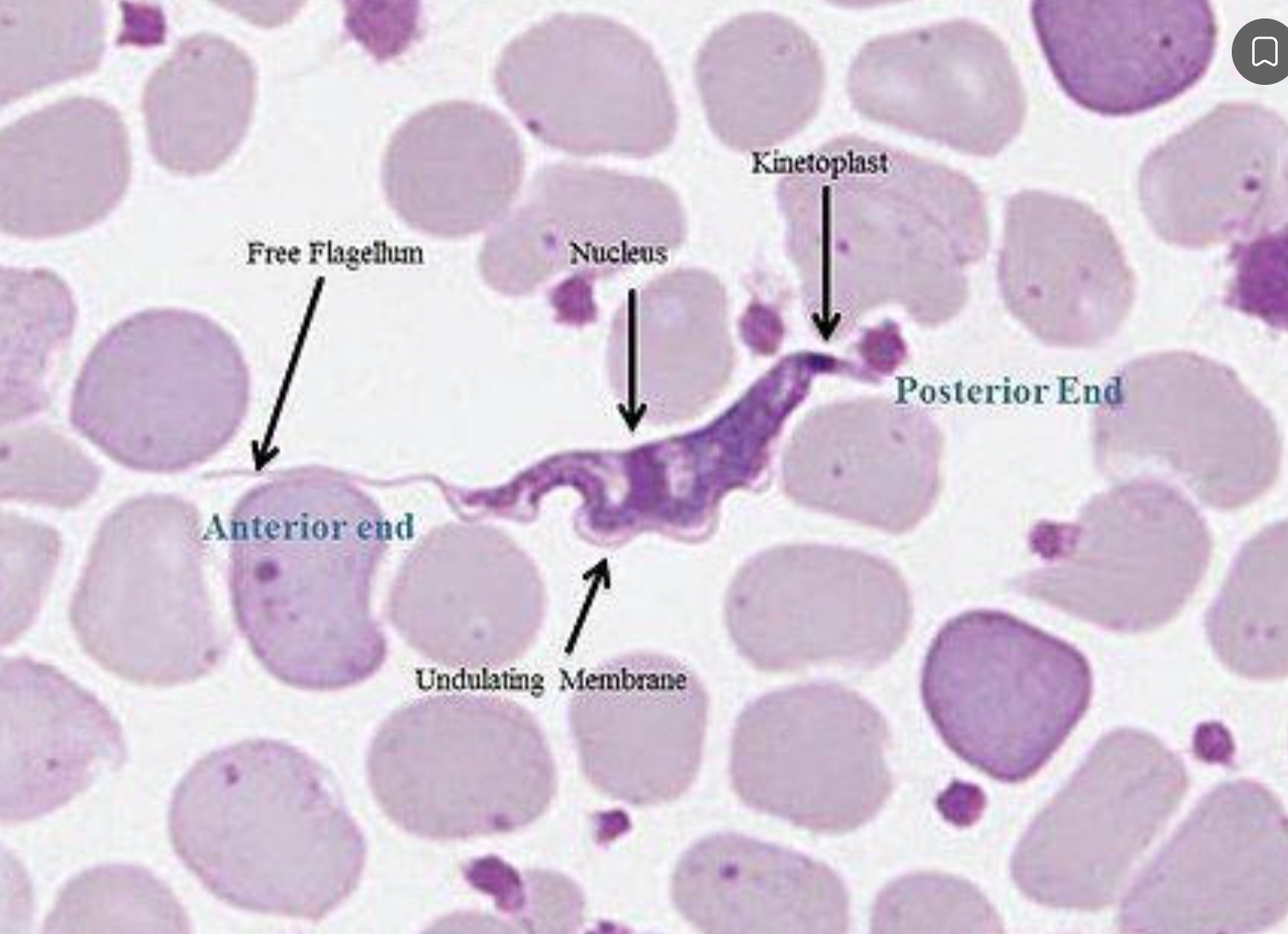
Appearance: A long, slender, curved or spindle-shaped cell.
Nutrition: Heterotroph — obtains nutrients from its environment or host.
Cell type: Unicellular.
Movement: Uses a flagellum and an undulating membrane.
Special structures: Flagellum, undulating membrane, nucleus, and kinetoplast (a DNA-containing region within a mitochondrion).
Key characteristics: A parasitic protist that lives in hosts and can cause diseases. Different species cause diseases such as African sleeping sickness (tsetse flies)
Features of heterotrophic protists:
• Complex single-celled protists
• Sometimes called protozoans (“first animal”)
• Get their food by ingesting it.
• Some consume live material while others are decomposers
• Many take food in by phagocytosis and form a food vacuole
hypotonic
A solution with a lower solute concentration than inside the cell, causing water to move into the cell by osmosis. (Swell or lyce)
hypertonic
A solution with a higher solute concentration than inside the cell, causing water to move out of the cell by osmosis. The cell shrinks
isotonic
A solution with the same solute concentration as inside the cell. Water moves in and out at equal rates, so the cell stays the same size.
plasmodium
is a genus of unicellular parasitic protists
• Plasmodium species cause malaria in humans are transmitted by mosquito
• Infects red blood cells to cause fever, headache, coma, and death