AP Bio Unit 2 (not done)
 Call Kai
 Learn
 Practice Test
 Spaced Repetition
 Match
 Flashcards
 Knowt Play
1/63

There's no tags or description
Looks like no tags are added yet.
64 Terms
What things are found in all cells? (prokaryotic and eukaryotic)
ribosomes, cytoplasm, cell membrane, genetic information
What are the differences between prokaryotic and eukaryotic cells
prokaryotic: unicellular organisms, less complex (simple structure), smaller, lack membrane bound organelles
Eukaryotic: multicellular organisms, more complex, bigger, contain membrane bound organelles
What is a membrane-bound organelle?
Specialized subunit within the cell that performs a specific job that is enclosed by a lipid bilayer membrane
Describe the cytoplasm
gel-like fluid that fills the cell and gives it shape
Describe the cell membrane
flexible barrier around a cell that controls what goes in and out
Describe the ribosomes
small structures that are responsible for protein synthesis
describe genetic information
carries the information to control of cellular processes, growth, and reproduction
Describe the rough ER
Folded, membrane bound sacs
Provides structural support, divides cell
Holds ribosomes So helps with protein synthesis

describe the smooth ER
smooth network tubes
Synthesizes essential lipids
Detoxifies
Abundant in liver cells

Describe the golgi Body/apparatus
Folded/flattened membrane sacs
Sorts, modifies, and ships proteins

describe the nucleus
Contains DNA
Regulates growth and metabolism

describe the mitochondria
Double membrane organelles —> going to increase surface area
Folded inner membrane
Energy production (ATP) during cellular respiration
Has its own DNA + ribosomes

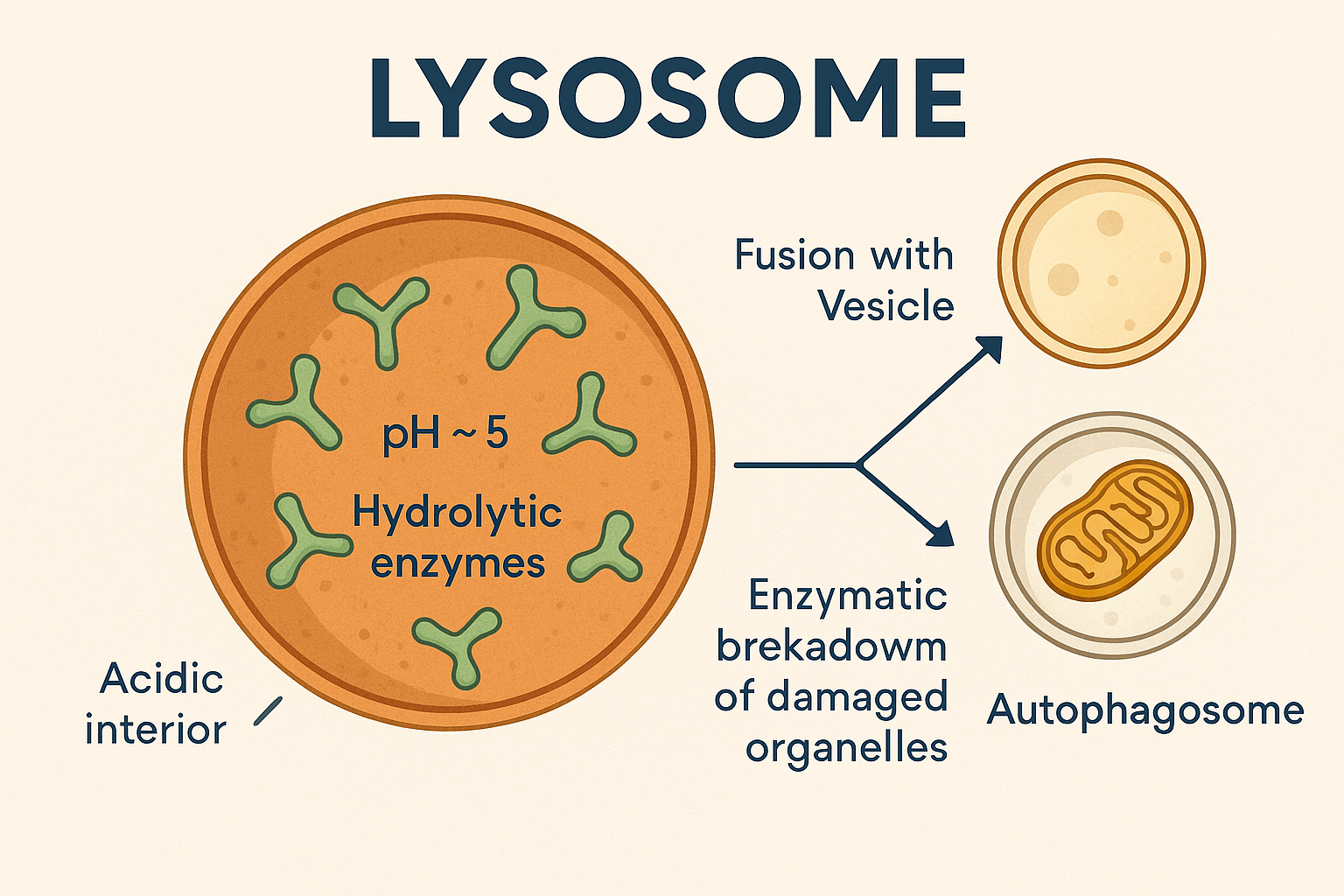
describe the lysosomes
typically found more so in animal cells
Membrane bound, contains enzymes
Break down waste and cellular materials
The “recyclers”
describe the vacuole
sac filled with water
Stores watermelon structural support
Plants contain one central big vacuole
Animals contain many smaller vacuoles

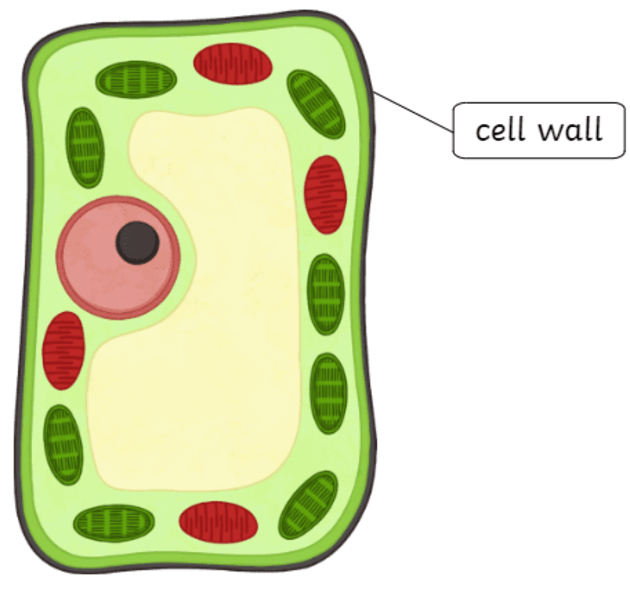
Describe chloroplasts
only found in plant cells
Double membrane
Absorbs light for photosynthesis

describe the cell wall
only found in plant cells
Rigid exterior of cell
Made of cellulose
Provides shape, supports, structure
What happens when a cell is too big
It has a hard time exchanging materials
describe the plasma membrane
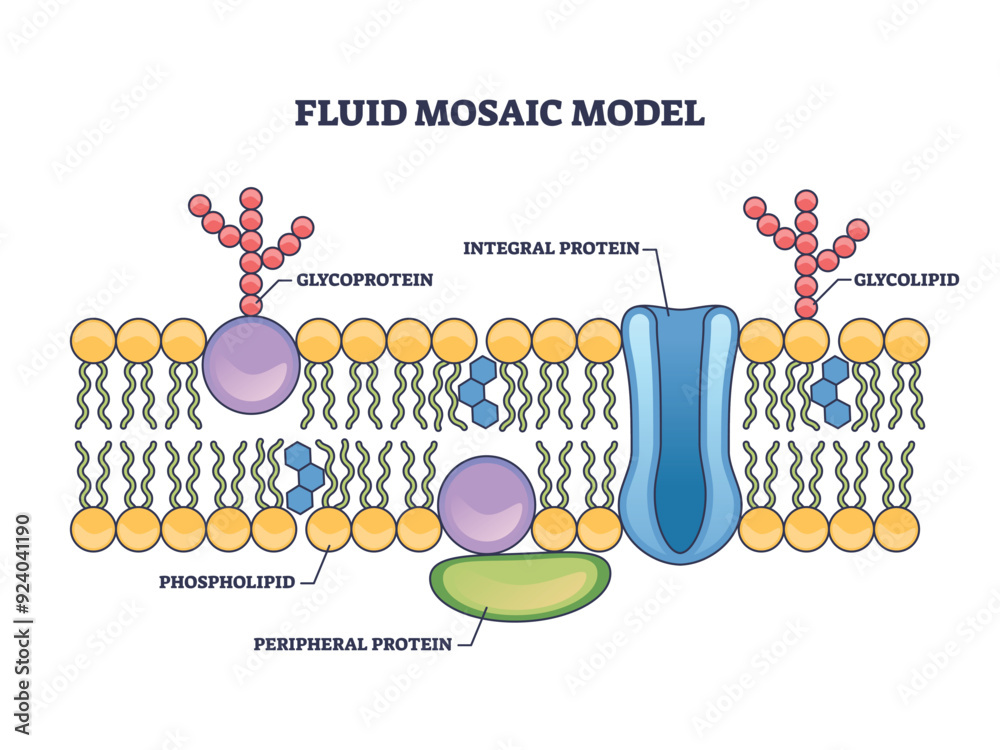
Contains the phospholipid bilayer and fluid mosaic model
The cell membrane is found in all cells
It exports materials and prevents harmful materials from entering the cell
Describe what the fluid mosaic model is and what structures are in it
The fluid mosaic model the structure of the cell (plasma) membrane as a flexible lipid bilayer with a diverse ‘mosaic’ of proteins, cholesterol, and carbohydrates embedded within or attached to it. It contains transport proteins, glycoproteins and cholesterol.
Describe the structure of the phospholipid bilayer
Phospholipids are arranged in 2 rows
Hydrophilic (polar) heads point out
Hydrophobic (non polar) heads point in
Bilayer is flexible and fluid

Describe transport proteins
channels for specific molecules to pass through

describe glycoproteins
have carbohydrate chains attached to them.
Aid in signaling, cell to cell recognition, etc.

Describe cholesterol
Help maintain proper membrane fluidity

what is the cell membrane primarily composed of
Phospholipids
What does it mean for the membrane to be permeable?
It means it only lets certain molecules in and out of the membrane
what types of molecules can go directly through the membrane via simple diffusion?
small, nonpolar molecules
what types of molecules have to go through via facilitated diffusion?
polar, charged, or large molecules
why can some molecules go through the membrane via simple diffusion, while others need to do facilitated diffusion?
Because the phospholipid bilayer is mostly non-polar, nonpolar stuff goes through easier. Also, the channels are small so only small molecules can go through.
Can water go through the bilayer directly?
Yes, but its a lot slower than if it were to utilize a transport proteins.
What the difference between peripheral proteins and integral proteins?
Integral proteins are embedded within the phospholipid bilayer, while peripheral proteins are attached to the surface of the bilayer
What is simple diffusion
A type of passive transport
The movement of molecules across the membrane from high to low concentration
what is facilitated diffusion
a type of passive transport
The movement of molecules across a membrane from high to low concentration through a transport protein
What is osmosis
a type of passive transport
Movement of water molecules across a membrane from high to low concentration
What is concentration gradient
the difference in particle concentration between areas
When all molecules are equally distributed, it is known as dynamic equilibrium
What is passive transport
The movement of molecules without the use of energy
Molecules move down a concentration gradient
Particles naturally move from high concentration to low concentration
what is the natural movement of particles across a concentration gradient
high concentration to low concentration
What is solute concentration in relation to water concentration
higher water concentration = lower solute concentration and vice versa
where will water move in osmosis regarding water concentration and solute concentration
Water will move to the place with the lower water concentration and the higher solute concentration
what is tonicity
Tonicity explores how external solutions can charge a cell’s volume by causing water to flow in or out of the cell
What are the three types of solutions
hypertonic, hypotonic, isotonic
what is a hypertonic solution
has a higher solute concentration than the cell, causing water to flow out of the cell

What is a hypotonic solution
Has a lower solute concentration than the cell, causing water to flow into the cell

What is an isotonic solution
Has equal solute concentration to the cell, causing water to flow into and out of the cell
What are the three types of transport proteins?
channel proteins, carrier proteins, and aquaporins
Describe channel proteins
describe carrier proteins
describe aquaporins
what are the two main categories of active transport
bulk transport and protein pumps
What are the two types of bulk transport
Describe exocytosis
describe Endocytosis
what are the three types of Endocytosis
describe how movement goes against the gradient with protein pumps
Describe pinocytosis
type of Endocytosis
Describe phagocytosis
type of Endocytosis
describe receptor mediated Endocytosis
describe osmoregulation
What is osmolarity
what are pH levels in lysosomes? How does this help them function?
Describe plasmolysis vs cytolysis