Medical Terminology, Health Records, and Integumentary System Flashcards
 Call Kai
 Learn
Learn Practice Test
 Spaced Repetition
 Match
Match Flashcards
 Knowt Play
1/37

Earn XP
Description and Tags
Vocabulary practice flashcards covering introductory medical language, health records structure, and the integumentary system based on lecture notes.
Name | Mastery | Learn | Test | Matching | Spaced | Call with Kai | Chat |
|---|
No analytics yet
Send a link to your students to track their progress
38 Terms
Epidermis
The outer layer of the skin made up of squamous cells.
Dermis
The skin layer beneath the epidermis made up of a few cells and many thick fibers, containing hair follicles, nerves, and glands.
Alopecia
Baldness.
Anhidrosis
Lack of sweating.
Onycholysis
The loss or loosening of a nail.
Comedo
A hair follicle that is plugged with sebum (blackhead, whitehead).
Pruritus
An itch.
Erythema
Redness of the skin.
Macule
A small, flat discolored area on the skin (e.g., freckle).
Papule
A small solid raised skin lesion.
Nodule
A solid mass that extends deeper into the skin.
Vesicle
A smaller blister filled with clear fluid.
Bulla
A larger blister filled with clear fluid.
Pustule
A pus-filled blister.
Abscess
A localized collection of pus in the body.
Keloid
An overgrowth of scar tissue.
Petechia
A small bruise or pinpoint hemorrhagic lesion.
Ecchymosis
A larger bruise.
Impetigo
A highly contagious bacterial infection of the skin.
Basal Cell Carcinoma
The most frequent type of skin cancer, which is slow-growing and does not metastasize.
Squamous Cell Carcinoma
A type of skin cancer that appears as a sore that doesn't heal with a heaped-up, crusted appearance, and can metastasize.
Malignant Melanoma
A harmful tumor of melanin cells.
ABCDEs of Skin Cancer
Assessment criteria for skin cancer: Asymmetry, Border, Color, Diameter, and Evolution.
SOAP Method
An acronym for documenting health records: Subjective (what the patient says), Objective (what tests reveal), Assessment (analysis of S and O), and Plan (course of action).
Chief Complaint
The main reason for the patient's visit.
History of Present Illness
The story of the patient's medical problem.
Review of Systems
Description of individual body systems in order to discover any symptoms not directly related to the main problem.
Febrile
Having or showing symptoms of a fever.
Etiology
The cause of a disease or health condition.
Idiopathic
Having an unknown cause.
Prognosis
A forecast of the probable course and outcome of a disease.
Auscultation
The action of listening to sounds from organs (e.g., lungs, heart) typically using a stethoscope.
Palpation
The process of using one's hands to examine the body.
Eponym
A medical term named after a person (e.g., Alzheimer disease, Loop of Henle).
Antepenult
The third-to-last syllable of a word.
Word Root
The main part or stem of a medical term that carries its core meaning.
Combining Form
A word root combined with a combining vowel (typically "o").
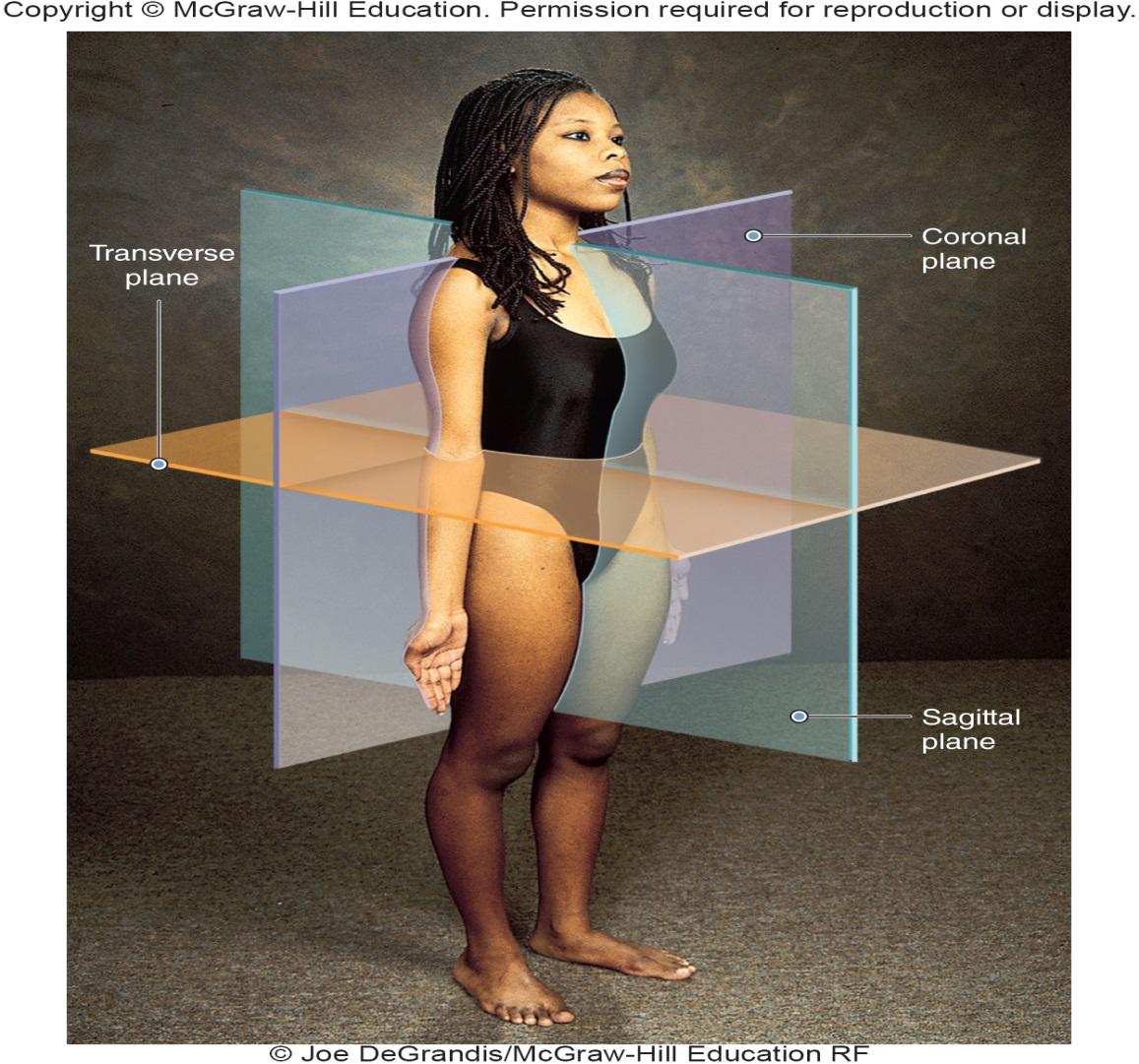
Anatomic Planes
Imaginary flat surfaces passing through the body: Transverse plane, Coronal plane, and Sagittal plane.