Chapter 8: Articulation System 1
 Call Kai
 Learn
Learn Practice Test
 Spaced Repetition
 Match
Match Flashcards
 Knowt Play
1/49

There's no tags or description
Looks like no tags are added yet.
Name | Mastery | Learn | Test | Matching | Spaced | Call with Kai | Chat |
|---|
No analytics yet
Send a link to your students to track their progress
50 Terms
articulation
site where 2 or more bones meet
function of joints
give skeleton mobility
hold skeleton together
functional classification of joints
based on amount of movement allowed by the joint
3 functional classifications are
synarthroses - immovable
amphiarthroses - slightly movable
diarthroses - freely movable
structural classification focuses on…
material binding bones together
whether or not a joint cavity is present
3 structural classifications are…
fibrous
cartilaginous
synovial
fibrous joints - general info
the bones are joined by fibrous tissue
mostly synarthroses
fibrous joints - sutures
rigid, interlocking joints
synarthroses
structure of the skull

fibrous joints - syndesmoses
bones connected by ligaments
synarthroses, some amphiarthroses
distal tibiofibular joint, interosseous membrane between radius and ulna

fibrous joints - gomphoses
peg-IN joints
peg & socket joint - immovable/fixed joint where a cone-shaped, peg-like process fits tightly into a hollow socket
synarthroses
between tooth and toot socket

cartilaginous joints - general info
bones are joined by cartilage
synarthroses/amphiarthroses
cartilaginous joints - synchondroses
hyaline cartilage unites the bones
synarthroses
epiphyseal plates of children, joint between the costal cartilage of the first rib and the sternum

cartilaginous joints - symphisis
fibrocartilage unites the bones
amphiarthroses
intervertebral joints and the pubic symphysis of the pelvis

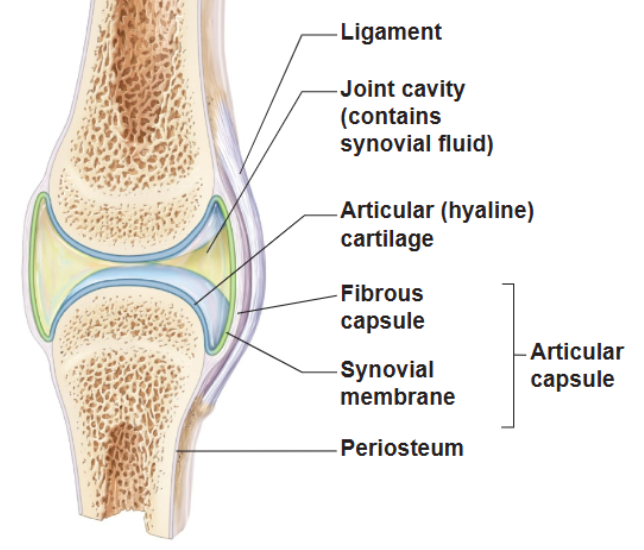
synovial joints
joints in which the articulating bones are separated by a fluid-containing joint cavity
all are diarthroses (freely movable)
include all limb joints, most joints of the body
synovial joints - distinguishing features
articular cartilage - hyaline cartilage
joint (synovial) cavity - small potential space
articular (joint) capsule
outer fibrous capsule - dense irregular connective tissue
inner synovial membrane - loose connective tissue
synovial fluid
viscous slippery filtrate of plasma & hyaluronic acid
lubricates and nourishes articular cartilage
3 possible types of reinforcing ligaments
capsular (intrinsic) - part of fibrous capsule
extracapsular - outside capsule
intracapsular - deep to capsule; covered by synovial membrane
rich nerve and blood vessel supply
synovial joints - friction reducing structures
bursae
flattened, fibrous sacs lined w/ synovial membranes, contain synovial fluid
commonly act as “ball bearings” where ligaments, muscles, skin, tendons, or bones rub together
tendon sheath
elongated bursa that wraps completely around a tendon

synovial joints - movement
muscle attachments across a joint
origin - attachment to immoveable bone
insertion - attachment to movable bone
muscle contraction causes insertion to move toward origin
movements occur along transverse, frontal, or sagittal planes
synovial joints - range of motion
nonaxial - slipping movements only
type of joint motion where flat/slightly curved bone surfaces slide or glide past each other without rotating around a specific axis
uniaxial - movement in one plane
biaxial - movement in two planes
multiaxial - movement in or around all 3 planes
movements at synovial joints
gliding
angular movements
flexion, extension, hyperextension
abduction, adduction
circumduction
rotation movements
medial and lateral rotation
special movements
supination, pronation
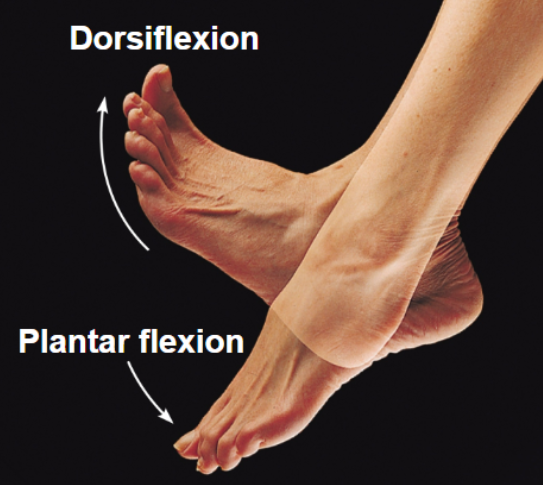
dorsiflexion, plantar flexion of the foot
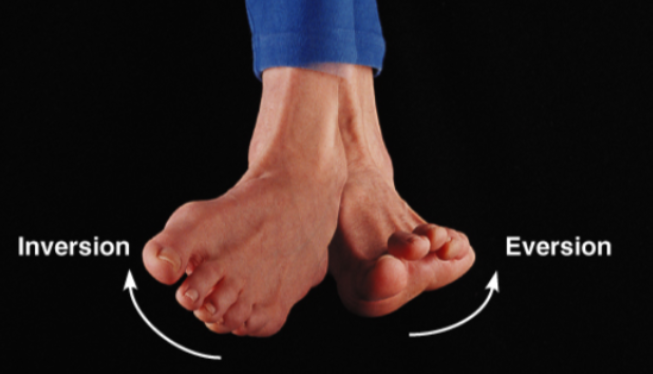
inversion, eversion
protraction, retraction
elevation, depression
opposition
movements at synovial joints - gliding movements
one flat bone surface glides or slips over another similar surface
examples:
intercarpal joints
intertarsal joints
between articular processes of vertebrae

movement at synovial joints - angular movements pt. 1
movements that occur along the sagittal plane
flexion - bending movement that decreases the angle of the joint
extension - reverse of flexion, joint angle is increased
hyperextension - excessive extension beyond normal range of motion

movement at synovial joints - angular movements pt. 2
dorsiflexion & plantar flexion - up and down movement of the foot
abduction - movement away from midline
adduction - movement toward the midline
circumduction - movement describes circular motion in space

movements at synovial joints - rotation
turning of a bone around its own long axis
examples:
between C1 and C2 vertebrae
rotation of humerus and femur

movements at synovial joints - special movements (foot up/down)
movements of the foot
dorsiflexion - upward movement
plantar flexion - downward movement
movements at synovial joints - special movements (forearm)
movements of the forearm
supination - palms facing forward
pronation - palms facing backward

movements at synovial joints - special movement (foot side to side)
movements of the foot
inversion - turn sole medially
eversion - turn sole laterally
movements at synovial joints - special movements (transverse plane)
movements in a transverse plane
protraction - anterior movement
retraction - posterior movement

movement at synovial joints - special movements (body parts)
elevation - lifting a body part superiorly
depression - lifting a body part inferiorly

movements at synovial joints - special movement (thumb)
opposition of the thumb
movement in the saddle joint so that the thumb touches the tips of the other fingers

classification of synovial joints
based on shape of articular surface
plane
hinge
pivot
condyloid
saddle
ball and socket
classification of synovial joints - plane
nonaxial
intercarpal and intertarsal joints
gliding

classification of synovial joints - hinge
uniaxial
elbow joint & knee
flexion & extension

classification of synovial joints - pivot
uniaxial
proximal radioulnar joint
pronation and supination

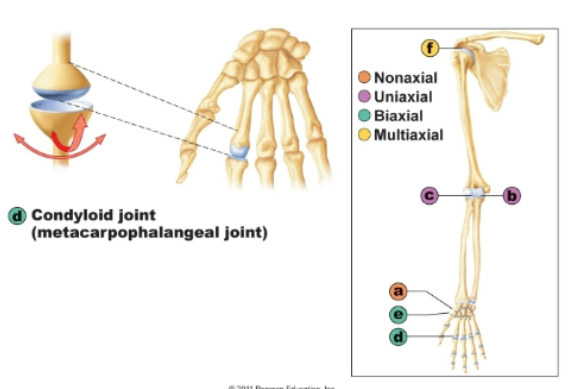
classification of synovial joints - condyloid
biaxial
metacarpopharyngeal joint
flexion, extension, abduction, adduction
classification of synovial joints - saddle
biaxial
carpometacarpal joint of thumb
flexion, extension, adduction, abduction

classification of synovial joints - ball and socket
multiaxial
hip and shoulder joint
all movements

comparison of hip & shoulder - bones in the joint
shoulder -
head of humerus & glenoid fossa of scapula
glenoid labrum
hip -
head of femur and acetabulum
acetabular labrum
comparison of hip & shoulder - type of synovial joint
shoulder - ball and socket
hip - ball and socket
comparison of hip & shoulder - joint capsule
present in hip and shoulder
comparison of hip & shoulder - reinforcing ligaments
shoulder
coracohumeral ligament
three glenohumeral ligaments
hip
iliofemoral
ischofemoral
pubofemoral
comparison of hip & shoulder - other ligaments
shoulder
transverse humeral ligament
hip
ligamentum teres
comparison of hip & shoulder - reinforcing muscle tendons
shoulder -
tendon of the longhead of biceps, rotator
cuff tendons -
subscapularis, supraspinatus, infraspinatus, teres minor
hip -
all the muscles that surround the hip joint
comparison of hip & shoulder - movement at the joint
shoulder -
all movements (multiaxial)
hip -
all movements (multiaxial)
comparison of elbow & knee joint - bones in the joint
elbow -
trochlear of ulna and trochlea of humerus
head of radius and radial notch of ulna
knee -
femoropatella joint - between femur and patella
lateral and medial tibiofemoral joints - between the condyles of femur and medial & lateral menisci of tibial condyles
comparison of elbow & knee joint - type of synovial joint
elbow -
hinge joint
pivot joint
knee -
hinge joint - modified
plane (gliding)
comparison of elbow & knee joint - joint capsule
elbow -
present
knee -
anterior part of the capsule is
lateral and medial patellar retinacula
patellar ligament
medial and lateral menisci - semicircular fibrocartilage that functions as a wedge between the bones
comparison of elbow & knee joint - reinforcing ligaments
elbow-
ulnar ligament
radial ligament
prevent side to side movement
knee -
tibial collateral ligament
fibular collateral ligament
prevent side to side movement
comparison of elbow & knee joint - other ligaments
elbow -
annular ligament
knee -
anterior cruciate ligament - prevents posterior displacement of femur
posterior cruciate ligament - prevents anterior displacement of femur
anterior/posterior naming is referring to direction of tibial movement being prevented
comparison of elbow & knee joint - reinforcing muscle tendons
elbow -
muscles that surrounds it
knee -
muscles that surrounds it
comparison of elbow & knee joint - movement at the joint
elbow -
flexion and extension
pronation and supination
knee -
gliding
flexion and extension