Plant Reproduction
 Call Kai
 Learn
 Practice Test
 Spaced Repetition
 Match
 Flashcards
 Knowt Play
1/52

There's no tags or description
Looks like no tags are added yet.
53 Terms
What is reproduction?
the action or process of making a copy of something, production of offspring by a sexual or asexual process
What are whorls?
circles that attach parts of the flower
What is a sepal (whorl 1st)?
outer most whorl, green and leaf like
What is a petal (whorl 2nd)?
often colored, lots of variation, attracts pollinators
what are stamens (whorl 3rd)?
filament stalk with pollen-bearing anther, where male gametophytes are produced
what are carpels (whorl 4th/center)?
where female gametophytes are housed,
What is a fruit?
a mature, ripened ovary (or group of ovaries), containing seeds
What do incomplete flowers lack?
at least one whorl
How are male gametophytes produced?
pollen grain
how are female gametophytes produced?
embryo sac
What is the first stage in male gametophyte production?
anthers contain 4 microsporangia which produce micropore mother cells
What is the second stage in male gametophyte production?
microspore mother cell produces haploid microspores
What is the third stage in male gametophyte production?
microspores become pollen grain
What is the fourth (final) stage in male gametophyte production?
each pollen grain contains a generate cell that eventually divides to produce 2 sperm cells
What is the first stage in female gametophyte production?
in each ovule is a megaspore mother cell
What is the second stage in female gametophyte production?
produces 4 haploid megasporesW
What is the third (final) stage of female gametophyte production?
megaspore produces 8 haploid nuclei creating the 7-celled embryo sac
What is pollination?
process by which pollen is placed on the stimga

What is self-pollenation?
pollen from one flowers anther pollinates a flower on the same plant (inbreeding)
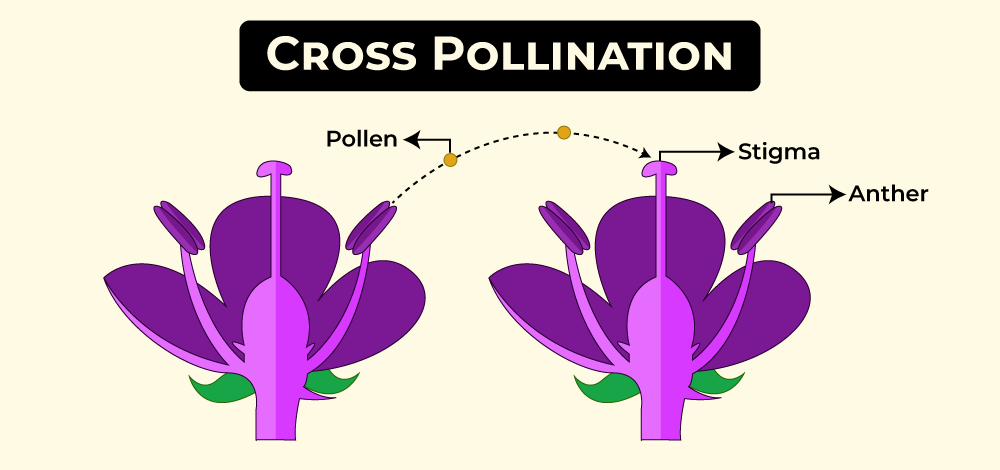
What is cross pollenation?
pollen from one flower’s anther pollinates a flower on a different plant (outcrossing)
What are types of pollinators?
wind, bees & other insects, birds, mammals
How does the embryo sac come into contact with sperm?
pollen tube grows down to ovule to carry sperm to the embryo sac
What is the first stage in double ferillization?
pollination
what is the second stage in double fertillization?
pollen grain germinates
what is the third stage in double fertillization?
pollen tube grows
what is the fourth stage in double fertillization?
pollen tube reaches ovule
what is the fifth stage in double fertillization?
sperm cells released
what is the sixth (final) stage of double fertillization?
what are reasons why plants stop embryo development?
unfavorable conditions, protection when vulnerable, contain food for growing before photosynthesis
How do seeds start developing?
enough water and oxygen, fire, digested, inhibitroy chemicals leach from the seed coat
What is fruit?
mature plant ovaries containing seeds
What is a pericarp?
3 layers to ovary wall
Are pericap different per fruit types?
Yes, fleshy and soft to dry and hard
What is the first stage of seed formation?
sperm cells released
what is the second stage of seed formation?
double fertillization
4 fused carpels each with multiples ovules (seeds)
tomato
one ovule (seed) endocarp forms pit
avocado
multiple unfused ovaries single seed/ovary
black berry
Why do plants make fruit?
protection for seed and embryo, increases dispersal
What are types of dispersal?
eating fruit, hitchhikers, wind blowing, floaters
asexual reproduction self-pollinate T/F
False
Where does asexual reproduction occur the most?
in agriculture and horticulture
What is apomixis?
embryos in seeds producing asexually by parent plant
Where does apomixis commonly happen?
in harsh or poor conditions, more in arctic regains than temperate
What is vegetative reproduction?
new plants are cloned from parts of adults
What are runners(stolons)?
stems that grow along the ground (strawberries, spider plants)
What are rhizomes?
stems that grow under the soil (potatoes, ginger)
What are suckers?
the roots of some plants that rise to new plants
What are adventitious plantets?
plantlets from meristematic tissue, mature and drop to soil
how are plants cloned?
isolated cells to grow roots, shoots, or even entire plant (important in agriculture and horticulture)
What are endosperm?
nutrient-rich tissue that forms inside the seeds of most angiosperm to nourish the developing plant embryo