cardio respiratory system
 Call Kai
 Learn
 Practice Test
 Spaced Repetition
 Match
 Flashcards
 Knowt Play
1/35

There's no tags or description
Looks like no tags are added yet.
36 Terms
circulatory system
the body’s transport system
moves blood to carry oxygen + nutrients
removes waste like CO2
the lungs ________ blood
and removes ___ when __________
the lungs oxygenates blood
and removes CO2 when we breathe out
heart
a strong muscle that pumps blood
pushes blood to the rest of the body
blood (3 major functions)
delivers oxygen + nutrients from lungs to body cells
regulates body temperature
fights off diseases and infections
blood vessels
transport blood around the body
delivers oxygen + nutrients to vital tissues
removes waste from cells
types of blood vessels
artery
vein
capillary
arteries
type of blood and where
walls
valves
pressure
example
carry blood away from the heart (oxygenated, except pulmonary arteries)
thick, muscular walls to handle pressure
no valves
high blood pressure
e.g. aorta (to the body)
veins
type of blood and where
walls
valves
pressure
example
carry blood to the heart (deoxygenated, except pulmonary veins)
thin, less muscular walls
valves to prevent backflow
low blood pressure
e.g. vena cava (to the heart)
capillaries
what it does
what it exchanges
walls
pressure
example
connects arteries and veins
exchanges oxygen, nutrients, waste
very thin walls (one cell thick)
very low blood pressure
e.g. capillaries around alveoli (lungs)
components of blood
red blood cells
white blood cells
plasma
platelets
red blood cells
role and function
description
percentage
carry oxygen from the lungs to the body
small, round, flexible
44% of the blood
white blood cells
role and function
description
percentage
fight off pathogenic diseases and infections
do not have a fixed shape
<1% of the blood
plasma
role and function
description
percentage
carries red/white blood cells, and platelets around the body
pale yellow liquid
55% of the blood
platelets
role and function
description
percentage
form scabs to stop cuts from bleeding
small, colourless
<1% of the blood
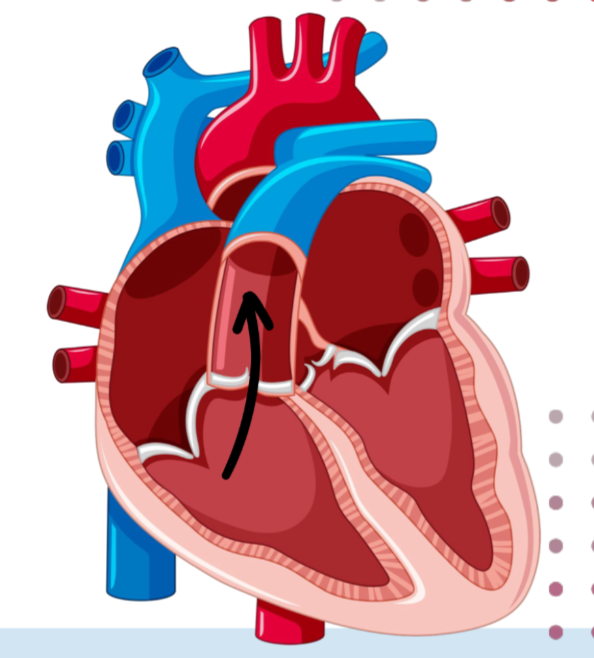
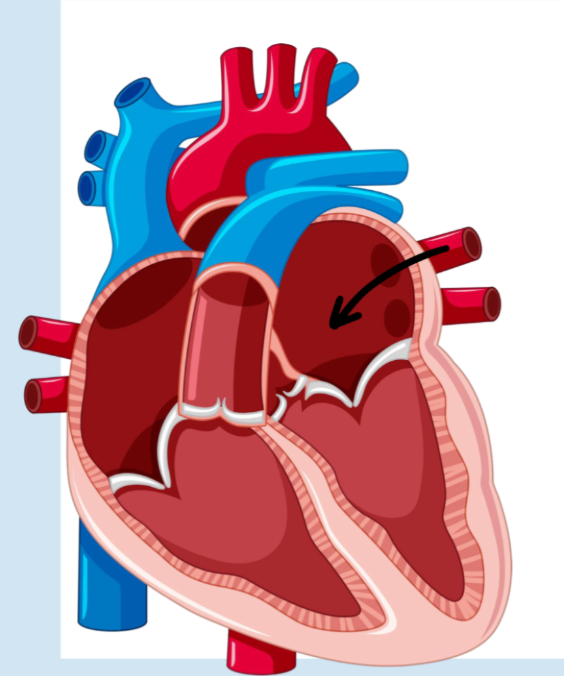
role of the heart
pump blood around the body
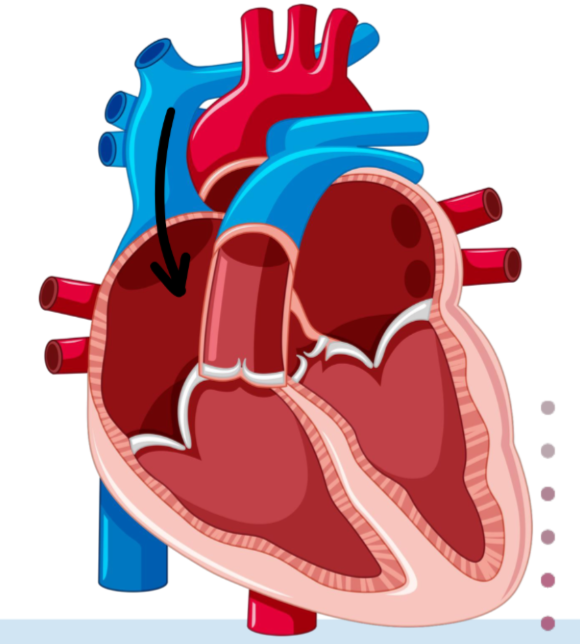
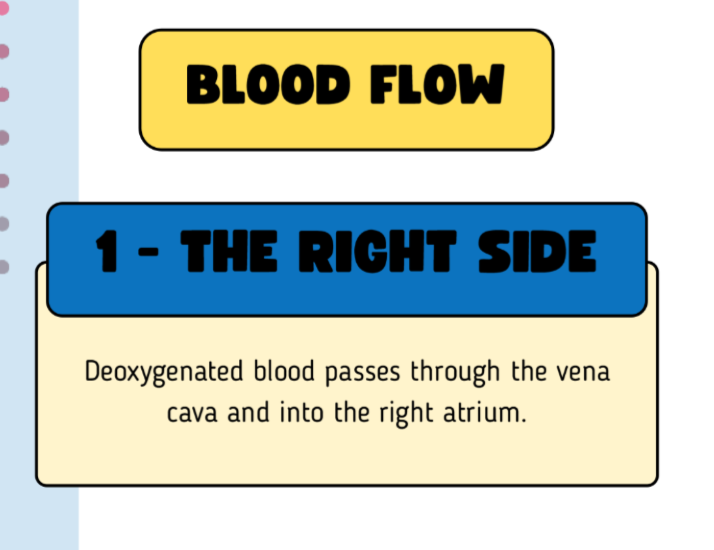
right side = deoxygenated → lungs
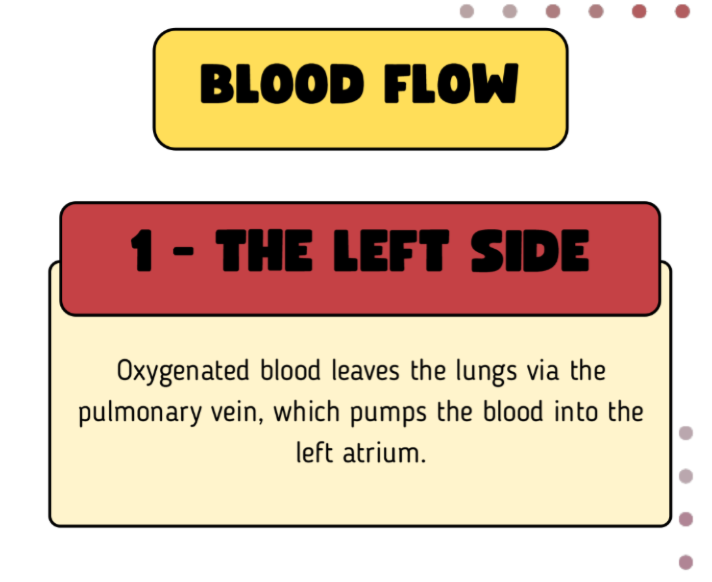
left side = oxygenated → body
valves → prevent backflow
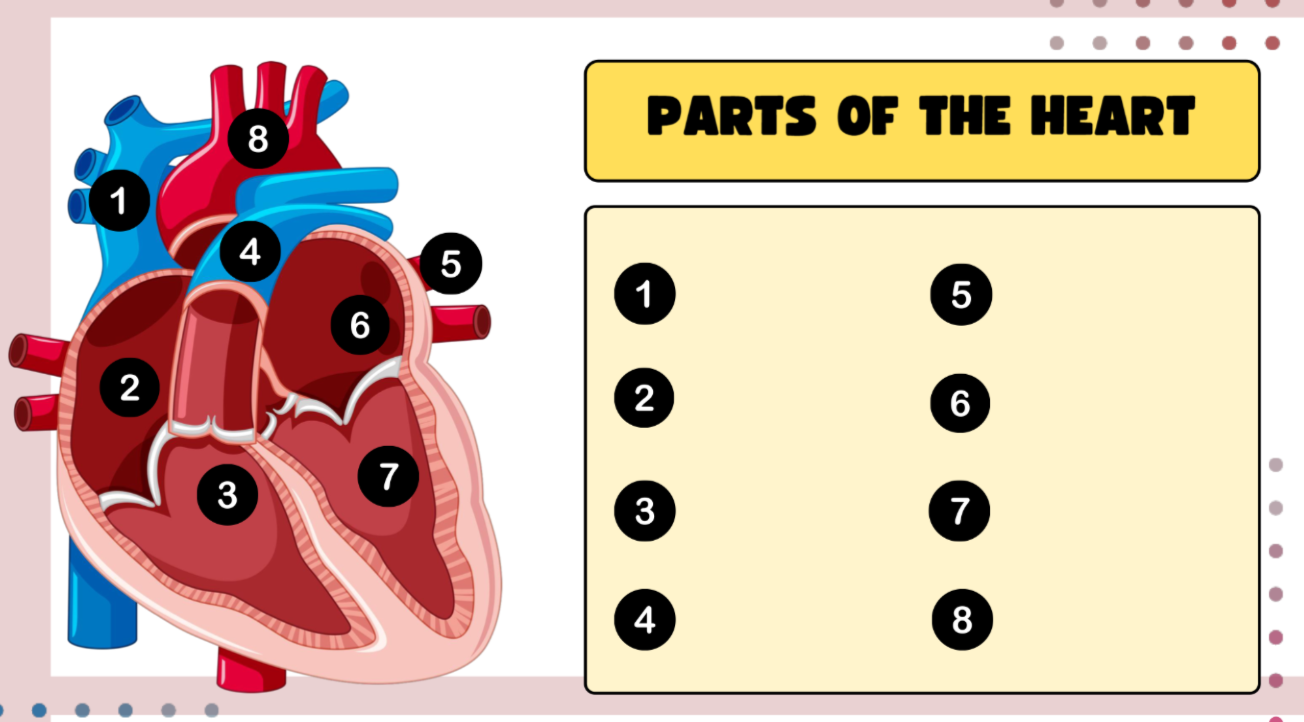
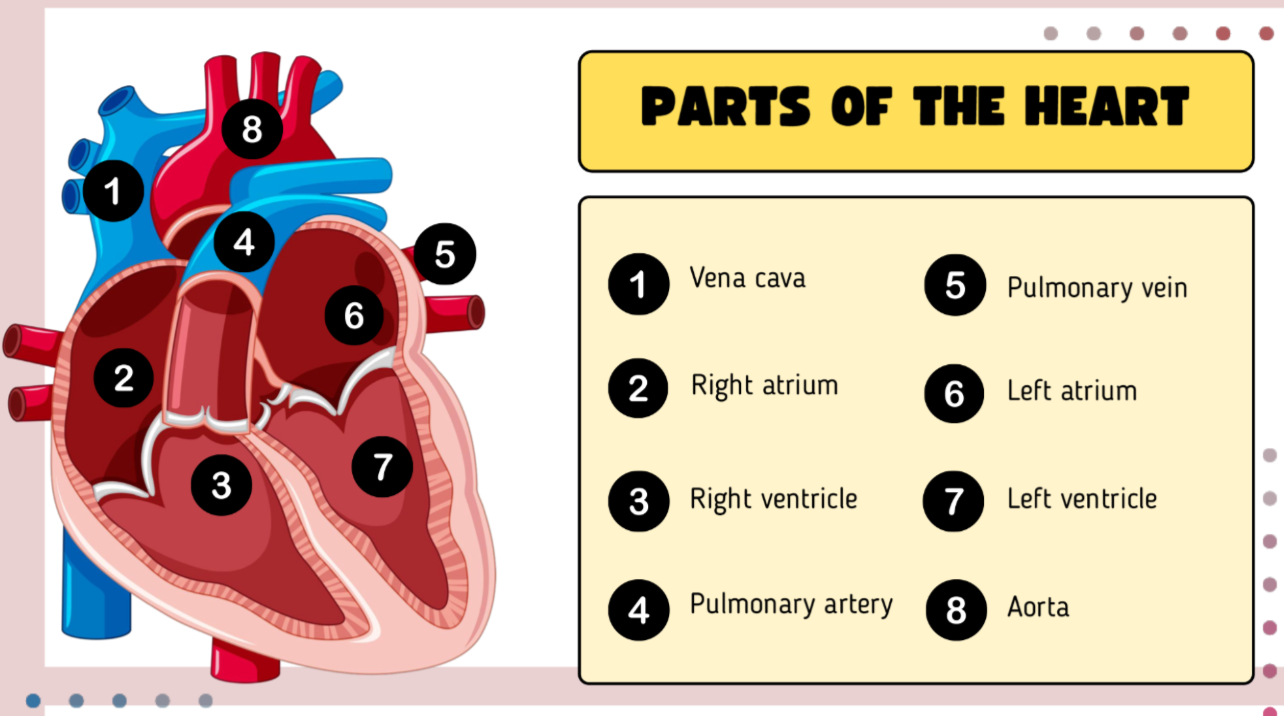
label the parts of the heart





four (4) functions of the respiratory system
composition (3 parts)
delivers oxygen from atmosphere → lungs
gas exchange - O2 in, CO2 out
creates speech → vocal cords
creates sense of smell
composed of: air passages, lungs, diaphragm


diaphragm
muscle that controls inhalation and exhalation
contracts, moves downwards → inhalation
relaxes, moves upwards → exhalation
inhalation
air enters nose/mouth → down the trachea → lungs.
in alveoli → O2 and CO2 are exchanged
exhalation
air with CO2 is removed
essential to maintain energy + body balance
nasal cavity
where air passes through
warmed up
pharynx
air passes through
connects to the larynx/trachea
larynx
contains vocal cords
‘voice box’
trachea
long tube that connects the nasal cavity → rest of the respiratory system
bronchi
extends from the trachea
connects to each lung
bronchioles
small branches with alveoli
air passes through
alveoli
clusters of microscopic air sacs
facilitate gas exchange
millions of them in the lungs
features of alveoli
clusters of microscopic air sacs
one cell thick walls → faster gas exchange
large surface area → maximise O2 + CO2 exchanged
surrounded by capillaries → rich blood supply

(during external respiration)
oxygen diffuses from alveoli → blood (capillaries)
carbon dioxide diffuses from blood → alveoli, to be exhaled
both gases move from a high → low concentration area
since the walls are very thin → rapid + efficient