Skull anatomy and pathology
 Call Kai
 Learn
Learn Practice Test
 Spaced Repetition
 Match
Match Flashcards
 Knowt Play
1/187

There's no tags or description
Looks like no tags are added yet.
Name | Mastery | Learn | Test | Matching | Spaced | Call with Kai | Chat |
|---|
No analytics yet
Send a link to your students to track their progress
188 Terms
what is multiple myeloma
a cancer that effects the white blood cells of bone marrow (plasma cells) that is associated with bone destruction (idiopathic)
multiple myeloma is a ____ disease
subtractive
what is the radiographic appearance of multiple myeloma
usually seen on the vertebrae, ribs, skull, shoulder, pelvis, and long bones. The lesions appear as destructive lytic lesions, sharply defined and appear “punched out”

what are these pictures of?
multiple myeloma
what is bone metastatic disease
when a cancer spreads from its primary location to the bone (breast, prostate, lung, kidney and thyroid)
usually to pelvis, spine, proximal long bones, ribs, and skull
idiopathic
what is the radiographic appearance of bone metastatic disease
appears as osteolytic (lucent) or osteoblastic (dense) lesions depending on the type of tumor
subtractive or additive depending on disease

what are these pictures of?
bone metastatic disease
what is a depressed fracture
when a fragment of the skull is depressed
ping pong fracture
what is the radiographic appearance of a depressed fracture
appears like a ping pong size indent in the skull
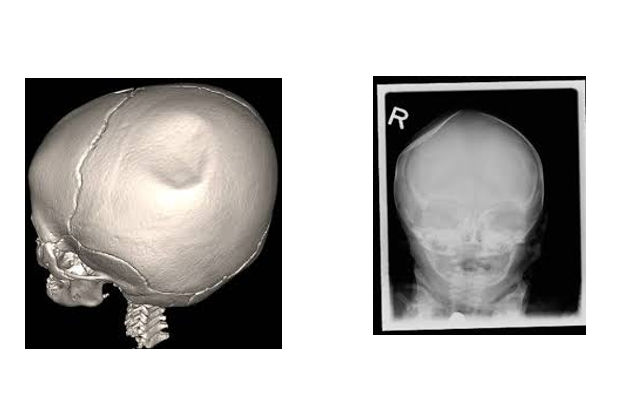
what are these pictures of?
depressed fractures
what is a coup/ contrecoup fracture
fracture to one side of the skull casued by a trauma to the other side of the skull
what is the radiographic appearance of a coup/ contrecoup fracture
fracture to the opposite side of the head from the actual impact injury

what are these images of?
coup/contrecoup fracture
the top of your head is also known as
vertex

what is A?
frontal

what is B?
right parietal

what is C?
left parietal

what is D
occipital

what is E?
ethmoid

what is F?
sphenoid

what is G?
right temporal

what is H?
left temporal

what is 1?
frontal squama

what is 2?
supraorbital foramen

what is 3?
supraorbital margin

what is 4?
glabella

what is 5?
nasal spine

what is 6?
superciliary arch

what is 7?
frontal eminence
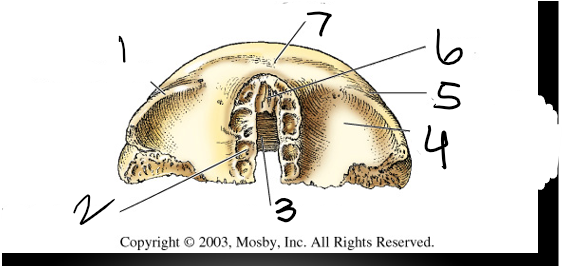
what is 1?
supraorbital margin

what is 2?
ethmoid air cells

what is 3?
ethmoidal notch

what is 4?
orbital plate

what is 5?
superciliary arch
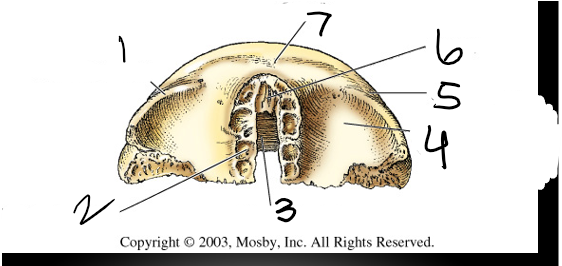
what is 6?
nasal spine

what is 7?
glabella

what bone is this?
parietal bone

what is 1?
articulates with frontal bone

what is 2?
articulates with temporal bone

what is 3?
articulates with occipital bone

what is 4?
articulates with opposite parietal bone

what is 5?
parietal eminence

what is 1?
squama

what is 2?
condylar canal (ASRT)

what is 3?
basilar portion

what is 4?
occipital condyle
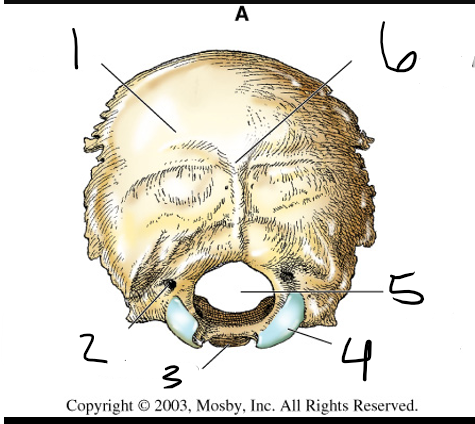
what is 5?
foramen magnum

what is 6?
external occipital protuberance (inion)

what bone is this?
occipital bone

what bone is this?
temporal bone

what is 1?
mastoid portion

what is 2?
external acoustic meatus

what is 3?
mastoid process

what is 4?
tympanic portion

what is 5?
styloid process

what is 6?
mandibular fossa

what is 7?
articular tubercle

what is 8?
zygomatic process

what is 9?
squamous portion
the petrous portion is at the level of
TEA (top of ear attachment)

what is A?
squamous portion

what is B?
petrous portion

what is C?
styloid portion

what is D?
mastoid portion

what bone is this?
ethmoid bone

what is 1?
superior nasal concha
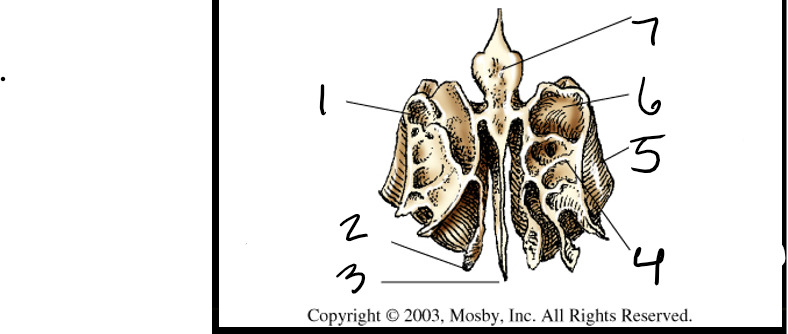
what is 2?
middle nasal concha

what is 3?
perpendicular plate

what is 4?
air cells in labyrinth
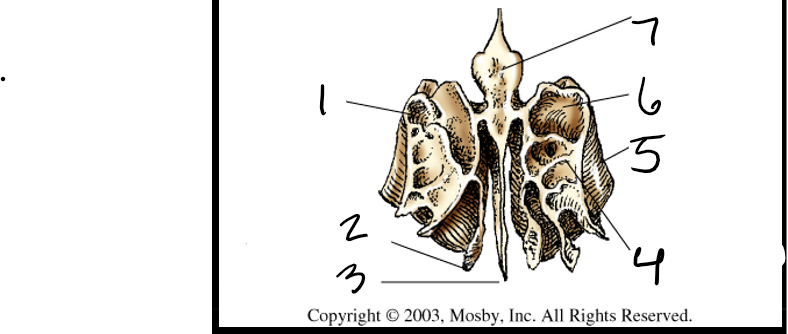
what is 5?
medial orbital wall

what is 6?
ethmoidal sinus
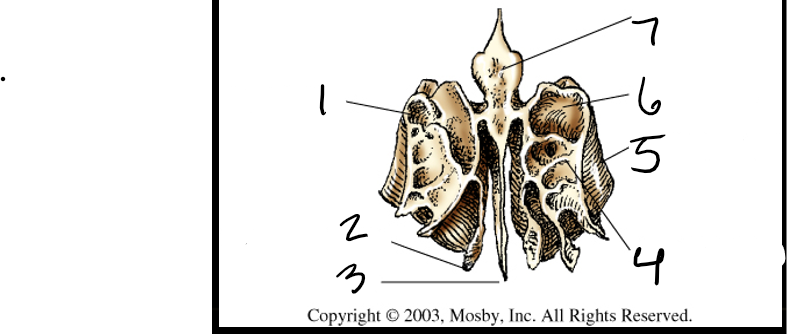
what is 7?
crista galli

what bone is this?
ethmoid bone

what is 4?
articulates with cartilage of nasal septum
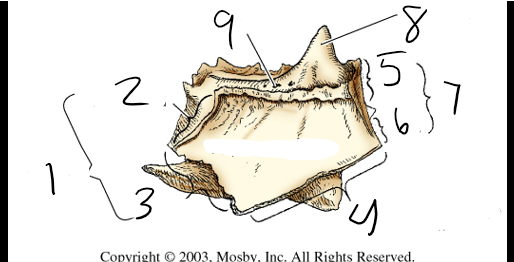
what is 8?
crista galli

what is 9?
cribriform plate

what is crossed out in white?
perpendicular plate
the ethmoid sits primarily where
below the floor of the cranium

what is 1?
crista galli

what is 2?
cribriform plate

what is 3?
perpendicular plate

what is 4?
anterior air cells

what is 5?
middle air cells

what is 6?
posterior air cells

what is 1?
anterior clinoid process

what is 2?
foramen rotundum

what is 3?
tuberculum sellae

what is 4?
posterior clinoid process

what is 5?
sella turcica

what is 6?
dorsum sellae
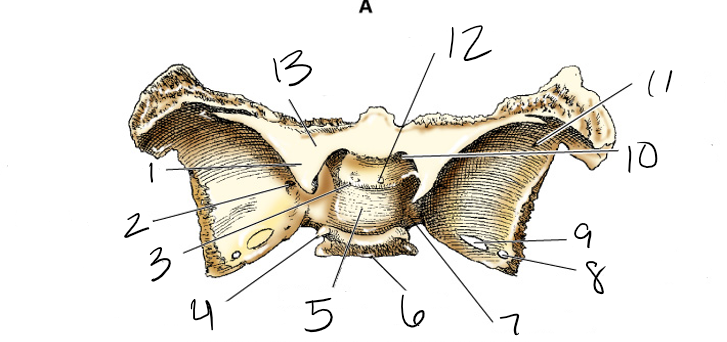
what is 7?
carotid sulcus

what is 8?
foramen spinosum

what is 9?
foramen ovale
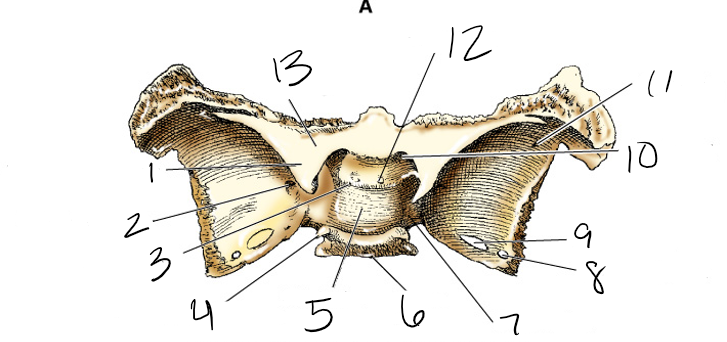
what is 10?
optic canal

what is 11?
greater wing
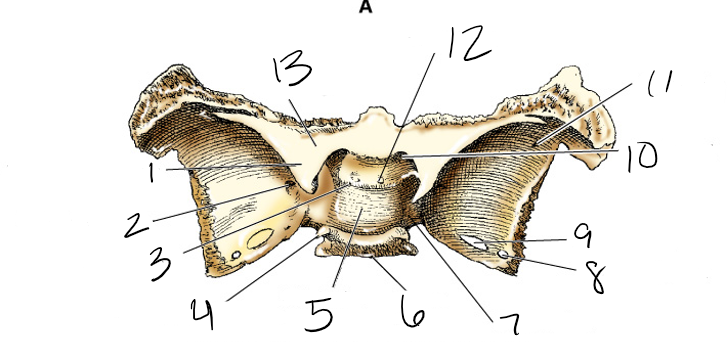
what is 12?
optic groove

what is 13?
lesser wing

what is 1?
pterygoid process

what is 2?
anterior clinoid processes

what is 3?
posterior clinoid processes