Exam 1 Study Guide
 Call Kai
 Learn
 Practice Test
 Spaced Repetition
 Match
 Flashcards
 Knowt Play
1/104

There's no tags or description
Looks like no tags are added yet.
105 Terms
Dr. William Beaumont
army Dr. at Ft. Mackinae who observed St. Martin, a French trapper shot in the stomach
Beaumont was unable to close the wound and eventually healed with an opening to the outside
he frequently checked the opening to observe the process of digestion
Alexis St. Martin
survived a gunshot that left an opening to his stomach
allowed Beaumont to study digestion in a living human directly
Daniel (from Bible)
First recorded nutritional experiment in history:
young Israeli taken to Babylon and didn’t want to eat royal food
agreed to do experiment with kings permission
Antonie Lavoisier
- designed calorimeter
Measures heat produced by the body from work in the consumption of varying types of food
-”life is a chemical process”
- Father of Nutrition
James Lind
showed that citrus fruits could prevent/treat scury, which was the initial discovery of vitamin C

Stephen M. Babcock
developed the Babcock test
Tests for the amount of fat in milk
Developed research showing the importance of dietary minerals and nutrients in animal nutrition
had one corn fed group and one wheat-fed group
corn fed group exceled

Casimir Funk
coined the term “vitamine” in 1912 and helped establish the idea that certain diseases result from nutrient deficiencies
What is the first recorded nutritional experiment?
Daniel from the Bible:
when he chose to not eat the royal food
agreed to experiment with Kings permission
What did Beaumont discover together with Alexis St. Martin?
that the stomach wasn’t a “grinder”, but broke food down
Who was responsible for the health of the Limeys (British Navy)? Why are they called Limeys?
James Lind was responsible for the Navy and helped solve scurvy problem
called Limeys Because they were given lime juice as part of their rations to prevent scurvy
What was the significance of the single plant feeding experiment?
showed that animals need specific nutrients in their diet, not just adequate amounts of protein, carbohydrates, fat, and minerals
Who named vitamins after vital amines?
Funk
Who is credited with “Life is a chemical process”, and is called the Father of Nutrition?
Lavoisier
What are the major differences and similarities in composition between animals and the plant materials that serve as their food?
sugar
any monosaccharide or disaccharide used by animals to store energy; what carbohydrates are made up of
monosaccharide
a one sugar molecule that can’t be broken down (pentoses and hexoses)
disaccharide
two simple sugars connected
polysaccharide
starch
made of repeating units of maltose
just comprised of glucose
glucose connedted with alphha bonds
cellulose
glycogen
like amylopectin
storage CHO found in animals, but only in small amounts
readily available supply
glucose
monosaccharide - hexose
blood sugar
ribose
one of the most important sugars
pentose
part of DNA and RNA
non-essential in diet; body can synthesize it
fructose
monosaccharide - hexose

galactose
monosaccharide - hexose
maltose
repeating unit in starch
dissacharide
glucose + glucose w/ alpha bond
cellobiose
repeating unit of cellulose
disaccharide
glucose + glucose w/ beta bond
hemicellulose
lignin

amylase

amylopectin
type of starch (polysaccharide)
branched chain polymer
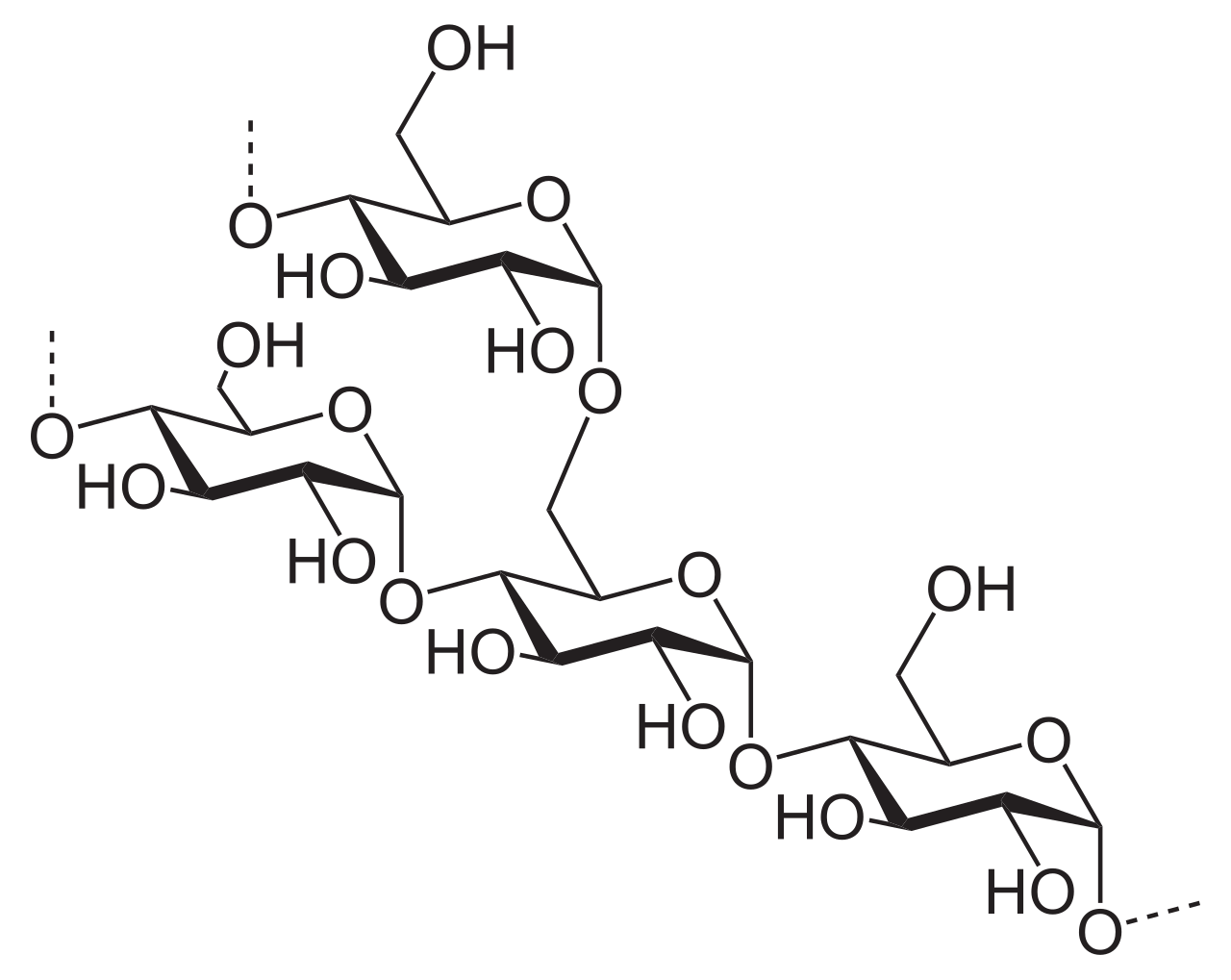
amylose
type of starch (polysaccharide)
straight chain polymer

cellulase
xylose
pentose
fibrous materials and forages

mannose
monosaccharide - hexoes
acetic acid
propionic acid
butyric acid
palmitic acid
stearic acid
oleic acid
linoleic acid
linolenic acid
arachidonic acid
essential fatty acid
glycerol
triglyceride (di-, mono-)
phenylalanine
valine
tryptophan
threonine
isoleucine
methionine
histidine
arginine
lysine
leucine
peptide bond
polypeptide
crude protein
true protein
NPN
Which could be be called the most important nutrient?
water
Which nutrient class provides most of the energy in livestock diets?
carbohydrates
Which nutrient class has the most energy per gram?
fats
Which nutrient class provides energy only after requirements for it are met?
Which nutrient classes do NOT provide any energy?
Which nutrient class is analyzed as crude fuber and NFE?
Which nutrient class is soluble in ether?
Which nutrient class is analyzed by kjeldahl procedure?
Which nutrient class is analyzed by N x 2.25?
How much energy do fats, carbohydrates, and proteins have in relation to each other?
How much water loss is fatal?
about 12%
What are 3 sources of water?
drinking water
water in feed
metabolic water
What are 3 physical properties of water that aid animal life?
High Dielectric Constant: high polarity and helps dissolve many things
High Latent Heat of Vaporization: heat removed when sweat evaporates
High Specific Heat: maintains body temp and takes a lot of heat to change body temperature
High Dielectric Constant
high polarity of the water molecule
water dissolves many things
High Latent Heat of Vaporization
takes a lot of energy to change water from liquid to vapor
results:
lots of heat os removed when sweat evaporates or moisture-laden air exhaled
example: dog panting
High Specific Heat
takes a lot of heat to change body temp much
helps maintain proper body temp
What physical principle is working to help cool a dog when it pants?
High Latent Heat of Vaporization
Which physical principle is working to help move nutrients to the cells?
High Dielectric Constant
What are the major functions of water for animals?
movement of nutrients and metabolites
constant body temp
media for chemical reactions
takes part in chemical reactions
What are the consequences of too little water?
Lower feed intake
blood thickens
increased heart rate, temp, respiration rate
ultimately death
Why is water such a good substance for maintaining constant body temperature?
high specific heat: requires large amount of heat energy to change temperature, buffering the animal against rapid body temp fluctuations
high latent heat of vaporization: it takes a lot of energy to transform water liquid into vapor, dissipating large amounts of heat when sweat evaporates or moisture-laden air is exhaled
How does water help maintain constant body temperature?
High Specific Heat: absorbs and releases heat with minimal temp change, buffering the body against sudden shifts
High Heat of Vaporization: removes large amounts of body heat via evaporative cooling (sweating and panting)
In what circumstance is metabolic water important to animals?
hibernating animals
water-conserving animals
How are carbohydrates classified?
carbohydrates are classified by being soluble or insoluble
List 2 pentoses (monosaccaride)
ribose (one of most important sugars; part of DNA and RNA)
arabinose (forages)
xylose (fibrous materials; trees)
4 hexoses (monosaccharide)
glucose
fructose
galactose
mannose
4 dissacharides (and the monosaccharides they’re made of)
sucrose
maltose
lactose
cellobiose
3 polysaccharides
starch
amylopectin
amylose
glycogen
cellulose
What is the difference between starch and cellulose
starch:
glucose bonded connected with alpha bonds
cellulose:
glucose connected with beta bonds
What is glycogen, and what is it most similar to?
most similar to amylopectin
stored in animals in small amounts
What are 2 forms of starch, and what is their difference?
amylose:
straight chain polymer
amylopectin:
branched chain polymer
What happens to extra starch if too much is consumed?
What is lignin, and what effect does it have on other carbohydrates?
What is blood sugar?
glucose
What is milk sugar?
lactose
What is table sugar?
sucrose
What are the major sources of carbohydrates in animal diets?
What is the result of digestion of starch in the pig? in the cow?