Neuro exam 2 - the good stuff
 Call Kai
 Learn
 Practice Test
 Spaced Repetition
 Match
 Flashcards
 Knowt Play
1/123

There's no tags or description
Looks like no tags are added yet.
Name | Mastery | Learn | Test | Matching | Spaced | Call with Kai | Chat |
|---|
No analytics yet
Send a link to your students to track their progress
124 Terms
Uvea vasculature
it has it’s own but it ismore separated
bullet goes from front of eye to the back, list in order all of the structures it goes through
Eyelids -> conjunctiva -> cornea -> anterior chamber -> iris pupil -> posterior chamber -> lens -> ciliary body -> vitreous -> posterior eye wall (retina -> choroid -> posterior sclera) -> optic nerve
eye has a negative fluorescence stain test but has corneal vascularization what should you do for treatment and what are the causes
tx - steroids
causes - uveitis or immune mediated, allergic conjunctivitis
canine - pannus
feline - eosinophilic dermatitis
You have a corneal ulcer
what are the 3 questions to ask yourself
is it superficial or deep?
is it infected or not? (if it is deep assume it is already infected)
is there underlying disease that is contributing to the ulcer?
Superficial/ uncomplicated ulcers - what does it look like and tx
no bumps or depressions
tx - topical abx to prevent infections
Complicated corneal ulcers - what does it look like, and tx
depression, can have infiltration, melting, edematous, vascularized
assume it’s infected
tx - broad spectrum abx or based on cytology and increase the frequency
Steroids can’t be used in what 3 eye diseases
corneal ulcer, dry eye, or glaucoma
How to dx a corneal infection and what are the s/s
dx - cytology because we need fast results when we don’t want malacia (can still do culture to get a better description)
s/s - WBC, deep blood vessels, inflammation in response
Conjunctivits causes in dogs and tx
allergies
give topical anti-inflammatories (steroids) 3 times a day
Conjunctivitis causes in cats and tx
infectious (herpes, chlamydia, myoclonus)
tx - topical antivirals or antibiotics 3 times a day, no steroids because the animal needs to fight the infection
P has red eye
what 3 test do you need to perform and what is their normal
if any of these test are normal what can you not perscribe
STT - abnormal is under 10
IOP - abnormal is over 10-25 mmHg or difference over 5-7 between eyes
fluorescence stain test - there shouldn’t be any stain uptake
any abnormal = NO STEROIDS
Inflammation of the eyelids is local or systemic
systemic
Glaucoma is caused by
Never over production of AH so it is always a block drainage
pupil can be blocked by lens lux, iris bombe, mass, iridocorneal drain can be clogged by WBC (uveitis) or born with a bad drain
Normal pathway of AH
ciliary body to pupil to iridocorneal angle to sclera vasculature
closed system unlike tears that drain
S/S of chronic glaucoma
cupped nerve, lens is subluxated, bupthalomos that can also cuase Haab’s stria stretch marks on cornea
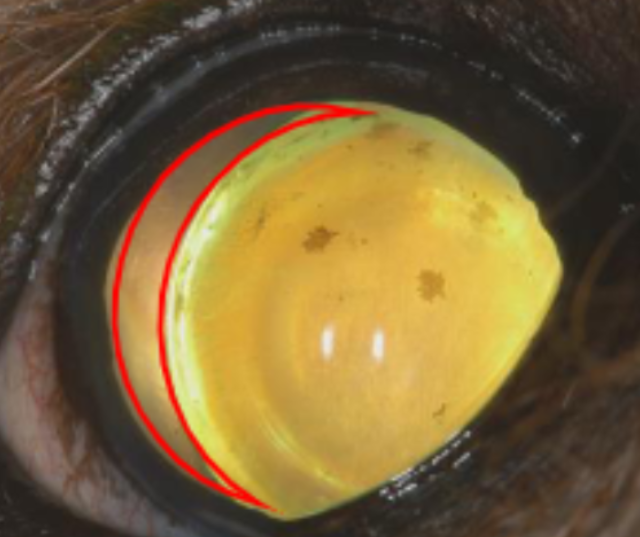
What is this
subluxated lens

What is this
cupped ONH

what is this
Haab’s striae
What means you are irreversibly blind in a glaucoma case
cupped nerve, buphthalmic eye or no consensual PLR
Glaucoma - tx primary
unilateral
latanoprost or osmotic diuretic (faster and strongest) carbonic anhydrase - safe for all time across all species, reduces AH production
timolol used to delay glaucoma in good eye
Glaucoma tx - secondary
bilateral
Carbonic anhydrase inhibitors reduce aqueous humor production
Do not use prostaglandin analog or mannitol
Glaucoma - chracterisitcs that indication vision or potential for vision and how to tx
acute (under 48hrs), positive menace, dazzle reflex or consensual PLR to fellow eye, normal ONH
Treat aggressively with consideration of referral
Glaucoma - chracterisitcs that indication irreversibly blind
chronic (over 72 hrs), bupthalmic (except puppies) absent dazzle, no con sensual PLR to fellow eye, grey/dark, round and cupped optic nerve head

What is this
Uveitis (hazy and color change)

What is this
Uveitis
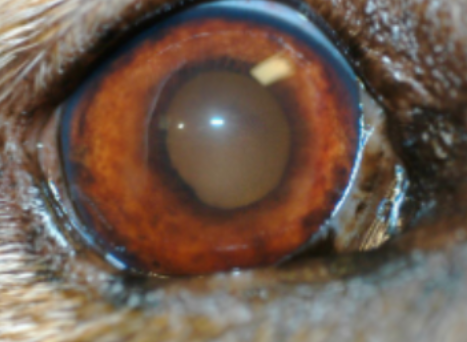
What is this
uveitis
Uveitis is caused by
reflex of corneal ulcer, trauma, leaking of lens antigen, intraocular tumors
if not one of those 4 disease then it is somewhere else in the body
If the cause of uveitis is systemic what should be your next step
CBC, Chem, UA (systemic work up)
Uveitis - s/s
small pupil, hazy red eye, low IOP (in beginning)
inflammation makes iris anchor down and endothelial damage both lead to corneal edema
Uveitis - tx
as long as the fluorescent stain is negative give a steroid and possible dilate the eye
Chornic uveitis can cuase
glaucoma but WBC clogging the drain
Best way to examine the lens
retro illumination (glowing photo of lens)
Best way to asses cornea or if light passes through a cysts in the anterior chamber
trans illumination
what is the response to the lens to anything triggering
become opacic (cataracts)C
Cataracts - tx
sx and mitigate lens induce uveitis (steroids if no corneal ulcer)
Most common cause of luxation
zonula dysgenesis
traumatic lens luxation requires severe luxation
Why do we struggle to get drugs into the eye
because there are 3 layers to the tear film
hydrophobic - lipid
hydrophilic - aqueous
hydrophobic - mucin
How to differentiate retobullbar abcesses/cellulitis vs neoplasia
abcesses/cellulitis are painful on retropulsion and opening of mouth
What makes a patient a better prognosis for proptosis
easy out easy in
brachycephalic, acute, less number of muscles torn
Distichia
additional row of lashes orginating from metaplasitc meibomian gland
Ectopic eyelashes
grow straight down through the conjunctiva
more likely to cause ulcer
Trichiasis
normally placed cilia directed toward cornea
Neural Larval Migrans (NLM)
aseptic suppurative or eosinophilic meningoencephalitis form aberrant migration of larvae throughout the CNS
Taenia Multiceps - DH and IH and how is it spread
DH - canine
IH - ovine in brain and spinal cord
causes ataxia that allows dogs to eat them and then ingest the parasite
Baylisascaris Pryocyonis - DH, what species have larva migrans
DH - raccoon (in small intestines and do not cause s/s)
Ocular larva migrans in wild nad domestic animals
Baylisascaris pryocyonis - time of life cycle and dx
direct lifecycle
dx - patent infections done through fecal float
Parelaphostrongylus Tenius - type of life cycle, DH, IH
indirect life cycle
DH - white tailed deer (little to no disease)
IH - gastropods
Parelaphostrongylus Tenuis - accidental hosts and where does it infect
Accidental hosts - moose, elk, caribou, llamas, alpaca, sheep, goats
migrates through nervous tissue in either the brain, spinal cord or both
Parelaphostrongylus Tenuis - s/s and dx
s/s - depend on location in CNS - asymmetrical spinal cord disease - ataxia
dx - asymmetric neurologic s/s, CSF eosinophilic pleocytosis, absence of evidence for DDX, hx of white tailed deer exposure
Parelaphostrongylus Tennuis - tx and prevention
tx - anthelminitcs + anti inflammatories
prevention - minimize contact with white tailed deer and snail/slug
Angiostrongylus Cantonesis - Rat lung worm - DH, IH
DH - rats and other rodents (only rat will have larvae in feces)
IH - gastropods
Angiostrongylus cantonesis - incidental hosts and s/s
incidental hosts - humans
s/s - eosinophilic meningitis
ICP normal
5-14 mmHg
what incicates increased ICP
disease - known space occupying lesion, hydrocephalous, traumatic brain injury
s/s - decreased mentation, recurrent or cluster seizures, anisocoria (pupils are unequal sizes), reduced/absent PLR
severe - Cushing reflex - bradycardia, irregular breathing, hypertension
Anesthetized beagles normal cerebral perfusion pressure (CPP)
82 mmHg
what to monitor for a P with potential for increased ICP
ETCO2 (consider arterial blood gas in not accurately reflexing PaCO2), invasive arterial blood pressure, SPO2, ECG (detect bradycardia and arrythmias) temp
Normal ETCO2
between 30-45 mmHg
Normal PaCO2
35-40mmHg
Normal SPO2
over 95%
Normal PaO2
over 80-90mmHg
Bromethalin - s/s
hours to days after ingestion
dull mentation
mild - hindlimb ataxia and paresis
severe - generalized seizures, hyperexcitability, hyperthermia and coma → respiratory failure and death
Bromethalin - tx
Acute - aggressive decontamintaiton
tremors and seizures - benzodiazepines ± phenobarbital
cerebral edema - mannitol, hypertonic saline, elevated head 30 degrees
Iv fluids and nutritional support
recumbnecy care
Xylitol - s/s and tx
seizures, hypoglycemia
s/s - p is systemically stable and then supportive care
Temorgenic mycotoxin - where do you get it from and s/s
moldy cheese ingestion (or other moldy organic material)
acute, causes tremors that can progress to seizures
Temorgenic mycotoxin -tx
stop tremors, supportive care, IV lipid therapy
Permethrin - common cause and s/s
cats with topical dog flea meds
tremors
Permethrin - tx
bath (avoid hypothermia), stop tremors, IV fluids and supportive care, IV lipid therapy
Ivermectin and macrocylic lactones - s/s
starts neuroexcitation but at higher doses can result in flaccid paralysis and coma, seizures, blindness, weakness, stupor
Ivermectin and macrocyclic lactones - tx
seizure control - no benzodiazepines as they can bind to gaba and prolong recovery
aggressive supportive care
IV lipid therapy
Redirected aggresion in cats has the underlying emotional motivator of
fear
What medications can you use in assertive aggressive cats and what should you not sue
paroxetine, sertaline, fluoxetine, clomipramine
not buspirone
what drugs helps in the tx of owner direct aggression in dogs
Fluoxetine
How to desinsitze a leash reactive dog toward unfamiliar dogs
exposure to stuffed decoy dog off leash
walking on leash with approach from familiar dog
walking on leash with approach from unfamiliar dog
What do has seperation anxiety
1) dog that destroys something in house while O is gone
2) velcro dog
1
Safety signals (dog training) are considered
inhibitory conditioned stimulus
Doing the stimulus multiple times without the associated effect to get the dog to no longer react to the stimulus would be an example of
extinction of classical conditioning
What can help reduce the need for pharmacological itnervetion in noise phobia
noise desensitization
What medication is best for ACUTE control of noise phobia in dogs
dexmedetomidine (sileo)
In vet offices increased stress can lead to increased or decreased risk of anesthetic complications
increased risk
What can you do to decreases stress at the vet
examine the pet in front of O
If O is unable to place a muzzle on P what should be the next step
event mediaction
What is a pharmacological effect of tricyclic antidepressant amitriptyline
Antihistamine, H-1 blockade
Meds for at home use in aggressive canine patient and what should you not use
sertaline, paroxetine, fluoxetine, clomipramine
Not alprazolam
Most common side effect of fluoxetine
inappetance
what event medicne should you use for a dog with predictable noise phobia
Alprazolam, clonidine, trazodone, gabapentin
Compuslive disorder
behavior persists even after stressors have been corrected
Management factors that influence the incident of sterotypes
social isolation, feeding concentrates, limited access to forage, extensive stall confinement
Sensory replacement
offer a confined horse an item that promotes an appropriate behavior that address the nervous system need for specific sensory input
Devices that physically prevent sterotpy increase
the performance of sterotpies
What can decrease sterotipies
increase grazing time, stalling near companions, providing foraging enrichment, reducing high energy concentrates
MUE localizes where but you should also keep what in mind
asymmetrical and multifocal in young to middle aged dog, small breed
also think about infection
Cat has a swollen nose what disease do you think it is and what can you do to dx
cryptococcous
antigen test (the only one that is not antibody)
FIP - localzation
multifocal asymmetrical brain typically
can’t easily dx
when do you put neoplasia on DDX list
older chronic (occ acute) progressive, asymmetrical (except pituitary that grow on midline)
Meningioma are commonly found in
cats and dolichocephalic dogs
Glioma are found in
brachycephalics
Pituitary tumors - distinguishing s/s
dull mentation that stops eating
Metasitc brain neoplasia
hemangiosarcoma
Stroke - characterisitcs
acute/peracute that gets better on its own
SRMA - signalment
young medium to large breeds
6months - 2 years
classic breeds - beagle, boxer dog, Bernese mountain dog (3 Bs)