plant toxins and the heart
 Call Kai
 Learn
 Practice Test
 Spaced Repetition
 Match
 Flashcards
 Knowt Play
1/42

There's no tags or description
Looks like no tags are added yet.
43 Terms
toxin types
aconite alkaloids
taxus alkaloids
cardiac glycosides
sodium-potassium pump
high sodium out and low potassium out
pump causes opp for balance using ATP hydrolysis
action potential is in
excitabel cells
neurosn and muscles
electrical conduction system of human heart
modified cardiac cells: SA node, AV node, His bundle, Purkinje fibers
certain sequence is key
aconite alkaloids
family Ranunculaceae
aconitine in aconitum spp.
aconitum spp
monkshood/wolfsbane
known as arrow poison
aconitine
From buttercups, causes Na channels to open early and stay open longer
agonist of voltage gated sodium channels
causes of aconitine
contamination, adulteration, inadequate processing of roots, large doses, mistakenly consumed
warning: wear gloves and not lotion
aconitine symptoms
weakness, numbeness, vomiting, dizziness, arrythmia, coma, death
acotinine structure
has a piperidine with ring with NH at top

aconitum spp plant

spirea japonica
rosacaea
toxin from veatchine group, least toxic
traditional chinese medicine
aconite alklaoids
aconite alkaloids types
aconitine
atisine
veatchinine
taxus alkaloids
taxaceae
taxus spp. (yew)
Taxus spp.
yew
ornamental shrub/tree
red aril is only nontoxic
often highly manicured and trimmed
non flowering confier

aril
acessory covering of certain seeds that commonly develops from seed talk, found in both angisperms and gymnosperms

juniper berry
Cupressaceae fam
juniperus L.
female seed cone of junipers
only spice known from conifers
for flavor gin

taxus baccata L
yew
taxine B

taxine B
in plant parts
red aril edible
antagonist Ca and Na channels
hypotension, cardiac arrest, death
drugs and taxus
some useful anti-cancer drgs
semisynthetic approaches
6 trees per patient
paclitaxel
Taxus spp toxin
binds tubulin to prevent breakdown and induce apoptosis
often used in combo with other drugs


docetaxel
taxus toxin
semi-synthetic analogue
Cardiac Glycosides types
from many families
cardinolide and bufadieaolides
cardiac glycosides structure
sugar: carbon rings with many hydroxyl groups
and nonsugar (aglycone)
glycosdic bond between
cardenolide

bufienolide

cardiac glycosides mechanism and effects
binds and disables cardiac Na/K pump
cellular sodium increases causign calcium increase
intracellular Ca causes muscle contraction (troponin)- irregular, intense contractions, death
cardiac glycosides treatment
atropine
stimulates heart
Apocynaceae (Dogbane Family)- Cardiac glycosides
most toxic
some produce cardioactive steroids and otehrs produce monoterpene indole alkaloids with nerbous system effects
monarch butterfly and milkweed plant
apocynace fam
cardiac glycoside relation
Asclepias spp
store toxins in adult stages
nerine oleander butterfly
nerum oleander
apocynace fam
cardiac glycoside relation
oleandrin
whole plant is toxic, fresh, or dried- smoke and sticks/stirring

oleandrin

strophanthus kombe
apocynacaea fam
cardiac glycoside
g-Straophanthin (onabain)
arrow poisons kill elephants
onobain
increased cardiac output
less readily absorbed by GI tract
rapidly eliminated

plantaginaceae family-cardiac lgycosides
foxglove fam
digitalis lanata
digitalis lanata
digoxin

digoxin
used in systematic heart failure (weak LV, doesnt pump properly), increased cardiac output and decreased hospitalizations
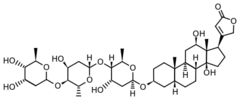
digoxin vs digitoxin?
Ranunculaceae fam- cardiac glycosides
adonis spp (pheasants eyes): can kill horses if eaten

families in cardiac glycosides
apo, plant, ran, aspa
Asparagaceae fam- cardiac glycosides
convullaria majalis (lily of valley), convallotoxin

convallotoxin

other cardiac plant toxins
khat-catha edalis (celastraceae): chewed for centuries, used where alcohol prohibited, moved around world by expatriates
mistletoe