DM Complications - Lewis
 Call Kai
 Learn
 Practice Test
 Spaced Repetition
 Match
 Flashcards
 Knowt Play
1/47

There's no tags or description
Looks like no tags are added yet.
48 Terms
2 categories of diabetes complications
macrovascular
microvascular
macrovascular complications
hyperglycemia → damage to larger blood vessels
cerebrovascular disease
coronary heart disease
peripheral vascular disease
atherosclerotic cardiovascular disease (ASCVD)
major cause of morbidity and mortality in diabetes
Prevention strategy (ABCDE)
A1c / antiplatelet therapy
blood pressure control
cholesterol management
diet
exercise
prevention strategy: A1c
goal for most non-pregnant adults
FBG
PPG
consider therapy w/ — benefit (regardless of A1c)
A1c = <7%
FBG = 80 - 130 mg/dL
PPG = <180 mg/dL
consider therapy w/ ASCVD benefit
therapy with ASCVD benefit
GLP 1
Liraglutide (VIctoza)
Dulaglutide (Trulicity)
Semaglutide SQ / PO (Ozempic)
Tirzepatide (Mounjaro)
SGLT 2
Dapagliflozin (Farxiga)
Empagliflozin (Jardiance)
Canagliflozin (Invokana)

B: start ozempic
prevention strategy: Antiplatelet Therapy
primary prevention
consider in
not recommended for
> 70 yrs old
consider in
pts w/ DM ≥ 50 yrs + 1+ major risk factor and w/o increased risk of bleeding
not recommended for
low risk of ASCVD (pts w/ DM < 50 yrs and no major ASCVD risk factors)
> 70 yrs old
risks > benefits
prevention strategy: Antiplatelet Therapy
secondary prevention
history of ASCVD (MI/stroke)
aspirin 75 - 162 mg daily
clopidogrel 75 mg daily if aspirin allergy
prevention strategy: Antiplatelet Therapy
CAD/PAD
aspirin + low-dose Xarelto (Rivaroxaban) can be added
prevention strategy: Antiplatelet Therapy
major risk factors
increased risk of bleeding


C: appropriate to start aspirin
prevention strategy: Blood Pressure Control
monitoring
guideline recommended BP goals for diabetic patients
monitor BP at every office visit (cross-reference w/ home monitors)

prevention strategy: Blood Pressure Control
accurate assessement
avoid smoking, caffeinated beverages, or exercise within 30 mins before measurement
≥ 5 min of rest before measurements
sit w/ back straight and supported
feet flat on the flood and legs uncrossed
arm supported at heart level
appropriate cuff size

A: per ADA, < 130/80
prevention strategy: Blood Pressure Control
monitor
BP control and adverse effects
ACEi/ARB
BMP (SCr, K+)
2 - 4 weeks after initiation and at least annually
recommendations for the treatment of HTN in people w/ Diabetes
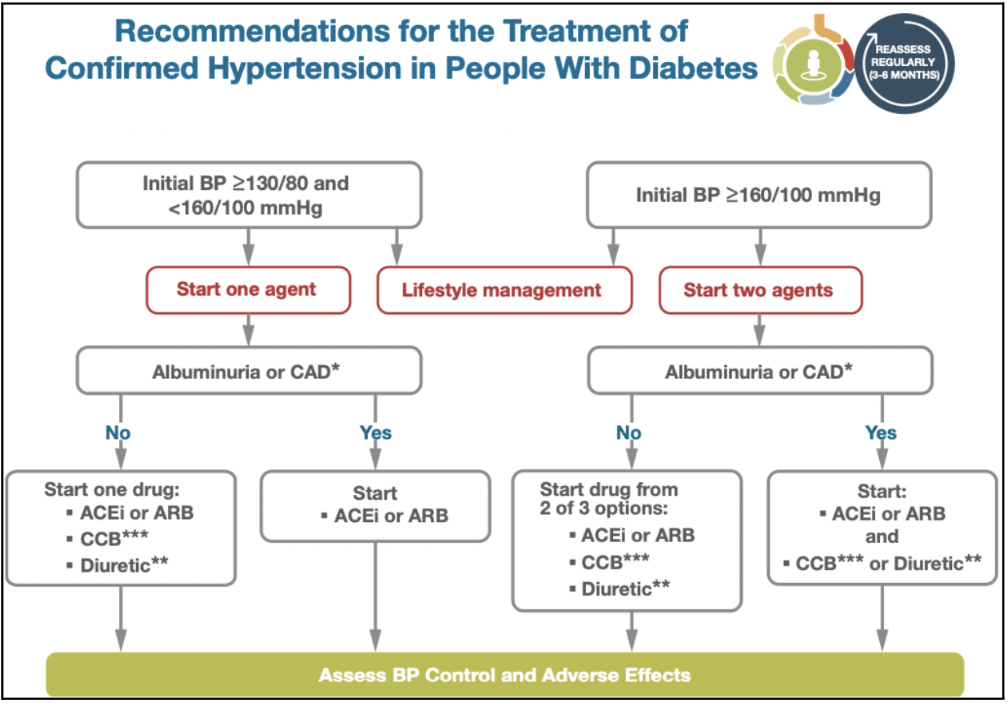

D : olmesartan and amlodipine
prevention strategy: Cholesterol Management
obtain lipid panel at:
DM diagnosis
initial medical evaluation
at leasy every 5 years for pts < 40 yrs of age w/ DM
4 - 12 weeks after initiating or changing lipid-lowering therapy
3 - 12 months while on stable lipid lowering therapy
prevention strategy: Cholesterol Management
add-on treatment (to max tolerated statin): LDL above goal
if LDL remain above goal → add Ezetimibe or PCSK9 inhibitor
LDL goal < 55 mg/dL if ASCVD event
LDL goal < 70 mg/dL all others
prevention strategy: Cholesterol Management
add-on treatment (to max tolerated statin): LDL controlled but TG 135 - 499 mg/dL
if TG 135 - 499 mg/dL → add Icosapent ethyl (Vascepa)
prevention strategy: Cholesterol Management
add-on treatment (to max tolerated statin): TG ≥ 500 mg/dL
add omega-3 fatty acids as adjunct to diet
if necessary, add fibrate therapy to prevent acute pancreatitis
safety: fenofibrate > gemfibrozil
Lipid Management for DM: Primary Prevention

Lipid Management for Dyslipidemia: Secondary Prevention
clinical ASCVD at very high risk (hx of multiple ASCVD events, or 1 major event + multiple high-risk conditions)
high intensity statin to acheive ≥50% reduction in LDL and goal of LDL < 55 mg/dL
clinical ASCVD NOT at very high risk
high intensity statin to acheive ≥ 50% reduction in LDL and goal of LDL < 70 mg/dL
T or F: RCT support use of fibrates and niacin as add-ons to statin therapy
F: no support → not shown to improve ASCVD outcome

C: add Zetia (Ezemtimibe)
prevention therapy: Diet and Exercise
weight loss
reduce —
alcohol intake
sodium restriction
type of diet
exercise
Overweight or obese, weight loss of ≥7%
Reduce overall carbohydrate intake (avoid sugar, sweetened bevs </3)
Limit alcohol intake
Women: ≤1 drink/day
Men: ≤2 drinks/day
Limit sodium <2,300 mg/day
DASH diet or Mediterranean diet
Minimum 150 min/week of moderate-intensity aerobic exercise spread over at least 3 days
microvascular complications
Hyperglycemia → damage to smaller blood vessels
Retinopathy
Nephropathy
Neuropathy
Diabetes is the leading cause of acquired blindness, ESRD, and neuropathies
Prevent or slow progression by controlling blood glucose
retinopathy
Damage to the eye that may lead to impaired vision or blindness
types of diabetic retinopathy
Non proliferative
Proliferative
Diabetic macular edema
retinopathy: screening and monitoring
retinal fundoscopy

diabetic retinopathy treatment
refer if
non-pharm
pharm
refer
Macular edema
severe nonproliferative diabetic retinopathy
proliferative retinopathy
non-pharm
panretinal laser photocoagulation
pharm
intravitreous injections of VEGF inhibitors:
Bevacizumab (Avastin)
Ranibizumamb (Lucentis)
Aflibercept (Eylea)
nephropathy
Damage to the kidneys that may lead to proteinuria or even renal failure
Nephropathy: screening and monitoring
Monitor all patients who have had DM for ≥5 years
Monitor twice annually: Patients with DM and uACR ≥300 and/or eGFR 30-60
False positive uACR readings: exercise within 24hr, infection/fever, CHF, marked hyperglycemia/HTN, menstruation
uACR reading
normal
microalbumnuria
macroalbuminuria

monitoring
renal function
albuminuria

nephropathy: prevention/treatment
A1c control
BP control
A1c control
Consider SGLT-2 for T2DM patients with eGFR ≥ 20 mL/min/1.73m2
If SGLT-2 intolerant or contraindicated:
Consider GLP-1 agonist or Finerenone (if eGFR ≥ 25 mL/min/1.73
BP control
if micro/macroalbuminuria present and/or eGFR <60 mL/min/1.73m2
First Line: ACEi or ARB
T or F: ACEi/ARB not recommended for primary prevention in patients with
normal BP, normal uACR (<30mg/g), and normal eGFR
True
Finerenone (Kerendia)
Aldosterone receptor antagonist (MRA)
Indications: CKD in T2DM, HFpEF
Dosing for CKD in T2DM:
Initial:
eGFR ≥60: 20 mg daily
eGFR 25-59: 10 mg daily
eGFR <25: do not use
Maintenance: based on K+ levels and eGFR (must monitor!) after 4 weeks
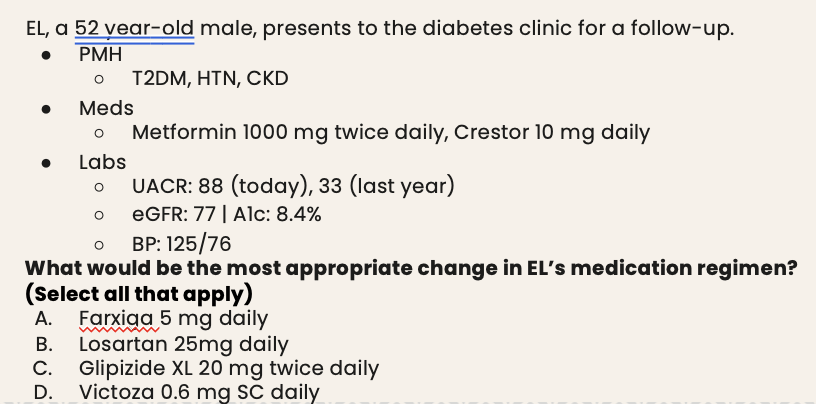
A: Farxiga (Dapagliflozin) - SGLT2i
B: Losartan - ARB
Albuminuria → ACEi/ARB.
Diabetes + CKD → SGLT2 inhibitor
types of neuropathy
Peripheral neuropathy (Neuropathic pain and loss of coordination)
Autonomic neuropathy (Gastroparesis, ED, orthostatic hypotension)
neuropathy screening/follow up

peripheral neuropathy screening tests
small fiber function
larger fiber function
small fiber function
pinprick sensation
temp sensation
larger fiber function
vibration
ankle reflexes
10 g monofilament
oral treatment for peripheral neuropathy


D : clean socks and replace daily
autonomic neuropathy - gastroparesis
symptoms
monitor
medications to avoid
Symptoms
early satiety, N/V, bloating, constipation, abdominal pain, weight loss
Monitor annually to assess for signs and symptoms
Medications to avoid:
Opioids (depressive/sedating - decrease GI motility)
Anticholinergics (sedating - decrease GI motility)
TCAs (serotonin – GI)
GLP-1 RAs (GI d/t action on pancreas and gut)
Pramlintide (acts on pancreas)
autonomic neuropathy treatment

recommended vaccines for pts w/ DM
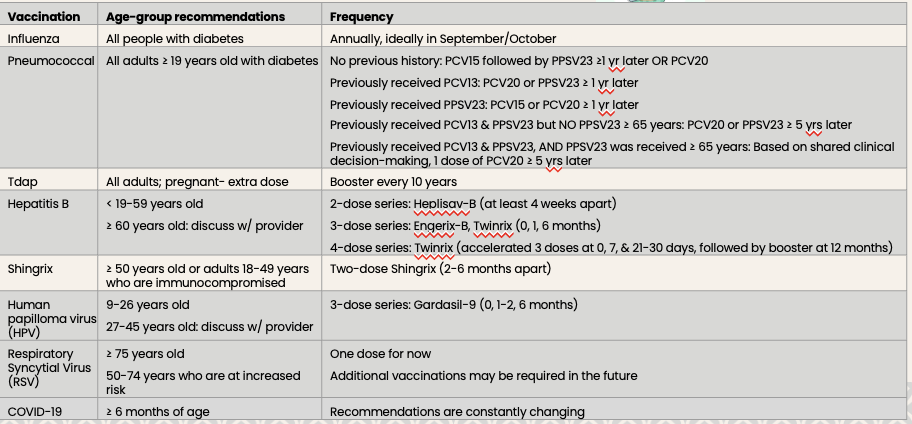
clinical pearls on DM management
A2c every 3 months
if A1c at goal every 6 months
BP at every visit and assess
lipid panel 1x year unless not at goal and making therapy changes
dont forgert ASCVD 10 yr risk PREVENT score
kidney and liver function, electrolytes, CBC at least annually
UACR 1 - 2x / yr, B12 periodically
eye/foot exam 1x year
immunizations