Haematology and Blood Transfusion Introduction
 Call Kai
 Learn
 Practice Test
 Spaced Repetition
 Match
 Flashcards
 Knowt Play
1/42

Earn XP
Description and Tags
Blood content, Haematopoiesis, ABO and Rh blood groups, HDFN, Transfusion.
Name | Mastery | Learn | Test | Matching | Spaced | Call with Kai | Chat |
|---|
No analytics yet
Send a link to your students to track their progress
43 Terms
3 substances in blood
Erythrocytes
Leukocytes
Thrombocytes
what is Haematopoiesis
Formation of blood cells
sites of haematopoiesis in fetus
0-2 months - yolk sack
2-7 months - liver & spleen
7-9 months - Bone marrow
sites of haematopoiesis in Infants
Bone marrow
Sites of haematopoiesis in adults
vertebrae,
ribs
sternum
skull
sacrum
proximal ends of femur
liver
role of stem cells in haematopoietic system
to self renew
and differentiate into progenitors
role of progenitor cells in haematopoietic system
they differentiate into mature, short lived cells
Erythrocytes days in circulation
120
erythrocytes sequestered in?
spleen
erythrocytes shape
biconcave discoid shape
flexibility and allows for gas exchange
Hemoglobin in fetus
2a and 2y -& HbF
haemaglobin in adults
2a and 2b -& HbA
Erythropoiesis negative feedback
stimulus: low blood volume, decreased O2 carried
sensor: specialised kidney cells
response: erythropoietin released into blood (EPO)
Effect: EPO> red bone marrow, preventing cell death, increasing production


neutrophil
60% of wbcs
lobed nucleus
fine granules
6-10hours
non-specific defence against bacterial and fungal infection
pink stain

eosinophils
1% of wbcs
large granules
bilobed nucleus
4-5hours
parasitic infection defense
allergies

basophils
<1% of wbcs
large granules
anaphylactic hypersensitivity, inflammatory response
methylene blue

Monocytes
5% of wbcs
very large
10 hours
matures to phagocytic tissue macrophages
removes aged rbcs, debris

lymphocytes
33% of wbcs
large round nucleus
recognition of foreign substances
phagocytosis
pseudopodia forms during attachment
phagosome forms, bacterium ingested
phagosome forms w/ lysosome
lysosomal enzyme digests

T-lymphocytes
developed in thymus after bone marrow
40-805 of blood lymphocytes
cell-mediated immunity
2 sub types: T-helper & T-cytotoxic cells
B-lymphocytes
bone marrow derived
10-30% of lymphocytes
produce antibodies
NK-Lymphocytes
Natural killer cells
5-15% of lymphocytes
innate immunity
non specific defense
targets cancer cells
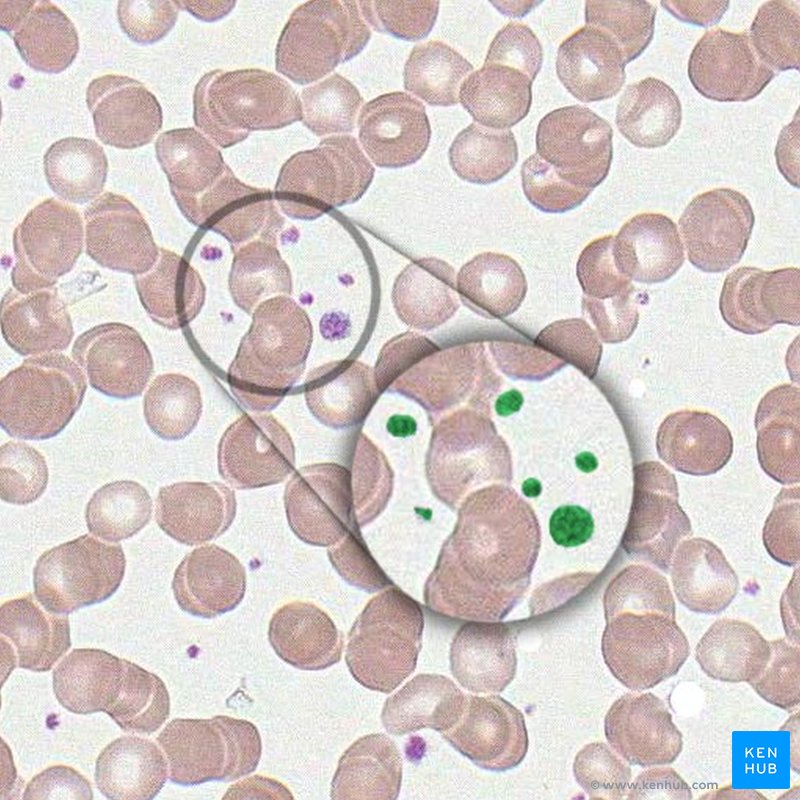
Thrombocytes
platelets
discord, anucleate cells
granular cytoplasm
10-12 days
atherosclerosis

Plasma
60% of total blood volume
pale, yellow, aqueous, electrolytes and proteins
plasma extracellular ions?
Cations - Na2+ , (K+, Ca2+, Fe2+, Mg2+)
anions - Cl- , (HCO3- , SO4 2-, HPO4 2-)
blood group O antigens
L- fructose added- H antigen
blood group A antigen
N-acetylgalactosamine, H antigen
Blood group B antigen
D-galactose, H antigen
Blood group AB antigen
N-acetylgalactosamine H antigen & D-galactose, H antigen
Blood gp. A plasma antigens
anti B, will agglutinate with anti A and anti AB
Blood gp. B plasma antigens
Anti A, will agglutinate with anti B and anti AB
Blood gp. AB plasma antigens
contains anti A and anti B, will agglutinate with anti A and anti B and anti AB
Blood gp. O plasma antigens
Contains nether, will not agglutinate

IgM
10% or Ig serum
Heavy u chains
primary IR
naturally occuring

IgG
75% of serum Ig
heavy y chains
secondary IR
needs stimulatory event to occur
Haemolytic Disease of the Foetus & Newborn
Mother Rh specific Bcells detect foestus’ different RhD group in its RBCs
Rh specific Bcell forms plasma cells and memory cellls
Plasma cells form Anti Rh IgM
Memory cells release IgG
IgG can cross placenta, attcking foetal RBCs
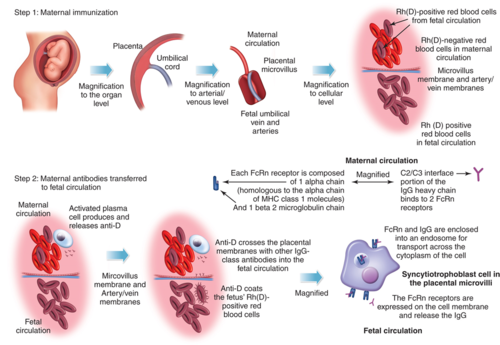
Preventing HDFN?
Rhogam prevents B cell activation and memory cell formation
How to determine blood group?
plasma w/ known antibodies mixed w/ patient’s rbcs
> this tells you the antigens present on rbcs
rbcs w/ known antigens mixed w/ patients plasma
> confirms antibodies present
Symptoms of wrong transfusions?
fever
pain
circulatory collapse
hemorrhage
death?
Group A can donate to…
A, AB
Group B can donate to…
B, AB
Group AB can donate to…
AB
Group O can donate to…
A, B, AB