(1) SCI Intro
 Call Kai
 Learn
 Practice Test
 Spaced Repetition
 Match
 Flashcards
 Knowt Play
1/58

Earn XP
Description and Tags
09/28/2026 + 09/30/2026
59 Terms
Anatomy - where does SC exit the skull?
foramen magnum
Anatomy - central “H” of the spinal cord?
gray matter
Anatomy - dorsal part is associated with?
sensory
Anatomy - ventral/anterior horn is associated with?
motor
Anatomy - intermediate is associated with?
interneurons
Anatomy - the tracts and interneurons are made up of?
white matter
Anatomy - fxn of sympathetic nervous system (SNS)?
fight/flight response:
dialate pupil
increased heartrate
dilate bronchi
converts glycogen to glucose
secrete adrenaline + noradrenaline
inhibits saliva
inhibits peristalsis + gastric secretion
inhibits bladder
Anatomy - function fxn of parasympathetic nervous system (PNS)?
rest/digest response:
stimulates saliva
stimulates peristalsis + gastric secretion
stimulates bile production
contracts the bladder
slows heartrate
constricts bronchi
2 types of SCI pathology
Traumatic vs. Non-Traumatic
Traumatic SCI
Direct damage to vertebral column
spinal contusion
laceration
transection
Often used in studies (due to ease of knowing lesion) for inclusion criteria
Non-Traumatic SCI
Loss of blood flow to the spinal cord
tumor
infection
multiple sclerosis (MS)
spinal stroke
arteriovenous malformation (AVM)
abdominal aortic aneurysm (AAA) repair
Chart - frequencies of types of SCI

2 phases of pathophysiology of SCI
Primary vs. Secondary injuries:
Primary = immediate resultant injury
Secondary = increased damage, often more chronic in nature
Spinal Shock
Occurs immediately after SCI; may be due to abrupt withdrawal of connections between higher centers and spinal cord (“electrical shutdown”)
areflexia + flaccidity below level
transient reflex response (several hrs to 2-4 wks after injury)
earlier resolution from spinal shock = better prognosis
indicator for resolution: bulbocavernosus reflex
Bulbocavernosus Reflex (Osinski Reflex)
Used for spinal shock (absence of bulbocavernosus reflex; presents with hypotension, bradycardia, complete loss of motor/sensation/reflexes)
when absent, still in spinal shock
anal sphincter will contract if present
checked by monitoring sphincter contraction in response to squeezing of penis or clitoris, or pulling on indwelling Foley catheter
polysynaptic response mediated by S2-S4
Better prognosis after reflex returns
This is typically completed by the medical team, less commonly the PT.
Neurogenic Shock
Brain loses ability to send sympathetic “fight-or-flight” signals to blood vessels and heart (disrupts sympathetic chain T1-L2)
blood vessels suddenly vasodilate = blood pooling in limbs (decr. BP and HR that is uncompensated)
need to address w/ fluids and medications to save the spinal cord
can last up to 6 weeks
Chart - Spinal Shock vs Neurogenic Shock

Epidemiology and Etiology of SCI
average age from 29yo during 1970s to 43yo as of 2015
about 79% of new tSCI cases are male as of 2015
lengths of acute care stay and rehab duration have decreased as of 2015
incomplete tetraplegia is the most frequent extent
frequency of incomplete/complete paraplegia is virtually the same
less than 1% of persons experienced complete neurological recovery by hospital discharge
Life Expectancy post SCI
average remaining years of life in persons with tSCI have not improved since 1980s, still significantly below life expectancies of persons without tSCI
mortality rates significantly higher in 1st year after injury; increased in those with most severe neurological impairments
Causes of Death post SCI
Over time, pneumonia and septicemia have greatest impact on causes of death + reduced life expectancy in those with tSCI
no change in mortality rate for septicemia over last 50yrs, only slight decrease in mortality rate for respiratory disease
Decreased rates from cancer, heart disease, stroke, arterial disease, pulmonary embolus, urinary disease, digestive disease, and suicide.
However, increasing rates from endocrine/metabolic/nutritional disease, accidents, nervous system disease, musculoskeletal disorders, mental disorders.
Mechanisms of Injury for SCI
Flexion: head-on collisions, most common (anterior cord syndrome)
Flexion/Rotation: side impact MVA, boxing “hook”
Hyperextension: typically in falls (land on chin), whiplash is often “milder” (central cord syndrome)
Clinical Signs and Symptoms
Tetra/quadriplegia (same; use tetraplegia nowadays because fully Greek roots; quadri was latin) = 4 limbs
Paraplegia = lower half (2 limbs)
Neurologic Level of Injury (NLI) is determined by ISNCSCI exam
different than surgical level or injury location
Incomplete SCI Syndromes
Central Cord Syndrome
Anterior Cord Syndrome
Brown Sequard Syndrome
Cauda Equina Syndrome
(1/5th of SCIs)
Central Cord Syndrome
Most common cord syndrome
typically from hyperextension injury (falls, MVA)
UE > LE, proximal > distal involvement
associated w/ congenital or degenerative narrowing of spinal canal
sacral sensory sparing
typically ambulatory
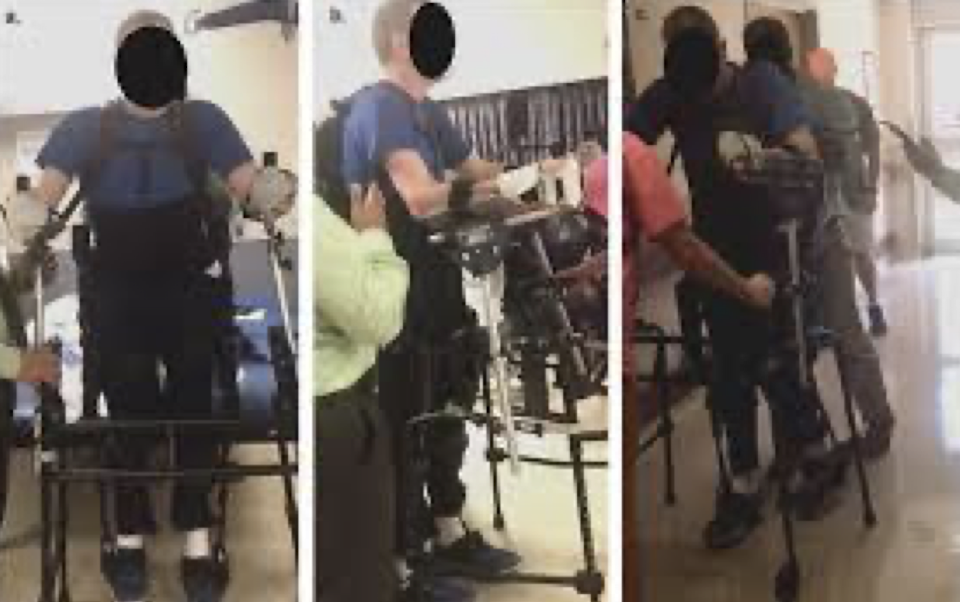
some balance deficits: cannot use arms for balance
Anterior Cord Syndrome
Affects anterior 2/3 of spinal cord, often T1-L2
typically from flexion injuries
motor loss
pain and temperature loss below lesion
proprioception and light touch spared (separate vascular supply)
normal vibratory sense, 2-point discrimination, fine touch
caused by ischemia w/in artery supplying blood to 2/3rds of spinal cord (Anterior Spinal Artery)
surgical repairs such as aortic surgery, hypotension (from cardiac arrest), vasculitis, sickle cell, AVM, disc herniation, cocaine use
typically longer lengths of stay
Posterior Cord Syndrome
Rare – 1% of incomplete SCIs, from cervical to lumbar
impaired dorsal column:
proprioception, vibration, 2-point discrimination, and light touch below level of injury
causes: traumatic injury (hyperextension injury, e.g. MVA), tumors, degenerative disc disease, B12 deficiency, MS, untreated syphilis
other Sx: pain (burning/tingling), sensory ataxia
Brown-Sequard Syndrome
Rarer form – 1-4% of traumatic SCIs
lesion resulting in:
ipsilateral motor loss (corticospinal)
ipsilateral proprioceptive, light touch, vibration loss (dorsal columns)
contralateral loss of pain and temperature (spinothalamic)
“Hemisection” (one side of SC is damaged)
Brown-Sequard Plus syndrome is more common (true hemisections are rarer)
Known to be caused by knife/bullet injuries
can still be caused by trauma, falls, disc herniation, tumors, MS, and infection

Cauda Equina Syndrome
Damage to long nerve roots after end of SC, typically at L1
areflexic bowel/bladder and saddle anesthesia
same potential to regenerate as peripheral nerves elsewhere in body
not common due to large distance in lesions, glial-collagen scarring, disorganization of axonal regeneration, loss of end-organ functioning after reinnervation; rate slows and stops after ~1yr
Conus Medullaris syndrome (most distal portion of SC damaged; mixture of UMN and LMN damage)
both syndromes characterized by LE motor and sensory loss
Chart - Cord Summary

Medical Management of SCI
high-dose steroids ASAP (solumedrol)
surgical intervention (decompression, laminectomy, fusion)
anticoagulation
pulmonary, bladder, integument (need extra care/management until pt. learns to manage these themselves, due to increased infection risk)
Internal/Surgical Intervention
anterior (may have difficulty speaking after) or posterior spinal fusion
the metal used for fusion
decompression, laminectomy
Traction/Stabilization Interventions
Halo: superior option to immobilize upper c/sp
can restrict atlantoaxial flex/ext by 75% (vs. 45% with conventional orthoses)
Minerva Brace - CTLSO (cervical-thoraco-lumbar-sacral orthosis
TLSO (thoraco-lumbar sacral orthosis)
Autonomic Dysfunction after SCI
Afrer SCI, supraspinal influence on autonomic nervous system (ANS) is disrupted
results in sympathetic blunting and parasympathetic dominance. Results in:
cardiac dysrhythmias, systemic hypotension, bronchoconstriction, copious respiratory secretions, uncontrolled bowel/bladder, and sexual dysfunction
Systems Review Considerations for SCI patients
musculoskeletal
integument
pressure relief (move/adjust, just enough to get capillary refill)
for sitting: Q15min
for laying: Q2H
autonomic
cardiovascular
respiratory
nervous
bowel and bladder
sexual
psychological
Musculoskeletal considerations
Paralysis, atrophy
LMN = flaccid paralysis
at the level of the injury
cauda equina
“more from lateral disc herniations”
UMN = spasticity, incr. tone
below the level of the injury
less atrophy (from tone)
Contractures (due to muscle imbalance)
Bone Health considerations
Immobilization = osteoclastic bone resorption!
acute: hypercalcemia (high serum Ca2+)
long term: osteoporosis
patients may require DEXA scanning for BMD tracking
possible complication: Heterotopic Ossification (HO)
most common at hips → knees → shoulders
unorganized bone growths; can limit ROM (bony end-feels); may attempt to remove surgically but often grows back

Chart - Integumentary considerations
Sitting: movement orders Q15min
Laying: movement orders Q2H

Autonomic considerations
Apneic bradyarrhythmia
acute, high cervical patients with hypoxic conditions
Tx: avoid hypoxia (monitor O2 sats, HR)
Orthostatic Hypotension
lack of sympathetic input to regulate cardiac response to postural changes
need to incorporate postural challenges to Tx; use of abdominal binders/stockings/ace wraps (adjuncts to help incr. BP)
Temperature Control
no shivering/sweating below the level of the injury
decreased ability to withstand hot/humid weather; sports implications
big area for patient education
Autonomic Dysreflexia
LIFE THREATENING CONDITION
only injuries at T6 and above
noxious stimuli (e.g. full bladder, impacted bowel, tight clothing, etc.) below level of injury triggers uncontrolled sympathetic response (fight-or-flight)
signs and symptoms:
flushed face, pounding headache, dizziness, high BP
prevention: education, bladder care
treatment: elevate patient’s head, identify + remove noxious stimulus, hypertensive medication
other causes: decr. HR, incr. sweating (where able)
more common with complete or chronic injuries
untreated? may lead to stroke
Autonomic Dysreflexia Frequency
approx 40% with SCI above T6 have never heard of AD
22% did not know how to respond to an episode of AD
up to 40% of ED personnel may not have adequate knowledge or training related to AD
Chart - Autonomic Dysreflexia Stimuli (overview)
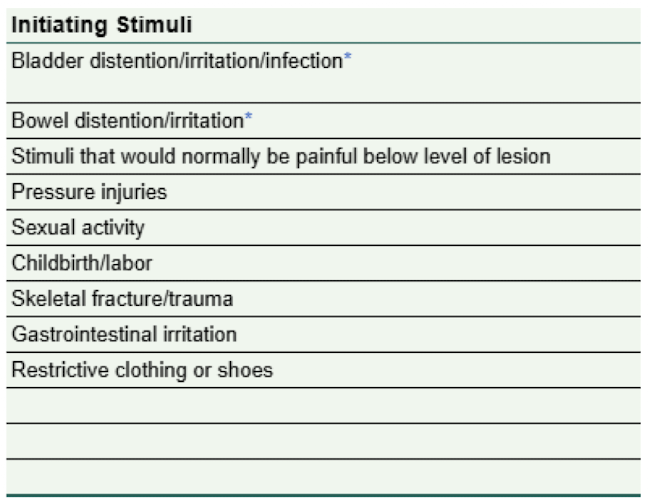
Chart - Autonomic Dysreflexia Signs and Symptoms (overview)

Cardiovascular considerations
Parasympathetic signals → vagus nerve (decr. heart rate and contractility)
Sympathetic outflow through sympathetic trunk
heart and upper body blood vessels above T6
lower body blood vessels between T6-L2
Imbalance between PSNS/SNS:
neurogenic shock, bradyarrhythmias, hypotension, AD, orthostatic hypotension, impaired cardiovascular reflexes
Thermoregulation considerations
Poikilothermia
body cannot internally regulate core temperature = matches temperature of surrounding environment
e.g. cannot feel sunburns
Exercise/warm environment
limited ability to vasodilate peripheral blood vessels and lower body heat through sweat; results in hyperthermia
Cold environments
limited ability to vasoconstrict peripheral blood vessels and shiver results in hypothermia
Hyperhidrosis (excessive sweating), anhidrosis (lack of sweating), or hypohidrosis (limited sweating)
most common presentation is:
hyperhidrosis above lesion
hypohidrosis below lesion
Exercise Tolerance and Wellness considerations
SCI below or w/in thoracolumbar sympathetic output
reduced exercise tolerance, lower stroke volume, reduced cardiac output
Cervical SCI
likely demonstrate lower peak HR, post-exercise hypotension, and other abnormal CV responses to exercise
Long term SCI
at-risk for developing CV disease (due to inactivity), impaired glycemic control, chronic inflammation, abnormal cholesterol profiles
***Regular exercise program after rehab is imperative***
Respiratory considerations
Paradoxical breathing (typical in tetraplegia)
abnormal breathing pattern; reverse of normal chest wall movement during breathing
Treatments
abdominal binders (improve/assist respiratory function)
coughing (functional? weak?)
assisted coughing; manual assist; devices; self-assist
Respiratory system review
Volume:
vital capacity is ½ of normal value in people with tetraplegia
observe patient for accessory breathing muscle use
consult with respiratory therapy

Chart - nerve involvement and respiratory muscles

Bowel Function considerations
SCI patients report that bowel dysfunction has greater impact on QOL and social activities than other impairments
Normal sphincter control (S2-S4)
internal sphincter: increased tone at rest, relaxes with rectal distension
external sphincter: maintains tone at rest, increases tone when internal sphincter relaxes (for voluntary control over evacuation)
Neurogenic Bowel in SCI patients
decreased control over defecation due to injury of nervous system
immediately after SCI with spinal shock: may have paralytic ileus
Bowel Management considerations
Reflexive/spastic bowel
anorectal reflex is intact; UMN lesion above S2 (or T12, depending on source)
bowel program: stimulate rectum to trigger reflex
digital stimulation and suppositories to simulate the reflex
goal: soft-formed stool
Areflexive/flaccid bowel
anorectal reflex is absent; LMN lesion at S2-S4 (or cauda equina involving S2-S4)
bowel program: manual evacuation of bowel, typically several times/day
goal: keep stool well-formed, rectal vault clear, prevent accidents
Bowel Program considerations
Established bowel clearing schedule
Bowel movements planned for the same time of day, every day
Perform bowel care within 30mins - 1hr post-meal
Complete emptying of the rectal vault with each movement
Eat and drink well (track how foods affect you, drink ≥2L H2O daily; must be weary of irritating foods like spicy, lactose, etc. that may be aggravating on bowels)
Stay active (within abilities)
Know the effects of medications and their timing (e.g. stool softeners, bulking agents, suppositories)
Genitourinary (Bladder) considerations
Same neural level for sphincter control as bowels: S2-S4
Detrussor muscle → “internal sphincter” that detects stretch (bladder full = distension)
Pelvic floor → “external sphincter” for voluntary control of bladder voiding
***Must prevent urinary tract complications***
UTI
Hydronephrosis (kidney swelling due to urine backup)
Renal calculi (kidney stones)
Bladder calculi (bladder stones)
Vesicoureteral reflux (backward flow of urine up the ureter)
Neurogenic Bladder considerations
Spinal shock = flaccid bladder = indwelling catheter
Reflexive = emptying of bladder with distension of bladder walls
Management includes suprapubic tapping, intermittent catheterization (IC)***, condom catheter, indwelling catheter
Areflexive = resultant urinary retention
Management includes Créde maneuver (manual pressure over lower abdomen for voiding), valsalva, ICs
Sexual Function considerations
This spans more than just the physical ability to have intercourse; often overlooked by healthcare professionals
typically an area first addressed by social workers
Paraplegics report that improved sexual function is primary factor to improve QOL; tetraplegics = secondary after improved hand function
Patient education to include sexual aids, positioning
Sexual Function; Male considerations
Reflexogenic erections (complete injuries above T10) = response to external physical stimulation
Psychogenic erections (preserved with LMN lesions) = response to cognitive activity
Ejaculation is impaired; implications for decreased fertility
Interdisciplinary approach: work with MSW and/or Psychology team members
Concerns: safety + hygiene implications
Sexual Function; Female considerations
Reflexogenic vs. Psychogenic responses also present
Normal menstruation returns; interrupted for first 3-24mo after injury
Concerns: close support during pregnancy (decreased awareness of when labor may start)
Nervous System considerations
Acute pain may be present
Nociceptive pain (musculoskeletal or visceral)
UEs more common (overuse); biceps tendonitis, lateral epicondylitis, shoulder impingement, RTC tears, CTS, wrist tendonitis)
Neuropathic: central vs. peripheral
difficult to treat
TENS, massage, acupuncture, mental imagery
Pharmacological (Gabapentin/Neurontin, Pregabalin/Lyrica, etc.)
Nervous System – Possible Complications
Secondary impairments/complications can arise from immobility:
DVTs, PEs
Edema (dependent edema → lymphedema)
UTI
Osteoporosis
Contractures
Posttraumatic Syrinx (Syringomyelia)
Chronic complication resulting in fluid-filled cavity in the spinal cord; unknown causes
presentation: pain, change or reduction in motor or sensory abilities
Tx: surgery, shunt placement
Dx method: MRI
High recurrence rate