Bowel Elimination
 Call Kai
 Learn
 Practice Test
 Spaced Repetition
 Match
 Flashcards
 Knowt Play
1/70

There's no tags or description
Looks like no tags are added yet.
71 Terms
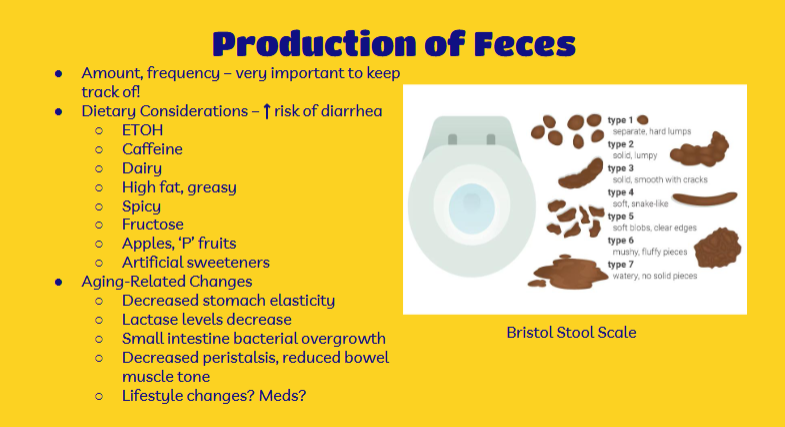
When keeping track of the production of feces, what two things should you most importantly keep track of?
Amount, frequency
Why are IV fluids (and not oral) administered when intervening for diarrhea?
Because IV fluids provide direct hydration, whereas if this was intervened orally, it will go through the GI tract anyway.

Certain dietary considerations can increase the risk of diarrhea. Are apples one of them?
Yes

Certain dietary considerations can increase the risk of diarrhea. Are P fruits one of them?
Yes

Certain dietary considerations can increase the risk of diarrhea. Are artificial sweeteners and sucrose one of them?
Artificial sweeteners yes, but NOT sucrose — fructose can increase the risk of diarrhea

Certain dietary considerations can increase the risk of diarrhea. Are spicy foods one of them?
Yes

Certain dietary considerations can increase the risk of diarrhea. Is caffeine one of them?
Yes

Certain dietary considerations can increase the risk of diarrhea. Are high fat, greasy foods one of them?
Yes
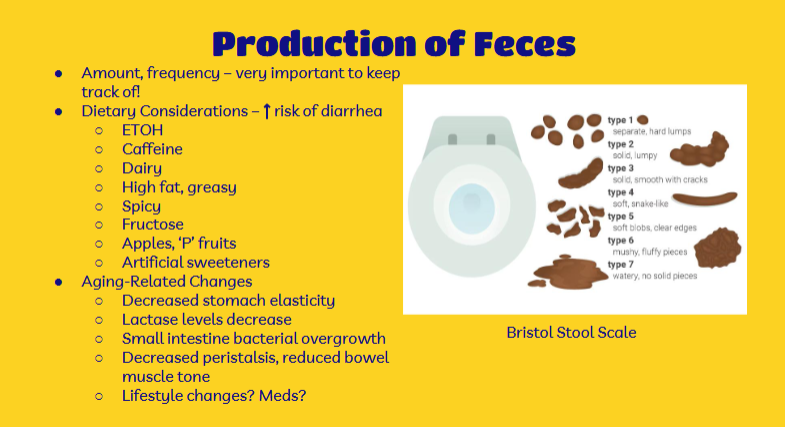
Certain dietary considerations can increase the risk of diarrhea. Is ETOH one of them?
Yes

Chris just chugged a whole gallon of milk. Is he more at risk for constipation or diarrhea?
Diarrhea

T/F: Older people have decreased stomach elasticity, affecting their production of feces.
T

T/F: Older people have increased lactase levels, which affect their production of feces.
F, older people have decreased lactase levels.
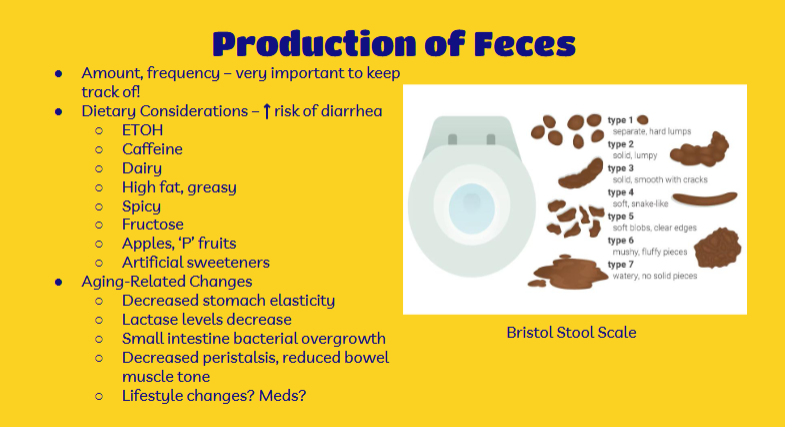
T/F: Older people have decreased peristalsis and reduced bowel muscle tone, affecting their production of feces.
T

T/F: Older people tend to have bacterial overgrowth in their large intestine, affecting their production of feces.
F, this is true for the small intestine, but not the large intestine.
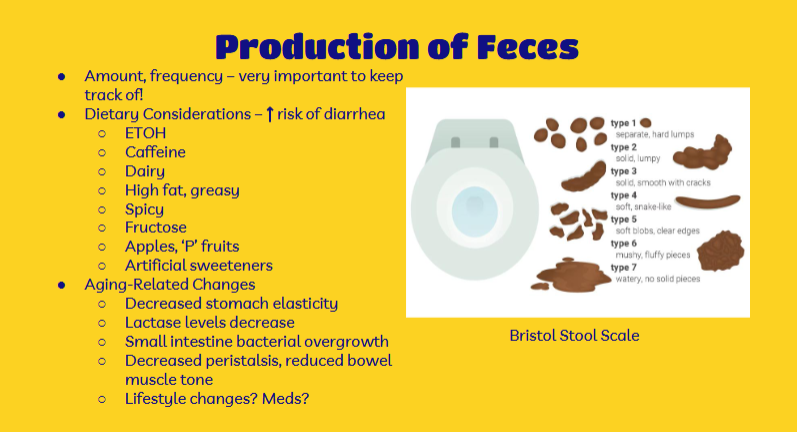
T/F: Older people may have lifestyle changes, including changes in medications, that affect their production of feces.
T

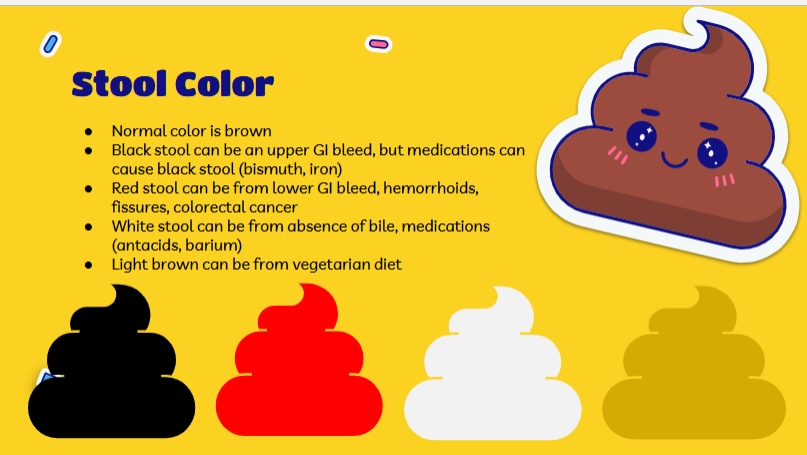
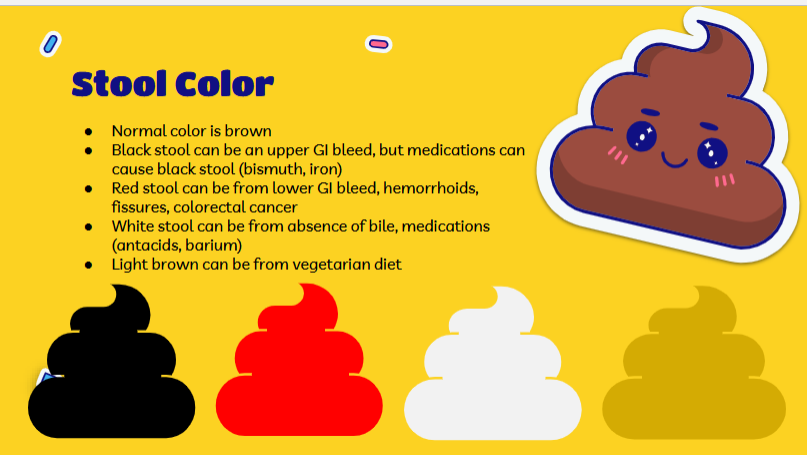
What is normal stool color?
Brown

Your patient poops and it’s black. What could this mean?
It could be an upper GI bleed, but medications like bismuth and iron can also cause black stool

Your patient poops and it comes out red. What could this mean?
It could be a lower GI bleed, hemorhhoids, fissures, or colerectal cancer.
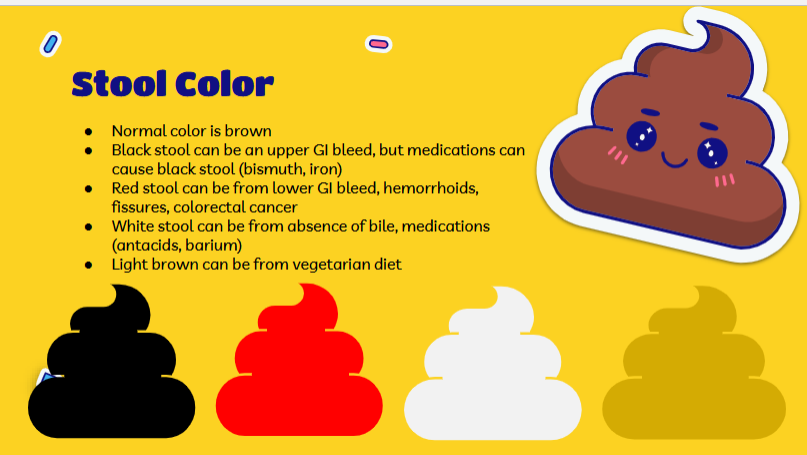
Your patient poops and it comes out white. What could this mean?
It may be the absence of bile or certain medications such as antacids and barium.

Your patient poops and it comes out light brown. What could this mean?
A vegetarian diet

Your patient, Rianna, is on a vegetarian diet. What color would you expect their poop to be?
Light brown
Your patient is experiencing an upper GI bleed. What color would you expect their poop to be?
Upper GI bleeds can result in black stool
Your patient is taking bismuth and iron. What color would you expect their poop to be?
Black

Your patient is experiencing a lower GI bleed. What color would you expect their poop to be?
Red

Your patient is admitted due to a severe hemorrhoid. What color would you expect their poop to be?
Red

Your patient is taking antacids and barium. What color would you expect their poop to be?
White

Your patient has colorectal cancer. What color would you expect their poop to be?
Red

Your patient has low bile levels. What color would you expect their poop to be?
White

Your patient is not drinking enough fluid or fiber. What are they at risk for?
Constipation

Your patient is on opioids, calcium channel blockers, and anesthesia. What are they at risk for?
Constipation

Your patient is on anti-cholinergics and an iron supplement. What are they at risk for?
Constipation
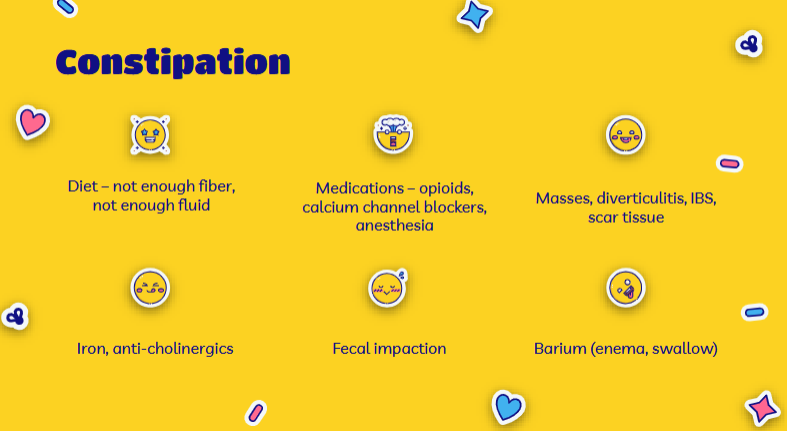
Your patient is experiencing fecal impaction. What are they at risk for?
Constipation
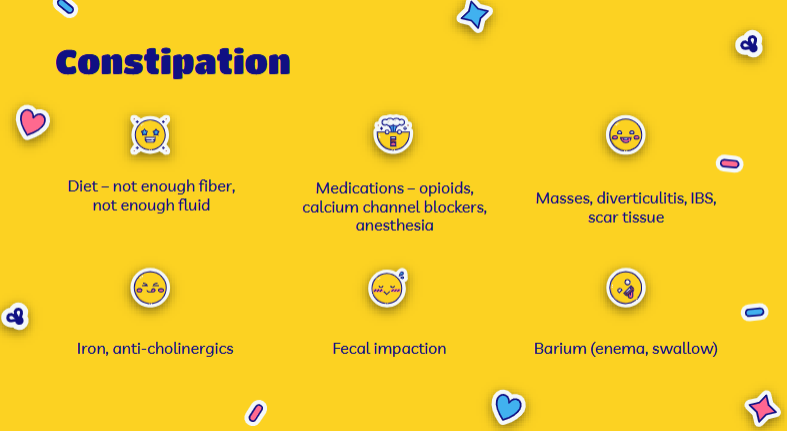
A barium swallow (upper GI series) and a barium enema (lower GI series) are two different X-ray imaging procedures (fluoroscopy) that use a chalky contrast liquid called barium sulfate to view the digestive tract. Your patient has just had this done — what are they at risk for?
Constipation

Your client is suffering from constipation. What are teaching points you can give your patient?
Take small, frequent meals
Eat a high-fiber, low-fat diet
Get adequate fluid intake
Exercise
Discourage regular laxative use (not too much now)
Daily routine
Evaluate their medications
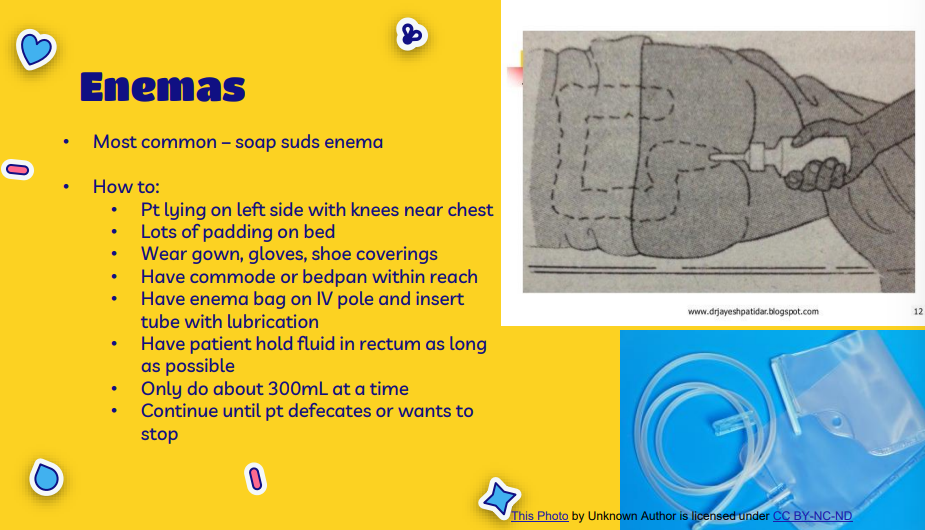
What is an enema?
An enema is a medical or therapeutic procedure that injects fluid directly into the rectum and lower intestine through the anus.

An ____ is a medical or therapeutic procedure that injects fluid directly into the rectum and lower intestine through the anus.
enema
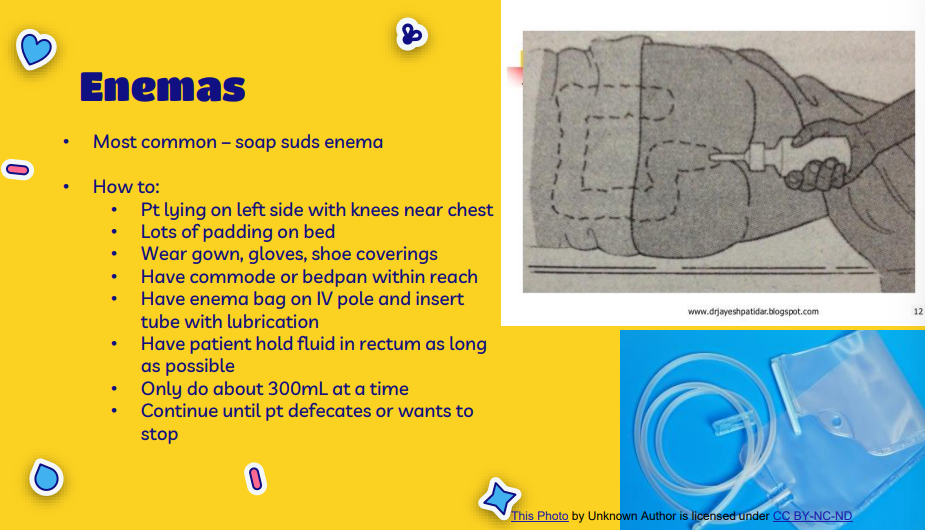
What is the most common type of enema?
Soap Suds enema

How do you perform an enema?
Have the pt lay on their left side with knees near their chest
Provide lots of padding on the bed
Wear gown, gloves, shoe coverings
Have commode or bedpan within reach
Have enema bag on IV pole and insert tube with lubrication
Have patient hold fluid in rectum as long as possible
Continue until pt defecates or wants to stop

You should only do ____ mL at a time when performing an enema.
300 mL

What is the point of an enema?
An enema is the injection of liquid into the rectum and lower intestine to clear or treat the lower bowel.
Constipation Relief
Looses fecal impaction
Prep for medical procedure

What are potential causes of diarrhea?
Antibiotics, magnesium
Stress
Infection
Hyperthyroidism
Laxative Abuse
Colon disease
Radiation

Hyperthyroidism can lead to (constipation/diarrhea).
Diarrhea

Suggesting probiotics, like yogurt, cheese, soymilk, kefir, tempeh, and miso, is a great intervention for (constipation/diarrhea).
Diarrhea
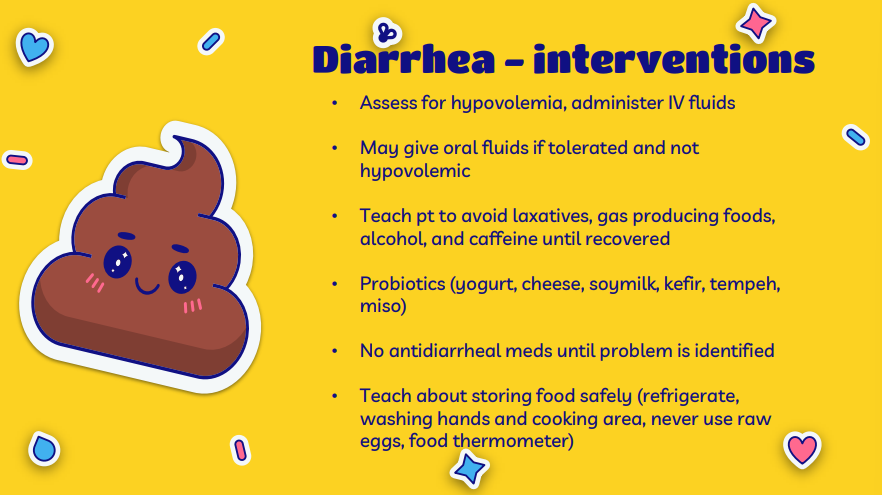
As an intervention for diarrhea, you can give oral fluids if the patient tolerates them and the patient is not (hypervolemic/hypovolemic).
hypovolemic
T/F: You should NOT give a diarrhea patient antidiarrheal meds until the problem is identified.
T

What is urge incontinence?
Urge incontinence is the sudden, intense, and uncontrollable need to urinate that frequently leads to involuntary urine leakage before you can reach a toilet.

What is passive incontinence?
Passive incontinence—also known as passive fecal or bowel incontinence—is the involuntary leakage of stool or gas without the person being aware that it is happening beforehand.

Your patient is attempting to reach the bathroom but they wet themselves in the process. What kind of incontinence is being described?
Urge incontinence

Your patient urinates themself in bed and was unaware they were urinating. What kind of incontinence is being described?
Passive incontinence
What is the most important nursing intervention when patients demonstrate incontinence?
Skin Care

What is a rectal tube?
A rectal tube is a soft, flexible medical device inserted into the rectum by a healthcare provider to relieve gas, drain liquid stool, reduce bowel pressure, or protect surgical sites.
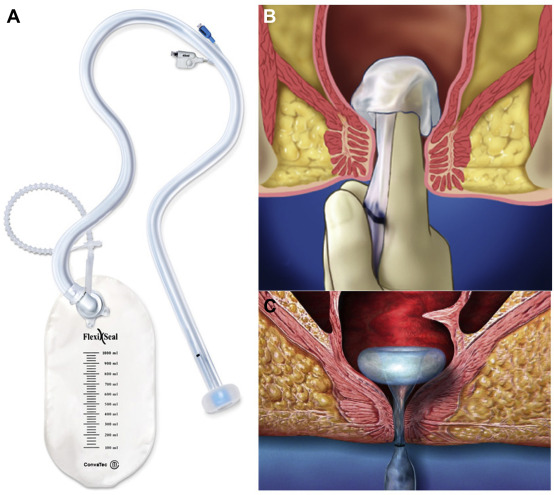
What is the device used to drain liquid stool, relieve gas, reduce bowel pressure, and/or protect surgical sites?
Rectal tube

What kind of program/training is important for patients with a CNS injury/denervation to the defecation reflex center?
Bowel Training/Bowel Program

What is a bowel training/program?
Bowel training (or bowel retraining) is a behavioral and physical program designed to help you establish a regular, predictable schedule for bowel movements and manage conditions like chronic constipation or fecal incontinence.
Important for pts with CNS injury/denervation to the defecation reflex center
Helps with physical and psychosocial
Can include the use of meds, diet, rectal stimulation.

What type of cancer is on the rise in younger age groups?
Colorectal cancer
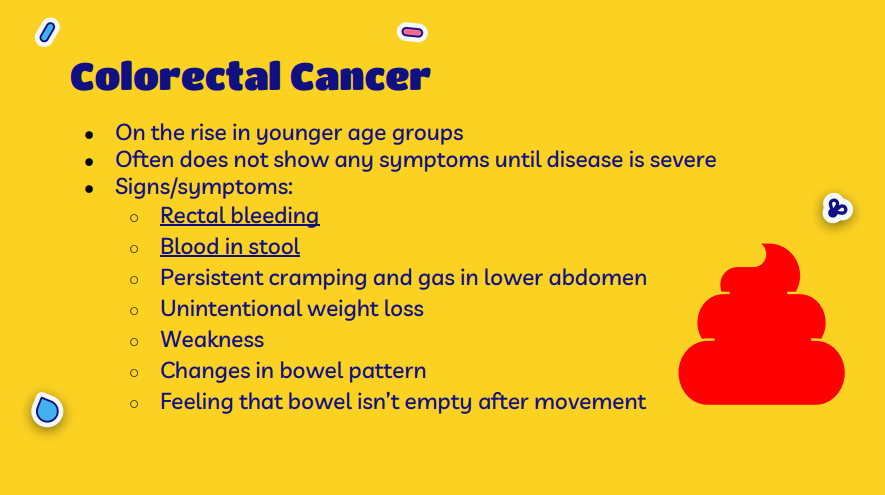
T/F: Symptoms of colorectal cancer are easily distinguishable when caught early enough.
F, colorectal cancer does not show any symptoms until the disease is severe.
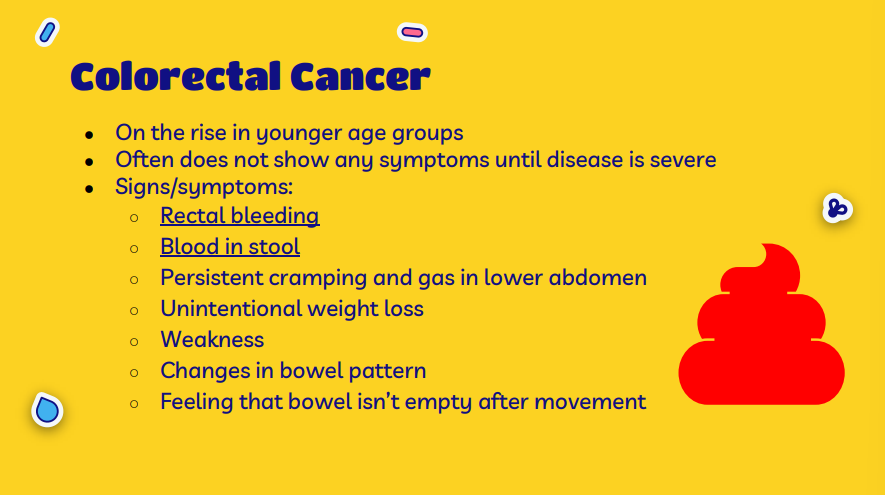
What are the S/S of colerectal cancer?
Rectal bleeding
Blood in stool
Persistent cramping and gas in the lower abdomen
Unintentional weight loss
Weakness
Changes in bowel pattern
Feeling that the bowel isn’t empty after movement
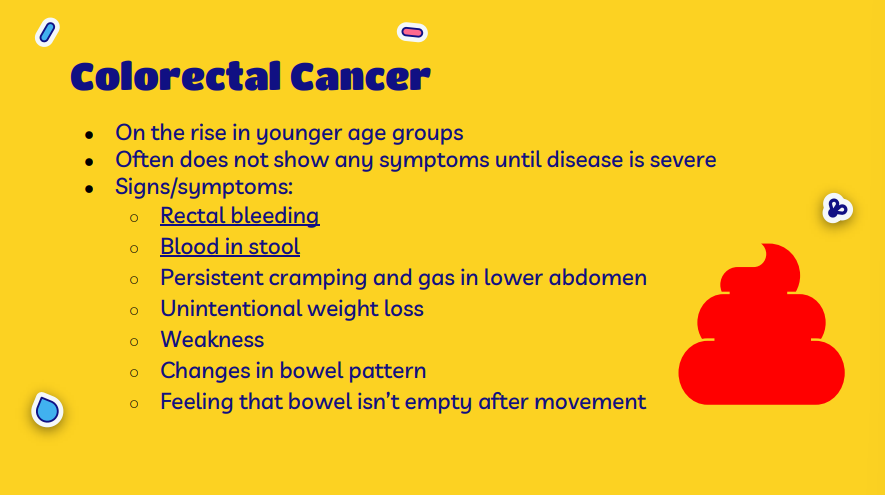
A patient shows to the ER with rectal bleeding. There is blood in the stool. What is this a sign of?
Colorectal cancer.

What is a guaiac?
The Stool guaiac test, or guaiac fecal occult blood test (gFOBT), is a medical screening tool used to detect hidden (occult) blood in stool samples.

Which test is a medical screening tool used to detect hidden (occult) blood in stool samples?
Guaiac

What is the purpose of a stool culture?
A stool culture is a laboratory test used to detect and identify disease-causing (pathogenic) bacteria in the lower digestive tract.
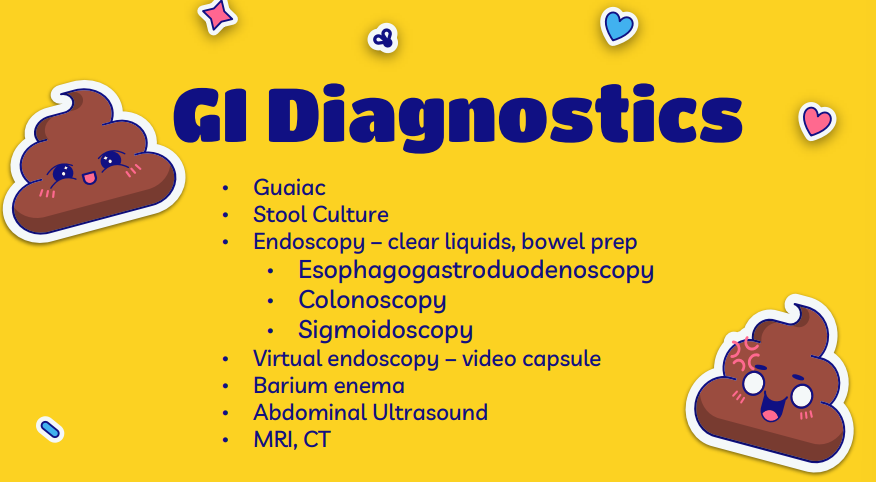
What is an endoscopy?
An endoscopy is a nonsurgical medical procedure that uses a thin, flexible tube equipped with a light and a video camera—called an endoscope—to view the inside of your body.
An _____ is a nonsurgical medical procedure that uses a thin, flexible tube equipped with a light and a video camera to view the inside of your body.
endoscopy

What are the different types of endoscopies?
Esophagogastroduodenoscopy (Upper endoscopy): a 5-to-20-minute medical procedure that uses a flexible, lighted scope with a camera to examine the lining of the esophagus, stomach, and the first part of the small intestine (duodenum)
Colonoscopy: a medical procedure where a doctor uses a long, flexible, lighted tube with a camera (colonoscope) to examine the entire lining of your large intestine and rectum.
Sigmoidscopy: a diagnostic medical procedure that uses a lighted tube to examine the rectum and the lower part of the large intestine (the sigmoid colon).
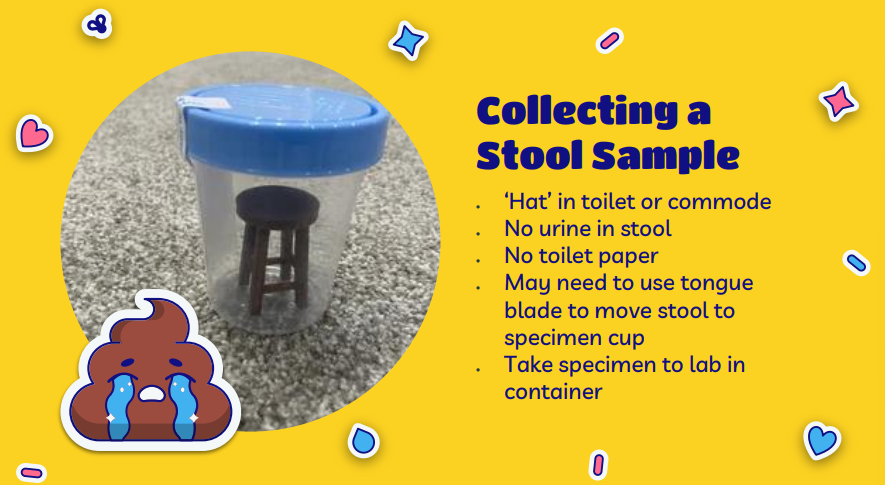
T/F: When collecting a stool sample, there should be urine in the stool.
F
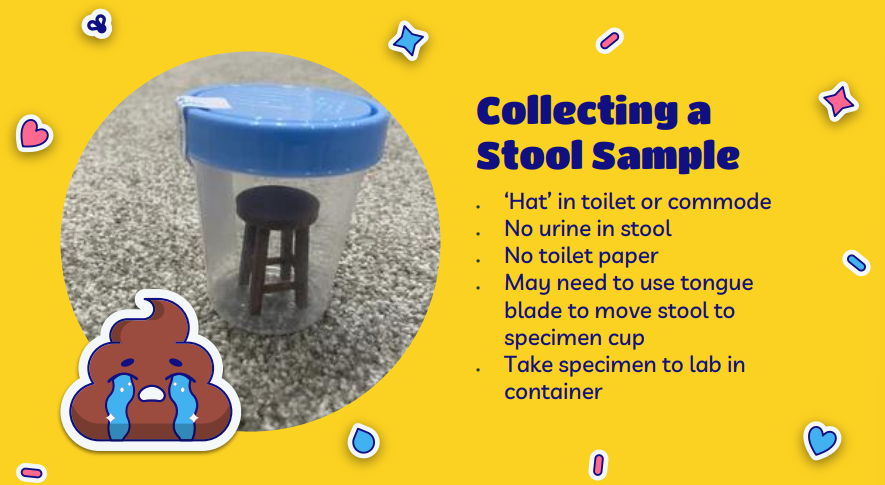
T/F: When collecting a stool sample, toilet paper is not allowed in the sample.
T

T/F: You may need to use a tongue blade to move stool to a specimen cup.
T

What is this
A "hat" (also called a nurse’s hat, nun’s cap, or fireman’s hat) in a toilet or commode is a disposable plastic collection pan used to gather urine, stool, or kidney stones for medical testing.

What is an ostomy?
An ostomy is a surgical operation that creates an opening called a stoma on the abdomen to allow bodily waste (stool or urine) to leave the body when the normal path is damaged, diseased, or needs time to heal.
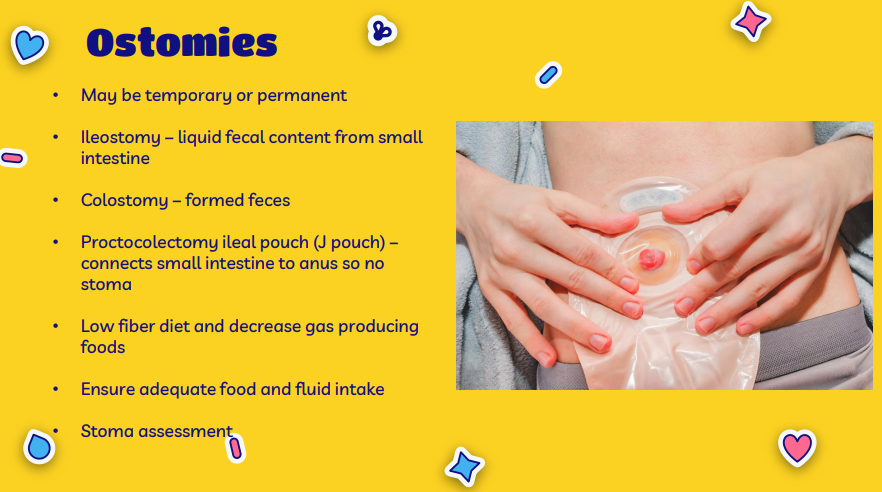
An ____ is a surgical operation that creates an opening called a stoma on the abdomen to allow bodily waste (stool or urine) to leave the body when the normal path is damaged, diseased, or needs time to heal.
ostomy

What are the different types of ostomy’s that can be performed and what do they do?
Colostomy: A section of the large intestine (colon) is brought through the abdominal wall to create a stoma, redirecting stool out of the body.
Ileostomy: The lowest part of the small intestine (the ileum) is brought through the abdominal wall to form a stoma, completely bypassing or removing the large intestine (colon).
Urostomy: It creates a new path for urine to leave the body when the bladder is diseased, damaged, or removed. Surgeons usually use a small piece of the intestine (an ileal conduit) to connect the ureters (tubes from the kidneys) to the abdominal stoma.