mammals of the world 5; subclade euungulata: orders perissodactyla & artiodactyla
 Call Kai
 Learn
Learn Practice Test
 Spaced Repetition
 Match
Match Flashcards
 Knowt Play
1/24

There's no tags or description
Looks like no tags are added yet.
Name | Mastery | Learn | Test | Matching | Spaced | Call with Kai | Chat |
|---|
No analytics yet
Send a link to your students to track their progress
25 Terms
order perissodactyla characteristics
foot posture unguligrade, foot structure mesaxonic (axis of symmetry passes through middle 3rd digit), alisphenoid canal (AC) present

subclade euungulata
order perissodactyla
family tapiridae - tapirs
snout modified into movable proboscis; nasals heart-shaped; projecting over nasal opening; cheek teeth bilophodont
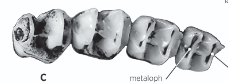
bilophodont - cusps joined into low ridges called lophs

subclade euungulata
order perissodactyla
family rhinocerotidae - rhinos
only non-artiodactyl with hood ornament (hair horn made of keratin), nasals large and thick (rugose), cheekteeth with simple π-shaped lophodonty (lophodont teeth)
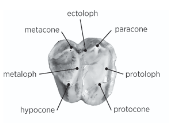
lophodont

subclade euungulata
order perissodactyla
family equidae - horses, zebras, donkeys
only one distinct digit, nasal bones long and narrow projecting over nasal opening, cheekteeth selenolophodont, postorbital bar present, upper incisors present (compare to Camelidae and Ruminantia)
order artiodactyla/cetartiodactyla
foot posture digitigrade or unguligrade or missing, paraxonic feet if present (axis of symmetry passes between 3rd and 4th digits, even-toed ungulates), alisphenoid canal absent
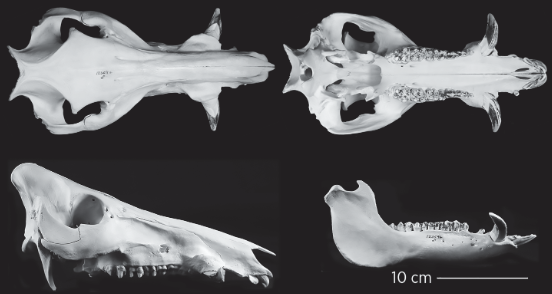
order artiodactyla
suborder suina
family suidae - hogs & pigs
upper canines larger than lower canines and oriented upwards and outwards, paraoccipital processes elongate

order artiodactyla
suborder suina
family tayassuidae - peccaries
upper canines the same size as lower canines and directed downward, paraoccipital process small

order artiodactyla
suborder whippomorpha
family hippopotamidae- hippos
canines and incisors large, tusklike and directed anteriorly
clade cetacea characteristics
telescoped skull (nares have migrated to the top of the head)
subclade mysticeti characteristics
the baleen whales - no teeth, baleen present, skull profile is convex, no echolocation, lower jaw robust (compare to thin lower jaw in Odontoceti)

clade cetacea
subclade mysticeti
order artiodactyla/cetartiodactyla
family balaenidae - right whales, bowhead whales
no dorsal fin, baleen long and thin with a sharply arched rostrum, no grooves on throat, feed by swimming with mouth open (skimmers)

clade cetacea
subclade mysticeti
order artiodactyla/cetartiodactyla
family balaenopteridae - blue whales, humpbacks, gray whales
very small dorsal fin, baleen short and broad with a mainly straight rostrum, throat grooves present to feed by inflating their throat and gulping their prey (gulpers)
subclade odontoceti (toothed whales) characteristics
homodont teeth present, no baleen, skull profile concave, with depression occupied by a fatty organ (“melon”) used in echolocations, thin lowr jaw (“pan bone”); use echolocation

clade cetacea
subclade odontoceti
order artiodactyla/cetartiodactyla
family delphinidae - dolphins
no boss on premaxilla, simple conical cheek teeth, dorsal fin usually present: falcate or pointed

clade cetacea
subclade odontoceti
order artiodactyla/cetartiodactyla
family phocoenidae - porpoises
premaxilla with boss or swelling anterior to nasal opening, teeth usually spade-like, dorsal fin usually present: triangular

clade cetacea
subclade odontoceti
order artiodactyla/cetartiodactyla
family physeteridae - sperm whales
no boss on premaxilla, strongly symmetrical skull, snout very large, broad, blunt, teeth simple and conical but no upper cheek teeth present, dorsal fin present; sickle-shaped (Kogia) or reduced (Physeter), symphysis of lower jaw long
suborder tylopoda characteristics
foot posture digitigrade (all other living artiodactyls are unguiligrade), reduction or loss of upper incisors, molars selenodont
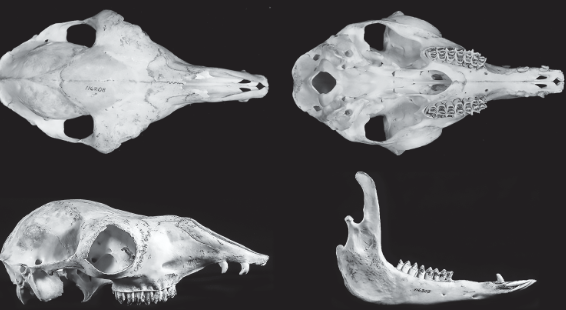
order artiodactyla
suborder tylopoda
family camelidae - camels, llamas, alpacas
post orbital bar present, upper canines present (compared to most Ruminantia)
suborder ruminantia characteristics
foot posture unguligrade, loss of uppper incisors, molars selenodont

order artiodactyla
suborder ruminiantia
family antilocapridae - pronghorns
pronghorns (boney core covered by a keratinized sheath that can be forked, shed annually), lacrimal depression absent, nasal and lacrimal bones separated by large opening (nasolacrimal gap), two lacrimal foramina/canals on the side of the orbit

order artiodactyla
suborder ruminiantia
family cervidae - deer, elk
antlers present on pedicels (boney core sheathed in velvet while growing that is usually complexly branched, shed usually annually [velvet & antlers shed separately]), lacrimal depression present, nasolacrimal gap present, two lacrimal foramina/canals at the front edge of or outside the orbi
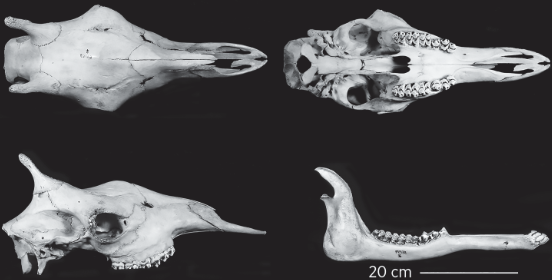
order artiodactyla
suborder ruminantia
family giraffidae - giraffes
ossicones (composed of dermally derived bones located over the frontal and parietal sutures), no lacrimal depression, nasolacrimal gap present, one lacrimal foramen inside orbit

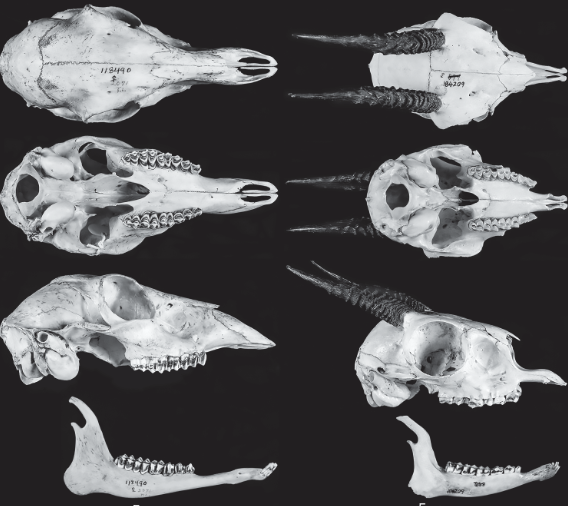
order artiodactyla
suborder ruminiantia
family bovidae - cattle, goats, sheep
true horn (projecting from frontal bones, permanent and unbranched covered in a hardened keratin sheath), lacrimal depression present or absent, nasolacrimal gap present or absent, single (rarely two) lacrimal foramen/canals present usually on inside orbital rim