Intro Chapter 5 Test
 Call Kai
 Learn
 Practice Test
 Spaced Repetition
 Match
 Flashcards
 Knowt Play
1/42

There's no tags or description
Looks like no tags are added yet.
43 Terms
_______ is when part of the body, such as the arm, is moved away from the midline of the body.
abduction
__________ is when part of the body, such as the arm, is moved toward the midline of the body.
adduction
________ is the ability to use the right or left arm to manipulate the transducer during scanning while the other arm is used for keyboarding.
Ambidextrous Scanning
______ is a closed, fluid-filled sac that contains synovial fluid.
bursa
_________ is a repetitive strain disorder characterized by the median nerve becoming compressed or aggravated within the carpal tunnel of the wrist.
Carpal tunnel syndrome
__________ is a repetitive strain disorder characterized by the ulnar nerve becoming compressed or aggravated within the cubital tunnel of the elbow.
Cubital Tunnel Syndrome
_________ is a repetitive motion injury that is characterized by tenosynovitis of the thumb side of the wrist.
deQuervian disease
______ are the processes used to improve a worker’s comfort, safety, and productivity.
Ergonomic Interventions
_________ is the scientific study of creating tools and equipment that help the human body adapt to the work environment.
Ergonomics
______ relates to how much pressure is applied by one object (transducer) to the surface of another object (the patient)
force
______ is the involuntarily contraction of a muscle
Muscle Spasm
______ is another name for a pinched nerve
Nerve Entrapment
________ is a physical injury acquired carrying out one’s job duties.
Occupational Injuries
_______ are the medical instruments used to promote the use of proper body mechanics by aligning, immobilizing, or supporting parts of the musculoskeletal system.
Orthotic Devices
___________ is a technique that ensures that the spine is in appropriate alignment for virtually any position required to function in one’s daily tasks, such as moving, sitting, standing, and lifting.
proper body mechanics
_________ is maintained muscle work over a long period of time, which is thought to result in the gradual damage to muscles due to abnormal contraction and consequent buildup of fibrous tissue within the muscles.
Static Muscle Loading
___________ is a nerve entrapment disorder that results in the inflammation or irritation of the tibial nerve located within the tarsal tunnel in the foot.
Tarsal Tunnel Syndrome
_______ is the inflammation of a tendon
tendinitis
________ is the compression of the nerves and blood vessels of the neck and shoulder due to repetitive strain
Thoracic Outlet Syndrome
_________ are occupationally acquired or occupationally aggravated injuries to an individuals muscles, tendons, ligaments, or cartilage that result from repetitive use
Work-Related Musculoskeletal Disorders
What percent of clinical sonographers have experienced symptoms of work-related musculoskeletal disorders?
90%
What percent of sonographers experienced career ending injuries
20%
Most common areas of work-related injuries for sonographers
Shoulders = 84%
Neck = 83%
Wrist = 61%
Back = 58%
Hands = 56%
Body Mechanics
center of gravity at the pelvis
spine is properly aligned

Risk Factors for Developing WRMSD’s
Posture and body positioning
Repetitive motions and force
Room and equipment design
Job design
Other threatening physical predisposing factors
Risks specific to some specialties
Abduction of the arm
arm moved away from the midline of the body
overreaching beyond 30 cm for a prolonged period of time can result in muscle fatigue and possible injury

Adduction of the Arm
moving the arm closer to the midline

WRMSDs Preventative Pre-Examination Steps
Obtain all necessary equipment for the exam (gel, towels, and positioning devices)
choose a comfortable chair that provides good lumbar and foot support and that can swivel
Position the ultrasound machine where it is directly in front of you, with your eyes even with the top of the monitor. Make sure that the keyboard is in a place that prevents overstretching of your nonscanning arm.
Raise the examination table to prevent excessive leaning, reaching, and bending.
Position the patient as close to you as possible to reduce arm abduction and abnormal posturing of the wrist.
Place a support cushion under your scanning arm if needed. Occasionally, you can rest your scanning arm on the patient with permission.
Make appropriate changes to accommodate for good posture throughout the examination when the patients position must change
The pressure applied with the transducer in combination with sustaining a static posture can lead to
static muscle loading
The majority of exams are given from the
left side of the bed with the use of the sonographers right arm
Varying room design accommodates
ambidextrous scanning and prevents repetitive injury
Equipment Design
machines lighter
transducers lighter
adjustable monitor
adjustable keyboard
adjustable console height
lightweight compared to older models
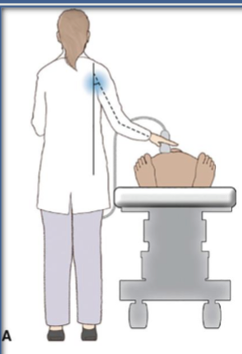
what is this
neutral standing scanning posture with abduction of scanning arm limited to 30 degrees

what is this
Neutral standing scanning posture with nonscanning arm close to the body with 90-degree elbow flexion.

what is this
Neutral seated scanning posture with abduction of scanning arm limited to 30 degrees

what is this
Neutral seated scanning posture with nonscanning arm close to the body with 90 degree blow flexion
Underlying Predisposing Conditions
previous trauma
diabetes
chronic fatigue
obesity
smoking
excessive alcohol consumption
rheumatoid arthritis
Lyme disease
conditions associated with excessive fluid retention
having an unhealthy lifestyle
Tenosynovitis
inflammation of the sheath around a tendon
Epicondylitis
inflammation of the periosteum in the area of insertion of the biceps tendon on the distal humerus
Bursitis
inflammation of the bursa within a joint
Pinched Nerve
disorder that results from compression, abnormal stretching, or constriction of a nerve or group of nerves
Common Locations for Pinched Nerves
elbow, wrist, and neck
What is the best treatment for WRMSDs
prevention
ergonomics intervention
conditioning and stretching exercises