Chem 51 LC Week 4 Quiz
 Call Kai
 Learn
 Practice Test
 Spaced Repetition
 Match
 Flashcards
 Knowt Play
1/13

There's no tags or description
Looks like no tags are added yet.
14 Terms

What is this & what rank would it be in electrophilic strength?
Carboxylate anion, dead last, not strong at all
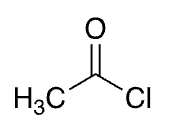
What is this & what rank would it be in electrophilic strength?
Acid Chloride, 1st, is the strongest

What is this & what rank would it be in electrophilic strength?
Carboxylic acid, would be 4th

What is this & what rank would it be in electrophilic strength?
Amide, 5th place before carboxylate anion

What is this & what rank would it be in electrophilic strength?
Anhydride, 2nd strongest

What is this & what rank would it be in electrophilic strength?
Ketone, would the 3rd, (IF THERE’S AN ALDEHYDE (one R group is an H), THEN IT COMES BEFORE THE KETONE
Type 1 Carbonyls
Acyl group is attached to a group that DOESN’T have any lone pairs & can’t act as a leaving group
Type 2 Carbonyls
Acyl group is attached to a group that DOES have a lone pair, and is a good leaving group or can be made into a good leaving group
How does a type 1 carbonyl get attacked?
at the carbonyl compound

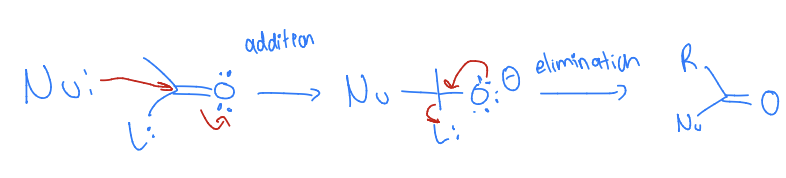
How does a type 2 carbonyl get attacked?
it attacks at the carbonyl & then does an elimination reaction where the product with the lone pair gets replaced by the nucleophile


MeMgBr 2. H2O
PBr3, pyridine
Mg, ether
CO2
HCl


PCC
PhMgBr & H2O
PCC
EtMgBr & H2O
