S/H sci ~ exam 3
 Call Kai
 Learn
 Practice Test
 Spaced Repetition
 Match
 Flashcards
 Knowt Play
1/163

There's no tags or description
Looks like no tags are added yet.
164 Terms
phonemes
smallest unit of sound
vowel
vocal sound produced by relatively free passage of an airstream through the larynx and oral cavity
Vowels form the _____ of the syllable
nucleus
Consonant
a speech sound produced with one or more narrowed or constricted areas of the vocal tract
Acoustic theory of speech production is also known as:
source filter theory
What are the 2 major components of speech production in source-filter theory?
the sound source
the filter or resonator
The sound source
the sound pressure wave generated by vibrating VF which is rich in harmonic structure
The filter or resonator
selects portions of the harmonic frequencies to be radiated out of the mouth
The vocal tract is an _____ resonator
acoustic
Frequency-dependent
the way the vocal tract resonates the sound source is dependent on the frequency components of that source
Formants
the frequencies that have been selected by the vocal tract to radiate at a greater amplitude
Equation for source-filter theory:
P(f)= U(f) x T(f) x R(f)
Acoustic characteristics of the source
complex periodic waveforms contain a F0 and an infinite number of harmonics (integer multiples of F0)
As harmonic frequencies _____, each harmonic ____ in amplitude
increases, decreases
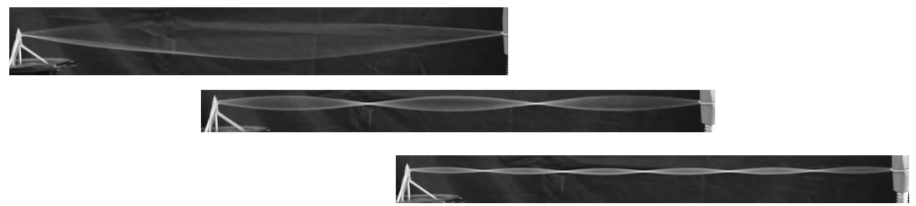
Spectral roll-off
amplitude decreases at a rate that is proportional to the inverse square of the harmonic number
The ____ the cutoff of airflow, the ____ the excitation of air in the vocal tract
faster, greater
Vocal ____ determine frequency
folds
Vocal ____ determines what is amplified
tract
Formants shape our…
perception of vowels
Vocal tract transfer function
the length of the vocal tract defines its resonance characteristics (aka transfer function)

Tube will resonate best at a frequency….
4x the length of the tube
Determining formants includes
wavelength
frequency
velocity of sound
Determining formants equation:
34,000 / 4L = F1
The vocal tract will only resonate _____ multiples of the ____ frequency
odd-numbered, lowest
Why do women and children have higher formant frequencies?
shorter vocal tract
How do you lengthen your vocal tract?
protruding/rounding lips or lowering larynx in pharynx
How do you shorten your vocal tract?
retracting lips or raising larynx in pharynx
Acoustic waves are altered when they hit a _____
boundary (lips)
Acoustic characteristics of Lip radiation
the radiation characteristics at the lips favor high frequency components of a sound
-going from the vocal tract (resonator) to the atmosphere is a boundary
Standing wave
result of constructive and destructive interference of an incident wave and reflected wave
Air particles vibrate most effectively at the ____ of the tube and least effectively at the ______ of the tube
open end
closed end

How does this relate to speaking
Glottis = node (minimum velocity)
Lips = antinode (maximum velocity)
F1 has a wavelength of 4x the length of the vocal tract and contains one node (glottis) and one antinode (lips)
• The longer the vocal tract, the lower the formant frequency
There must be some minor ____ to produce different vowel sounds
constriction
Constriction is influenced by:
movement of jaw, tongue, lips, and (lesser extent) pharyngeal wall
2 elements that influence formant frequencies
length of vocal tract
cross section of vocal tract
Constriction (perturbation) at or near ANTINODE causes:
max volume velocity, min pressure ~ lowers formant frequency
Constriction (perturbation) at or near NODE causes:
min volume velocity, max pressure ~ raises formant frequency
First formant frequency (F1)
Lowered by constriction in the oral cavity near the point of maximum volume velocity
• Raised by constriction in the lower pharynx (just above glottis) which can be achieved by lowering mandible
Second Formant (F2)
Most influence by the shape of the posterior portion of the tongue
Lowered by constriction of the lips or at the back of the oral cavity (/u/)
• Raised by constriction in the anterior oral cavity (/i/)
Third Formant Frequency (F3)
Most influenced by position of the tongue tip
Lowered by constriction at the lips and in the middle of the mouth
• Raised by constriction in the oropharynx and by constriction in the anterior mouth

What can we conclude about this chart?
each vowel has its own type of formant frequencies
How are vowels classified?
tongue height ~ high, mid, low
tongue advancement ~ front/back
lip rounding ~ rounded/unrounded
Vowel quality
vowels are more difficult to differentiate than consonants
our auditory perception of vowel quality is driven by the relationship between the formant frequencies
Acoustic representation of vowel quality
the frequency of F1 has an inverse relationship with vowel height
As the vowel becomes lower/more open, F1….
increases
As vowels move from back to front, F2….
increases but not consistently
For Front Vowels ~ F1 & F2 are spaced _____and F3 is located ___
far apart
closer together
For Back Vowels ~ F1 & F2 are spaced _____and F3 is located ___
closer together
farther apart
Movements of the tongue affect the
pharynx
& create distinct resonating cavities
Resonating cavities in back of the vocal tract are crucial for
front vowels
Resonating cavities in front of the vocal tract are crucial for
back vowels
Natural resonating frequencies are determined by
volume of air being resonated
Smaller resonating space creates
higher frequency, higher formant frequency
Larger resonating space creates
lower frequency, lower formant frequencies
F1 is raised by
constricting lower pharynx and opening jaw
F1 is lowered by
constricting front of oral cavity
F2 raised by
constricting front of oral cavity
F2 is lowered by
constricting back of oral cavity or lips
What is the set quantity for each formant
there isnt one
it is the relative relationship between formants
Average values for each vowel can be referred to as
individual vowel space
vowel space: the set of F1-F2 points that specify the vowel
Diphthongs
articulatory posture shifts smoothly from first vowel (on-glide) to second vowel (off-glide)

Each diphthong has a characteristic ______
F1-F2 pattern
F2 experiences the change in frequency
Intrinsic pitch of vowels
each vowel has an intrinsic pitch
Tongue moves up for high vowel → hyoid is pulled up → may exert force on laryngeal cartilages that results in VF elongation (increased pitch)
Dialect influences on vowels
each language has its own vowels ~ english 14-15
dialects are dynamic and ever-changing
Energy loss
lost subglottally
absorbed by the mucosa of the vocal tract
decreased by frictional force
Acoustic filters
selectively pass certain frequency components of a complex wave
some are boosted some are suppressed
Low-pass filters block ____ components of a sound wave and allow ______ to pass
high frequency
low frequency
High-pass filters block ____ components of a sound wave and allow ______ to pass
low frequency
high frequency
Frequency cutoff
established point where frequencies below (for high-pass filters) or above (for low-pass filters) that point will be damped and not allowed to pass
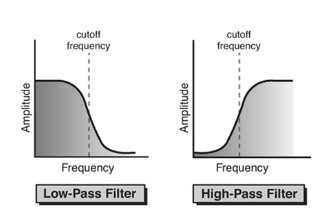
Filters can have both _____ cutoff and ____ cutoff
low-pass, high-pass

Formants act as _____ filters
bandpass
Bandwidth
range of frequencies between the low and high pass cutoff frequencies
the range that are allowed to pass through
Resonance curve
frequencies will have varying levels of amplitude
Source =
Filter =
harmonic frequencies
formant frequencies
Sound spectrograms
graphic representation of the frequency component energies of a speech signal as a function of time
Spectrograms can display info about the _____ OR the ____ but not both at the same time
sound source
filter function
Narrow bandwidth
good frequency resolution, poor time resolution
*info about sound source
Wide bandwidth
poor frequency resolution, good time resolution
*info about filter function
Vertical lines on spectrograms represent
cycles of glottal opening and closing
Raising F0 _____ change the vowel
doesn’t
Waviness of the harmonic lines indicates
slight jitter
Percentage of jitter _____ but results in wider variability as the ____ increase
stays the same
harmonics
Long-term average spectrum
avg of spectral energy over a set amount of time during sustained vowel phonation
shows consistent features that present over sustained sound
Harmonics-to-noise- ratio
numerical evaluation of the ratio of noise with no repeating sound energy in the speech signal

Cepstral Measures
doesn’t rely on individual vibration cycles
used on continuous speech
shows F0 and harmonics standing out from the background noise
Inverse filtering
way to measure glottal volume velocity
involves capturing airflow via facial mask and using meth equations
Vocal tract imaging
gain info about: articulation dynamics, formant frequncies, and perceptual acoustic vowel space
Forms of vocal tract imaging
X-ray
Computer tomography (CT)
Magnetic resonance imaging (MRI)
Ultrasound
Downstream
constriction closer to the mouth
Upstream
constriction closer to the VF
3 types of consonants
voiced
turbulent airflow (unvoiced)
combination of the two
3 sources of speech sounds
nearly periodic complex waves
continuous aperiodic waves
transient aperiodic waves
Nearly periodic complex waves
vibration of VF
ex: vowels
Continuous aperiodic waves
airflow through open glottis (unvoiced)
continuous noise generated by turbulence
ex: /f/, /s/
Transient aperiodic waves
rapid pressure changes in supraglottal
buildup of pressure in mouth rather than airflow
ex: /p/ /k/
Coarticulation
sound is influenced by another sound that precedes or follows it
Anticipatory coarticulation
phoneme is affected by a phoneme that occurs AFTER it
Retentive coarticulation
phoneme is affected by a phoneme that occurs BEFORE it
Place of articulation
where the sound is being made
Manner of articulation
degree of constriction and its effect on air flow
transient complete: airflow stopped momentarily
continuant: constriction isnt complete, air flows around it