Digestive system
 Call Kai
 Learn
Learn Practice Test
 Spaced Repetition
 Match
Match Flashcards
 Knowt Play
1/129

There's no tags or description
Looks like no tags are added yet.
Name | Mastery | Learn | Test | Matching | Spaced | Call with Kai | Chat |
|---|
No analytics yet
Send a link to your students to track their progress
130 Terms

Entry point of the digestive tract
Oral cavity (mouth)

Muscular tube connecting mouth to esophagus
Pharynx (throat)

Glands producing digestive enzymes and saliva
Salivary glands

Tube connecting pharynx to stomach
Esophagus

Organ for chemical and mechanical digestion
Stomach

Accessory organ producing bile
Liver
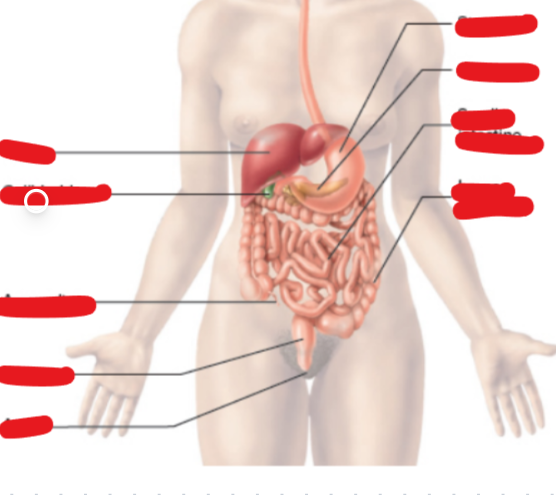
Organ storing bile
Gallbladder

Gland secreting digestive enzymes and hormones
Pancreas

Primary site of nutrient absorption
Small intestine

Organ absorbing water and forming waste
Large intestine

Small pouch connected to the cecum
Appendix

Final straight portion of the large intestine
Rectum
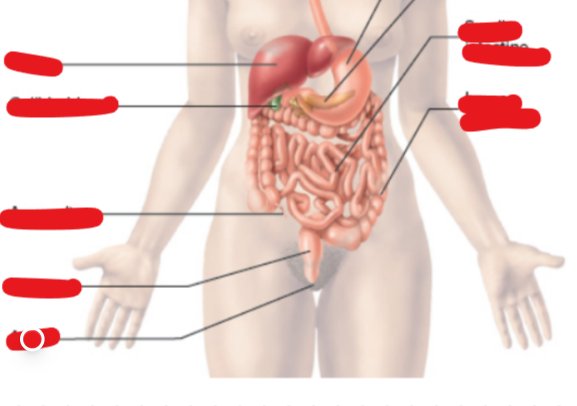
Terminal opening of the digestive tract
Anus
_________ is the consumption of solid or
liquid food, usually through the mouth. __________ is chewing.
Ingestion and mastication
____________ is the movement of food from one
end of the digestive tract to the other. __________ is the movement of food
back and forth in the digestive tract, which incorporates the digestive
system’s many secretions into the food.
Propulsion and mixing
______ is the breakdown of large organic
molecules into smaller molecules that can be absorbed. Digestion
occurs through mechanical and chemical means. __________ is the
addition of liquids, enzymes, and mucus to the ingested food.
Digestion and secretion
____________ is the movement of molecules out of the
digestive tract and into the blood or lymphatic system. The epithelialcells that line the lumen of the small intestine absorb the small
molecules of nutrients (amino acids, monosaccharides, fatty acids,
vitamins, minerals, and water) that result from the digestive process.
Absorption
_____________ is the removal of undigested material, such
as fiber from food, plus other waste products from the body as feces.
Elimination

The nerve network located between the circular and longitudinal muscle layers
Myenteric plexus

The nerve network located in the submucosa regulating secretions and local blood flow
Submucosal plexus

The network of nerves supplying the gastrointestinal tract
Enteric plexus

Vascular structures supplying blood to and from the intestinal wall
Blood vessels

Channels transporting lymph and absorbed fats through the mesentery
Lymphatic vessel

Nerve fibers carrying sensory and motor signals through the mesentery
Nerve

A double layer of peritoneum that attaches organs to the posterior abdominal wall
Mesentery
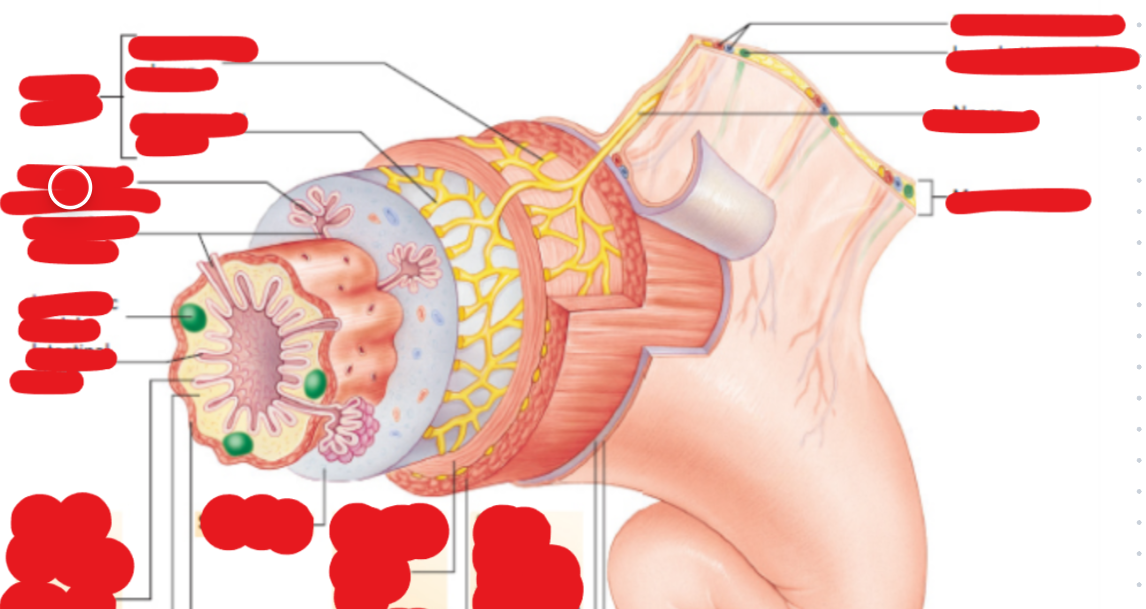
An exocrine gland located within the submucosal layer
Gland in submucosa

Channels transporting secretions from submucosal glands to the mucosal surface
Ducts from glands

A small mass of lymphoid tissue in the mucosa providing immune defense
Lymphatic nodule

A tubular gland structure extending into the mucosa
Intestinal gland

The innermost mucous membrane layer lining the lumen of the digestive tract
Mucosa (mucous membrane)

The primary functional mucosa boundary layer consisting of the luminal cellular lining and its supporting vascular connective tissue base.
Epithelium, Lamina propria

The vascular connective tissue layer beneath the mucosa containing larger blood vessels, lymphatics, and nerve fibers.
Submucosa

The thin, outer smooth muscle layer of the mucosa that produces local movements of the mucosal surface to aid digestion and absorption
Muscularis mucosae

The primary muscular coat of the gastrointestinal tract responsible for segmentation and peristaltic propulsion.
Muscularis

The inner smooth muscle sub-layer of the muscularis that constricts the lumen upon contraction.
Circular muscle layer
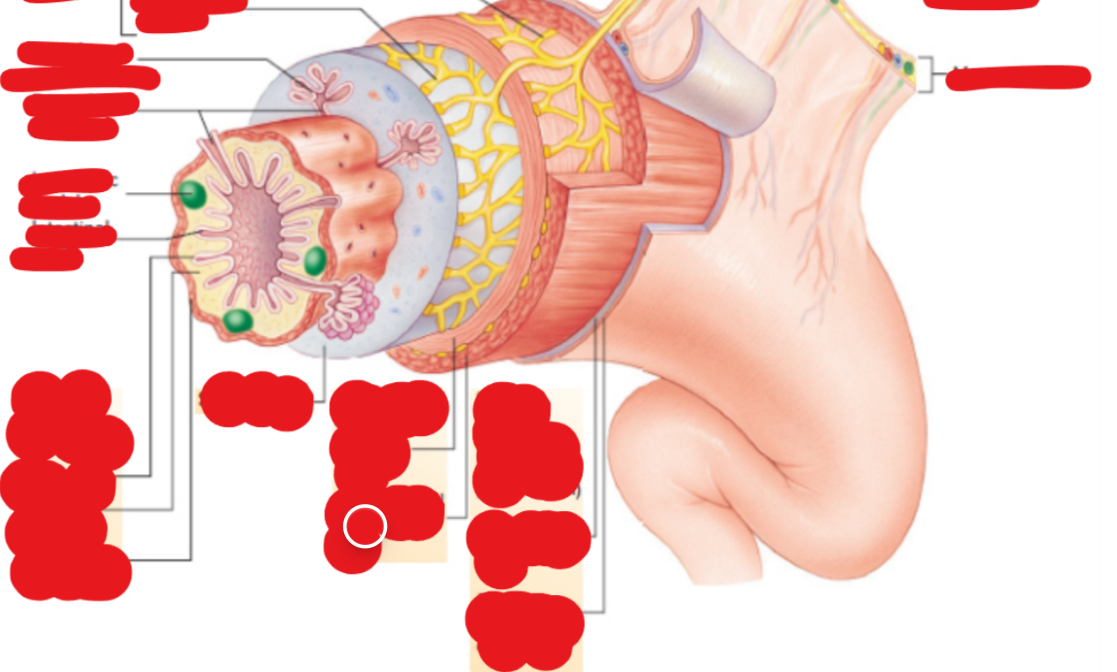
The outer smooth muscle sub-layer of the muscularis that shortens the tube length during propulsion.
Longitudinal muscle layer

The outermost serous membrane covering intraperitoneal organs, consisting of connective tissue and simple squamous epithelium.
Serosa (serous membrane; visceral peritoneum)

The internal sub-layer of the serosa providing structural anchorage for the mesothelium.
Connective tissue layer

The outermost single layer of flattened mesothelial cells forming the smooth, lubricating outer surface of the serosa.
Simple squamous epithelium

Cribriform plate

Superior concha

Middle concha

Inferior concha

Vestibule

Naris

Nasal cavity

Hard palate

Oral cavity

Tongue

Palatine tonsil

Lingual tonsil

Hyoid bone
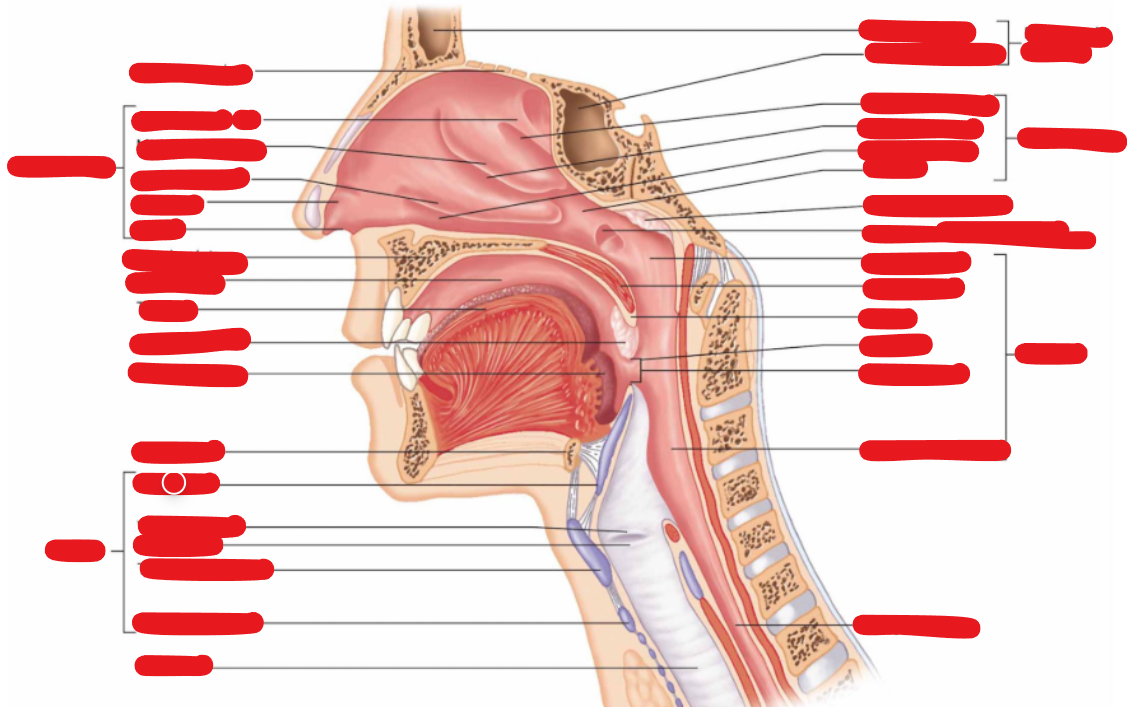
Epiglottis

Vestibular fold
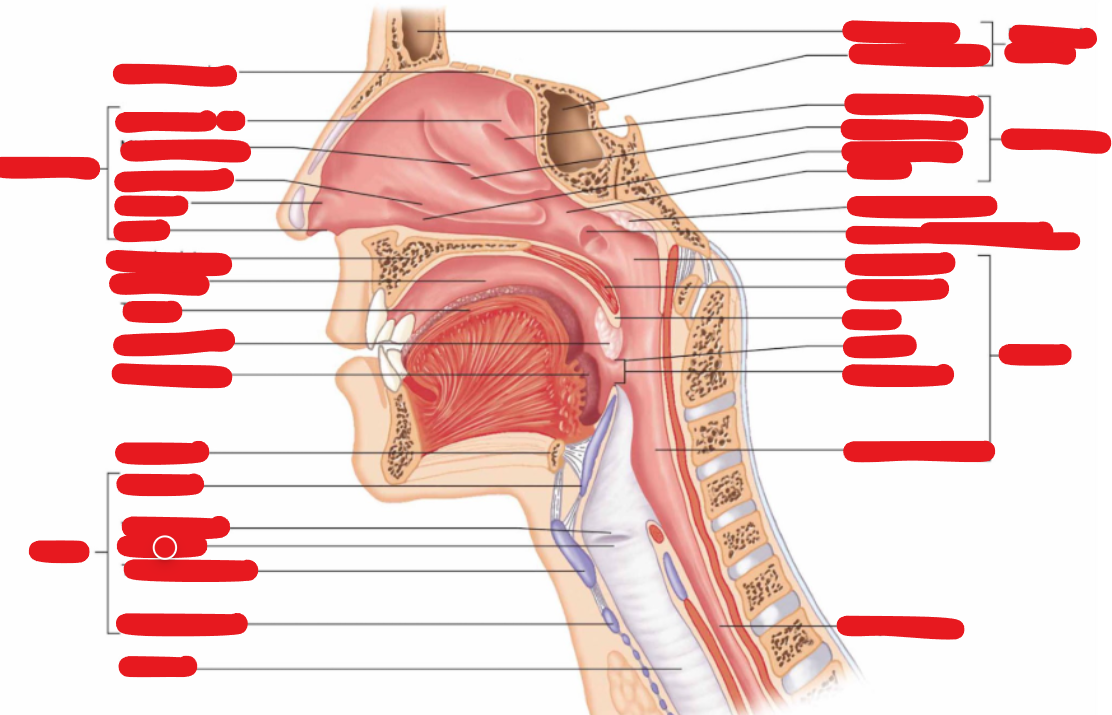
Vocal fold

Thyroid cartilage

Cricoid cartilage

Trachea

Frontal sinus

Sphenoidal sinus

Paranasal sinuses

Superior meatus

Middle meatus

Inferior meatus

Choana

Pharyngeal tonsil

Opening of auditory tube

Nasal cavity

Nasopharynx

Soft palate

Uvula

Fauces

Oropharynx

Pharynx

Esophagus

Transverse colon

Right colic flexure
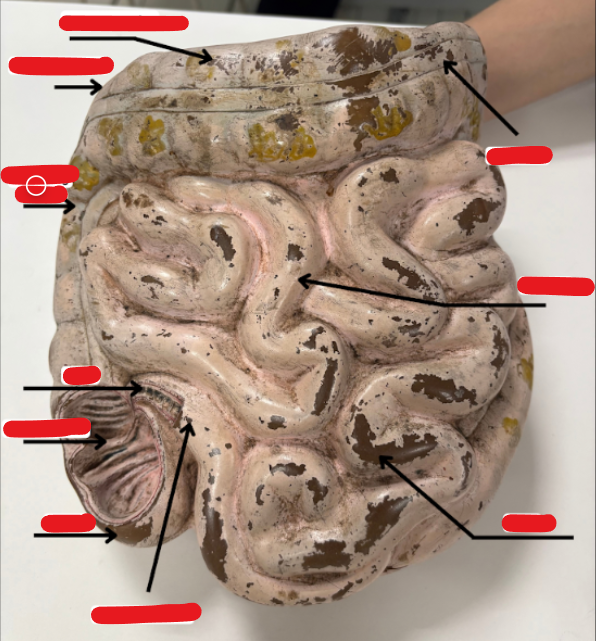
acending colon

Ileum
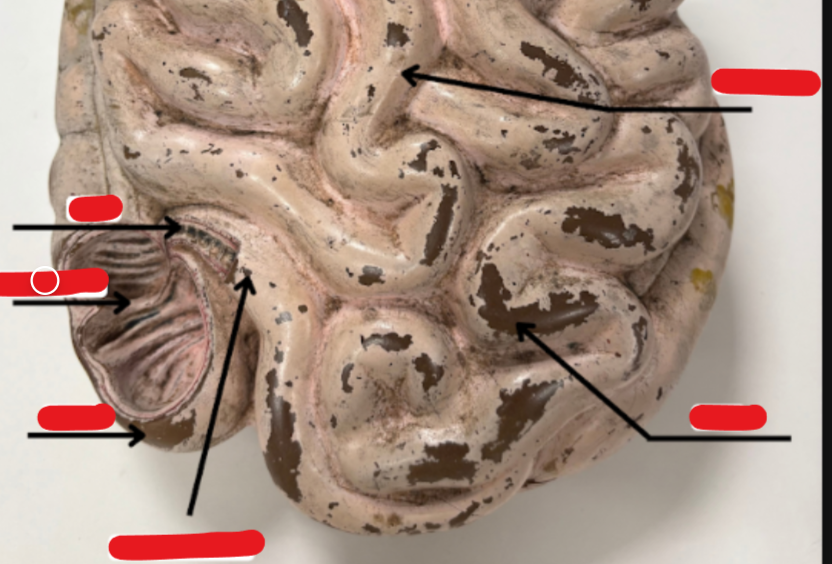
Iliocecal valve
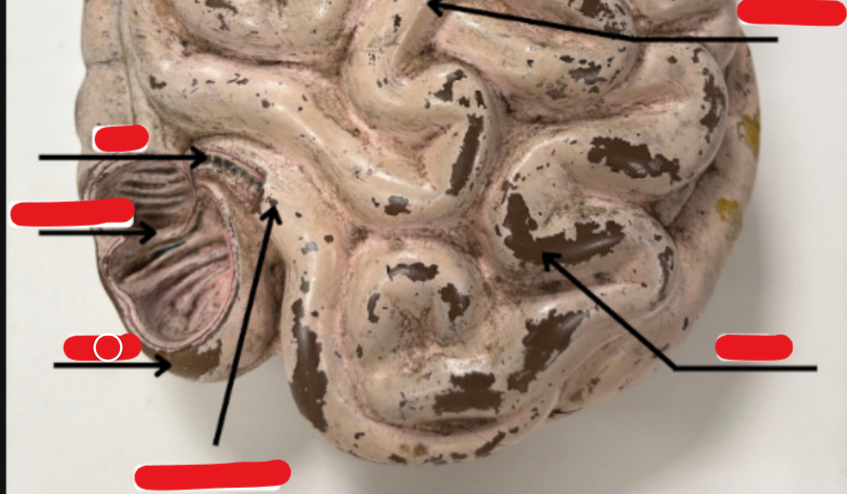
Cecum

Ileocecal junction

Teniae coli

Jejunum
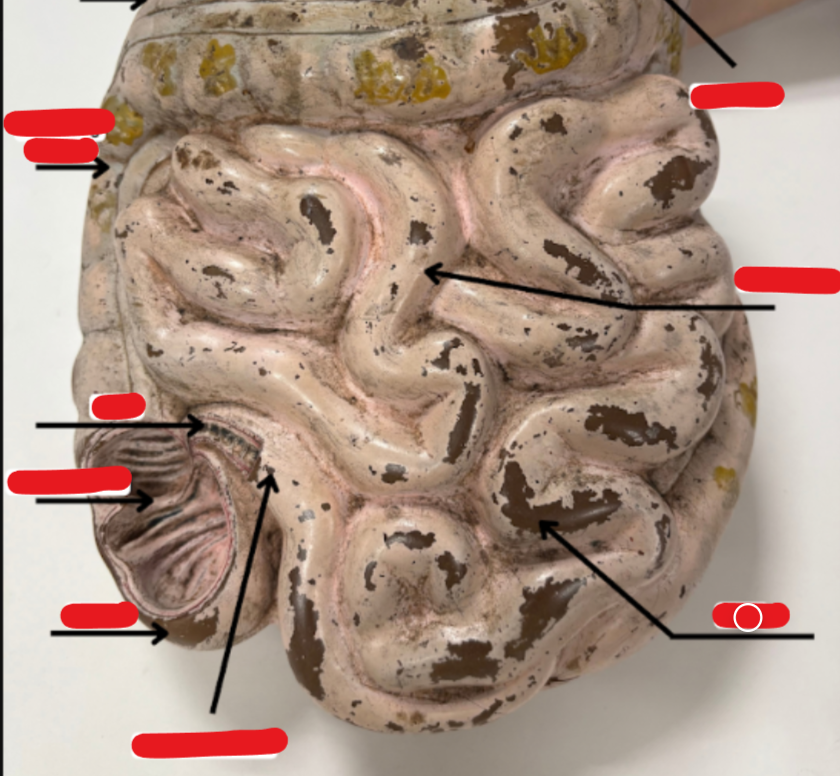
Ileum

Left colic flexure

Descending colon

Sigmoid colon

Appendix

Artery
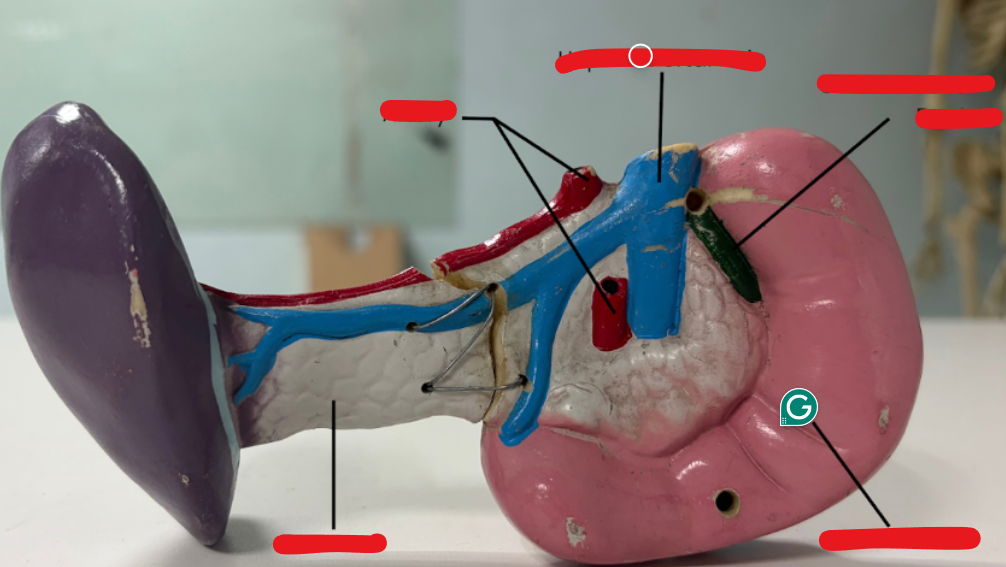
Hepatic portal vein

Common Bile Duct

Deodenum

Pancreas

Duodenum

Minor duodenal papilla
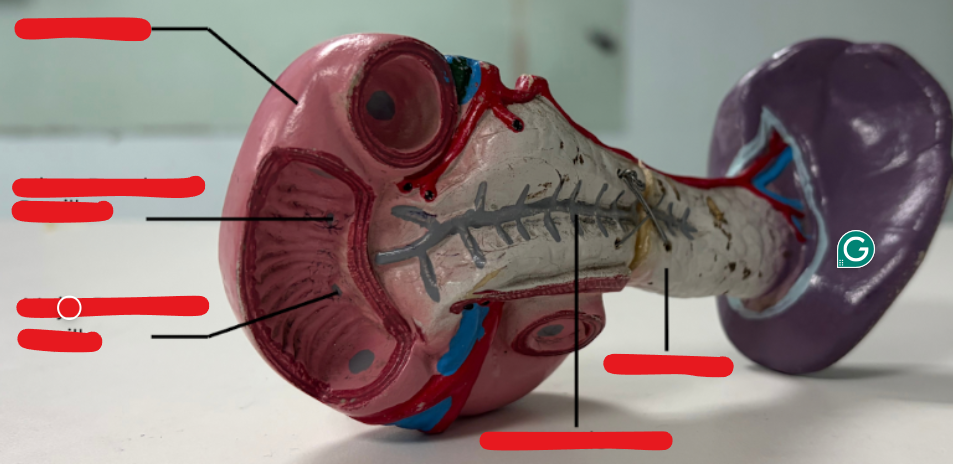
Major duodenal papilla
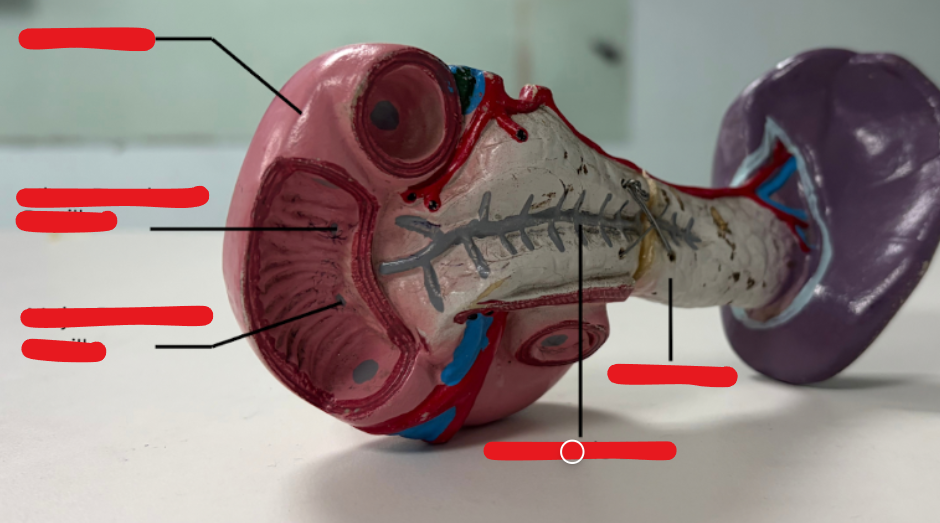
Pancreatic duct

Pancreas
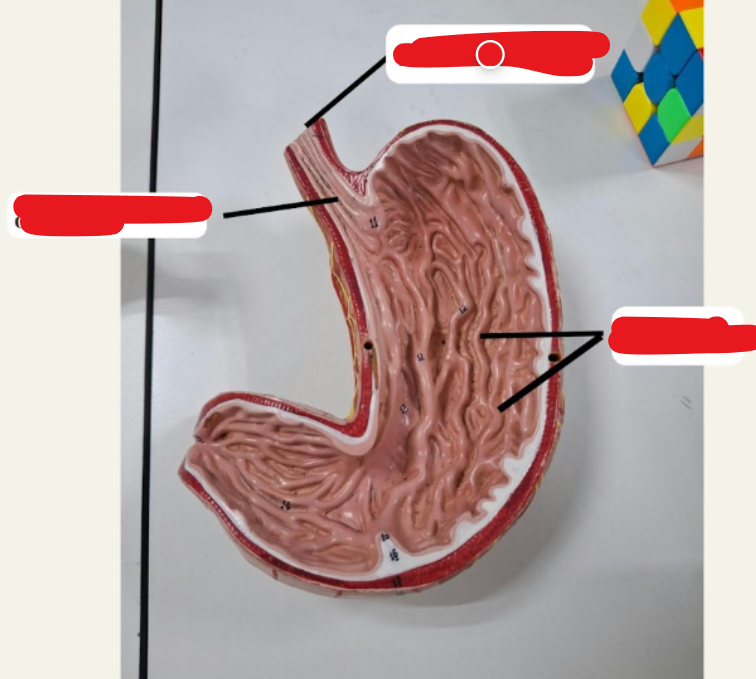
Esophagus