Lab Practical #2 Study Guide Microbiology
 Call Kai
 Learn
 Practice Test
 Spaced Repetition
 Match
 Flashcards
 Knowt Play
1/63

There's no tags or description
Looks like no tags are added yet.
64 Terms
What does the medium MSA select for?
What is the inhibitor?
What is it a differential for?
What is the indicator?
What is the positive result?
Select For: Halophiles (Staphphylococcus)
Inhibitor: Salt (NaCl)
Differential: Mannitol
Indicator: Phenol red
Pos Result: Yellow colonies w/ yellow halo
What does the medium PEA select for?
What is the inhibitor?
What is it a differential for?
What is the indicator?
What is the positive result?
Select For: Gram positive bacteria
Inhibitor: Phenylethyl alcohol
No differential
No indicator
Pos Result: Positive result = growth is gram positive bacteria
What does the medium DOC select for?
What is the inhibitor?
What is it a differential for?
What is the indicator?
What is the positive result?
Select For: Gram negative
Inhibitor: Sodium desoxycholate
Differential: Lactose
Indicator: Neutral red
Pos Result: Pink/red colonies
What does the medium MacConkey (MAC) select for?
What is the inhibitor?
What is it a differential for?
What is the indicator?
What is the positive result?
Select For: Gram negative
Inhibitor: Bile salts + crystal violet
Differential: Lactose
Indicator: Neutral red
Pos Result: Pink/red (coliforms)
What does the medium Endo Agar select for?
What is the inhibitor?
What is it a differential for?
What is the indicator?
What is the positive result?
Select For: Gram negative
Inhibitor: Basic fuchsin + sodium sulfite
Differential: Lactose
Indicator: Basic fuchsin
Pos Result: Metallic sheen (rapid lactose fermentation); pink (slow/standard lactose fermentation)
What does the medium EMB select for?
What is the inhibitor?
What is it a differential for?
What is the indicator?
What is the positive result?
Select For: Gram negative
inhibitor: Eosin Y + methylene blue
Differential: Lactose/sucrose
Indicator: Eosin Y + methylene blue
Pos result: Metallic sheen (rapid fermentation); pink (slow fermentation)
What does the medium HE Agar select for?
What is the inhibitor?
What is it a differential for?
What is the indicator?
What is the positive result?
Select for: Gram Negative enteric
Inhibitor: Bile salts
Differential: Lactose/sucrose/salicin + H2S
Indicator: Bromothyl blue + ferrous ammonium citrate
Pos result: Yellow/orange (fermentation); red/black (H2S)
What does the medium XLD select for?
What is the inhibitor?
What is it a differential for?
What is the indicator?
What is the positive result?
Select for: Gram negative enteric
Inhibitor: Sodium desoxycholate
Differential: Xylose/Lysine/H2S
Indicator: Phenol red
Pos result: Yellow (ferment); red + black (H2S)
What does the medium Bile Esculin select for?
What is the inhibitor?
What is it a differential for?
What is the indicator?
What is the positive result?
Select for: Group D Strep + Enterococcus
Inhibitor: Bile salts + Sodium azide
Differential: Esculin hydrolysis
Indicator: Ferric citrate
Pos result: Black precipitate
What does the medium OF-G test for?
What is the indicator?
What is the positive result?
What are some key notes?
Tests for: Oxidation and fermentation of glucose
Indicator: Bromothyl blue
Pos Result: Yellow (oxidation or fermentation)
Key notes: Mineral oil seals anaerobic tube
What does the medium Phenol Red Broth test for?
What is the indicator?
What is the positive result?
What are some key notes?
Tests for: Fermentation (acid production)
Indicator: Phenol Red
Pos Result: Yellow = acid; Bubble in Durham tube = CO2 gas
Key Notes: Red Tube = peptone deamination
What does the medium MR Test (MR-VP) test for?
What is the indicator?
What is the positive result?
What are some key notes?
Tests for: Mixed Acid Fermentation
Indicator: Methyl red added
Positive result: Red Color = Positive
Key notes: Uses same broth as VP
What does the medium VP (MR-VP) test for?
What is the indicator?
What is the positive result?
What are some key notes?
Tests for: Acetoin/ 2,3 butanediol pathway
Indicator: KOH + alpha-naphthol added
Pos Result: Red layer at top = positive (acetoin)
Key Notes: Uses same broth as MR
What does the medium Catalase test for?
What is the indicator?
What is the positive result?
What are some key notes?
Tests for: Catalase enzyme
Indicator: Hydrogen peroxide reagent
Pos Result: Vigorous bubbling (O2 gas)
Key Notes: Add H2O2 to culture
What does the medium Oxidase test for?
What is the indicator?
What is the positive result?
What are some key notes?
Tests for: Cytochrome c oxidase enzyme
Indicator: Chromogenic reducing agent (DrySlide)
Pos Result: Dark purple within 30 seconds
Key notes: Read in
What does the medium Citrate Agar test for?
What is the indicator?
What is the positive result?
What are some key notes?
Tests for: Citrate as sole carbon source
Indicator: Bromothyl blue
Pos Result: Blue slant = positive (alkaline)
Key notes: Green = negative
What does the medium Malonate test for?
What is the indicator?
What is the positive result?
What are some key notes?
Tests for: Malonate utilization
Indicator: Bromothyl blue
Pos Result: Blue = positive (malonate used)
Key notes: Yellow/green = glucose fermentation
What does the medium Decarboxylation test for?
What is the indicator?
What is the positive result?
What are some key notes?
Tests for: Amino acid decarboxylase
Indicator: Bromcresol purple
Pos Result: Purple = Positive (decarboxylation)
Key Notes: Add Mineral Oil; amino acids; arginine, lysine, ornithine
MSA selects for _______ (type of organism) because it contains high levels of ______ (inhibitor)
Halophiles
Salt
MSA is differential for ______ fermentation. Fermentation-positive colonies will appear ____ in color.
Mannitol fermentation
Yellow
The genus primarily isolated on MSA is _____. Members that are differentially positive will ferment the sugar and turn the agar ______
Staphylococcus
Yellow
PEA agar selects for _______ bacteria. The inhibitor phenylethyl alcohol, disrupts the ______ of gram-negative bacteria
Gram-positive
DNA
DOC agar selects for ________________________ bacteria. The inhibitor is ________________________. The indicator used is ________________________.
Gram-negative
Sodium desoxycholate
Neutral red
MacConkey agar inhibits Gram-positive bacteria using two inhibitors: ________________________ and ________________________.
bile salts and crystal violet
On MacConkey agar, bacteria that ferment lactose appear ________________________ in color. These organisms are called ________________________
Pink/red
Coliforms
Endo agar is selective for ________________________ bacteria. Rapid lactose fermenters produce a ________________________ sheen. Standard fermenters appear ________________________.
Gram-negative
Metallic sheen (rapid)
Pink (standard)
On EMB agar, the indicators/inhibitors are eosin Y and ________________________. Rapid fermenters display a ________________________ color. Slow fermenters appear ________________________. Non-fermenters are ________________________.
Methylene blue
Metallic Green (rapid)
Pale pink (slow)
Non-fermenters are colorless
HE agar is differential for the fermentation of lactose, sucrose, and/or ________________________. It is also differential for ________________________ reduction. The fermentation indicator is ________________________ and the sulfur reduction indicator is ________________________.
Salicin
Sulfur reduction
Yellow/green is fermentation indicator
Sulfur reduction indicator: Black/Red
XLD agar inhibits ________________________ bacteria. The sugar possibly being fermented is ________________________. The amino acid being decarboxylated is ________________________. Black growth indicates ________________________.
Gram-positive
Xylose
lysine
Hydrogen Sulfide (H2S) production
Bile esculin agar selects for Group D Streptococcus and the genus ________________________. The inhibitor that blocks most other Gram-positive bacteria is ________________________. The indicator for esculin hydrolysis is ________________________.
Enterococcus
Bile salts block gram-positive
Ferric citrate
OF-G tubes test for the ________________________ and fermentation of glucose. Mineral oil is added to one tube to create an ________________________ environment. The indicator in both tubes is ________________________.
Oxidation
anaerobic
Bromothyl blue
In phenol red broth, fermentation creates an ________________________ pH and turns the broth ________________________ in color. A bubble in the Durham tube indicates the production of ________________________.
Acidic
Yellow
CO2 gas
1. The red tube in phenol red broth indicates ________________________ deamination is occurring.
Peptone
The Methyl Red (MR) test checks for ________________________ fermentation. A red color indicates a ________________________ result
Mixed acid
differentially positive
The VP test looks for the production of ________________________. A red layer at the top of the tube indicates a ________________________ result. Both MR and VP use the same ________________________ broth.
Acetoin
Positive
MR-VP broth
To test for catalase, you add ________________________ to the culture. A positive result is indicated by the production of ________________________ gas (visible as bubbling).
Hydrogen peroxide (H2S)
O2 gas
The oxidase test detects the enzyme ________________________. A positive result produces a ________________________ color on the DrySlide within ________________________ seconds.
Cytochrome c oxidase
Dark purple
30 seconds
The citrate test determines if an organism can use ________________________ as its sole carbon source. The indicator is ________________________. A positive result turns the slant ________________________.
Citrate
Bromothyl blue
blue (alkaline)
Malonate interferes with the ________________________ cycle by inhibiting succinate dehydrogenase. A positive result (malonate utilized) turns the broth ________________________.
Krebs cycle
Blue
In decarboxylation broth, ________________________ oil is added after inoculation to create anaerobic conditions. The indicator is ________________________. A positive result (decarboxylation occurred) appears ________________________ in color. The three amino acids tested are ________________________, ________________________, and ________________________.
Mineral oil
Bromcresol purple
Purple
Arginine, lysine and ornithine
Explain the difference between selective media and differential media. Give one example of each.
Selective media: Allows certain bacteria to grow while preventing others from growing
Example: MSA (Mannitol Salt Agar)
Differential media: Allows bacteria to grow but shows visible differences among them (color)
Example: EMB (Eosin Methylene Blue Agar)
A plate of MacConkey agar shows pink colonies and clear (colorless) colonies. What can you conclude about each type? Which would be coliforms?
Pink colonies - Positive, can ferment lactose and are coliforms (enteric pathogens)
Colorless colonies - Negative result, cannot ferment lactose. May indicate pathogens such as Salmonella
You inoculate two OF-G tubes with the same bacterium. After incubation, the open tube turns yellow and the sealed tube stays green. What does this tell you about how this organism metabolizes glucose?
This organism metabolizes glucose through oxidation and not fermentation
Why is it important to read the oxidase test within 30 seconds?
To help prevent false positives. After this time the colorless reagent spontaneously oxidizes from exposure to oxygen in the air turning purple/blue, the same as a positive result.
A bile esculin agar slant turns completely black. What two conclusions can you draw from this result?
That the bacteria is likely an Enterococcus species (UTI risk) or Group D Streptococcus as gram-positive (by bile salts) and gram-negative (by sodium azide) bacteria are inhibited
The bacteria hydrolyze esculin (break it down)
Compare and contrast the MR and VP tests. What pathway does each detect? What does a positive result look like for each?
MP test - detects stable mixed acid fermentation. Positive result is red. Indicator is methyl red. Detects strong acid production typical of E. coli
VP test - detects acetoin via the 2,3-butanediol pathway. Positive result is yellow with a red layer at the top. Indicator is VP reagents. Helps differentiate opportunistic pathogens like Enterobacter.

What test is this? What is the top arrow pointing to? What is the bottom arrow pointing to?
MSA (Mannitol salt agar)
Top arrow: Staph aureus
Bottom arrow: Staph epidermidis

What test is this? What is the arrow pointing to?
PEA (Phenylethyl alcohol)
Gram positive bacteria

What test is this? What is the single arrow on the left pointing to? What are the three arrows on the bottom right pointing to?
DOC (Dexoxycholate agar)
Left arrow: gram-positive bacteria
Right arrows: gram-negative bacteria

What test is this? What is the pointer pointing to?
MAC (MacConkey agar)
Coliforms

What test is this? What is the top arrow pointing to? What are the bottom arrows pointing to?
Endo agar
Top arrow: Rapid lactose fermentation (metallic sheen)
Bottom arrows: Standard lactose fermentation (pink)

What test is this? What is the arrow pointing to?
EMB (Eosin Y + Methylene blue)
Arrow is pointing to a colorless gram-negative bacterial colony

What test is this? What is the arrow pointing to?
Hektoen Enteric (HE) agar
Arrow is pointing to fermentation, noting a positive result
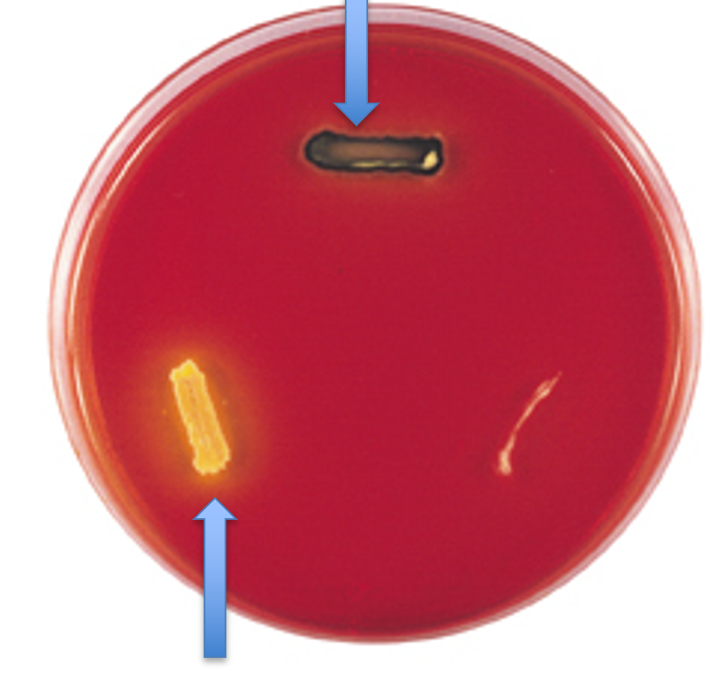
What test is this? What is the top arrow pointing to? What is the bottom arrow pointing to?
XLD agar (Xylose Lysine Deoxycholate)
Top arrow: Sulfur reduction
Bottom arrow: Xylose Fermentation

What test is this? What is the arrow pointing to the black tube denote? What is the arrow pointing to the orange tube denote?
Bile Esculin agar
Black tube: Differentially positive
Orange tube: Negative
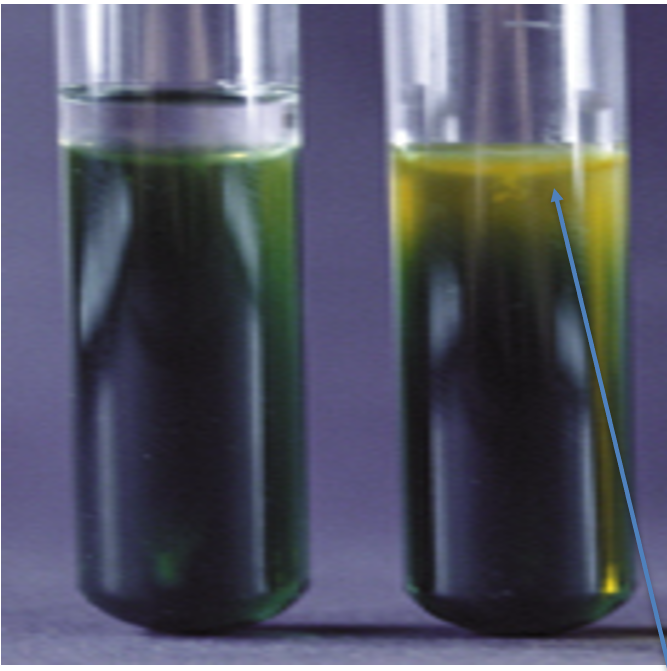
What test is this? What is the arrow pointing to?
OF-G tubes
Arrow points to yellow in the tube which shows oxidation of glucose

What test is this? What is the arrow pointing to?
Phenol Red Broth
The arrow is pointing to a red tube denoting peptone deamination

What test is this? What is the arrow pointing to?
Methyl Red (MR)
Red tube = differentially positive result (mixed acid fermentation)

What test is this? What is the arrow pointing to?
VP (Voges Proskaur)
Arrow is pointing to red layer at the top which denotes a positive result (acetoin)

What test is this? What are the arrows pointing to?
Catalase test
Long arrow: Pointing to vigorous bubbling of O2 gas which = positive result
Short arrow: Pointing to no bubbles in the tube which denotes a negative result

What test is this? What is the arrow pointing to?
Oxidase test
Arrow pointing to a positive result (purple) where oxidase is present

What test is this? What is the arrow pointing to?
Citrate agar
Arrow is pointing to a positive blue result

What test is this? What are the arrows pointing to?
Malonate test
Arrow pointing to blue tube = positive result
Arrow pointing to yellow/green tube = negative result

What test is this? What are the arrows pointing to?
Decarboxylation broth
Arrow pointing to purple tube is a positive result (alkaline)
Arrow pointing to yellow tube is a negative result (acid)