Biophysical Agents Exam 2
 Call Kai
 Learn
 Practice Test
 Spaced Repetition
 Match
 Flashcards
 Knowt Play
1/288

There's no tags or description
Looks like no tags are added yet.
289 Terms
what is soft tissue mobilizaition
the intentional and systematic mechanical manipulation of soft tissues to promote heath and healing
-application of manual or instrument assisted pressure to soft tissue to improve flexibility, function, and overall well being
what are the different soft tissue types/techniques
-general massage
-transverse friction
-scar massage
-ischemic compression
-myofascial mobilizaition
-soft tissue release
-manual lymphatic drainage
-IASTM
what are common impariments treated with soft tissue
-adhesions/scars
-decreased mobility
-trigger points
-tendionpathy
-muscle strains/tears
-lymphedema
-pain
-muscle gaurding
what are precautions to soft tissue
-low BP
-joint instability
-impaired sensation
-fragile skin
-cancer
-severse atherslerosis
-severe varicose veins
-certain medications (ones that alter sensation or blood circulation)
-recent psychological trauma
-advanced diabetes
-acute RA
what are the contraindications
-infection that may spread by skin or lymph
-acute inflammation
-bleeding
-blood clotting disorders
-open wound
-edema (if unexplained)
-presence of a thrombus
-over a healing fracture
what are the different kinds of therapeutic effects
-biomechanical effects
-physiological effects
-neurological effects
-psychological effects
what are the biomechanical effects
mechanical pressure on tissues
-decrease tissue adhesion
-increase muscle compliance
-increase range of joint motion
-decrease passive stiffness
-decrease active stiffness
what are the physiological effects
changes in tissue or organ
-increase blood flow
-increase skin blood circulation
-increase parasympathetic activity
-increase relaxation hormones
-decrease stress hormones
what are the neurological effects
reflex stimulation
-decrease neuromuscular excitability
-decrease pain
-decrease muscle tension or spasm
what are the psychological effects
increased relationship between the body and mind
-increase relaxaiton
-decrease anxiety
is a decrease in muscle stiffness a long term or short term effect
short term
when is it helpful for ROM
when used with other techniques
-less effective when used in isolation
does soft tissue increase skin/muscle temp
yes
-can increase intramuscular temperature to 2.5 and quickly return to baseline
how does soft tissue decrease muscle tension
reduction in neuromuscular excitability
how does soft tissue decrease pain
-may activate neural gating mechanism
-can increase serotonin
-less pain, improved function in combination with exercise and postural/body mechanics
how is the evidence for soft tissue
major design flaws in existing reserach studies
-small sample size
-no follow ups
-no randomization
-clinical effectiveness
-case studies or case series
what kind of relief does soft tissue provide
may offer short term relief, but should be used in conjuction with other interventions for long term improvement
what is the evaluation
-patient history
-tests and measures (pain, ROM, strength, various others)
-observation
-palpation
what goes into treatment planning/decision making
-informed consent
-identify impairments (pain, decreased ROM, poor muscle perfomance)
-functional/activity limitations
-selection of STM techniques
-other PT intervenions
what are good guidelines to follow
-maintain a professinal demeanor
-good boundaries (draping)
-good verbal communication
-when necessary, have a witness
-document consent
how do you assess pts response during treatment
-ask specific questions - get feedback from the patient)
-observe pts non verbals
what do you do after treatment
reassess
-pain
-mobility
-function
what are trigger points
a hyperirritable spot in skeletal muscle that is associated with a hypersenstive palpable nodule in a taut band
what are trigger points characterized by
-tense bands
-focal-assymetrical distribution (regional bands or focal tenderness)
what is seen with trigger points
-rigid muscle palpation
-restricted ROM/muscle stiffness
-muscle weakness
what are the possible mechanisms of trigger point
-energy crisis theory
-motor end plate hypothesis
what is the cycle of trigger point formation
-muscle overload
-abnormal release of acetylcholine (muscle can't relax)
-influx of calcium into sarcomeres
-localized contraction of affected sacromeres
-contraction knots (develops into trigger point)
-increase in metabolic demands
-local ischemia (sends out pain signals)
-energy crisis
-pain
what is myofascial pain syndrome
condition associated with trigger points
-muscular pain disorder involving pain referred by trigger points either local or distal to the painful site
-often misdiagnosed or poorly diagnosed (Often as a muscle strain)
what are the characteristics of myofascial pain syndrome
-non inflammatory
-local pain and stiffness
-hyperirritable palpaple nodues (send pain other places)
what is the epidemiology of MPS
associated with several pain conditions including:
-migraines
-whiplash
-shoulder pain
-epicondylalgia
-carpal tunnel syndrome
-LBP
-pelvic pain
-knee pain
-plantar heel pain
-post mastectomy
what kind of pain do trigger points have when stimulated
reffered pain when stimulated
-duration of pain is variable
what are the pain descriptors of trigger points
-deep, aching, burning
-at times perceived as superficial
what is the intensity of a trigger point correlated with
the degree of irritability
what is a condition associated with TrP
fibromyalgia
what is fibromyalgia
-rheumatic disorder
-generalized pain in all 4 quadrants for > 3 months
what are the disease characterticis of fibromyalgia
-stifness
-fatigue
-sleep disturbance
-tender points (11 of 18)
-negative lab findings (diagnosis exclusion)
what are the 2 scales used to grade fibromyalgia
symptom seversity (SS)
-somatic symptoms
-waking unrefrshed
-cognition
-fatigue
0-12 points
widespread pain index (WPI)
-1 point for each 19 areas where pain present in past week
0-19 points
what is the diagnosis of fibromyalgia using the two scales
-WPI of at least 7 and SS scale of at least 5
or
-WPI of 3-6 and SS scale of at least 9
what is the managment for fibromyalgia
1. restore restful sleep
-low level antidepressent (Elavil)
-muscle relaxer (flexeril)
-sleep hygine
2. injection to tender points
3. PT- massage/STM, aerobic exercise, stretching, patient education, biofeedback
4. education on staying active and sleeping
in active TrPs, what is the pts tenderness
very tender on palpation and possibly at rest
in latent TrPs, what is the pts tenderness
pai on deep palpation
in tender points, what is the pts tenderness
tender generalized pain
in active TrPs, what is the pts pain/restricted ROM
-pain with movement
-restricted ROM
in latent TrPs, what is the pts pain/restricted ROM
-no pain with movement
-ROM may be restricted
in tender points, what is the pts pain/restricted ROM
-may/may not be painful with movement
-hypermobility
in active TrPs, what is the pts referred pain
usually has referred pain pattern
in latent TrPs, what is the pts referred pain
does not typically have referred pain pattenr
in tender points, what is the pts referred pain
no referred pain pattern
in active TrPs, what is the pt awareness of trigger point
patient confirms presence
in latent TrPs, what is the pt awareness of trigger point
presence not known unless probed- does not cause clinical pain complaints
how do you identify a trigger point
-Subjective complaints/history, pain drawings
-Palpation: flat, pincer
-Referred pain pattern (RPP)
-Local twitch response
-Should correlate with other eval findings (ROM, MMT, Posture...)
what is the most commonly reported criteria of trigger points
-spot tenderness
-referred pain
-local twitch response
-pain recognition
-limited ROM
-jump sign
what is the most common combination used to diagnosis a trigger point
spot tenderness and local twitch response
what is the medical management of trigger points
Injections of procaine
Medications: limited evidence and unclear benefit
Dry Needling: "insertion & manipulation of a fine/flexible needle into TrP to produce a local twitch response (LTR), resulting in muscle relaxation"; state practice acts determine who is qualified to do this
what PT interventions are used for trigger points
-general massage techniques
-TrP pressure release
-direct fascial techniques
-PROM/self stretches
-modalities
-dry needling
-addressing any perpetuating factors
-teach self managment techniques
what are common errors for TrP
-pressure applied too quickly and too much
-pressure exceeds patient pain tolerance
-pressure not maintained on TrP
-insufficent depth
-passive stretch omitted ( have to couple with exercise)
-perputuating factors not addressed
what are the general massage techniques
-basic efferuage
-rolling petrissage
-circular friction
-beating percussion
what are general guidelines for massages
-maintain contact
-regulate pressure as appropiate
-area defined by muscle groups or anatomical landmarks
-stoks can be done 1 handed or 2 handed or using diff parts of hand
-you are assessing and treating simultaneously
what is effleurage
-Gliding strokes
-Light strokes: accustoms pt to your touch, relaxing, return stroke
-Deep strokes: affect circulation, begin to see mechanical effects
what is effleurage technique
-Hands should be relaxed
-Stroke begins "light" and deepens over the bulkiest part of the muscle, then finishes "light"
-Return stroke should be light
what is petrissage
kneading manipulaitons
-force is away from the body
what is the purpose of petrissage
-increase soft tissue mobility
-increase circulation
-decrease pain
what is petrissage technique
many ways to perform
-goal is to lift and squeeze/mobilize the soft tissue
-don't pinch !
what are the types of petrissage
-basic 2 handed kneading
-one handed kneading
-circular 2 handed petrissge
-alternating fingers to thumb petrissage
-skin rolling
what is friction
-fingers and skin move over deeper tissues
-creates superficial heating
-compressive force
-creates movement between deeper tissues
-usually ciricular motions performed
-2-3 cycles then glide to next spot and repeat
-increase depth gradually- work through superficial layers to the deep tissue
-can be done with fingers, thumb, knuckle, heel of hand, elbow
what did the study about the effects of sports massage on performance and recovery find
-no improvement in sport perfomance
-small benefit with DOMS
-improvement in flexibility
helps with mobility and soreness but NOT performance
what is a trigger point pressure release
sustained digital pressure, direct inhibitory pressure, static friction, acupressure, progressive pressure technique
-a non gliding technique with its compressive force applied perpendicularly to the structure
what is the TrP pressure release technique
-apply gentle, gradually increase pressure : increase in resistance, patient discomfort
-precise control over direction and force
-pressure maintained : palpable tension release ; finger advance slightly ; can be 30 sec - 2 mins; typically 60-90 sec
-follow with a stretch
-often incorporate petrissage strokes and stripping
what does the research say about trigger point compressin and passive stretching
-may inhibit: pain and reflex motor and autonomic CNS responses
-small increase in ROM
-possible anti-inflammatory action
levator scapula referral pattern

what is the levator scapula TrP pressure release
-treating the upper TrP
-the lower TrP is located at the superior angle of scap
-to stretch: neck flex, rot, and SB to opposite side
-stabilize scap when stretching
levator scapulae stretch

suboccipital pain referral pattern

what is the suboccipital release (SOR)
-upward pressure of fingers into suboccipitals
-gentle traction to take up the slack
-as fingers sink into tissue, take up the slack and repeat sequence
-follow with manual stretch
suboccipital stretch

trapezius pain referral pattern
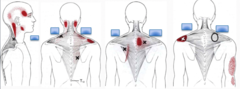
what is the upper trapezius TrP release
-TrP often found at just lateral to angle of neck
-pincer or flat palpation can be used
upper trap stretch

what do you need to assess with a pt has TMJ pain
-masseter
-temporalis
-lateral ptyergoid
what would the pt present with when they have TMJ pain
-pt complains of headaches, tooth pain, ear pain, jaw pain
-forward head posture, bruxism (grinding of teeth), teeth clenching
masseter pain referral pattern

temporalis pain referral pattern

what is the masseter TrP release
-RPR: eyebrow, ear, TMJ, upper and lower teetch
-use pincer palpation
-very easy and very effective
-assess opening ROM
piriformis pain referral pattern

quadriceps pain referral pattern
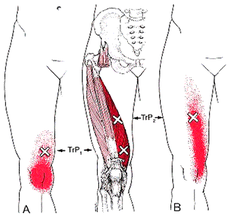
hamstrings pain referral pattern

what is myofascial release
hands on soft tissue technique, facilitation a stretch into a restricted area (soft tissue while someone is stretching)
-sustained pressure
-hold for 60-90 seconds
-move into new tissue barrier and repeat
-do as needed
-can be active or passive
-STM with movemnt
-same concept as trigger point STM
what are direct fascial techinques
-sweeps/muscle stripping
-clearing
-releases
-friction
-bending
deeper pressure techinques - often combining effleurage and petrissage
what is muscle stripping/sweeps
-1 hand or finger stabilizes
-1 hand or finger mobilizes
-slow sweep along the length of the muscle
-thumg, finger, knuckle, heel of hand, forearm, elbow
what is lumbar release technique
-take up the slack
-hold until it releases
-repeat last 2 steps until an end feel is reached
-working through layers
-direction of stretch may change depending on feedback of muscle
what does the evidence say about myofascial release
may help with movement and pain, but current research does not provide convincing evidence that it works by impacting tissue stiffness
what are self care instructions
-correct self stretches
-AROM exercises
-moist heat
-self STM
-ergonimic and posture education
what are different tools for PT and patient
-tennis balls
-lacrosse balls
-thera cane or body back buddy
-foam roll
what are the effects of self STM on ROM
-short term benefits
-foam roller: 2-5 sessions , 30-60 seconds
-roller massage: 2-5 sessions, up to 2 minutes
-better effects when combined with stretching
what are the effects of self STM on muscle recovery and soreness
reduces pain and can reduce muscle performance decrements post intense exercise
what is important to know about the use of STM
-beneficial tool in care
-consider when to use based on anatomy, impairments, diagnosis, and contextual factors
-consider the balance of active vs passive treatment
-not everyone needs STM
what is trigger point dry neendling
an invasive technique to treat TrP
what is the preliminary research about TrP dry needling
-improves pain
-reduces muscle tension
-normalizes endplate dysfunction
-facilitates accelerated return to active rehab
what is dry needling
a skilled intervtion performed by a PT that uses a thin filiform needle to penetrate the skin and stimulate underlying myofascial trigger points, muscular and connective tissues
-used to mangage musculoskeletal pain and movemnt impairments
-based upon western medical concepts
-requires at PT examination and diagnosis to accurately use
what is acupuncture
family of procedures involving the stimulation of points on the body using a variety of techniques
-involves penetrating the skin with thin, metallic needles that are manipulated by the hands or by electrical stimulation
-treats along meridians
-based on traditional chinese medicince and focuses on restoring imblances in Qi, Yin, and Yan, five elements
-national exam for licensure