Ren
 Note
 Call Kai
 Learn
 Practice Test
 Spaced Repetition
 Match
 Flashcards
 Knowt Play
1/84

There's no tags or description
Looks like no tags are added yet.
85 Terms
Frans Hals
A Dutch painter known for his portraits that reflect Dutch realism and individuality.
Peter Paul Rubens
A Flemish Baroque painter recognized for his dynamic compositions and glorification of monarchy.
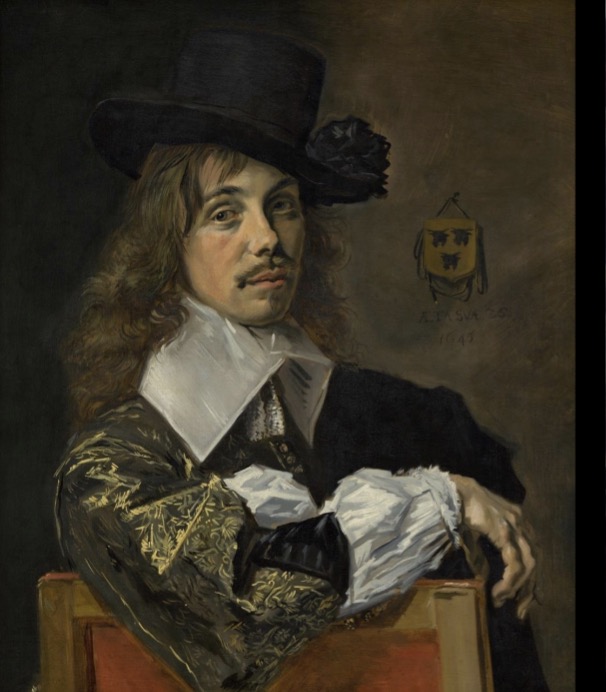
Willem Balthazar Coymans (1645)
A portrait painting by Frans Hals depicting a wealthy Dutch merchant.
Henry IV Receiving the Portrait of Marie de Medici (1621–25)
A history painting by Peter Paul Rubens commissioned as royal propaganda.
Dutch Republic
The region where Frans Hals worked, characterized by a Protestant capitalist society.
Catholic Flanders/France
The area associated with Peter Paul Rubens, linked to monarchy and Counter-Reformation politics.
Intimate portrait
A painting style used by Hals to express identity, personality, and wealth display.
Monumental history painting
Rubens' approach intended to glorify monarchy and assert political legitimacy.
Realism and individuality
Viewer expectations when looking at Hals' work.
Drama, grandeur, and symbolic messaging
Viewer expectations related to Rubens' paintings.
Loose brushwork
A technique characteristic of Frans Hals, providing a sense of immediacy in his portraits.
Theatrical, Catholic Baroque spectacle
The style of Peter Paul Rubens, emphasizing drama and complexity.
Limited palette and subtle lighting
Characteristics of Hals' color and light usage.
Rich color and glowing light
Features typical of Rubens' work that create heightened contrast.
Direct gaze and psychological presence
Elements of composition seen in Hals' portraits.
Idealized figures and allegorical space
Components found in Rubens' compositions.
Key difference between Hals and Rubens
Hals focused on personal economic identity while Rubens emphasized political power and spectacle.
Nicolas Poussin
A French artist known for his classical history paintings that teach virtue.
Johannes Vermeer
A Dutch painter celebrated for his portrayal of everyday life and domestic scenes.
The Burial of Phocion (1648)
A moral history painting by Poussin that reflects classical ideals.
View of Delft (c. 1660–61)
A cityscape by Vermeer showcasing the beauty of urban life.
Elite, educated patrons
The audience for Poussin's classical works.
Middle-class Dutch buyers
The main audience for Vermeer's paintings.
Classical revival
The cultural context of Poussin's work in Rome and French intellectual circles.
Urban prosperity
The context in which Vermeer created his works in the Dutch Republic.
Moral history painting
The function of Poussin's works aimed at teaching virtue.
Cityscape
The function of Vermeer’s works, celebrating everyday life and place.
Intellectual, moral reflection
Viewer expectations regarding Poussin's paintings.
Quiet observation and appreciation of reality
Viewer expectations of Vermeer’s art.
Order and reason
Key characteristics of Poussin's style reflecting Classical Baroque.
Perception and light
Focus of Vermeer’s works rooted in Dutch realism.
Structured, balanced landscape
Poussin's typical composition style.
Naturalistic, observational composition
A hallmark of Vermeer's approach to painting.
Even, controlled lighting
Lighting characteristic of Poussin's paintings.
Luminous, atmospheric light
Lighting style used by Vermeer to create depth.
Deep, constructed space
Perspective typical of Poussin's work.
Optical realism
Perspective approach used by Vermeer that mimics a camera-like view.
Key difference between Poussin and Vermeer
Poussin focused on idealized moral narratives, while Vermeer depicted observed reality and light.
Caravaggio
An Italian Baroque painter known for dramatic religious scenes and extreme chiaroscuro.
Johannes Vermeer
A Dutch master renowned for his intimate depictions of domestic life.
The Calling of St. Matthew (c. 1600)
A significant religious painting by Caravaggio showcasing conversion.
Young Woman with a Water Pitcher (1662)
A serene domestic scene painted by Vermeer.
Catholic Church
Patron of Caravaggio, aligned with Counter-Reformation efforts.
Private Dutch collectors
Primary audience for Vermeer's intimate works.
Religious revival in Rome
The context in which Caravaggio created his influential artwork.
Domestic life in Protestant Netherlands
The focus of Vermeer’s work in his cultural context.
Religious conversion scene
The subject matter of Caravaggio's notable works.
Domestic interior
The theme central to Vermeer’s paintings.
Emotional, spiritual engagement
Viewer expectations when experiencing Caravaggio's work.
Quiet contemplation
Expectations of viewers looking at Vermeer’s art.
Drama to inspire faith
Caravaggio's expressive technique that captivates viewers.
Calm realism
Technique used by Vermeer to highlight the beauty of daily life.
Extreme chiaroscuro
Light contrast characteristic of Caravaggio's paintings.
Soft, diffused natural light
Lighting style typical in Vermeer’s artworks.
Diagonal action and dramatic moment
Composition style used by Caravaggio for dynamic effect.
Still, balanced composition
Vermeer’s approach to achieve tranquility in his works.
Real, gritty, expressive figures
Characteristics of Caravaggio’s portrayal of human subjects.
Calm, idealized domestic figure
Representation style seen in Vermeer’s paintings.
Key difference between Caravaggio and Vermeer
Caravaggio emphasized dramatic spiritual transformation, whereas Vermeer focused on quiet domestic intimacy.
François Boucher
A French Rococo painter known for his decorative and fantasy-filled works.
Jean-Baptiste-Siméon Chardin
A French painter recognized for his moralistic depictions of everyday life.
Cupid a Captive (1754)
A mythological painting by Boucher, emblematic of Rococo aesthetics.
Grace at Table (Saying Grace) (1740)
A moral domestic scene painted by Chardin reflecting Enlightenment values.
French aristocracy
Boucher's primary patrons, known for their luxury consumption.
Middle-class Enlightenment audience
The target demographic for Chardin's work.
Rococo court culture
The context associated with Boucher’s decorative art style.
Enlightenment values
Chardin's work reflects the cultural ideals of 18th-century Enlightenment.
Decorative, mythological fantasy
The function of Boucher's works aimed at pleasing aesthetic sensibilities.
Moral domestic scene
Chardin’s paintings serve to depict ethical family values.
Pleasure and escapism
Viewer expectations invited by Boucher's works.
Simplicity and morality
What viewers expect from Chardin’s paintings.
Indulgence and sensuality
Characteristics reflected in Boucher’s art style.
Restraint and realism
Visual qualities typical of Chardin’s paintings.
Soft pastels and flowing forms
Key features of Boucher's color palette and composition.
Earth tones, simple structure
Characteristics of Chardin’s color and compositional style.
Diffused, dreamy light
Boucher's approach to lighting in his artworks.
Natural, subdued light
Chardin's lighting style that emphasizes realism.
Idealized, playful figures
Depictions commonly found in Boucher’s works.
Ordinary, grounded figures
The style of figures characteristic of Chardin's artwork.
Key difference between Boucher and Chardin
Boucher represented luxury and fantasy (Rococo), while Chardin focused on morality and realism (Enlightenment).