Facial Bones + other bones and structures
 Call Kai
 Learn
Learn Practice Test
 Spaced Repetition
 Match
Match Flashcards
 Knowt Play
1/27

Earn XP
Description and Tags
14 facial bones.
Name | Mastery | Learn | Test | Matching | Spaced | Call with Kai | Chat |
|---|
No analytics yet
Send a link to your students to track their progress
28 Terms

Mandible
1 bone. forms the lower jaw

body, ramus, condylar process, coronoid process, angle, mental foramen, mandibular foramen, alveoli, mandibular symphysis
Markings of the mandible

Maxilla
2 bones. each forms anterior portion of the face; upper jaw and parts of hard palate, inferior parts of orbits, and part of the walls of nasal cavity

alveoli, palatine process, infraorbital foramen
Markings of maxilla

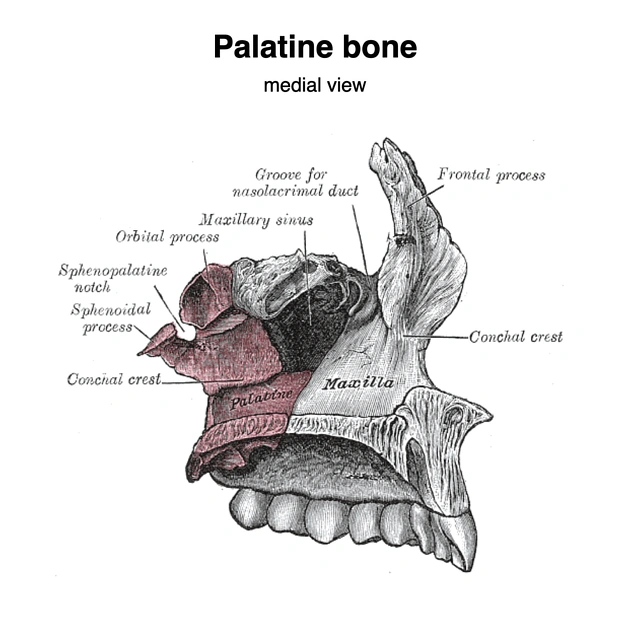
Palatine bone
2 bones. each forms posterior part of hard palate; also forms small part of nasal cavity and and orbit wall. L shaped bone. no markings

Zygomatic bone
2 bones. each forms a cheek and lateral part of the orbit. no markings


Lacrimal bone
2 bones. each forms part of the medial wall of the orbit.


Nasal bone
2 bones. form most of the bridge of the nose. no markings


Vomer
1 bone. forms inferior and posterior part of nasal septum. no markings


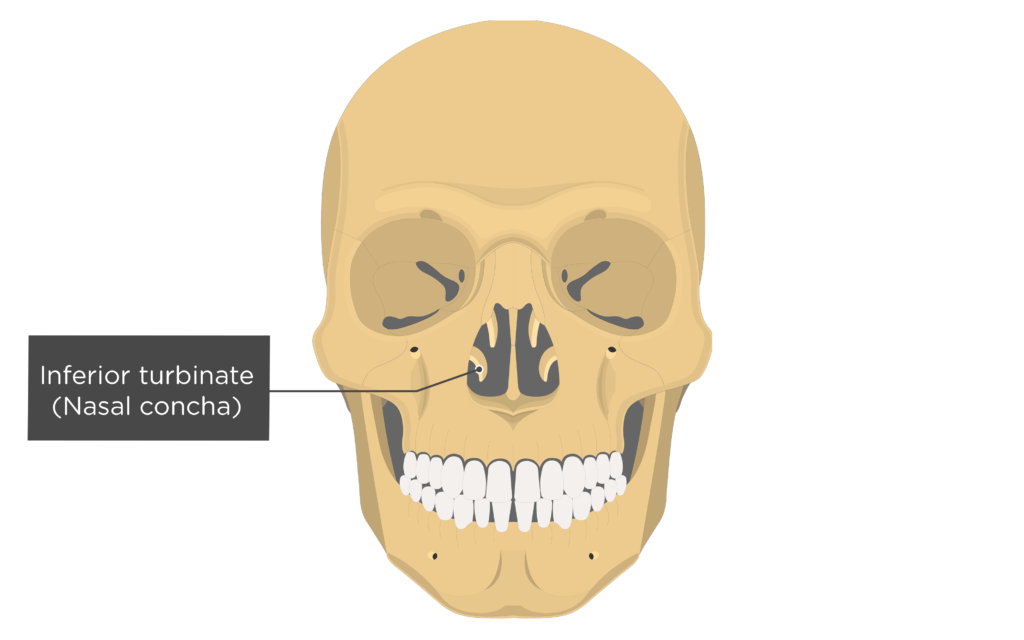
Inferior nasal concha
2 bones. forms inferior part of lateral wall of nasal cavity; causes turbulent airflow. no markings

Hyoid bone
1 bone. only bone in body that doesn’t connect to another bone. u-shaped bone that helps you speak, swallow, and breathe. in the anterior midline of the neck. no markings


Paranasal sinuses (all paired mucous membrane cavities)
four paired cavities in your face. include the frontal, sphenoid, ethmoid and maxillary sinuses.

frontal sinus, ethmoidal sinus, maxillary sinus, sphenoidal sinus
Markings of the paranasal sinuses

Glabella
found along the midline anterior aspect of the frontal bone


Supraorbital foramen (notch)
hole/notch on the superior ridge of orbit


Sagittal suture
connects the left and right parietal bones along the midline of the skull. lies along the sagittal plane


Coronal suture
articulation b/w frontal and parietal bones. lies along coronal plane


Squamous suture
on each side of the skull. site where the temporal bone and the parietal bone of that side articulate. Usually doesn’t fuse until late adulthood or may not fuse at all


External auditory (acoustic) meatus
opening into external auditory canal


Styloid process
serves as attachment point for muscles controlling tongue


Mastoid process
attachment point for muscles of neck


mandibular fossa
point of articulation w. head of mandible, forming the temporomandibular joint


zygomatic process
projection that articulates w/ temporal process of the zygomatic bone


Lambdoidal suture
joins parietal bones w/ the occipital bone

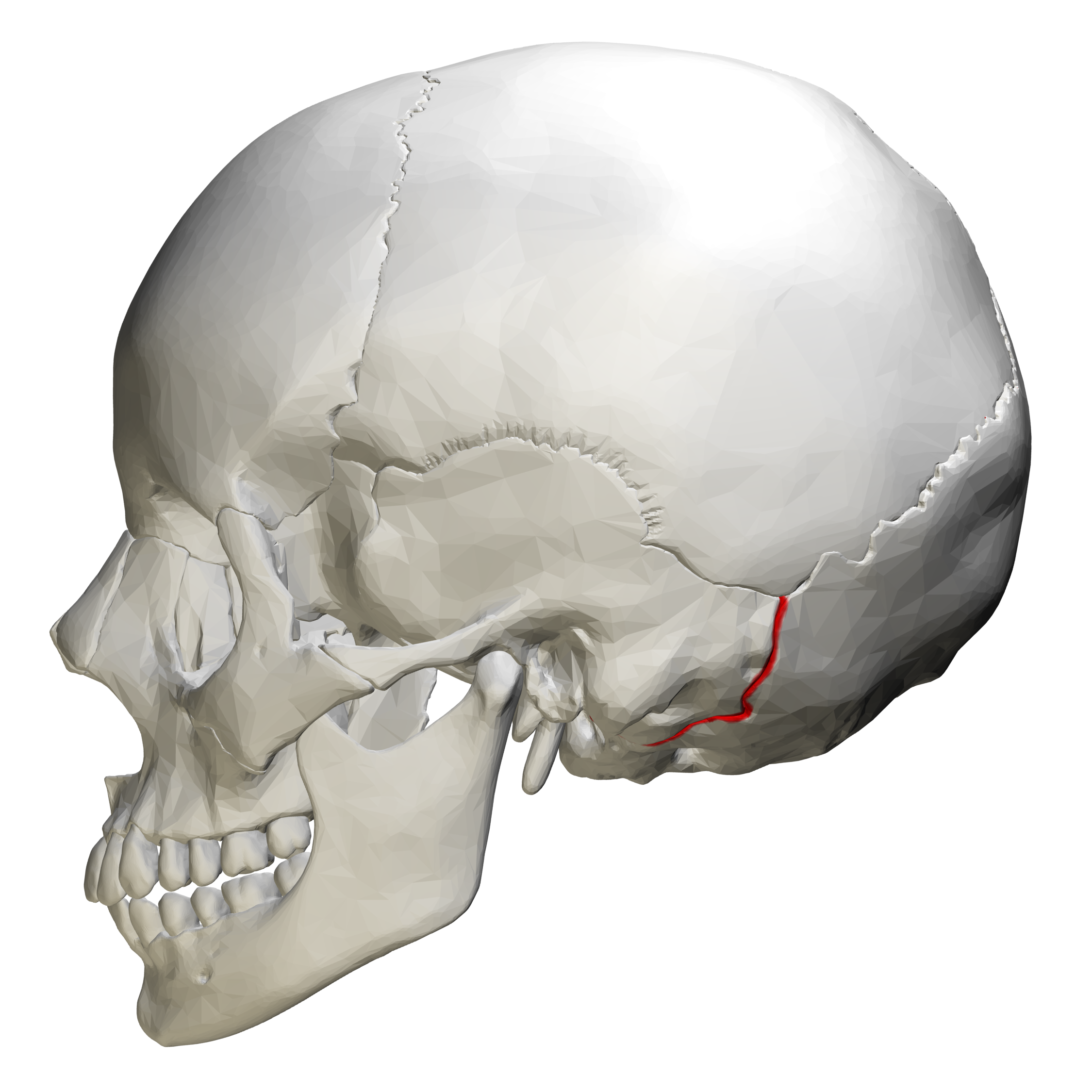
Occipitomastoid suture
connects the occipital bone w/ the portion of the temporal bone that houses the mastoid process


Foramen magnum
large hole for passage of spinal cord


Occipital condyle
smooth surface for articulation w/ atlas (first cervical vertebra)


External occipital protuberance
large projection palpated on the posterior aspect of the head; muscle attachment point
