Biology
 Call Kai
 Learn
 Practice Test
 Spaced Repetition
 Match
 Flashcards
 Knowt Play
1/57

There's no tags or description
Looks like no tags are added yet.
58 Terms
What are cells
Fundamental units of life
What are cells made up of?
Phospholipids
What is the role of phospholipids
Prevent the entry of hydrophilic compounds. (water-loving).
Transport proteins
Selective gate keepers
Info flows from
DNA via RNA to proteins
Cell behaviour is influenced by …
proteins
Composition of cells
70% is made up of water
30% contains other substances
what are the 3 types of prokaryotic cells?
Spherical cells, rod-shaped cells and spiral cells.
what are the 3 features of a prokaryotic cell?
protective cell wall surrounding plasma membrane
no organelles, circular DNA
Typically single-celled, aerobic or anaerobic
Eukaryotic cells are …. than prokaryotic cells
larger and more complex
What are the 3 features of a eukaryotic cell?
can be unicellular or part of multicellular organisms
linear DNA molecules (chromosomes in nucleus, chromosome number and policy widely variable)
Have membrane bound organelles
cell membranes
due to the nature of phospholipids, these molecules spontaneously assemble to form closed bilayers. The two faces of a membrane are asymmetric in terms of lipid and protein composition.
Functions of the plasma membrane
regulate transport like nutrients
maintain ‘proper’ chemical conditions
provide a site for chemical reactions unlikely to occur in an aqueous environment
detect signals in the extracellular environment
interact with other cells or the extracellular matrix
Nucleus
Membrane bound structure that separates DNA from cytosol, transcription from translation.
Endoplasmic reticulum (ER)
most lipid and most membrane protein synthesis, Ca2+ ion storage, detox. rough and smooth
Ribosomes
50% protein, 50% ribosomal RNA, protein synthesis, often associated with endoplasmic reticulum
Golgi complex
Series of flattened discs, modifies and sorts most ER products
Mitochondria
site of ATP production via aerobic metabolism, important role in apoptosis, self-replicating (fission)
mitochondria contains multiple…
mtDNA molecules
what do the genes in mtDNA exhibit and encode?
exhibit cytoplasmic inheritance and encode rRNAs, tRNAs and some mitochondrial proteins.
what varies considerably in different organisms?
The size of coding capacity of mtDNA
The products of mitochondrial genes…
they are not exported
What causes several genetic diseases in humans?
mutations in mtDNA
what do lysosomes do?
Degrade certain cell components, material internalised from the environment.
how do lysosomes appear on EM?
electron-dense bodies

features of lysosomes
single membrane
pH of lumen = 3.5-5
contain acid hydrolase
If a lysosomal enzyme is missing (genetic defect)
accumulation of material leads to lysosomal storage disease
peroxisomes degrade
fatty acids : carry out β- oxidation of fatty acids (β-
oxidation spiral)toxic compounds : alcohol oxidation
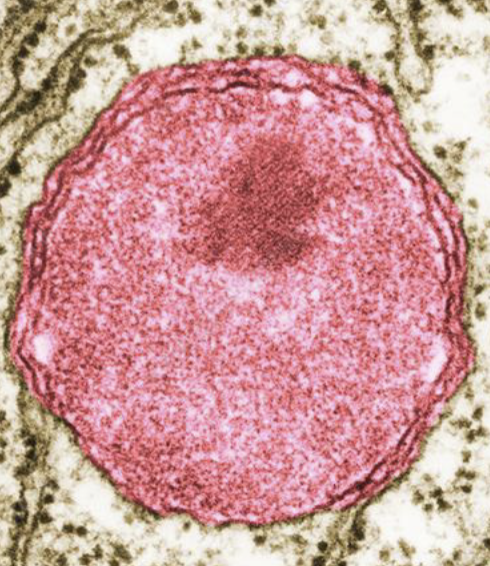
key features of peroxisomes
single membrane
contain oxidases (e.g. urate oxidase and catalase)
can be diverse in size and enzyme composition (e.g. special plant peroxisomes)

Cytoskeleton is composed of 3 MAJOR filamentous components :
microtubules : diameter 25nm. composed of tubulin
actin filaments : diameter 6nm. composed of actin
intermediate filaments : diameter 10nm. composed of different subunit proteins
what is cytoskeleton essential for?
movement of cellular components
maintaining cell shape
vesicular transport
cell division

in cytoskeleton, number of accessory proteins associate with the filamentous components
actin
microtubules

function of microtubules… hollow tube structure from 13 protofilaments
maintains cell shape by resisting compression (push)
move cells via flagella or cilia
move chromosomes during cell division
assist formation of cell plate during cell division
move organelles
provide tracks for intracellular transport
Microtubules are made up of tubulin
a tubulin and b tubulin dimers join together to make long protofilaments. 13 protofilaments form the hollow, straw shaped filaments of microtubules.
Dynamic - microtubules
+ end grows more rapidly
end anchored in microtubule organising centres (MTOCs)
The primary MTOC in a cell is called the centrosome, usually located adjacent to the nucleus (see cell division, genetics)
organelle position, cytoplasm organisation

functions of actin filaments … strands in double helix
maintain cell shape by resisting tensions
move cells via muscle contraction or cell crawling
divide animal cells in two
move organelles and cytoplasm in plants, fungi and animals
Actin filaments - cell shape and whole cell locomotion
Microvilli, endocytosis, lamellopodia, filopodia
long, thin fibres, composed of bundles or other groupings
dynamic
Actin filaments - cells which need to move rich in actin
e.g. lymphocytes needing to move out of blood vessels
also found in muscle cells, allowing cells to contract


functions of intermediate filaments … fibres wound into thicker cables
maintain cell shape by resisting tension pull)
anchor nucleus and some other organelles
Intermediate filaments are rope-like fibrous proteins - defined by size, not composition… abundant cytoplasmic and nuclear proteins
• classified into five groups based on domain and sequence
homology
• expression is cell-, tissue-, differentiation- and development-
specific (e.g. keratins (epithelial cells), desmin (muscle
examples of where intermediate filaments provide structural reinforcement and stress-resistance
skin rubbing in the blistering keratin skin diseases. non-mechanical stresses (oxidative or other toxic injury). anchor organelles including nucleus in cytoplasm.
Motor proteins - why not enough to have cytoskeleton
Need motors to move vesicles. 3 superfamilies identified with multiple members. Presence of conserved amino acid sequence, forms the ATP-binding and force-producing motor domain.
Myosin {type of motor protein}
acts on actin; cell surface contractions, morphological changes, vesicle motility, muscle cell contractions
Dynein and kinesin {type of motor proteins}
Interact with microtubules to move vesicles and organelles, movement of flagella and cilia, essential in mitosis and meiosis in the function of the spindle.
Myosins are expressed in virtually all eukaryotic cells
13 members of the myosin family, share a conserved motor domain consisting of separate head, neck and tail regions. Couple hydrolysis of ATP to conformational changes.
Myosin head, neck and tail regions
head (motor) domain: ATP- and actin-binding sites. Exhibits actin-activated ATPase activity
neck region: an extended a-helix
tail region : effector domain. determines specific function
What do microtubules possess?
Structural polarity. the minus ends are associated with the poles of the spindles.
Cytoplasmic motors
Dyenin: large mass, high level of complexity- activity can be dynamically regulated
Kinesin: much smaller structure - is either active or inactive
Dyenin and kinesin both move in one direction only!!
Dyenin: moves towards the minus end of the microtubules
Kinesin moves towards the plus end of the microtubule. Force and movement is generated by ATP hydrolysis
Where may cytoskeletal elements be anchored?
In the plasma membrane… stress fibres (actin + myosin II filaments)
Focal contacts
Attachments between actin and the ECM
cells can bind to the substratum
transmembrane adhesion protein (integrins) bind to components of the ECM, AND INDIRECTLY TO ACTIN FILAMENTS
cell-cell contacts
Adherens junctions ; actin-reinforced cell:cell contact involving cadherins
Desmosomes ; intermediate fibres anchored to plasma membrane
mutations in any of the cytoskleteal components can lead to disease
Actin mutations - forms of congenital myopathy
Intermediate filament mutations - 30 human diseases
Microtubule mutations/ disfunction - linked to neurodegeneration
keratin genes account for ¾ of all the intermediate filaments genes identified in the human genome
mutations- lack of effective intermediate filament network in the cytoplasm of keratinocytes. cells extremely fragile, epithelium breaks down
EBS
epidermolysis bullosa simplex
Pharmaceutical agents can be used to target cytoskeletal
components
e.g. polymerisation of filaments
• Colchicine; causes microtubule depolymerisation, may contribute to its role in treating gout
Treating cancer
vinca alkaloids and paclitaxel disrupting cell cycle progression by inhibiting mitotic microtubules
Can also target accessory proteins and ECM
Integrins are target for…
antiplatelet drugs