EMES 446 Final Exam Study Guide (Imported)
 Call Kai
 Learn
 Practice Test
 Spaced Repetition
 Match
 Flashcards
 Knowt Play
1/118

There's no tags or description
Looks like no tags are added yet.
119 Terms
hologenome theory
Postulates that in multi-partite symbiotic organisms, the combined hologenome (a consortium of the genetic material of all the members of the holobiont) acts as a single unit of evolution, with faster evolving micro-organisms providing the plasticity needed to adapt to the rapidly changing environment
- host and its organisms evolve together

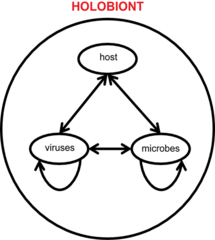
holobiont
consists of coral, dinoflagellate, and other microbes all in triangle impacting each other -> makes up the holobiont (host and all microorganisms in it)
massive corals
- mound shaped
- grow slowly (~1 cm per year)
- hermatypic corals
ex. Siderastrea sp.

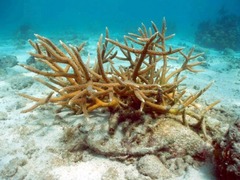
branching corals
- tree-like branch forms or elkhorn shapes
- grow rapidly (~10 cm per year)
- hermatypic corals
ex. Acropora sp.
corallite
polyp embeds into this (polyp's home)

gastrodermis (coral)
- symbiotic algae found here (intracellular symbiont, horizontal transfer)
- vital inner tissue layer lining the "gut"

keystone symbiosis
ex. zooxanthellae and coral relationship
- this symbiosis allows the holobiont to thrive in nutrient poor water

bleaching
occurs when corals lose their color due to loss of symbiotic zooxanthellae or their pigment
- not considered dead yet
- coral loses symbiont due to stress/disease

endolith
between skin and bone; has calcium carbonate skeleton
- in corals, symbionts associated with the calcium carbonate skeleton (also in mussels shell)
microbial community within coral host
microorganisms found in endolith, intracellular within tissue, in the digestive tract, but most are recovered from surface mucus layer
adaptive bleaching hypothesis
- posits that when environment changes, the loss of resident zooxanthellae is followed by establishment of a "new" symbiotic interaction with different zooxanthellae that are better adapted to the new conditions
- bleaching may not always be bad and instead an adaptive response, lost symbionts cannot handle heat, retained symbionts are more heat-resistant
- These more heat-resistant bacteria can be vertically transmitted based on Montipora study
MAMPs
microorganism-associated molecular patterns
- small molecules secreted on surface of a microbe to signal they are not pathogenic
keystone microbes
shape the rest of the microbial community and resist pathogens
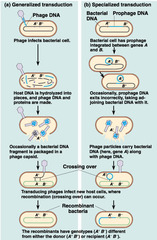
GTA (gene transfer agent)
- mediated horizontal exchange in coral reef bacteria (horizontal gene transfer on coral surface)
- phage like particles that can package up to 4000 base pairs of host bacteria DNA
- GTAs look like phage particles
- GTAs do not lyse recipient cells, only insert their DNA
prophage WO
- lysogen (phage doesn't replicate and is a "prophage" that is maintained or degraded in wolbachia genome)
- many reproductive parasitism genes encoded in Wolbachia within prophage WO
- prophage WO genes include cifB/cifA genes required for cytoplasmic incompatiability and wmk gene for male killing
- supergroups A, B, E, F, and S
lytic phage
1. infects bacteria: phage DNA is injected into host cell by bacteriophage
2. replicates: Phage DNA replication and viral protein synthesis, DNA packaged into new virus particles
3. Cell lysis: lyses bacterial host (release of progeny virus) and moves on to find new hosts

lysogenic phage
1. phage integrates its genome into host (phage DNA is injected into host cell by bacteriophage)
2. Phage DNA recombines with host chromosomes (prophage gets added)
3. cell carrying prophage divides normally
- cell can become lytic later
- more prevalent during times of low host abudance and productivity
- provides survival advantage by allowing phages to "hide out" during unfavorable conditions
reproductive parasitism
used by the symbiont to increase the frequency of infected females in a given population so that the symbiont is passed on
- if only females can transmit the symbiont, then it benefits the symbiont to manipulate its host to maximize its own proliferation
- different wolbachia symbionts have evolved different strategies to manipulate their hosts' reproduction (all wolbachia do not do all 4 strategies - depends on having the right genes)
bacteriophage
a virus that infects a bacterial host
- means "bacteria devourer"
- phages are the most "abundant replicating entities on the planet"
- total viral abundance exceeds that of prokaryotes by ~10 fold (1 bacteria: 10 viruses)
- highest abundance in photic zone

viral shunt
the transfer of energy and nutrients from living organisms into the dissolved phase through the process of viral lysis
rhizosphere
region of soil surrounding plant roots, significantly influenced by root secretions and the associated microbial community, playing a crucial role in plant
- below ground
- 2-10 mm from the root
- directly associated with roots

rhizoplane
surface of the root
- below ground
- in zone influenced by plant rather than bulk soil

root endosphere
area inside of the root
- below ground

leaf endosphere
area inside of the leaf
- above ground

phyllosphere
area on the surface of the leaves
- above ground

ectomycorrhiza
- on surface of root but can go in Hartig net vs Arbuscular mycorrhiza, which have direct connection inside plant cell
- not intracellular
- ectosymbiont

Hartig net
a network of fungal hyphae that penetrates into the root but stays between plant cells
- not intracellular!

Arbuscular mycorrhiza
form arbuscules within plant cells that serves as the primary site for nutrient exchange
- endosymbiont

biomining
techinque uses microbes to extract metals from their ore
- microbes can uptake metals in the ore into their cells, the metal can then be extracted from the microbial cells
- microorganisms: fungi and prokaryotes
- Harvest metal from microbial symbionts rather than directly from soil where metal levels are too low
Labyrinthula and Zostera seagrass symbiosis
- seagrass pathogen
effects: Seagrass wasting disease (SWD) -> caused by a slime mold like
- used to degrade when dead but now degrading alive grasses
transmission: transmission through water rather than contact (doesn't need physical contact with infected blades)
- disease is faster to show when increase cells per mL but each day is increasingly higher prevelance
- SWD caused by Labyrinthula is water born and does not require direct contact with infected leaves for transmission
- as little as 5 cells per mL can cause disease in 50% of plants
- tested temp do not appear to impact disease risk
picture: recognized a picture of a diseased seagrass
Geothermal soil grass with Curvularia fungi and CThTV virus
Geothermal soil grass contains Curvularia fungi with CThTV virus (tripartite symbiosis)
- allows plants to withstand increased temperatures
- used DNA sequencing of ITS region to identify Curvularia
- did not find Curvularia in surrounding soil; didn't grow in culture -> suggests curvularia is only associated with the plant host
- re-isolated viable curvularia fungi form Sym plants demonstrating both plant and fungal symbiont survived heat challenge
- symbiont allowed plant to grow when heat increased but just not as much but not completely dead
Geothermal soil grass with Curvularia fungi and CThTV virus
- generated a virus free (VF) curvularia
- use hyphal fusion to reintroduce CThTV virus from WT into VF strain to make An strain of Curvularia
- experiment showed virus is crucial for health of fungi bc without it, almost all plants died
- native grasses in geothermal soil harbor a fungal endophyte (Curvularia) that contain mycovirus and both the fungi and viral partners are required for plant and fungi to survive thermal stress
- the WT Curvularia (with virus) can also confer thermal tolerance to crop plant (tomato)
- mechanism underlying symbiotic benefits is unknown
Leaf gland endosymbionts
- extracellular endosymbiont
- transferred vertically through the bulb
- leaf glands enclose a single species of bacterial endosymbiont (many are not culturable)
- usually produce bioactive compounds that benefit the plant host (anti-insect)
- some symbionts encode T6SSs for possible interbacterial warfare
- can be small or large glands
- can find up to 100 million bacterial cells per gland
- evidence suggests vertical transmission
- leave endophytes kill each other with T6SS in cultures (shows T6SS kills)
- leave endophytes kill compete with T6SS in planta (a lot less colonization)
leaf endophytes summary
- leaf endophytes tend to be a single bacterial species associated with a given plant host
- engulfed by plant leaf and can be small or large, holding up to 100 million bacterial cells per gland
- bacterial endophytes produce molecules to aid the plant
- symbionts transferred to the bulbs to ensure vertical transmission from gen to gen
- occassionally transmission does not occur - leading to aposymbiotic plants that often do not develop properly
- allows researchers to introduce non-native bacterial symbionts that are culturable and genetically tractable
- bacterial endophytes might use T6SS weapons to compete for gland sites
active margin
- rocky shores, deep water
- contain rocky intertidal zones
- CA coast
- plate movements create these diff marine habitats

passive margin
sandy shores, shallow water
- NC coast

hepatopancreas
aids in digestion, nutrition absorption, and detoxification
- studies in shrimp show diverse benefical bacterial colonization but can also be a site of bacterial pathogens
- below stomach and heart in isopods
- Ligia isopods have hepatopancreas
- in other organisms, these are well-studied and found to have symbionts

be able to identify symbiotic hosts and/or microbial partners
Internal spawning in corals
Internal fertilization (brooding) followed by release of planula larvae
Broadcast spawning in corals
broadcast spawning on gametes, followed by formation of planula larvae that are planktronic
- gametes meet in water

Synchronized mass spawning in corals
- most corals spawn gametes in water this way
- population level coordination makes sense to increase probability of fertilization
- during slack neap tides at times of low wave action (minimize spread of gametes by waves and turbulence = increased fertilization rates) and reduce damage to early coral embryos
- hybrid species can be beneficial to adapting to changing environment
- overwhelm predator, timed with tide, hybridization
benefits of mass spawning
- overwhelm predators
- timed with less wave action to protect gametes
- promotes hybridization
Pocillopora corals
- During heat stress, some bleach some don't within same species
- Correlated with which type of symbiont (C. lat vs D. gly). - Study showed no fitness cost for host having heat-tolerant symbionts
Pocillopora corals with C. lat symbionts
- Less heat-resistant
- photosynthetic efficiency and division rate decreases with increased heat
Pocillopora corals with D. gly symbionts
- more resistant because didn't have decreasing photosynthesis
- More heat-resistant
- photosynthetic efficiency and division rate stays same with increased heat
Symbiodinium clade distribution (host specificity and location on an individual coral)
- Certain clades of Symbiodinium have a broad host range, some are very narrow
- Within an individual coral, there can be spatial structuring of its symbionts
- 9 major clades (A-I) along with sub-clades (like A3 or C7)
- many clades so found in many different hosts
- Clade C is generalists because found in all hosts except one
- Cade I specialists because only found in one host
- hosts are: Cnidaria, mollusca, foraminfera, and other
- organisms also having zooxanthellae symbionts: sponges, sea anemones, jellyfish, flatworms
- as move down from top of coral, different zooxanthellae appear (at top is B1 because closest to sunlight, then A3, then C7 at bottom near ocean floor)
-

Symbiodinium clade distribution (host specificity and location on an individual coral) patterns
- Clades A and B occured in light exposed tops
- Clade C mostly occurred in shaded sides or in deeper water habitats (light gone)
- suggests there are high-light and low-light adapted clades
How corals can influence the composition/function of symbiotic microbes (four scenarios)
1. Detect MAMPs that either trigger an immune response to pathogens or select for benefical symbionts (make lectins)
2. Produce and excrete antimicrobial compounds to select against non-benefical symbionts (produce antimicrobial compounds)
3. Release chemical cues that would attract potentially benefical microorganisms
4. Attract and maintain "keystone microbes" whose job it would be to shape the rest of the microbial community and resist pathogens
- If composition of microbiota is important to host then scenarios 1 or 2 may be likely (think vibrio/squid symbiosis)
- If function rather than composition of microbiota is more important for holobiont's health and stability, then scenarios 3 or 4 are more likely
Coral diseases and controversy (don't need to distinguish syndromes but should know coral is diseased and host is coral and type of symbiotic association is parasitic)
- about 18 coral diseases are generally recognized
- disease caused by Vibrio shiloi and Serratia marscensens (parasitic)
- disease can devastate dominant species of coral reef and result in major changes in community structure
Challenges of studying coral diseases:
- pathogen is often not conclusively identified
- pathogens are waterborne (easily spread, disease often linked to current patterns)
- pathogens can be host specific
- mortality can be up to 100%
- disease is correlated with other signs of weakening coral health (like bleaching)
- geographic extent and frequency of disease increasing in Carribean
Coral diseases controversy
some corals are no longer susceptible to infectious agents that caused disease in the past
possible explanations:
- holobionts can acquire benefical partners and ward off pathogens
- evolutionary loss of genes that reduce virulence in previously infectious agents (happened in V. shilol)
- natural selection for disease-resistant coral genotypes
- primitive immune memory in corals
- collection of generic symptoms that could be caused by several opportunistic pathogens
- disease could occur when members of the commensal microbiota escape some yet unidentified restrictions imposed by the host to control growth
Wolbachia genomes (lack of stability, lots of mobile elements)
- does not have high genome stability
- contains many mobile, repetitive, and viral like genetic elements that are indicators of continued genome evolution (includes repeat sequences that allows for genome rearrangements to occur)
- many draft and complete genomes of different types of wolbachia symbionts
How Wolbachia can be used to control Zika and avian malaria
wMel (wolbachia) signifcantly reduced infection rates
- mosquitos with wMel provide protection from zika
- can put wolbachia into mosquitos to prevent virus from staying in them and infecting humans
- releasing large scales of wolbachia infected mosquitos proved to decrease the amount of infective mosquitos
- introduce infected males
How many bacterial cells and viral particles in a liter of seawater
1 billion bacteria, 10 billion viruses in 1 L seawater
Phage influence on bacterial community composition and diversity
- primary result of lysis is removal of specific host from the community
- can create an open niche that may allow less competitive species to grow
- certain members of the community may be stimulated through the release of organic substrates from cell lysis
Phage resistance mechanisms (external)
External mechanisms of bacteria to fight off phage infection: block receptors (receptors have single amino acid change to modify structure, block protein to prevent phage docking, EPS can create shield around cell surface)
- modification of host cell receptor to prevent phage absorption
Phage resistance mechanisms (internal)
Internal mechanisms of bacteria to fight off phage infection: Degrade phage genome (nucleases that recognize specific site in phage genome and cut it up)
- degrade phage genome with enzymes
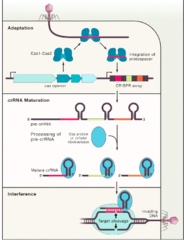
- includes CRISPR/Cas system: anti-viral immune system
- CRISPR (clustered, regularly interspaced, short, palindromic repeats)
Receptors on filaments limit host range of viruses, most ocean viruses are phages because bacteria are most abundant prey
Three stages of CRISPR immunity
1. Acquisition: new spacers are acquired from phage DNA and incorporated into the CRISPR locus (Phage infects cell, Cas enzymes obtain piece of phage genome and incorporate it as a new spacer)
2. Expression: CRSIPR arrays are and produced into small interfering crRNAs (Transcribe CRISPR locus as new RNA, each spacer has its own Cas enzyme)
3. Interference: crRNAs guide Cas proteins to homologous sequences (foreign DNA) to specifically cleave it (Guide RNA-Cas enzyme patrols cell, finds matching part of phage genome along with cleaving enzyme to degrade phage genome)
Applications of CRISPR/Cas
can be used to change, delete, or replace genes in virtually any cell, including human cells
- sickle cell anemia
- muscular dystrophy
- fundamental defect associated with CF
- HIV receptors
- viral and bacterial infectious disease diagnosis
- 2017, China first edited human embryo with CRISPR
Genetic engineering in plants:
- disease resistant wheat plants
- disease resistant bananas
- long lived tomato plant
Pseudomonas aeruginosa and phage with anti-CRISPR genes: symbiosis
Pseudomonas aeruginosa study looked at phages blocking CRISPR/Cas system (Anti-CRISPR system) -> used to combat CRISPR/Cas
- gram negative bacteria; resistant to antibiotics
- found widely in evironment
- contains a type I-F CRISPR/Cas system
- many P. aeruginosa isolates are lysogens (have prophages)
Steps:
1. when phage DNA integrates into host genome, some of its genes are still expressed
2. if a lysogenic phage encodes genes with anti-CRISPR function, then these genes might be expressed in P. aeruginosa lysogens
3. screen P. aeruginosa strains for a lysogen that can be infected with a CRISPR sensitive phage (look to see if P. aeruginosa's with lysogens can fight off phage too) *the control has no lysogen so can fight off phage
4. results:
- the control fails to replicate the phage
- prophage (lysogen) caused complete inactiviation of the CRISPR/Cas system (so it did replicate phage on tenfold dilution)
- 8 genes in these lysogens were able to inactivate CRISPR/Cas system
- anti-CRSIPR genes in phages are very effective meaning they replicate well (when no anti-CRIPSR gene theres no replication bc CRISPR worked to fix)
Pseudomonas aeruginosa and phage with anti-CRISPR genes: conclusion
- phage can encode genes with anti-CRISPR/Cas function
- these genes provide protection from CRISPR/Cas immune system and allow viral infection
- the anti-CRISPR genes found here can only inhibit the type I-F CRISPR/Cas system in P. aeruginosa (didn't work against e. coli) suggesting it is only effective against a narrow host range
- mechanism of how these proteins work is not known but predicted to affect the interference step of the process
Vibrio cholerae and ICP1 phage with its own CRISPR/Cas system: symbiosis
- this system targets bacterial anti-phage defenses
- Vibrio cholerae study found ICP1 phage has its own CRISPR/Cas system with anti-phage genespacers, uses this system when infecting V. cholerae
- V. cholerae is caustive agent of severe diarrheal disease cholera
- ICP1 is a lytic phage of the bacterium Vibrio cholerae
- ICP1 was found in all patient stool samples
- found ICP1 had extra genes btwn gene 87 and 88
- CRISPR/Cas system in ICP1 phage uses spacers specific to V. colerae chromosome (if have blue and pink or just blue or just pink it will infect, but if v. cholerae only has blue and ICP1 only has pink, it won't infect bc mismatch)
Vibrio cholerae and ICP1 phage with its own CRISPR/Cas system: conclusion
- ICP1 phage contains its own CRISPR/Cas system that is acquired from an unkown bacterium
- ICP1 CRISPR/Cas system has spacers that target the PLE region (anti phage region) of V. colerae
- ICP1 was able to incorporate new PLE-specific spacer sequences when grown on V. cholerae (it is adaptive)
-* ICP1 can use its CRISPR/Cas system to protect from PLE-mediated antiviral activity and complete the lytic cycle
Choanoflagellates as a model system for the evolution of multicellularity
microbes were present during process of evolution of multicellularity
- all animals evolved from single lineage of unicellular precursors more than 600 million years ago
- choanoflagellates are a group of unicellular (or facultatively multicellular) aquatic microeukaryotes that are the closest living relatives of animals
- choanoflagellates are capable of chemosensation, photosensation, and mechanosensation (these often involve specialized cellular appendages that resemble animal sensory cells)
- facultative multicellularity helps understand how evolution displaced the locus of single cell to collective and how new space of behavioral complexity might have become accessible
- other complex multicellular eukaryotes have converged at least 4 times (algaes, fungi: oomycetes)
- the immediate sister group of animals is choanoflagellates
- a group of ovoid bacterivorous flagellates that are globally distributed in aqautic environments
- eat bacteria but also have some symbiotic associations with bacteria
Biology and behavior of choanoflagellates
- Choanoflagellates act different ways in nature vs in culture
- can be readily isolated from most aquatic environments but little is known about behavior in wild
- their minute size and highly granular and ephemeral nature of aquatic microenvironments make in situ observation challenging
- see lots in winter in pond bc predator is prob away
- signature feature is a collar complex (a ring of fine and rigid appendages called microvilli that surround their beating flagellum)
- these 2 types of appendages cooperate to allow choanoflagellates to capture the bacteria they feed on
- the beating on the flagellum creates a flow that carry bacterial prey in the liquid
- the microvilli acts as a filter that first traps and then transports them toward the cell body to be phagocytsoed

Biology and behavior of choanoflagellates
detecting stimuli: senses and sensory receptors in choanoflagellates:
- the response to a stimulus by a cell or organism involves series of consecutive events (1. detection of the stimulus by a molecular receptor, 2. the conversion/transduction of the stimulus into biochemical acitivity of a cellular signaling pathway, 3. a functional output of behavior)
- choanoflagellates display abundant mitochondria
- suggests they rely on aerobic (need oxygen) metabolism to produce ATP and perform cellular functions
- hypothesized that oxygen conc. as well as chemcial cues indicating the presence of bacteria are likely relevant to their existence and logical prime candidates for chemosensing
- swim toward higher oxygen conc.
- swim toward lower pH (which can be caused by bacterial metabolism)
- NO might be generated by choanoflagellates
- NO signaling might mediate intercellular communication in this species, either within or btwn colonies
Be able to recognize a single choanoflagellate or a colony of individuals

Life stages of choanoflagellates
- Choanoflagellates can transition from slow to fast swimmers
- transition from indiviudal to multiples (colony chain or rosette)
- can attach to surfaces and use filopodia to "walk"
- secrete extracellular matrix that forms a rigid theca
- can transition through different stages
- found distributed globally in aquatic systems
- their small size and ephermal nature in these habitats can make them challenging to study in the wild

ecological role of choanoflagellates (in food web)
choanoflagellates act as bacteriovores but are grazed on by larger organisms
- eat bacteria, detritus, phytoplankton
- micronekton eat them
Use of FACS to quantify and identify choanoflagellates and their symbionts in seawater (global ocean survey)
Fluorescence-Activated Cell Sorting (FACS)
- water samples of different size fractions
- collect DNA for sequencing, temp, turbidity, nutrients
- choanoflagellates are identified using specific properties and fluorescent probes
Steps:
1. ocean sample for immediate cell sorting
2. staining of living phagotrophic protists
3. discrimination of predators from other microbes using FACS
4. single predators and co-associates sorted into wells
5. predatory protist and co-associates - whole genome amplified and sequenced
6. assembly, symbiont genome and host analysis

Lake mono choanoflagellates (B. monosierra) compared to S. rosetta
B. monosierra isolated from Mona lake, large colony creates lumen in center containing alpha- andgamma- proteobacteria, function of these bacteria still not known (may be similar to crypts in squid,ampullae of lorenzini in sharks)
- lake mono is hypersaline and alkaline
- aplified 18S gene from six isolates on lake mono (all were >99% identical so they were same species)
- B. monosierra colonies are larger than S. rosetta
- DNA staining observed in the lumen of B. monosierra colony
Traditional fishponds as a natural sample site for study choanoflagellate-bacterial symbioses
Traditional Hawaiian fishponds
- 20 traditional fishponds in Kaneohe Bay but only 1 left
- fishpond flooded, wall damaged, and invasive species took over
- resoration efforts to remove invasive species and have functional fishpond to provide protein for community
S. rosetta choanoflagellate and Vibrio fischeri symbiosis
S. rosetta is culturable choanoflagellate
- + V. fischeri stimulates sexual reproduction
- bacterium V. fischeri induces swimming and mating in S. rosetta through activity of secreted chrondroitinase EroS (Extracellular Regulator of Sex) -> bc S. rosetta and V. fischeri do not naturally co-occur
- EroS might mimic activity of inducer of mating secreted by the choanoflagellates themselves
S. rosetta choanoflagellate and A. machinpongoensis
S. rosetta is culturable choanoflagellate
- +A.machipongonensis stimulates rosette formation
- specificity of response to bacterial prey is also evident in control of multicellular development in S. rosetta which is induced by sulfonolipids (RIFs = Rosette inducing factors) secreted by the bacterium A. machinpongonensis
B. minor choanoflagellate and Comchoana symbionts
- Comchoana is bacteria related to human pathogens
- bacterial symbionts have smaller genomes
- bacterial symbiont genomes have systems for interacting with host (type 4 secretion system)
- bacterial symbionts are globally distributed (highest around equator)
- B. minor is globally distributed choanoflagellate particularly abundant in tropical-subtropical surface waters
- B. minor individuals have uncultured bacterial species associated with it
- these bacterial symbionts appear to be physically associated
- no microscopy yet bc B. minor is not in culture and ephemeral in nature (see increase after bloom from bottom- up effect)
- bacterial symbiont genomes show evidence of possible long-term, obligate associations with choanoflagellate host (small genome size, loss of some essential pathways, T4SS for interacting with eukaryotic cells)
B. monosierra choanoflagellate and gamma- and alpha- proteobacterial symbionts
- B. monosierra isolated from Mona lake
- large colony creates lumen in center containing alpha- and gamma- proteobacteria
- lumen space also contains an extracellular matrix
- function of these bacteria still not known (may be similar to crypts in squid,ampullae of lorenzini in sharks)
- B. monosierra has cavity inside colony made of bacterial sized cells (seen on TEM) -> bacteria and gammaproteobacteria inner and DNA overlays wider area across
- most but not all of the bacteria are gammaproteobacteria
- follow up sequencing shows a mix of species of gamma- and alpha- proteobacteria colocalizing within the lumen of the colony
- other species can build tree like structures with extracellular matrix that also become colonized on the outside by bacterial cells or within the hollow structure
- perhaps have large colony choanoflagellates in mason farm pond here
The winnowing from soil to plant
- the winnowing of many bacterial and fungal genotypes to only a few successful colonizers could be explained in part by plant-microbiome co-evolution
- niche adaptation may also have a major role in the selective filtering and recruiment of different microorganisms
- successful colonizers inhabiting the same host niche can either compete for the available resoucres or form stable co-existing communities through mutual cooperation
- highest diversity seen in bulk soil then rhizoplane and continue to decrease usually as go up plant
- plant associated microbial communities do not represent random assemblages -> they are structured by general rules for community assembly
- assembly is governed by complex interactions among microorganisms, their plant host, and the environment
Direct benefits of plant-microbe symbioses
- transformation and translocation of essential nutrients in the soil to make them available to plants (nitrogen fixation)
- migitation of environmental stresses (drought)
- protection from plant pathogens through competition
indirect benefits of plant-microbe symbioses
- enhancement of a plant's resistance responses
- emerging paradigm that plants and microbes should not be benefical or deleterious but as means to generate new phenotypes with increased fitness
Applications of plant-microbe symbioses
SynComs have shown how to put findings into applications in either greenhouse or field settings
- biocontrol agents (BCAs) are being created to target many diseases in fruit, vegetables, trees, grasses, etc
- ex. Pseudomonas choloroaphis to target diseases in fruit, vegetables, and cereals: can be used to prevent tomato root rot in rhizoplane
- different countries have different BCAs they are allowed to use
- solve environmental problems crop face (increase in heat or cold stress, increase in dessication or flood, increase in disease) and humans need metals for manufacturing (valueable metals are destructive and costly to mine and many sites have been stripped of their larger deposits)
Coastal plants and their microbial symbionts: Mycorrhizal fungi and coastal plants:
Mycorrhizal fungi and coastal plants:
- both arbuscular and ectomycorrhizal fungi have been found in plants along coastal sand dunes and mangroves
- these fungi are important for primary succession of plants in sand dune habitats that are deficient in phosphorus and are doughty
Coastal plants and their microbial symbionts: nitrogen fixers and coastal plants
- diazotrophs (nitrogen fixers) are very active in the rhizoplane and rhizosphere of salt marsh plants
- invasive N fixing species can allow species like Casuarinas, Acaias, and Myrica faya to successfully colonize and invade low nutrient coastal habitats
- in marshes and mangroves the use or promotion of N fixing microorganisms to enhance restoration of plant communities has long been suggested
Coastal plants and their microbial symbionts: endophytes and coastal plants
- in coastal sand dune systems suggests that presence of a fungal leaf endophyte greatly increases American beachgrass survival, belowground biomass, vegetative growth, and sand accumulation which has important implications for dune succession and stabilization
- similar fungal endophyte was present in 100% of pops sampled in FL coasts suggesting strong benefit
- medicinally active compounds
- can attenuate polluntants in coastal wetlands
- the use of endophytes that were isolated from a mangrove species to inoculate and improve the growth of a tree species used for restoration in Brazil
- can be used for stress resilience
Coastal plants and their microbial symbionts: rhizosphere microbes and coastal plants
- rhizosphre microbial communities in coastal systems are signficantly different than bulk soil
- several rhizosphere bacteria in marshes, mangroves, and sand dunes have plant growth promoting capabilities
- future work can facilitate agricultural plants under conditions of soil salinization
Coastal plants and their microbial symbionts: pathogens and coastal plants
Spartina marsh grass: water mold disease, invasive spartina species can bring with it the disease that impacts native Spartina species promoting invasion of new Spartina
Zostera seagrass: labyrinthula Seagrass wasting disease caused by a slime mold like (natural decomposer); now degrading alive grasses
Low rocky intertidal habitat zone and organisms
- many soft bodied organisms and algae
organisms: seaweeds, anemones, sea stars, sea urchins
middle rocky intertidal habitat zone and organisms
- higher species diversity than upper intertidal zone
- exposure is less
- rock depressions provide protection from heat
- low tide provides protection from predators
- organisms: barnacles (sessile suspension feeders only at high tide, each have ovaries and testes, larvae are planktonic), macroalgae, sea urchins, crabs, sponges, mussels
high rocky intertidal habitat zone and organisms
- well adapted to heat and drying exposure
- shells provide protection
- lichens' thick walls hold water
- organisms: periwinkle (phylum mollusca), lichens (grow on rocks or on shells of barnacles), shield limpets, ribbed
limpets (mollusca), chitons (mollusca), barnacles (phylum anthropoda)
splash rocky intertidal habitat zone and organisms
- mostly shelled organisms
- nocturnal behaviors
- hide in rock crevices during the day and venture out at night to scavenge for food (algae, larva, decaying organic matter)
- at low tide they might venture further away from the splash zone
- diversity decreases with increasing distance from water
- less competition for space and fewer predators
- organisms: periwinkle, limpets, rock louse, isopods (ligia species), athropods (crustacean)
Rocky intertidal stresses on organisms
Biggest stresses: heat and wave action , also dessication
- if body fluids get too hot -> physiological functions and protein stability can be affected
- organisms with external skeletons (barnacles and mussels) survive in drier and exposed areas bc they can enclose water in their shells and seal them to prevent desiccation
- organisms without external skeletons are not found on the more exposed areas but in moist cracks or in tidal pools
- as body size increases, SA relative to body volume tends to decrease and this aids in reducing water loss (better to be big regarding water loss)
- smaller organisms with larger SA to volume ratios can dissipate their heat better
- long, thin organisms will dry up more easily than spherical ones
Sea-to-land transition
aka terrestrialization
- happened during 3 temporal windows in the last 487 million years
- first wave during/after land plants, second wave during increased sedimentation, flooding, and seasonal wetlands, third wave during the greenhouse cretaceous
- happened through genetic changes (mutations, gene loss, gene gains), at least 11 different times
- happened for worms, pillbugs, etc and then some terrestrial animals went back to sea like whales and dolphins and marine reptiles
- phenotypic adaptations required: water rententive skin or cuticle, adapted immune systems, changes in skeletal design and locomotion, elevated metabolic rates, developmental adaptations (encapsulated larvae and brooding), adaptation of vision in aerial environments
- see widespread convergence across terrestrial lineages, suggesting largely predictable responses to similar environmental pressures
Ligia isopods as a model for sea to land transition
- Ligia species are found in splash zone intertidal regions
- considered semi-terrestrial
- isopods are thought to have transition from marine habitat to fully terrestrial by moving through the upper-intertidal habitat
- some of these pops stayed in the spray zone, making Ligia a primitative genus of terrestrial isopods and a good model system for exploring the role of microbial symbionts during terrestrialization
Ligia isopods and their Mycoplasma-like symbionts
- found in ligia isopods hepatopancreas
- ligia are semi-terrestrial
- after 16S clone and sequencing found most of symbiotic bacteria in heptaopancreas appear to be mycoplasma-like
- mycoplasma-like symbiont is not yet culturable
- no host specificity for mycoplasma-like symbionts
- used PCR to screen presence of mycoplasma in ligia
- found symbiont in all pops but not each individual in the pop
- results contradict the notion that this group of symbionts is absent or rare in these isopods
endolythic cyanobacterial parasites and native Perna perna brown mussels vs invasive: symbiosis
- Endolythic cyanobacterial symbionts dig into mussel shells and degrade them, killing mussels
- Perna perna has thicker shell and is more resistant -> gives it an advantage over invasive species
- more of the invasive mytilus are infected than native Perna in both open coast and bay
- fewer native Perna are infected than invasive
- shading has less infected for both but native Perna still has less infection in shade or non-shaded
- Perna takes more force to break shell
- Perna is stronger attachement
- invasive Mytilus has a higher mortality rate than native Perna
Why didn't disease flow both ways in 1492?
- long standing exposure in Europe (dense settlements, intesive agriculture with domesticated animals) -> fostered evolution of infectious disease and pathogens (smallpox, measles, flu) -> survivors often acquired immunity
-new world geographically isolated so prevented long term pathogen exchange, domesticated animals here less suitable for human pathogens, no old world disease
- humans contracted virus from animals but America didn't have as many domesticated species to maintain and transmit epidemic disease
- only Syphilis transmitted but was less severe
FIMS (Fungal Infection - Mammalian Selection Hypothesis)
this is just a theory to explain how mammals managed to rise after dinosaurs
evidence:
- theres a rich layer of fungal spores in fossil record after impact
- reptiles should have coped better than they did (they require less energy than mammals and have more offspring)
- reptiles are more susceptible to fungal disease than mammals and birds
- mammal fungal infections are less lethal
- air was full of fungal spores impacting both adults and eggs
- fungi can be food for mammals but reptiles have harder time digesting at lower temps and would be less active in foraging
Identify a mussel with parasitic infestation (degraded shell) vs non-infested
shell gets lighter, shell may get holes or pits as degrades
How might future climate conditions cause the endolithic parasite to become benefical for mussels
Under warming climate, could transition to beneficial symbiosis as shell lightens when degraded which can decrease heat stress
- the lighter color of the degraded shell reduced body temp due to infestation degrading shell
What area in the coastal shore did researchers see the most mussels with endolithic infestation and why?
high intertidal zone
- Rim
bc able to photosynthesize here