lab 9 fungi
 Call Kai
 Learn
 Practice Test
 Spaced Repetition
 Match
 Flashcards
 Knowt Play
1/36

There's no tags or description
Looks like no tags are added yet.
37 Terms
what are fungi
eukaryotes
1 kingdom
heterotrophs
more closely related to animals vs plants
fungis as heterotrops
most are saprotrophs- feed on dead organisms
are decomposers
living organisms that fungi feed on (3)
parasites
mutualists
predators
are majority of fungi mulicellular or unicallular
multicellular
what are fungii made of
filaments called hyphae

label the fungi
a- fruiting body
b- hyphae
c- mycelium

fruiting body
reprpductive part of fungus
the mushroom
mycelium
feeding part of fungus
what are hypae made of
chains of cells
does fungi digest food internally or externally
externally
which fungi are unicellular
yeasts
phylum
major differences in body plan

fungal life cycle

general asexual reproduction
occurs most of the time
a spore producing structure(n) releases spores (n) that develop into the mycelium (n)


sexual reproduction is in which conditions
occurs in harsh conditions


plasmogamy
in sexual reproduction
fusion of cytoplasm of different mating types
nuclei remain separate (n+n)


karyogamy
sexual reproduction
fusion of nuclei to form zygot(2n)

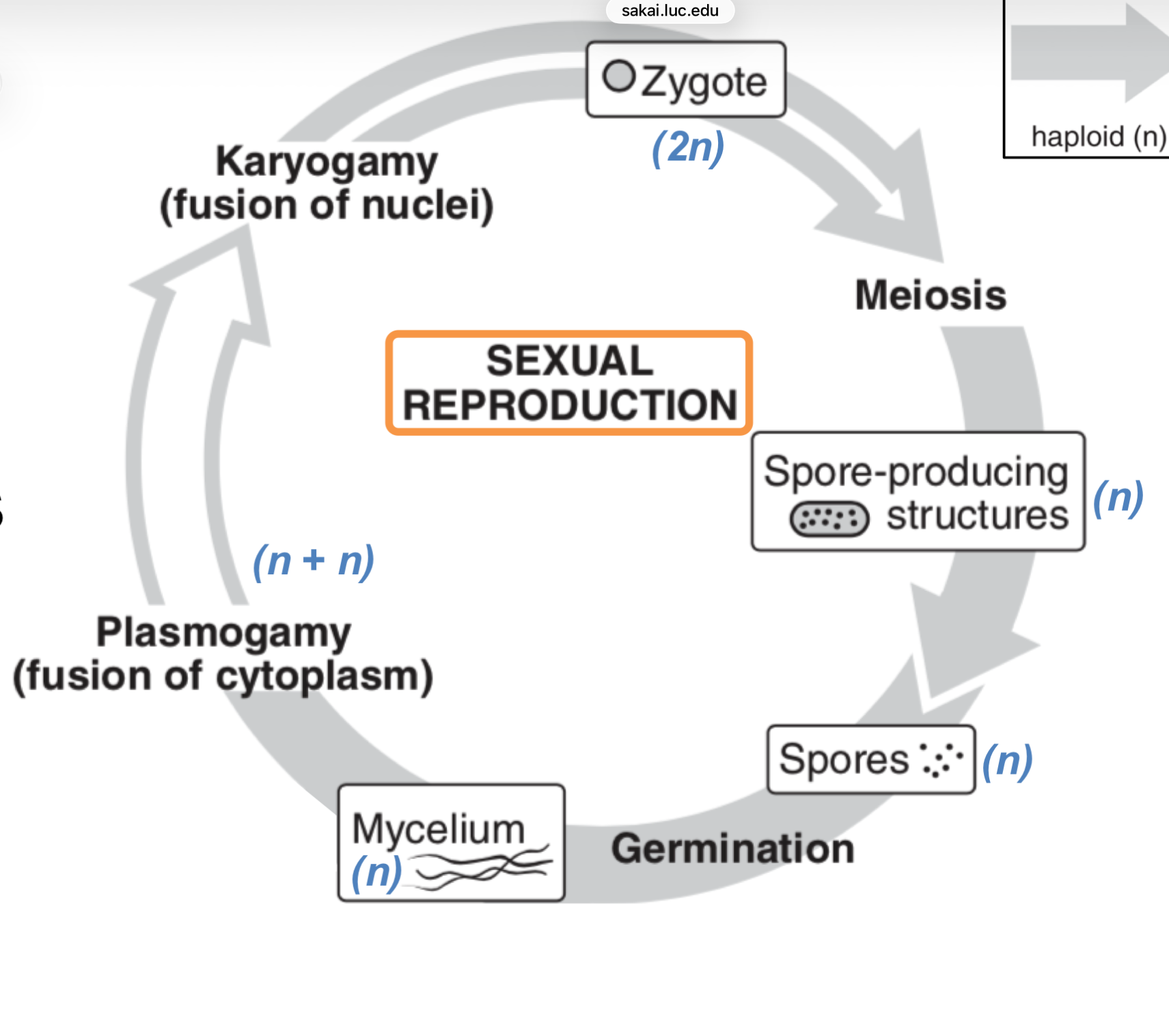
meiosis
each zygote (2n) undergoes meiosis to produce spores (n) that germinate mycelium

do haploid or diploid structures dominate life cycles
haploid
mucormycota
mold
rhizopus
mucoromycota
black bread mold

what is this and label
mucoromycota from rhizopus
a- spores
b- sporangium
c- sporangiophore


mucoromycota (asexual reproduction)
the sporangium on the sporangiophore produces spores by mitosis
sporangiophore is a specialized hypha
spores germinate into a new mycelium


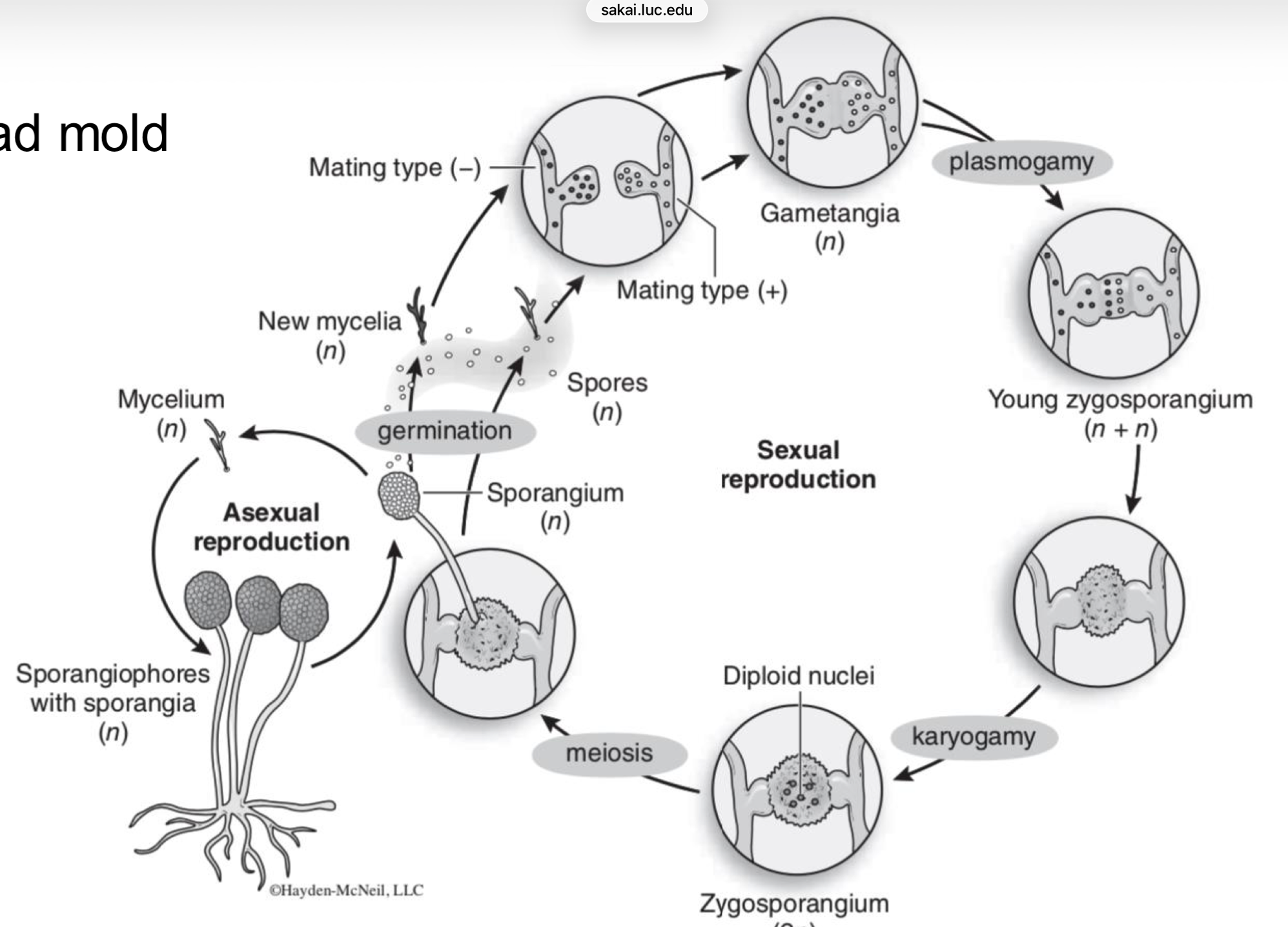
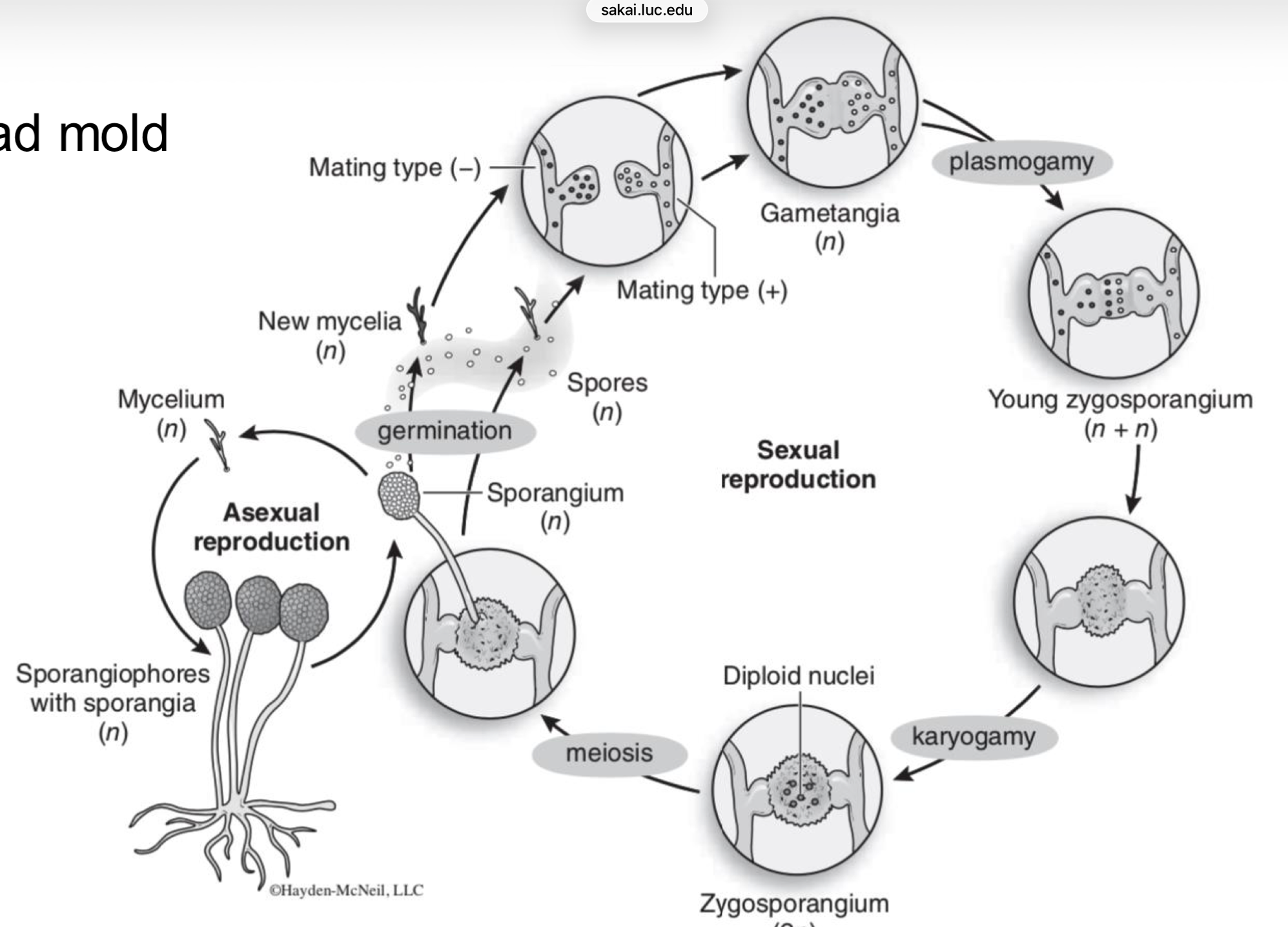
mucoromycota life cycle- sexual
tips of hypae swell to form gametangia
plasmogamy- fusion of cytoplasm
spores develop into hypae
meiosis- sporangia, sporangiophores and spores produced
karyogamy- fusion of nuclei to form zygotes
zygosporangium forms and develops a thick wall

ascomycota
sac fungi
what ascomycota produce asexually
penicillium

what is this and label
a- conidia(n)- forms chains
b- conidiophores(n)- specialized hyphae that produce conidia by mitosis


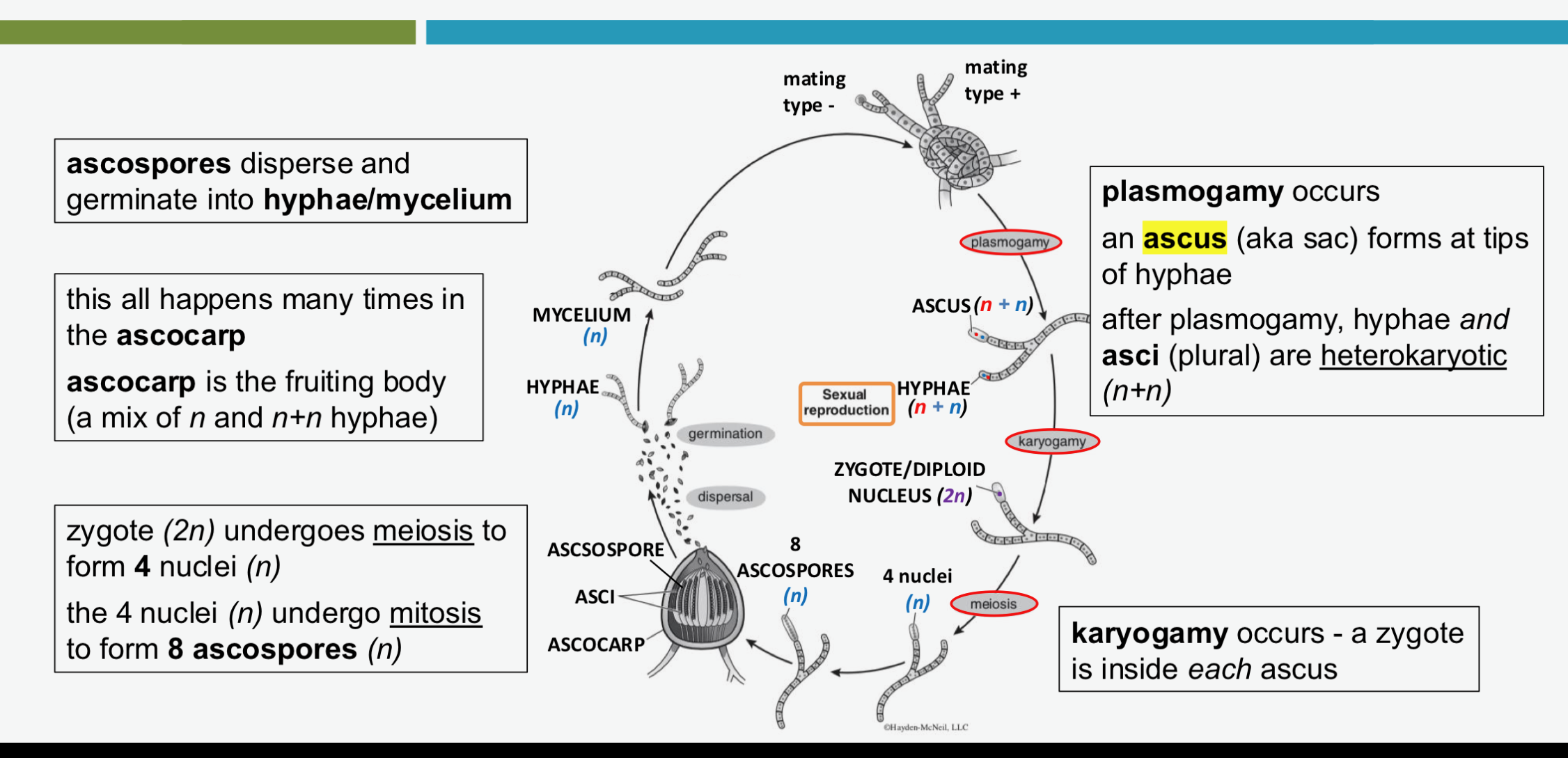
ascomycota asexual reproduction
conidiophores produce conidia by mitosis
conidia germinate into a new hyphae/ mycellium

ascomycota
sexual reproduction


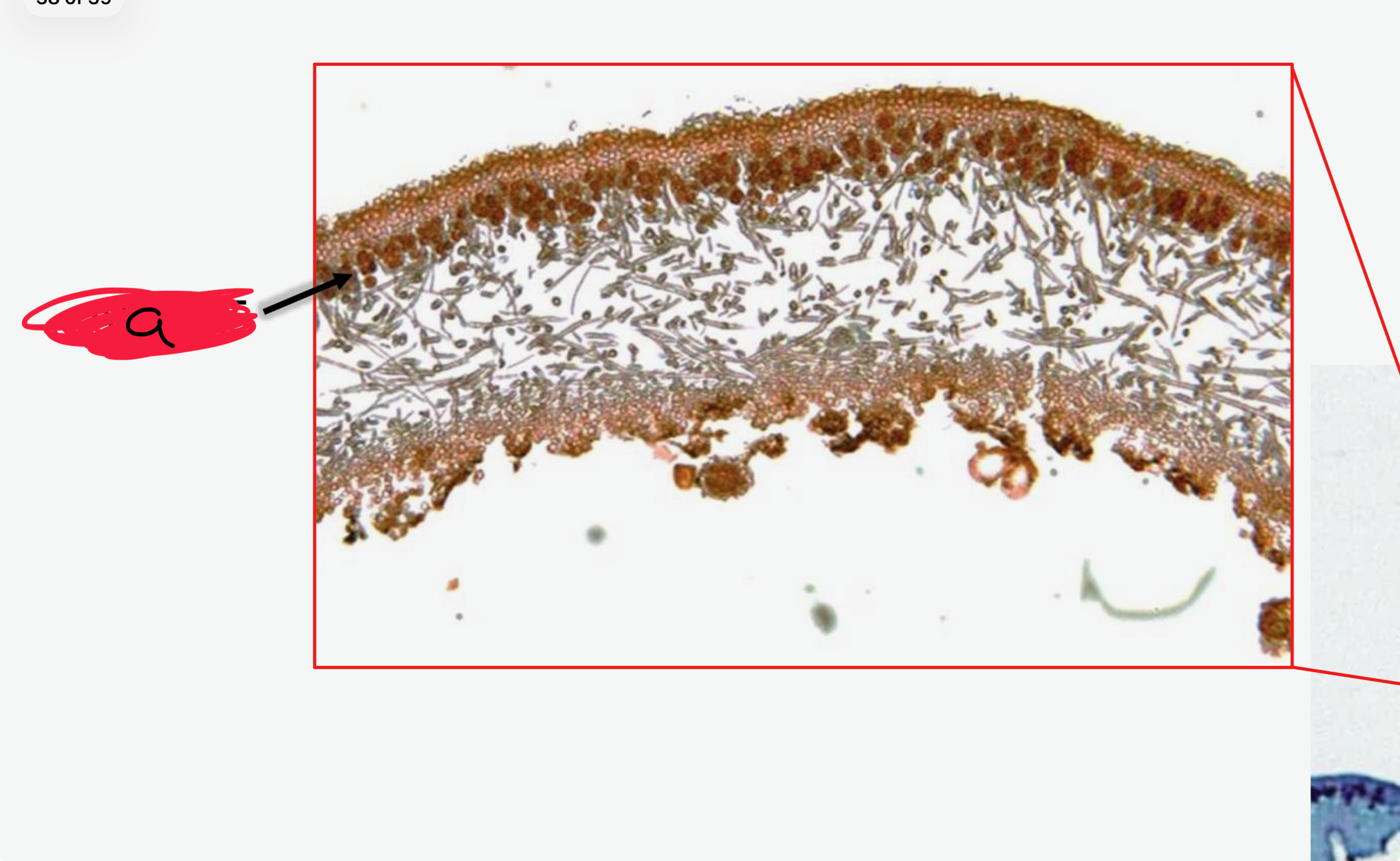
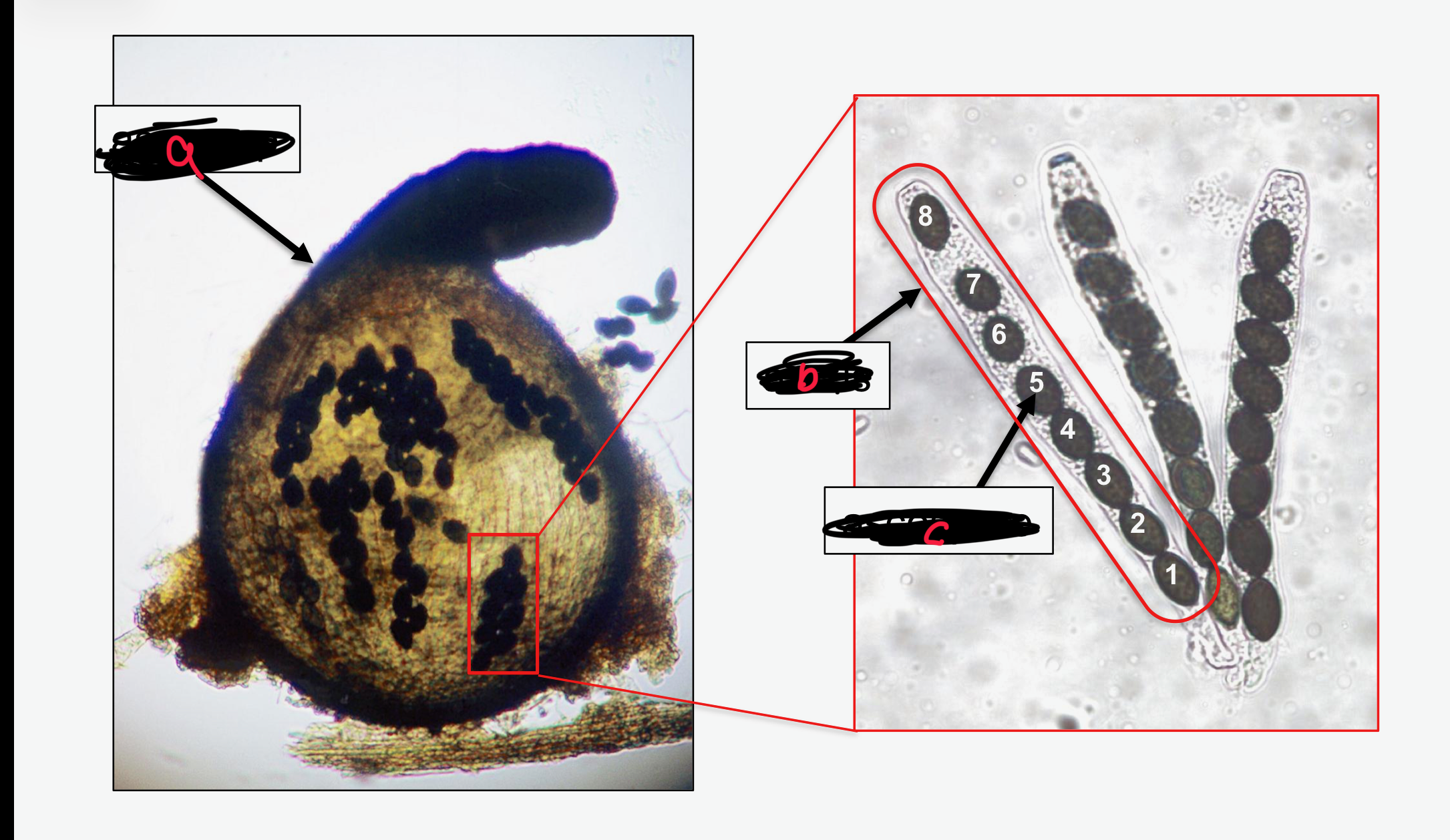
what is this and label
ascomycota sordaria
a- ascocarp
b- ascus
c- ascospore
basidiomycota
also known as club fungi
mushrooms , etc
no asexual portion

basidiomycota sexual life cycle
memorize


what is this and label
basidiomycota- agaricus mushroom
a- cap
b- gills
c- stalk
d- hyphae in gills
e- basidium
f- basidiospores

mycorrhizae and their benefits
mutation between a fungus and a plant
to fungus: place to live and sugar supply fron photosynthesis
to plants: water and nutrients, root growth, protection, thermal tolerance
lichens and their benefits
mutualism between fungus and a photosynthesis partner, either green algae or cyanobacteria
to fungus- sugar supply to photosynthesis
to photosynthetic partner- protection from environment and herbivores, structure for gas exchange, gains minerals that fungus breaks down
lichens- asexual reproduction
photosyntheic cells and hypae break away to form new lichen

what is this and label
lichens
a- algae