Paraneoplastic syndromes and Systemic effects of Cancer
 Call Kai
 Learn
 Practice Test
 Spaced Repetition
 Match
 Flashcards
 Knowt Play
1/62

There's no tags or description
Looks like no tags are added yet.
63 Terms
What is the difference between paraneopalstic syndromes?
Paraneoplastic syndrome: consequence of cancer but not due to location
Systemic effects: consequential to location of the tumour
What are the three main paraneoplastic syndromes related to the GI tract?
Cachexia and anorexia
Gastroduodenal ulceration
Protein losign enteropathy
Explain how cancer can cause cachexia and anorexia
Anaerobic resp due to glucose utilisation + tumoural hypoxia leads to incr lactate prod + altered insulin sensitivity
Altered metabolism due to cancer related cytokines and inflam
Poor appetite in some patient
What are the CS of cancer cachexia + anorexia?
wt loss
reduced fat mass
lean muscle loss
poor treatment tolerance
How can you treat cancer cachexia and anorexia?
Maintain/ increase caloric intake giving low carb high fat diet
Omega 3 PUFA (may be beneficial to reduce inflam)
What CS are seen with gastric/duodenal ulceration?
Bleeding can lead to anaemia as a systemic effect.
Melena or haematoemesis occasionally seen
risk rupture
How can gastroduodenal ulceration occur 2° to cancer?
GI tumour
Some tumours prod hormones/ metabolites that cause gastric acid prod + ulceration
MCT produce histamine —> GI signs, ulceration + bleeding
Gastrinoma's produce gastin —> GI signs, ulceration + bleeding
GI neuroendocrine tumours (GI bleeding poss due to hormone / cytokine production)
How can protein losing enteropathy occur 2° to cancer?
systemic effect
Damage to gut wall
Typically low TP, globlin, albumin often accompanied by diarrhoea
Low albumin -> ascites (transudate)
loss of proteins binding hormones, clotting factors etc.
Seen partciularly with GI lymphoma
What are the mechanism of haeamatological effects 2° to cancer?
Loss
Reduced production
Destruction
Cytoses (incr prod)
Mono-clonal gammopathies
Coagulation disorders
What does acute vs chronic blood loss anaemia suggest? How do they present?
Acute: if no haematemesis or melaenia more likely splenic than GI
TP drop before PCV
shock
Chronic: many differentials are other GI or oral lesions
lethargy, pallor (often adapt well)
Poorly regenerative microcytic hypochromic anaemia due to iron deficiency
Normal or elevated platelet count
What are reduced production cytopenias?
Anaemia of chronic inflammatory disease (not just cancer)
Common
Mild-mod normochromic normocytic non-regen anaemia
Due to
disordered iron storage
shortened RBC life span
What is myelophthesis?
Crowding out of stem cells in the bone marrow by tumour cells
Some tumours produce suppressive cytokines
include lymphoma, leukaemias, multiple myeloma, rarely histiocytic sarcoma and mast cell tumour (when met to BM)
What does myelopthisis cause?
One or several cytopenias
Neutropenia then thrombocytopenia then anaemia
Non regen, normochormic, normocytic anaemia
Dx by bone marrow aspirate
What tumour can cause hyperestrogenism?
Testicular tumours
(50% of dogs with Sertoli cell tumour)
What cytopenia do testicular tumours cause?
Neutopenia progressing to pancytopenia due to bone marrow hypoplasia
What are the CS of hyperoestrogenism? How can they possibly be reversed?
feminisation signs and include symmetrical alopecia, pendulous prepuce, hyperpigmentation, penile atrophy, gynecomastia, prostatic metaplasia
Castration can reverse many signs but bone marrow changes can be slow to recover or irreversible
What cancer does paraneoplastic IMHA and thrombocytopenia occur 2° to?
Lymphoproliferative tumours (occassionally others)
must exclude before tx for IMHA
What are the features of microangiopathic anaemia secondary to cancer?
Systemic effect
Fragmentation and shearing of RBCs leads to anaemia
Caused by fibrin networks
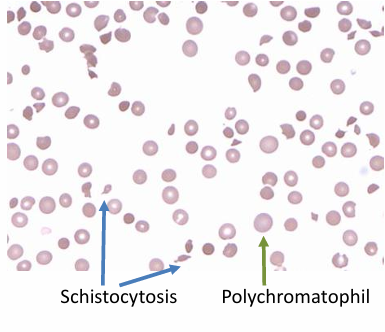
What is a key indicator of microangiopathic anaemia?
Schistocytosis
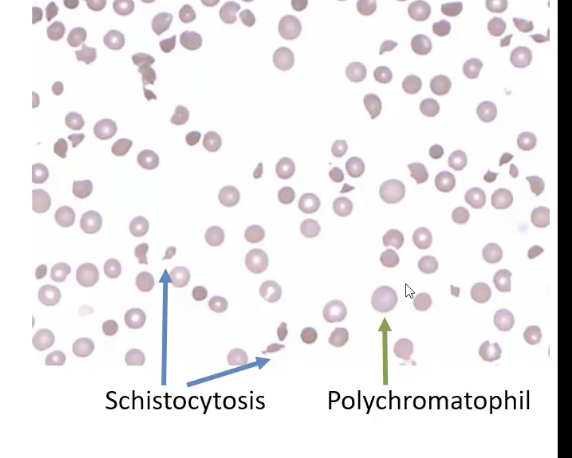
Which of the following conditions have been associated with schistocytosis
DIC
Lymphoma
MCT
Haemangiosarcoma
STS
Hyperadrenocorticism
IMHA
Metastatic carcinoma
DIC
Haemangiosarcoma
IMHA
(+ Metastatic carcinoma)
When can cause a paraneoplastic cytoses?
Erythrocytosis
Renal tumours via inc EPO, lymphoma, nasal fibrosarc, TVT, hepatic tumours
erythrocytoses, PUPD, neuro signs (poor flow RBCs), seizures
Neutrophilia
Seen with many tumours
tumour induced or immune response
Eosinophilia
Due to IL-5 production
Most common with T cell lymphoma and MCT
How can erythrocytosis be treated?
phlebotomy
removal of inciting cause
hydroxyurea
What causes a paraneoplastic mono clonal gammopathy?
Excess production of single immunoglobulin by tumour cells
Elevated serum globulins on biochem
What are the clinical signs, diagnosis and treatment for a paraneoplastic monoclonal gammopathy?
Clinical signs due to hyperviscosity (neurological including seizures and coma and cardiac signs), reduced immune function, renal failure, coagulopathies and ocular disorders.
Dx: Electrophoresis of serum and urine (Bence-Jones proteins)
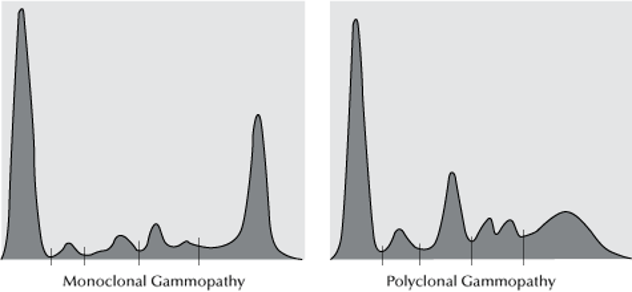
Tx: plasmapheresis and tumour directed treatment
Which of the following are commonly associated wiht monoclonal gammopathies?
Melanoma
Myeloma
Leukaemia
Carcinoma
Lymphoma
Myeloma
Leukaemia
Lymphoma
How can coagulation be affected by neoplasms? What can these cause?
Altered coagulation- altered platelet function
Infarct/ thromboembolism
DIC (altered consumptive coagulation)
Thromboembolism in small vessels and bleeding due to consumption of platelets and clotting factors
Multi-organ failure and death
often in end stage patients
What will be seen on haem when DIC is present?
Elevated APTT, PT, FDPs (fibrin degred prod)/ D dimers
low fibrinogen
low platelet count
schistocytes
What are the main tumours associated with DIC?
Carcinoma and HSA
What endocrine alterations can occur paraneoplastically?
Hypercalcaemia (apocrine gland anal sac carcinoma/anal sac adenocarcinoma)
Hypoglycaemia
Ectopic ACTH syndrome
Hyperestrogenism
What mechanisms can cause paraneoplastic hypercalcaemia?
Elevated PTH or PTH related peptide (mimic PTH)
IL-1 beta, TGF beta, RANKL
Bone lysis (osteolysis)
What are some non neoplastic differentials for hypercalcaemia?
lab error, renal failure, hypervitaminosis D, hypoadrenocorticism, granulomatous disease
What are the clinical signs of hypercalcaemia?
PU/PD
Dehydration
GI signs – inappetence and vomiting
Weakness
Muscle fasciculations
Calcification of soft tissues (especially kidneys) Ca x P >5
Arrythmias
Death
How do you treat hypercalcaemia? (urgent)
Rehydrate with NaCl (3-4x maintenance) —> enhances calciuresis
fluids without Ca + with Na
Then:
Continue fluids
Consider:
Furosemide —> incr calciuresis by incr Na loss
Bisphosphonates —> toxic to osteoclasts so slows Ca release from bone
Salmon calcitonin —> antagonise PTH (short-acting)
Prednisolone (only if lymphoprolif disease diagnosed or exluded)
Remove inciting cause is only real tx
How would you work up a hypercalcaemia case?
Assess tCa and iCa, also consider phosphate
Ensure rectal exam negative for anal gland tumours
Assess and aspirate LN
Check history for diet and toxin exposure
Imaging of thorax and abdomen and ultrasound neck esp. if iCa ↑ and Phos ↓
PTH / PTHrp / vitamin D if appropriate history of exposure
Reference interval PTH is abnormal in a hypercalcaemic animal
Bone marrow biopsy
Consider ACTH stim if other signs are consistent with hypoadrenocorticism
What is the main neoplasm causing hypoglycaemia?
Insulinoma
(Also hepatocellular carcinoma, smooth muscle tumours and number of others)
Caused by insulin, IGF 1 or 2
What are the CS of hypoglycaemia?
weakness
disorientation
seizures
coma
death
How do you manage a paraneoplastic hypoglycaemia?
Emergency – IV glucose + CRI glucose if necessary
Medical management – prednisolone (incr gluconeogenesis), diazoxide (decr insulin), octreotide (somatostatin, block insulin secretion)
Removal of inciting tumour
What are the non neoplastic ddxs for hypoglycaemia?
Sepsis,
Starvation,
Liver dysfunction,
Hypoadrenocorticism,
Lab error
Some toxicities
What are the features of ectopic ACTH syndrome?
Rare
Reported in association with lung tumours
Clinical signs similar to hyperadrenocorticism (Cushings)
Diagnosis
Positive for hyperadrenocorticism tests
+ localisable tumour
No signs of adrenal associated hyperadrenocorticism
Management
Excision of primary lesion
What paraneoplastic neurological effects can you get?
Systemic effects of neurological mass lesion
PNS
Myaesthenia Gravis
Peripheral neuropathy
commonly type 2 hypersensitivity reaction

How does myaesthenia gravis present as a paraneoplastic syndrome?
Immune mediated disease
Most commonly seen with thyomoma
also osteosarcoma and lymphoma
What are the CS of myasthenia gravis and how is it dx?
Weakness
Exercise intolerance
Dysphagia
Megaoesphagus and regurgitation
Presumptive diagnosis —> +ve ACHr antibodies and a relevant tumour
How is myasthenia gravis tx?
remove tumour
consider immunosuppression
manage other problems
How does a peripheral neuropathy present?
Wide range of tumour types associated
lung tumours, insulinoma, lymphoma, MCT, thyroid adenocarcinoma, melanoma
Not very common clinically apparent lesions
Mild to moderate and symmetrical – vague signs such as weakness
What is seen on histo of patients with peripheral neuropathy?
Demyelination, myelin globulation and axonal degeneration
The the possible cutaneous paraneoplastic syndrome
Alopecia and Malassezzia associated dermatitis
Pancreatic associated panniculitis
Superficial necrolytic dermatitis (SND)
Paraneoplastic immune mediated disease – Pemphigus and Erythema multiforme
Feline Thymoma-Associated Exfoliative Dermatitis (FTAED)
Cutaneous flushing
Nodular dermatofibrosis
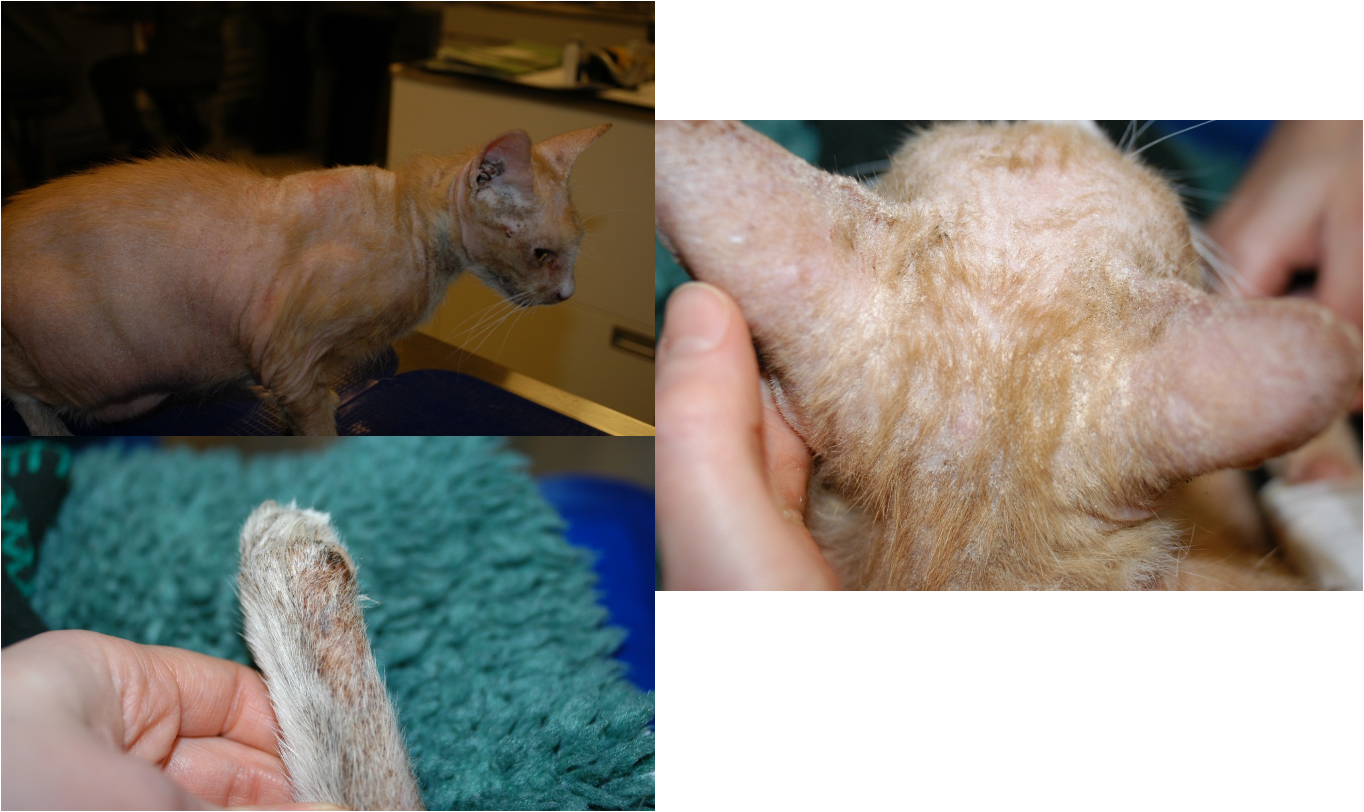
What are the features of feline paraneoplastic alopecia?
Alopecia
acute onset
non-pruritic
progressive symmetrical alopecia
initially ventral abdo then limbs
hair easily epilated
Glistening skin
Alopecic skin inelastic and thin
smooth shiny appearance
Footpad lesions
Concentric scale, crusting and painful fissure affecting FPs
Malassezia dermatitis
brown greasy accumulations around the eyes, nose and claw beds
may be pruritic

What are the ddx of feline paraneoplastic alopecia?
dermatophytosis, demodicosis, SIA (pruritus, psychogenic), telogen defluxion, endocrinopathies, SND
What is pancreatic panniculitis?
Inflammation and hydrolysis of adipose tissue due to pancreatitis and pancreatic carcinoma and adenocarcinoma
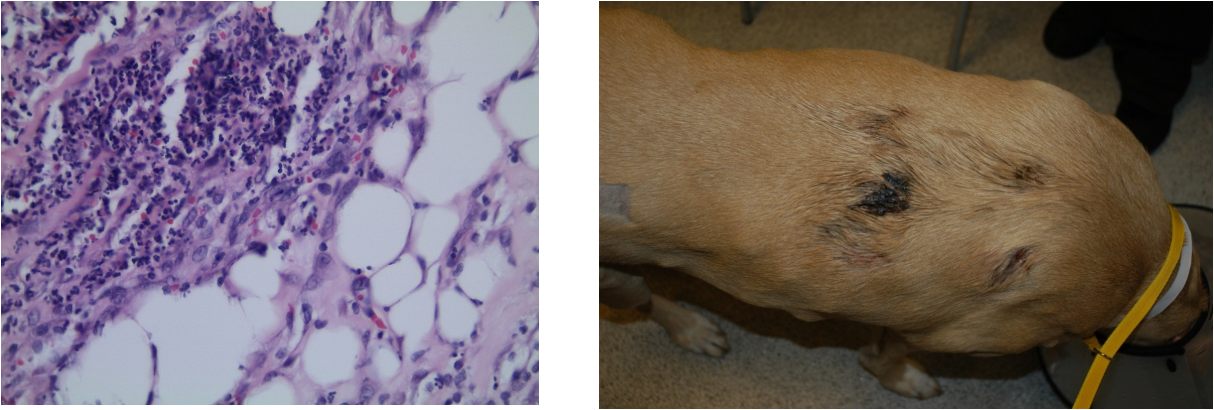
Pancreatic enzymes (lipase, amylase, trypsin)
What is Superficial necrolytic dermatitis (SND) aka hepatocutaneous syndrome?
=hepatocutanoues syndrome, necrolytic migratory erythema
Cause by hepatic disease and pancreatic neoplasia
Assoc amino acid deficiency
Red white and blue histo
Footpad hyperkeratosis + crusting dermatitis
What are the CS of Superficial necrolytic dermatitis?
Footpad hyperkeratosis
erythema, crusting, hyperkeratosis, fissure formation
Crusting dermatitis
alopecia, erosions/ulceration,adherent crusts affecting pressure points, mucocutaneous junctions and feet
Other clinical signs:
Early stages none
Lethargy
Inappetance
Systemic signs associated with hepatic / pancreatic disease or rarely glucagonoma
Some cases develop diabetes mellitus in association with hepatic disease
What is paraneoplastic pemphigus?
Very rare cutaneous PNS
Autoimmune-induced ulceration of the mucosae and mucocutaneous junctions
antibodies against tumour antigens cross-react with self-antigens
Lymphoma, thymoma, splenic sarcoma, metastatic thymic mass
Primary immune mediated pemphigus also seen
What are the CS of paraneoplastic pemphigu?
Oral and mucocutaneous ulceration
Vesicles
severe oral ulceration + mucocutaneous junctions
often bilat symmetrical
clawbeds and pressure points poss effected
What is Feline Thymoma-Associated Exfoliative Dermatitis (FTAED)?
Generalised exfoliative dermatitis
Most cases associated with thymoma
What are the CS of Feline Thymoma-Associated Exfoliative Dermatitis
Exfoliative dermatitis
non-pruritic
diffuse erythema and skin exfoliation/scaling
alopecia
head and pinnae, and then generalis
keratosebaceous accumulations
brown, keratosebaceous debris interdigital skin, claw beds and ear canals
some cases associated with Malassezia dermatitis
crusting and ulceration
What is cutaneous flushing?
Periodic release of vasoactive substances by tumours leads to skin colour changes
Rarely reported but reported with pheochromocytoma, lung tumours and MCT
Ddx: Demodicosis, drug reactions and systemic lupus erythematosus
What is nodular dermatofibrosis?
Nodules of well differentiated collagenous nevi mainly on limbs but also heads and trunk
Seen in middle aged GSDs with bilateral renal cysts or cyst adenocarcinoma
(Inherited —> autosomal dominant)
What is hypertrophic osteopathy?
Periosteal proliferation along shaft of long bones
2° to pulmonary (or abdo) tumours
Inc blood flow to limbs due to afferent neurological stim
What are the CS of hypertrophic osteopathy and how is it dx?
Shifting lameness
Swelling / oedema
Limbs feel warm and are uncomfortable to touch
Dx —> CS, Rx of long bones + pelvis
How is hypertrophic osteopathy treated?
Remove inciting cause
Prednisolone
Pain relief
Bisphosponates
What causes paraneoplastic pyrexia? What tumours is it seen with?
Expression of inflammatory cytokines by or in response to the tumour.
Seen with a variety of tumours especially lymphoma, renal cancers and hepatic tumours.
Can lead to anorexia and malaise.
(exclude infec)
How is pyrexia tx?
removal of the tumour
NSAIDS / paracetamol
What is a common systemic cardioresp effect due to tumour exudation or bleeding?
Effusions (due to tumour exudation or bleeding)
Pleural
Tachypnea and dyspnea and restricted breathing pattern
Pericardial
Signs of right side heart failure, collapse, pulsus paradoxus and electrical alternans
