CH 102 Lab Final Study Guide
0.0(0)
Studied by 0 people Call Kai
 Learn
 Practice Test
 Spaced Repetition
 Match
 Flashcards
 Knowt Play
Card Sorting
1/66

Earn XP
67 Terms
1
New cards
Given a selection of pictures, identify the name of different lab equipment used during the semester.
1 question
2
New cards
beaker
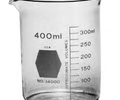
3
New cards
graduated cylinder
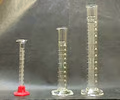
4
New cards
buret
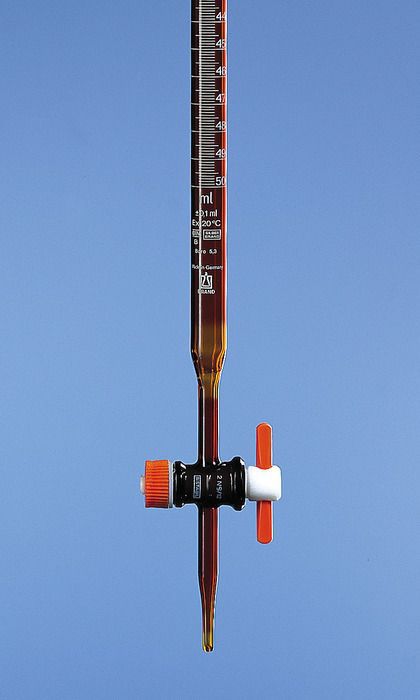
5
New cards
magnetic stir bar
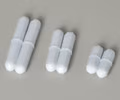
6
New cards
clamp
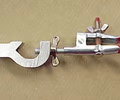
7
New cards
ring stand
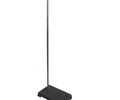
8
New cards
spot plate
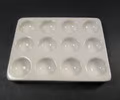
9
New cards
squirt bottle
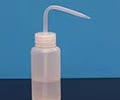
10
New cards
test tube

11
New cards
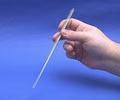
stir rod
12
New cards
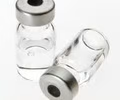
vial
13
New cards
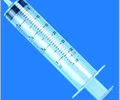
syringe
14
New cards
Safety
(two questions from selection)
(two questions from selection)
--know the hazards associated with different classes of chemicals (acids, oxidants, etc.)
--be familiar with general waste disposal instructions
--list proper lab attire
--know the policy for safety glasses in the labroom
--know the recommended response to chemical exposure
--list recommended Bunsen Burner precautions
--be familiar with general waste disposal instructions
--list proper lab attire
--know the policy for safety glasses in the labroom
--know the recommended response to chemical exposure
--list recommended Bunsen Burner precautions
15
New cards
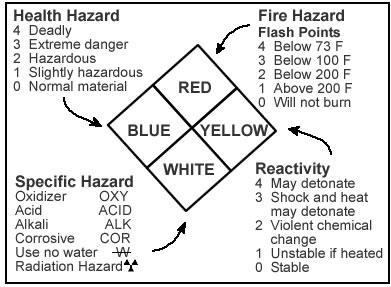
--know the hazards associated with different classes of chemicals (acids, oxidants, etc.)
-Concentrated HCl produces vapors and should be used in the fume hood
-Mg reacts with acid and produces hydrogen gas, this is flammable
-Silver nitrate may cause dark spots on skin
-Mg reacts with acid and produces hydrogen gas, this is flammable
-Silver nitrate may cause dark spots on skin
16
New cards
--be familiar with general waste disposal instructions
-Any waste with special instructions for disposal will be placed in a container in the fume hood
-In redox reactions the reducing agent and oxidizing agent must be disposed of separately
-In redox reactions the reducing agent and oxidizing agent must be disposed of separately
17
New cards
--know the policy for safety glasses in the labroom
-must wear safety glasses at all times while in the laboratory.
-If you wear glasses, safety glasses must be worn over them. If you have prescription safety glasses with side shields, or safety glasses from a job or other activity, you may wear them instead of the university-issued glasses. This may require approval by the lab coordinator.
-If you wear glasses, safety glasses must be worn over them. If you have prescription safety glasses with side shields, or safety glasses from a job or other activity, you may wear them instead of the university-issued glasses. This may require approval by the lab coordinator.
18
New cards
--know the recommended response to chemical exposure
-If a small amount of chemical gets on your skin, wash the area with soap and plenty of water.
-If a large amount of corrosive chemical is spilled on your body, immediately get to the safety shower and pull the handle.
-If you should get a chemical in your eye, immediately go to the closest eyewash and flush the eye with water.
-If a small spill occurs on the bench top, unless it is a very corrosive substance, clean it up with a paper towel.
-For a larger spill or a corrosive substance spill, please alert your instructor. There are special spill clean up kits for these instances.
19
New cards
--list recommended Bunsen Burner precautions
-Do not keep gas on while burner is not in use
-Always keep watch of the burner and never direct towards people
-Keep area around burner clear
-Don't burn flammable liquids
-Always keep watch of the burner and never direct towards people
-Keep area around burner clear
-Don't burn flammable liquids
20
New cards
--list proper lab attire
-Shirt must cover shoulders, frontal area, and extend approximately 6" below the waist
-Pants must extend to ankles (no tights, leggings or capri pants)
-Torso must be covered when bending (no bare midriffs)
-Shoes must cover toes and heels (no flip flops)
-Long hair must be tied back
-Loose clothing must be restrained
-All earbuds and headphones are forbidden in the lab.
-Pants must extend to ankles (no tights, leggings or capri pants)
-Torso must be covered when bending (no bare midriffs)
-Shoes must cover toes and heels (no flip flops)
-Long hair must be tied back
-Loose clothing must be restrained
-All earbuds and headphones are forbidden in the lab.
21
New cards
22
New cards
Technique
(two questions from selection)
(two questions from selection)
Identify best practices in the use of the equipment listed below.
--analytical balances
--graduated cylinders
--burets
--titration
--centrifuges
--Bunsen burners
--pH probes
--analytical balances
--graduated cylinders
--burets
--titration
--centrifuges
--Bunsen burners
--pH probes
23
New cards
--analytical balances
-Do not dispense chemicals into a container while it is on the balance pan.
-Open the draft shield door and gently place the object on the center of the pan. Close the door; the mass will be displayed. Record the mass. Never weigh solid or liquid reagents directly on the pan. Weighing paper or a container such as a beaker should be used for this purpose as described below.
If you have overshot your target mass, do not put the excess chemical back into the reagent bottle. Retain it in the experiment, as in the example above, or put it in the waste container.
-If you are doing a series of measurements of the mass of an object over a period of time, perform all measurements on the same balance.
-Do not bump or place heavy objects on the bench after zeroing the balance.
-Let hot objects cool before obtaining the mass.
-Obtain the mass of hygroscopic (water absorbing) materials quickly.
24
New cards
--graduated cylinders
Most students are familiar with graduated cylinders, which are used to measure and dispense known volumes of liquids. They are manufactured to contain the measured volume with an error of 0.5 to 1%. For a 100 mL graduated cylinder, this would be an error of 0.5 to 1.0 mL. Measurements made with a graduated cylinder can be reported to three significant figures.
25
New cards
--burets
-For optimal accuracy and to prevent contamination, a buret must be clean. To test a buret for cleanliness, close its stopcock and pour a small volume (5-10 mL) of deionized water into it.
-Just before use, a buret should be "conditioned" to ensure that any water adhering to the inside walls is removed. Add ~5 mL of the liquid that is to be used into the buret. Rinse the walls of the buret, then drain the liquid through the stopcock. Repeat with a second volume of liquid.
-The buret can now be filled with solution. Do this carefully and avoid trapping air bubbles in the tube. You may need a small funnel. The liquid level can be above the 0.00 mL mark.
26
New cards
--titration
Although burets are sometimes used as dispensers, they are far more frequently used in procedures called titrations. In a titration, one attempts to determine an equivalence point as exactly as possible. This usually involves the first persistent color change of an indicator. With a little practice, one can dispense fractions of drops (less than 0.1 mL) into the titration vessel, and reproduce results within 0.10 mL or less.
27
New cards
--centrifuges
When loading test tubes into the centrifuge, two tubes of approximately equal volume must be placed opposite each other to balance the rotor. If other groups are not ready to centrifuge, you can simply put deionized water into an extra test tube for balance. Note the letter or number near the position of your tube(s) so you can identify it (them) when centrifugation is complete. Never put stoppers or other items in the centrifuge with your tubes. Only test tubes are allowed in the centrifuge!
Always close the lid to the centrifuge while it is rotating. Many newer centrifuges have a safety switch that will not allow them to turn while the lid is open. Make sure that the lid is completely shut and the safety knob is turned to engage the safety switch. Then turn the timer knob to about 30 seconds. Turning the timer knob to zero or turning the safety knob on the lid will turn off the centrifuge. Do NOT open the lid to the centrifuge until the rotor has slowed down to prevent injury. Do NOT slow the rotor with your hand! This can result in injury AND it will stir up the solution you were attempting to separate by centrifugation. Wait for the rotor to come to a complete stop before attempting to remove your test tubes. After about 30 seconds of centrifugation most precipitates will have settled. And the liquid above it can be decanted (poured off).
Always close the lid to the centrifuge while it is rotating. Many newer centrifuges have a safety switch that will not allow them to turn while the lid is open. Make sure that the lid is completely shut and the safety knob is turned to engage the safety switch. Then turn the timer knob to about 30 seconds. Turning the timer knob to zero or turning the safety knob on the lid will turn off the centrifuge. Do NOT open the lid to the centrifuge until the rotor has slowed down to prevent injury. Do NOT slow the rotor with your hand! This can result in injury AND it will stir up the solution you were attempting to separate by centrifugation. Wait for the rotor to come to a complete stop before attempting to remove your test tubes. After about 30 seconds of centrifugation most precipitates will have settled. And the liquid above it can be decanted (poured off).
28
New cards
--Bunsen burners
When lighting a Bunsen burner, make sure the area around the burner is completely clear and that no flammable solvents are in use in the laboratory. Connect the tubing to the gas valve on the lab bench. Adjust the gas regulator knob on the bottom of the Bunsen burner for a moderate flow of gas and rotate the sleeve at the base of the burner so that airflow is almost completely closed off. Strike a match and hold it close to the side of the burner but not quite touching it while you turn on the bench gas valve. If you are using a striker, make sure that the striker is producing sparks, turn on the bench gas valve and then use the striker to produce sparks near the top of the Bunsen burner. If the burner fails to light, turn off the gas check the connection to the gas and the gas regulator and correct any problems before attempting to light the burner again. If the burner fails to light upon successive attempts, alert your lab instructor.
29
New cards
--pH probes
Never leave the ph probe out of a solution
30
New cards
Mass, Moles and Volume
(one question from selection)
(one question from selection)
-Given mass and volume measurements, determine the density of an object.
-Given values and a ratio, use units cancellation to convert to different units.
-Given atomic radii, determine the atomic volume and volume ratios for different atoms.
-Given values and a ratio, use units cancellation to convert to different units.
-Given atomic radii, determine the atomic volume and volume ratios for different atoms.
31
New cards
-Given mass and volume measurements, determine the density of an object.
M/V=density
32
New cards
-Given values and a ratio, use units cancellation to convert to different units.
stoichiometry
33
New cards
-Given atomic radii, determine the atomic volume and volume ratios for different atoms.
volume = 4/3pi(r^3)
34
New cards
Emission and Absorption
(one question from selection)
(one question from selection)
-Given a compound's emission flame color and the color wheel, determine the wavelength, frequency and energy of the light emitted.
-Given a solution's visible color and the color wheel, determine the wavelength, frequency and energy of the light absorbed.
-Given a solution's visible color and the color wheel, determine the wavelength, frequency and energy of the light absorbed.
35
New cards
-Given a compound's emission flame color and the color wheel, determine the wavelength, frequency and energy of the light emitted.
Frequency and wavelength are inversely proportional,
wavelength, λ: c/ν = λ
frequency, v: c/λ = ν
E = hν
c=wavelength x frequency
remember to convert wavelength to meters
color wheel: blue-orange, red-green, yellow-orange
wavelength, λ: c/ν = λ
frequency, v: c/λ = ν
E = hν
c=wavelength x frequency
remember to convert wavelength to meters
color wheel: blue-orange, red-green, yellow-orange
36
New cards
-Given a solution's visible color and the color wheel, determine the wavelength, frequency and energy of the light absorbed.
visible color will have a complementary color, and emitted color will be that color
violet: 400-430 nm
blue: 430-490 nm
green: 510-530 nm
yellow: 560-590 nm
orange: 590-610 nm
red: 610-700 nm
violet: 400-430 nm
blue: 430-490 nm
green: 510-530 nm
yellow: 560-590 nm
orange: 590-610 nm
red: 610-700 nm
37
New cards
Solubility Rules
(one question)
(one question)
-Given an ionic solid, write the dissolution reaction.
-Given two aqueous solutions of ionic compounds and the solubility rules, write the net precipitation reaction that will occur and identify the spectator ions.
-Given two aqueous solutions of ionic compounds and the solubility rules, write the net precipitation reaction that will occur and identify the spectator ions.
38
New cards
-Given an ionic solid, write the dissolution reaction.
x(s) >> y+(aq) + z-(aq)
39
New cards
-Given two aqueous solutions of ionic compounds and the solubility rules, write the net precipitation reaction that will occur and identify the spectator ions.
spectator ions: don't participate in reaction/don't change at all
40
New cards
Qualitative Analysis
(one question)
(one question)
Complete a qualitative analysis separation scheme.
-Given a solution containing three ions, the solubility rules, and a series of reagents, determine which ions will precipitate and which ions will remain in the supernatant at each stage.
-Provide the chemical formula of the ionic solids that form.
-Given a solution containing three ions, the solubility rules, and a series of reagents, determine which ions will precipitate and which ions will remain in the supernatant at each stage.
-Provide the chemical formula of the ionic solids that form.
41
New cards
Complete a qualitative analysis separation scheme.
-Given a solution containing three ions, the solubility rules, and a series of reagents, determine which ions will precipitate and which ions will remain in the supernatant at each stage.
-Given a solution containing three ions, the solubility rules, and a series of reagents, determine which ions will precipitate and which ions will remain in the supernatant at each stage.
- salts containing group 1 ions are generally soluble, includes ammonium
- salts containing nitrate are generally soluble
- Cl-, Br-, I- salts are generally soluble. exceptions are silver, lead, and mercury.
- silver nitrate and silver acetate are soluble. all other silver compounds are insoluble.
- sulfates are soluble excluding calcium, barium, lead, silver, and strontium.
- hydroxides of group 1 are soluble. group 2 slightly soluble. transition elements and aluminum are insoluble.
- sulfides are insoluble.
- carbonates are insoluble.
- chromates are insoluble.
- phosphates are insoluble.
- fluorides are insoluble.
42
New cards
-Provide the chemical formula of the ionic solids that form.
use criss cross method to create subscripts of compound from ionic charges.
43
New cards
Molecular Geometry
(two questions)
(two questions)
-Given a chemical formula, draw the Lewis Structure. Remember to obey the octet rule and to include lone pairs and formal charges.
-Given a molecule, determine the bond angle, hybridization, and molecular shape about indicated atoms.
-Given a molecule, determine the bond angle, hybridization, and molecular shape about indicated atoms.
44
New cards
-Given a chemical formula, draw the Lewis Structure. Remember to obey the octet rule and to include lone pairs and formal charges.
lewis structure: each atom gets 8 electrons except hydrogen. for formal charge, calculate #bonds- #lone pairs.
45
New cards
-Given a molecule, determine the bond angle, hybridization, and molecular shape about indicated atoms.
Bond angle: 180
Hybridization: sp
molecular shape: linear (2 regions)
Bond angle: 120
Hybridization: sp2
molecular shape: trigonal planar (3 regions)
bond angle: <120
hybridization: sp3
molecular shape: bent at 120 (2 regions, 1 lone pair)
Bond angle: 109.5
Hybridization: sp3
molecular shape: tetrahedral (4 regions)
Bond angle: <109.5
Hybridization: sp3
molecular shape: trigonal pyramidal (3 regions, 1 lone pair)
Bond angle: <<109.5
Hybridization: sp3
molecular shape: bent tetrahedral (2 regions, 2 lone pairs)
bond angle: 90-120
hybridization: dsp3
molecular shape: trigonal bipyramidal (5 regions)
bond angle: <90-<120
hybridization: dsp3
molecular shape: seesaw (4 regions, 1 lone pair)
bond angle: <90-
hybridization: dsp3
molecular shape: t-shaped (3 electron regions, 2 lone pairs)
bond angle: 90
hybridization: d2sp3
molecular shape: octahedral (6 regions)
bond angle: <90
hybridization: d2sp3
molecular shape: square pyramidal (1 lone pairs region, 5 electron regions)
bond angle: 90
hybridization: d2sp3
molecular shape: square planar (2 lone pairs region, 4 electron regions)
46
New cards
Solid State Modeling
(one question from selection)
(one question from selection)
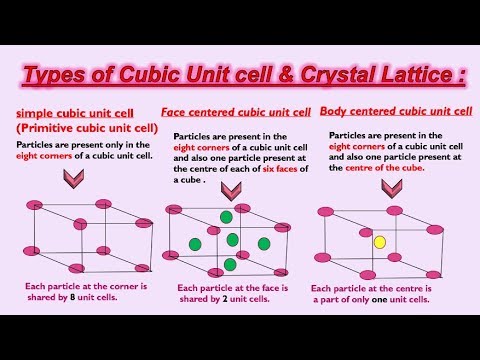
-Given a picture, identify a solid as simple cubic, body-centered cubic or face-centered cubic.
-Given a picture of an ionic solid, determine the atoms per unit cell and the chemical formula.
-Given a picture of an ionic solid, determine the atoms per unit cell and the chemical formula.
47
New cards
-Given a picture, identify a solid as simple cubic, body-centered cubic or face-centered cubic.
simple: dots on all corners (8 corners)
face centered: dots on the sides (8 corners, 6 faces)
body centered: dots on the sides AND in the center (8 corners, 1 center)
face centered: dots on the sides (8 corners, 6 faces)
body centered: dots on the sides AND in the center (8 corners, 1 center)
48
New cards
-Given a picture of an ionic solid, determine the atoms per unit cell and the chemical formula.
An atom at the corner of the unit cell counts as 1/8 atom because it is shared between 8 adjacent unit cells. Likewise, an atom at the edge of the unit cell counts as 1/4 as it belongs to 4 unit cells.
49
New cards
Measuring Enthalpy Changes and Gas Laws
(one question from selection)
(one question from selection)
Given a reaction with an initial and final temperature:
-determine the temperature change
-identify the reaction as exothermic or endothermic
-indicate what is known about the entropy of the reaction
-Given pictures and a diagram, relate phase changes to temperature and structural changes.
-Relate the pressure and volume of a gas using the ideal gas law and perform simple calculations.
50
New cards
Given a reaction with an initial and final temperature:
-determine the temperature change
-identify the reaction as exothermic or endothermic
-indicate what is known about the entropy of the reaction
-determine the temperature change
-identify the reaction as exothermic or endothermic
-indicate what is known about the entropy of the reaction
ΔT = Tfinal-Tinitial
if ΔT is positive, reaction is endothermic. if ΔT is negative, reaction is exothermic. entropy of surroundings increases with exothermic, decreases with endothermic.
if ΔT is positive, reaction is endothermic. if ΔT is negative, reaction is exothermic. entropy of surroundings increases with exothermic, decreases with endothermic.
51
New cards
-Given pictures and a diagram, relate phase changes to temperature and structural changes.
melting and evaporation are endothermic. freezing and condensing are exothermic. sublimation (gas to solid) is endothermic.
52
New cards
Relate the pressure and volume of a gas using the ideal gas law and perform simple calculations.
PV = nRT. this is the molar form of the ideal gas law. P is pressure, V is volume, n is the moles of gas, R is a constant (8.31 J/Kxmol), T is temperature.
53
New cards
Equilibrium
(one question)
(one question)
Given a colorimetric equilibrium reaction,
-determine the direction of equilibrium shift when a particular stress is applied
-identify the equilibrium expression
-given initial concentrations, calculate the value of K
-when K and all but one equilibrium concentration are known, calculate the remaining concentration
-determine the direction of equilibrium shift when a particular stress is applied
-identify the equilibrium expression
-given initial concentrations, calculate the value of K
-when K and all but one equilibrium concentration are known, calculate the remaining concentration
54
New cards
Given a colorimetric equilibrium reaction,
-determine the direction of equilibrium shift when a particular stress is applied
-determine the direction of equilibrium shift when a particular stress is applied
Le Chatelier's Principle states that when a stress is applied to a system at equilibrium, the equilibrium will shift in a direction to partially counteract the stress and once again reach equilibrium.
If the equilibrium shifts to the right, it favors the products.
If it shifts to the left, it would favor the reactants.
If the equilibrium shifts to the right, it favors the products.
If it shifts to the left, it would favor the reactants.
55
New cards
Given a colorimetric equilibrium reaction,
-identify the equilibrium expression
-identify the equilibrium expression
products/reactants
56
New cards
Given a colorimetric equilibrium reaction,
-given initial concentrations, calculate the value of K
-given initial concentrations, calculate the value of K
K=[products]/[reacants]
57
New cards
Titration
(one question)
(one question)
Given a titration reaction, the titrant concentration and volume, and the analyte volume and mass,
-identify the titrant to analyte stoichiometry
-determine the mmol of titrant and analyte
-determine the mass, mass percent and molarity of analyte in the sample
-identify the titrant to analyte stoichiometry
-determine the mmol of titrant and analyte
-determine the mass, mass percent and molarity of analyte in the sample
58
New cards
Given a titration reaction, the titrant concentration and volume, and the analyte volume and mass,
-identify the titrant to analyte stoichiometry
-identify the titrant to analyte stoichiometry
Titration is the addition of a standard solution of precisely known concentration (the titrant) to a precisely measured volume of a solution with unknown concentration (the analyte) to react according to a known stoichiometry.
59
New cards
-determine the mmol of titrant and analyte
mmol: concentration of ion (M) x volume of ion solution (mL)
60
New cards
-determine the mass, mass percent and molarity of analyte in the sample
mass of ion: mmol of ion (then move decimal back 3 places) x molecular mass of OG ion (g)
mass percent: mass of ion (previously calculated) (g) / mass of the ion solution (g)
molarity: mmol of ion / mL of the ion solution
mass percent: mass of ion (previously calculated) (g) / mass of the ion solution (g)
molarity: mmol of ion / mL of the ion solution
61
New cards
Acid-Base Studies
(one question)
(one question)
-Given a pH value, determine the hydronium ion concentration.
-Distinguish between a weak acid and a strong acid.
-Write a net Bronstead acid-base reaction given a substance and the pH of the aqueous solution.
-Distinguish between a weak acid and a strong acid.
-Write a net Bronstead acid-base reaction given a substance and the pH of the aqueous solution.
62
New cards
-Given a pH value, determine the hydronium ion concentration.
hydronium concentration: 10^(-ph)
63
New cards
-Distinguish between a weak acid and a strong acid.
STRONG ACIDS
1. Strong acids ionize completely in an aqueous solution.
2. It always loses H+, when dissolved in water.
3. It possess high conductivity due to the presence of the unpaired atoms.
4. Degree of dissociation value is higher.
5. It contains ionic bonds. (metals)
WEAK ACIDS
1. Weak acids ionize partially in an aqueous solution.
2. It loses less H+, when dissolved in water.
3. It possesses low conductivity due to the presence of fewer unpaired atoms.
4. Degree of dissociation value is lower.
5. It contains covalent bonds.
64
New cards
-Write a net Bronstead acid-base reaction given a substance and the pH of the aqueous solution.
include H3O+ or OH- depending on whether it's an acid or a base. the proton will transfer over to the base.
pH: -log[proton concentration]
pH: -log[proton concentration]
65
New cards
Redox Reactions
(one question from selection)
(one question from selection)
Given two reactants, a table with the reduction reactions and the standard state reduction potential,
-write the net redox reaction that occurs
-calculate the standard cell potential
-identify strong and weak reducing and oxidizing agents
Given two redox couples and a table containing reduction reactions and the standard state reduction potential,
-write the half-reactions that occur in each compartment of a battery
-write the net redox reaction
-calculate the standard cell potential
66
New cards
Given two reactants, a table with the reduction reactions and the standard state reduction potential,
-write the net redox reaction that occurs
-calculate the standard cell potential
-identify strong and weak reducing and oxidizing agents
-write the net redox reaction that occurs
-calculate the standard cell potential
-identify strong and weak reducing and oxidizing agents
use the table to write out the redox reactions, find the anode and subtract it from the cathode to get your cell potential
OIL RIG. Oxidation is loss of electrons, reduction is gain. But a strong oxidizing agent accepts electrons while a reducing agent loses the electrons.
OIL RIG. Oxidation is loss of electrons, reduction is gain. But a strong oxidizing agent accepts electrons while a reducing agent loses the electrons.
67
New cards
Given two redox couples and a table containing reduction reactions and the standard state reduction potential,
-write the half-reactions that occur in each compartment of a battery
-write the net redox reaction
-calculate the standard cell potential
-write the half-reactions that occur in each compartment of a battery
-write the net redox reaction
-calculate the standard cell potential
For the battery:
the positively charged left side (Compartment A): ion^+ + e- > ion
the negatively charged left side (Compartment B with a metal): ion > ion^+ + e- (if it's the anode you'd reverse it)
net redox reaction: combine the sides and balance your equation so the electrons cancel out, then use your table to find the standard cell potential