NDT & handling - Bobaths: info & techniques
 Call Kai
 Learn
Learn Practice Test
 Spaced Repetition
 Match
Match Flashcards
 Knowt Play
1/7

There's no tags or description
Looks like no tags are added yet.
Name | Mastery | Learn | Test | Matching | Spaced | Call with Kai | Chat |
|---|
No analytics yet
Send a link to your students to track their progress
8 Terms
Neurodevelopmental Treatment (1950s)
Neurological & developmental framework for treatment of cerebral palsy & movement disorders
Theoretical Foundation: Normalization of movement
NDT Intervention
Use of handling & movement facilitation techniques in activity
ROM + Managing muscle tone + Postural alignment
Postural Control: weightshifting, rotation, balance of flexion & extension, equilibrium responses
Functional use of synergies + Execution of movement sequences
Handling & Facilitation Techniques
Graded/tactile sensory input provided by OT’s hands at key points of control on child’s body to facilitate typical movement

EX 1
Rotary movement/turning being facilitated
OT has child w/ CP on lap, child leans against her torso to limit degrees of freedom
OT breaks up synergistic patterns of lower extremities wanting to ADDuct/internally rotate/flex by inserting knee between child’s legs & gives support from back just above hips.
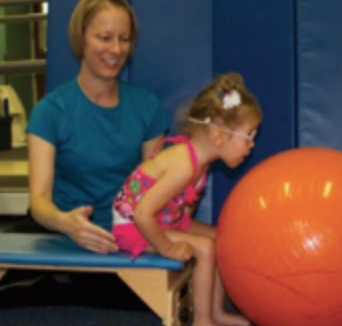
EX 2
OT’s hands on hips as child leans forward to ball
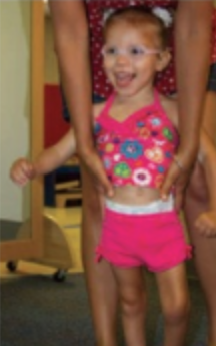
EX 3
Child upright, OT facilitates above hips and at torso so child can maintain an effective upright posture easily
Function-Dysfunction Continua
Original Pathology → Tone, atypical synergies, primitive reflexes
Compensations → Fixing, limit degrees of freedom, tone changes, motor programs
Short-term Implications → Contractures, inefficient postural control
Long-term implications → Deformities/Disability
____ are key as they are the biggest joints
Hips & pelvis
Shoulders also facilitate