Ruminant Nutrition Intro
 Call Kai
 Learn
 Practice Test
 Spaced Repetition
 Match
 Flashcards
 Knowt Play
1/34

There's no tags or description
Looks like no tags are added yet.
35 Terms
Where are most microbes in the rumen found?
Rumen fibre mat (traps food so microbes can digest it)
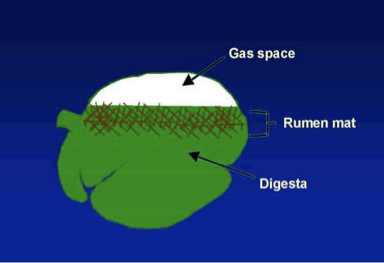
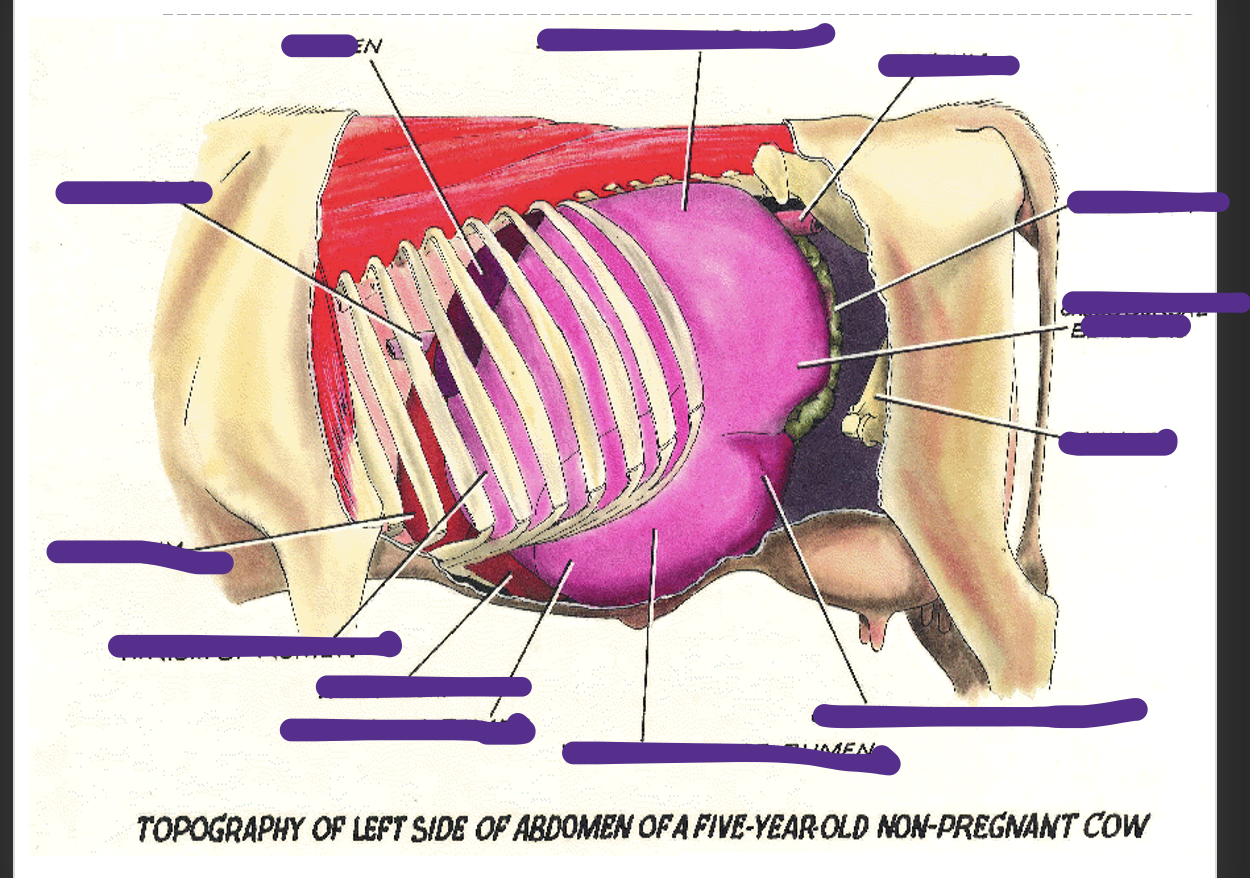
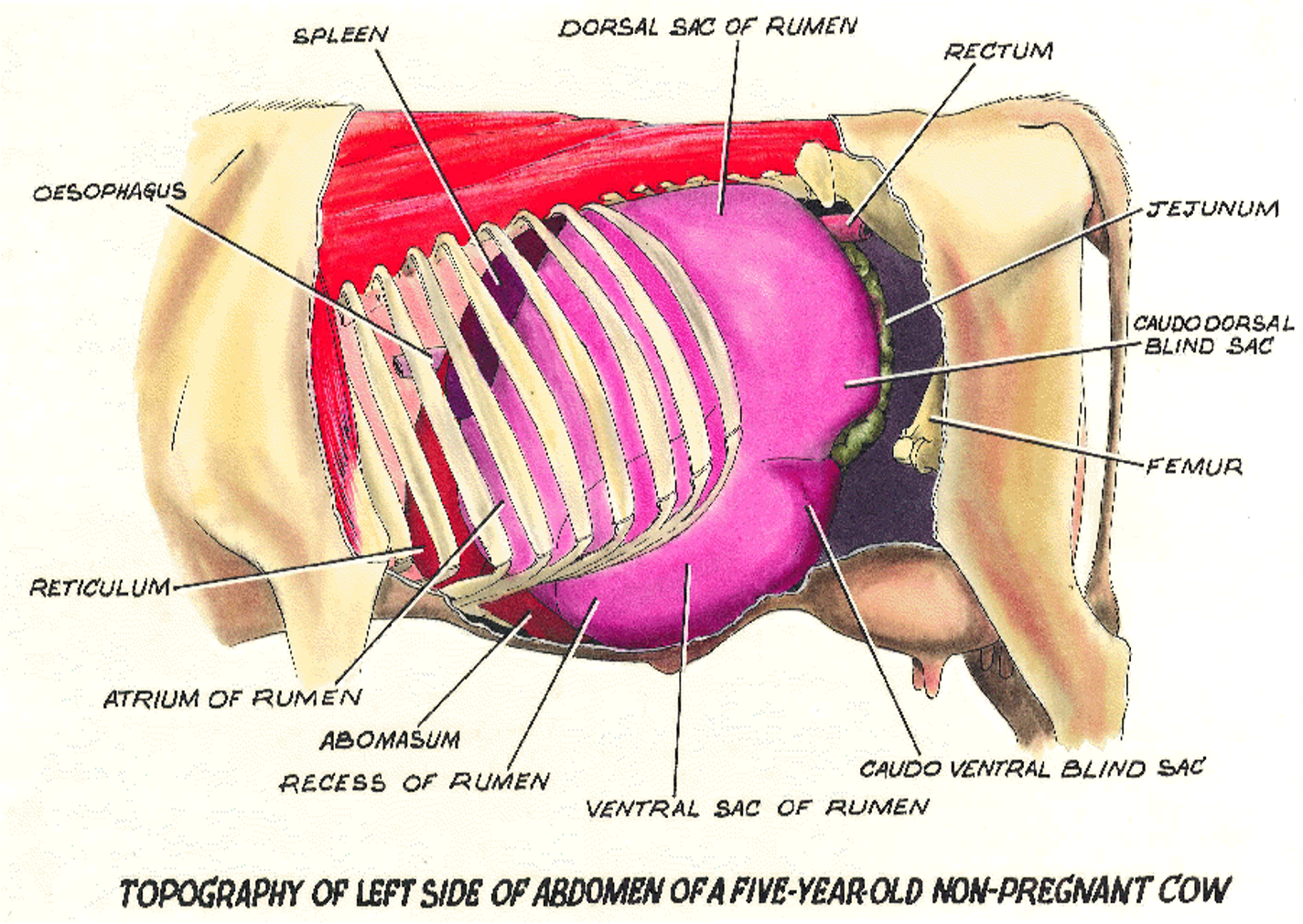
Label
Describe the basic principles of feedstuff absorption in the rumen
Rumen bugs break down feed stuff into VFAs, Methane and CO2
Cow absorbs VFAs and used to supply energy or fat/ glucose synthesis
Provides subtrate for energy for growth of bugs
Summarise the rumen contractions
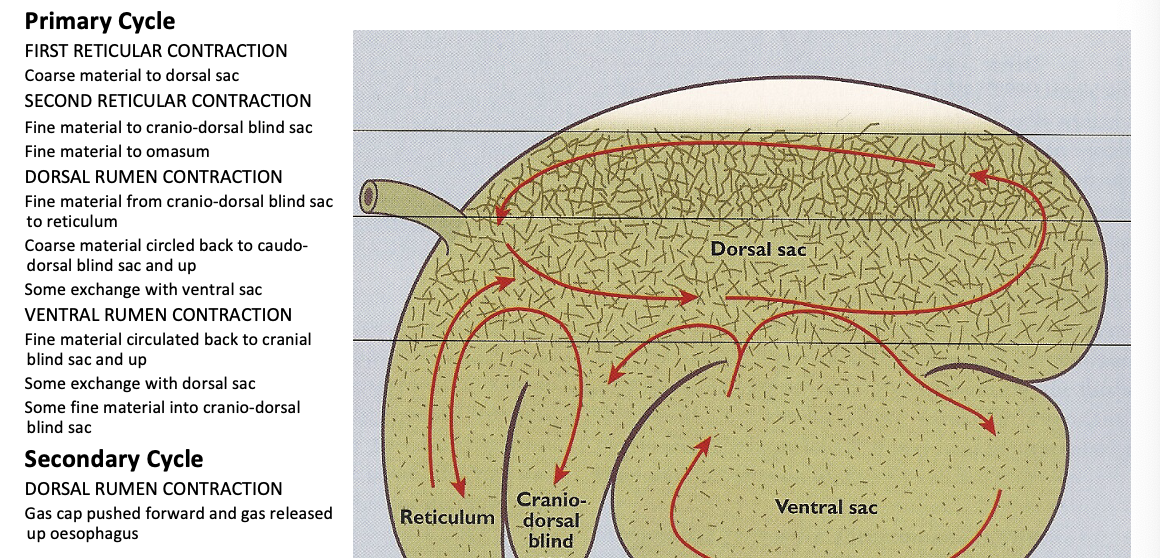
What is the ratio of primary: secondary cycle of rumen contractions?
2:1
When diets are formulated and analysed what parameters are used?
Dry matter intake
Energy
Protein
Minerals (macro and trace elements)
Vitamins
How much does a ruminant eat doing nothing, lactating and pregnant?
Doing nothing- 2%-2.5% of BW
Lactating- more e.g.- 3% (up to 4 for high yielding)
Pregnant- less
What infuences DMI?
BW & fatness – “fat cows eat less”
Milk yield
Stage of production cycle e.g. dry cow, calving, fresh calved (all have reduced DMI).
Type of food (digestibility/ rate of passage).
Palatability (mixed forages).
Access - feed barrier, electric fence etc.
Availability - TMR versus parlour feed etc.
Social factors e.g. bullying of heifers.
Stress / pain e.g lameness.
Rumen health - “the right bugs & healthy bugs”.
What is metaboliseable energy? What is the unit for it?
Energy available to the cow for metabolism
Calculated for feedstuff from infra-red spectrometry data - but assumes healthy rumen and microflora
Mega-joules per Kilogram (MJ/Kg) of dry matter (DM) = MJ/Kg DM
What are the different types of carbohydrates?
Long chain- slow fermentation
Short chain - fast fermentation
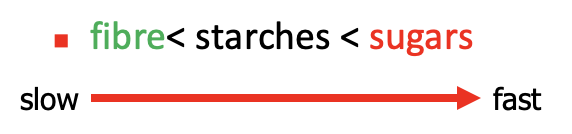
How much energy does microbial fermentation of carbohydrates produce?
75% of cow's total energy supply
How are VFAs buffered?
Chewing cud- salivary bicarbonate and phosphate produced
What happens to the VFAs?
Absorbed across rumen wall
Enter Krebbs cycle
Glucose synthesis from propionate, and milk prod
What is the fate of fats and oils in digestion?
Pass through rumen undigested
Absorbed in small intestine
Can impair rumen activity (feed protected fats) and expensive so only practical for high yielding when DMI fails to meet energy requirements
What happens in early lactation in terms of DMI?
Depressed DMI in first weeks coinciding with energy demand for milk prod
= NEB
Target loss.- 0.5 CS
What are the coping strategies for cows in early lactation?
Eat more- increase DMI
Metabolise body tissues- fat and muscle
Reduce milk yield
How much energy does an early lactating cow require?
BW Maintenance (65 - 70 MJ)
Production + 5MJ/ litre milk
How much energy does a high yield dairy cow require?
5.6 x Maintenance
How much protein does a dairy cow require?
16% if yield <8000L
18% if yield >8000L
What are the two types of protein?
Rumen degradable protein
Rumen undegradable protein
What is RDP? How is it used?
Any N containing compound
Fermented in rumen
Broken down to ammonia
Used by bugs to grow (protein synthesis)
Microbial protein digested in abomasum
Bugs require energy (FME)
If there is insufficient FME for rumen bugs to produce microbial protein what happens?
High blood (milk) urea
How does RUDP (ex- Soya) get used?
Passes through rumen
Digested in abomasum and small intestine
High quality (amino-acid make-up)
Expensive
Only to high yielders
What is the significance of energy density (M/D)
The lower the M/D – “healthier the diet”
Eating more= lower M/D required
Aim to maximise DMI
How do you maximise DMI in lactating cows?
Maximise intakes in dry periods
Palatable diet- mixed forages
Avoid SARA
Forage: Concentrate ratio
Change diets slowly- 3 week 'rumen adaptation period'
Dry cow management- avoid getting fat
Environment
Health
What is you DMI aim in dry period?
12 – 14 Kg
danger sign = DMI < 11Kg/cow
What is your M/D target for lactating cows?
11.5–12.3 MJ ME/Kg DM
How much DMI will cows get on pasture?
14 Kg DMI per day
What is the DMI and energy of clamp grass silage?
DM 20% - 35%
10 – 12 MJ ME/Kg DM
What is the DMI and energy values in maize silage?
DM 30% - 35%
11 – 11.5 MJ ME/Kg DM
NB: High starch & low protein; Poor fibre source
What is the DMI and energy values in big bale silage?
DM 30 - 35%
8.5 – 10.5 MJ ME/Kg DM
What is the DMI and energy values in hay?
DM 85%
8 – 9 MJ ME/Kg DM
What is the DMI and energy values in straw?
DM 85%
5.5 – 6.5MJ ME/Kg DM
What is the DMI and energy values in grass?
DM 20% or less
10 – 12.5 MJ ME/Kg DM
What is the DMI and energy values in concentrates?
Very dry so …….(often 88-90% DM)
12.5MJ ME/Kg DM