MMI188B: Autoimmunity
 Call Kai
 Learn
 Practice Test
 Spaced Repetition
 Match
 Flashcards
 Knowt Play
1/61

There's no tags or description
Looks like no tags are added yet.
62 Terms
an autoimmune arthritis that is caused by bacteria and transmitted from deer to humans by tick bites
lyme disease
define autoimmune disease
chronic inflammation responses directed against components of the body
what percentage of the us have an autoimmune disease?
1/6 (15%)
true/false: autoimmune diseases are more prevalent in developing countries than the United States
false, prevalence is only 3% in developing countries
autoimmune responses resemble which hypersensitivity reactions?
types 2, 3 and 4
define type 2 hypersensitivity reactions
Antibodies against cell surfaces or extracellular matrix
define type 3 hypersensitivity reactions
Soluble immune complexes deposited in tissues
define type 4 hypersensitivity reactions
Effector T cells
what is the disease name where IgG and IgM antibodies target Rh blood group antigens on RBCs, resulting in complement fixation on RBCs
autoimmune hemolytic anemia
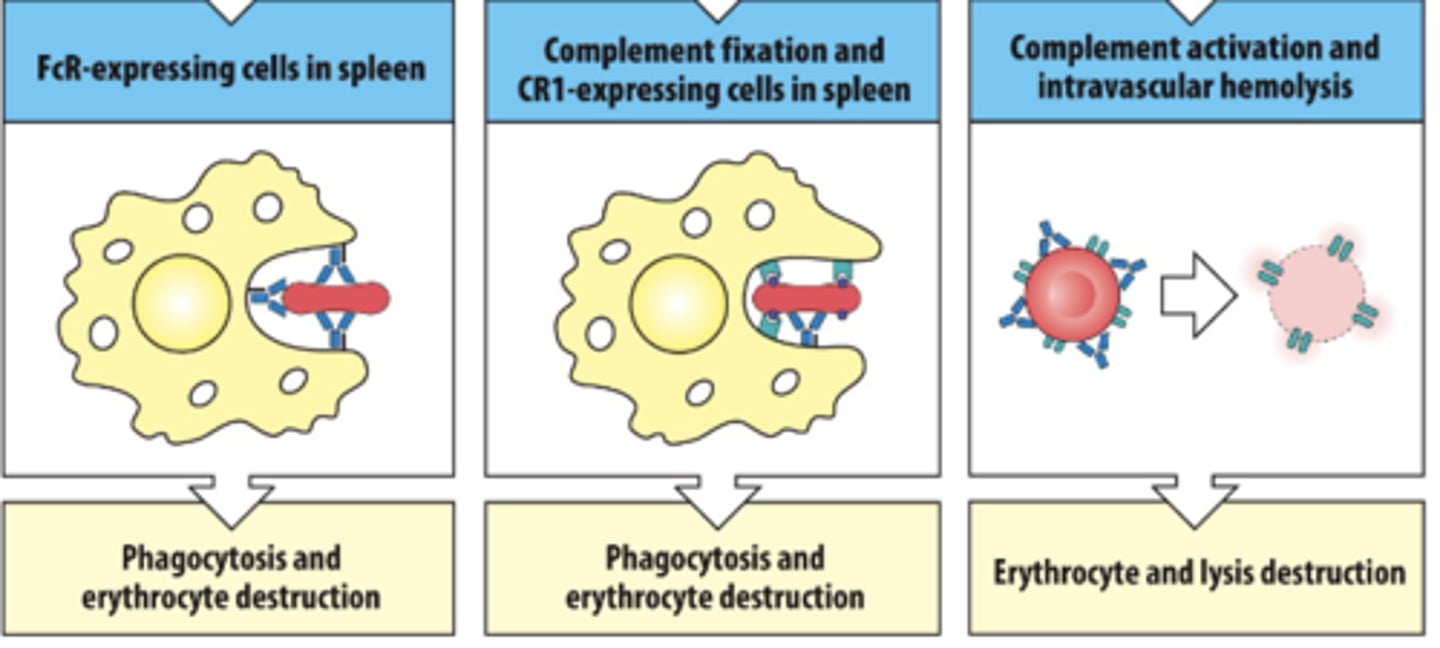
what are the three methods of RBC destruction that happens in autoimmune hemolytic anemia?
1. Phagocytes in spleen via FcR2. Phagocytes in spleen via CR13. Complement in the circulation
AIRE is a ____________ that is expressed in the ______ of the thymus that is responsible for _____________ that would cause autoimmune disease.
transcription factor; medulla; eliminating self-reactive T cell
How does AIRE induce negative selection in T cells?
exposing t cells to normal, healthy proteins from all parts of the body, and T cells that react to those proteins are destroyed
What is the condition of AIRE deficiency?
Autoimmune Polyendocrinopathy Candidiasis Ectodermal Dystrophy (APECED) or inherited autoimmune polyglandular syndrome, type 1
100% of patients with APECED develop ______, which is:
candidiasis; a fungal infection
Graves disease
antigen:
antibody:
consequence:
target cell:
thyroid-stimulating hormone receptor; agonist; hyperthyroidism; thyroid epithelium
Myasthenia Gravis
antigen:
antibody:
consequence:
target cell:
acetylcholine receptor; antagonist; progressive muscle weakness; muscle
Thyroid gland: regulates basal metabolic rate of body through secretion of _____and _____ hormones
T3; T4
what is the cause of Grave's disease?
Antibodies against the TSH receptor mimic the natural ligand (agonist), Leading to chronic overproduction of T3 and T4 insensitive to regulation-Results in hyperthyroidism
what are the main symptoms of hyperthyroidism
heat intolerance, nervousness, weight loss, outwardly bulging eyes
what treatment can be given to prevent graves's disease in infants from transfer of maternal IgG antibodies?
plasmapheresis removing TSHR-specific IgG from the baby
What disease does this description describe: Both Antibodies and T cells target normal thyroid tissue, causing Germinal centers form within the thyroid, Chronic thyroiditis, inability to make T3 and T4, hypothyroidism, Goiters often form (abnormal enlargement of the thyroid gland)
hashimoto's disease
what is the cause of myasthenia gravis?
Antibodies bind to the acetylcholine receptor on muscle cells, resulting in their endocytosis and degradation. Results in loss of muscle sensitivity to neuronal stimulation, progressive muscle weakness
what are symptoms of myasthenia gravis?
droppy eyelids and double vision
what is the main cause of neurological disability among young people in the western hemisphere?
multiple sclerosis
what are the main effector cells causing multiple sclerosis?
CD4+ t cell secreting proinflammatory cytokines (TNF-alpha nd IFN-gamma)
What disease is the result of the immune system attacking the outer layer of the adrenal gland (the adrenal cortex), disrupting the production of the steroid hormones aldosterone and cortisol?
Addison's disease
Pemphigus Foliaceus is a skin-blistering disease caused by autoantibodies specific for _______.
desmoglein
what is desmoglein?
an adhesion molecules that in cell junctions that hold keratinocytes together
what is epitope spreading?
When autoimmune reactions against a self-antigen cause release of other self-antigens from damaged tissue, resulting in an immune response to those antigens and exacerbation of disease
what is often the first symptom of SLE?
arthritis
what is the primary cause of SLE?
antibodies against your DNA, histones and ribosomes form immune complexes with antigens released from damaged cells, and these immune complexes can accumulate in capillaries of renal glomeruli causing glomerulonephritis (kidney failure)
Is SLE disproportionately developed among men or women?
women (10:1)
does SLE exhibit epitope spreading?
yes
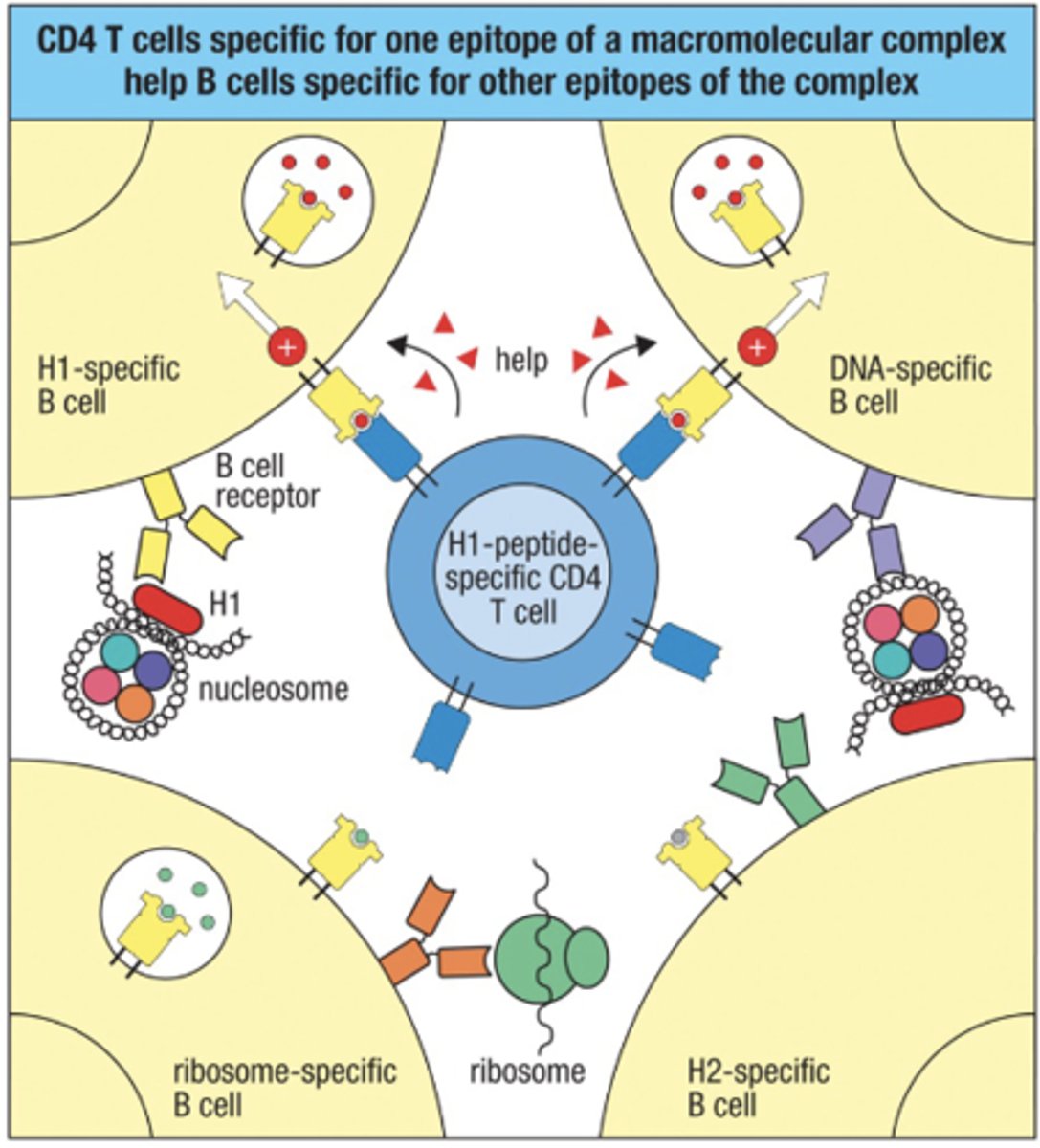
The broadening of the B-cell response to the nucleosome.
-The emergence of a single clone of autoreactive _____ T cells can lead to diverse B-cell responses to nucleosome components. The CD4 helper T cell in the center is specific for a particular peptide (red circles) from the ____ H1, which is present on the nucleosome surface.
-The B cells at the top are specific for epitopes on the nucleosome surface, on H1 and DNA, respectively, and thus bind and endocytose intact nucleosomes, process the constituents, and present the H1 peptide to the ______. Such B cells will be activated to make _______, which in the case of the DNA-specific B cell will be anti-____ antibodies
-In reality, a T cell interacts with one B cell at a time, but different members of the same T-cell clone will interact with the B cells of different specificity.
CD4; linker histone; T cell; antibodies; DNA
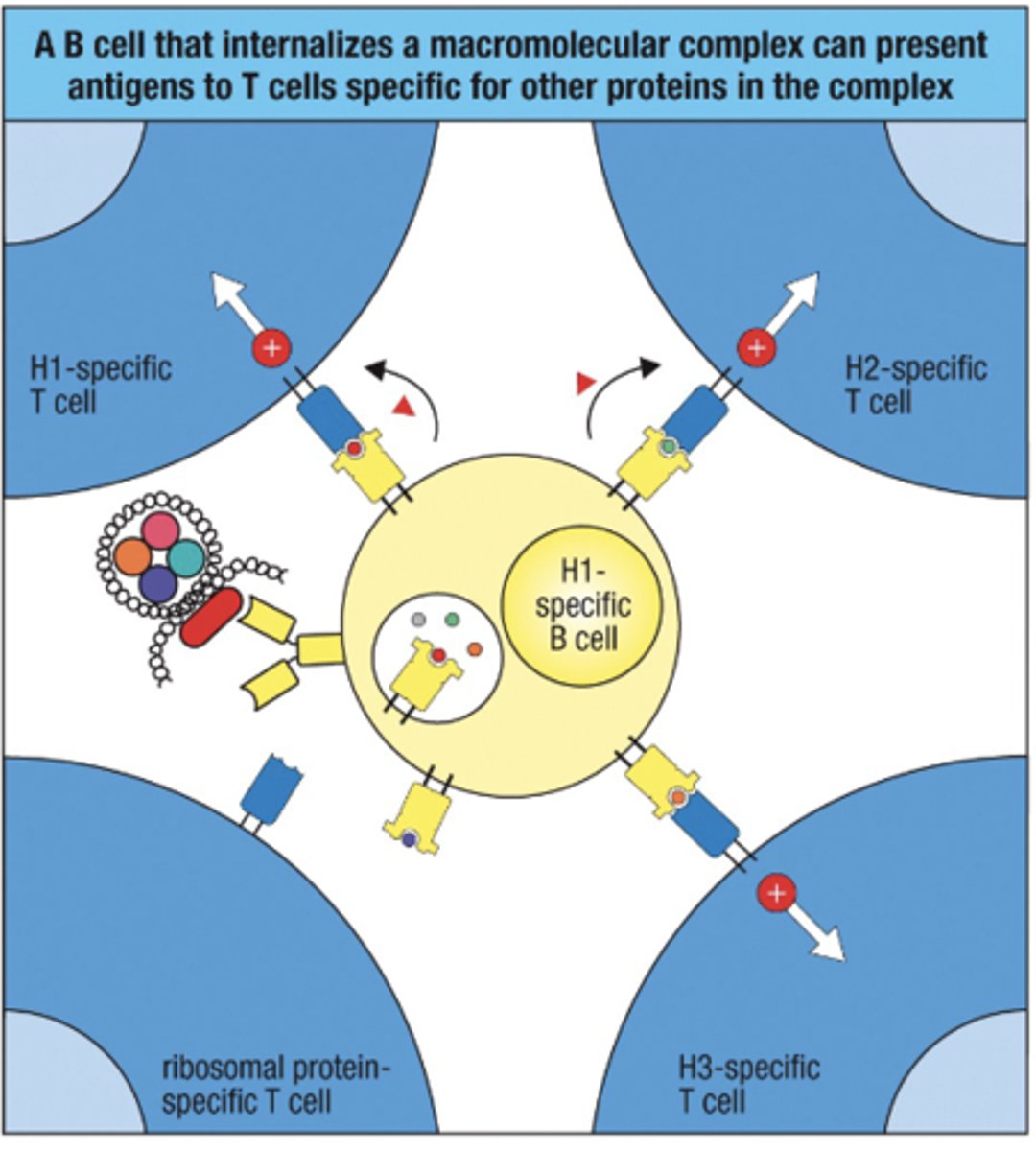
The broadening of the T-cell response to the nucleosome
-The ___-specific B cell in the center has processed an intact nucleosome and is presenting a variety of nucleosome-derived peptide antigens on its MHC class ___ molecules.
-This B cell can activate any T cell specific for one of these peptide antigens, which will include peptides derived from the internal ______ H2, H3, and H4 as well as _____ derived from H1.
-This H1-specific B cell will not activate T cells specific for peptide antigens of ________, because they do not contain histones.
H1; II; histones; peptides; ribosomes
what are the two definite benefits to using intravenous immunoglobulins for autoimmune diseases?
in grave's disease is decreases eye bulging and in thrombocytopenia is slows bleeding and loss of platelets
slide
31
what cytokines are the main cause of rheumatoid inflammation in arthritis
prostaglandins and leukotrienes, which are produced slowly
what is rheumatoid factor?
Fc portion of human IgG that patients with Arthritis develop antibodies against
what is a common treatment for arthritis
anti-TNF-alpha monoclonal antibodies (ADCC by genetically produced NK cells)
true/false: Pairs of siblings with the disease are much more likely to have the same HLA type than pairs of siblings who are healthy.
true
what are the strongest genetic factors influencing autoimmune disease susceptibility?
HLA alleles
true/false: Females are more susceptible to many of the most common autoimmune diseases
true
Name the six theories for why there is a higher prevalence of autoimmune diseases in women
1. genetic factors 2. x-chromosome inactivation 3. hormonal influences 4. environmental factors 5. microchimerism 6. higher antibody levels
What are the two mechs by which microbes may promote autoimmunity?
1) Microbes may activate the APCs to express co-stimulators B7 so APCs are more likely to present self antigens
2) some microbial antigens may cross-react with self antigens (mimicry)
what is evidence of molecular mimicry as a mechanism for autoimmune development?
often, viral infections precede development of many autoimmune diseases
The enzyme Peptidyl Arginine Deiminase (PAD) converts the ______ residues of tissue proteins to citrulline. In tissues stressed by wounds or infection, PAD activity is induced. By converting arginine residues to citrulline, PAD destabilizes _____, making them more susceptible to _______. It also introduces novel B-cell and T-cell ______ into tissue proteins that can stimulate an autoimmune response.
arginine; proteins; degradation; epitopes
rheumatoid arthritis has a much higher risk in patients of what population?
smokers
rheumatic fever
A bacterial infection that can be carried in the blood to the joints
HLA-B27 is associated with what syndrome after infection with chlamydia trachomatis?
reiter's syndrome, ie temporary inflammatory infection
HLA-DR2 and DR4 are associated with higher risk of what syndrome after exposure to borrelia burgdorferi?
lyme disease
HLA-DQ2 and DQ8 are associated with higher risk of what syndrome after exposure to various viruses?
type 1 diabetes
where is the release of sequestered antigens most dangerous?
the eyes- trauma to one can lead to loss of vision in both from an autoimmune reaction
what is another name for Type 1 diabetes?
Insulin-Dependent Diabetes Mellitus
define type 1 diabetes
Selective destruction of insulin-producing β cells located within the Islets of Langerhans (in the pancreas). Several autoantigens are recognized by both antibodies and T cells, including insulin and glutamic acid decarboxylase of the pancreatic β cel
In celiac disease, the inflammation and immune response damage the:
intestinal villa
Celiac's disease is characterized by:
greater numbers of lymphocytes in the epithelial layer and an increase in effector CD4 T cells, plasma cells, and macrophages in the lamina propria. Damage to the villi reduces the person's ability to utilize food and can cause life-threatening malabsorption and diarrhea.
In Celiac Disease, inflammation of the small intestine is caused by ______ responding to deaminated peptides derived from _____.
TH1 CD4 T cells; gluten
why is there an increase of rheumatoid arthritis with age?
thymus involution
what cytokine released by T cells upon activation by HLA class II receptors facilitates autoimmunity?
IFN-gamma
what disease do theses symptoms describe?
-IgG targets Type IV collagen, present in basement membranesthroughout the body
-Antibody accumulation in renal glomeruli and tubes lead toinflammation and impaired functionIgG
goodpasture's syndrome
slide 56 MEMORIZE
all ten!