applied animal health and welfare- oral cavity, pharynx, oesophagus and stomach in digestive system -
 Call Kai
 Learn
 Practice Test
 Spaced Repetition
 Match
 Flashcards
 Knowt Play
1/39

There's no tags or description
Looks like no tags are added yet.
40 Terms
what are the key features in oral cavity
hard palate
soft palate
lips
tongue
teeth

what does the mouth houses and where does it extends to ?
houses teeth, tongue, lips, hard/soft palate and salivary glands
extends from lips to pharynx
ingestion what is it?
process of taking food into body
what does ingestion involve
the use of mouth formed by lips, teeth and tongue
what is a bolus
a ball of chewed food bound together with saliva that is formed in mouth by action of tongue
what is the function of mouth
to pick up food
break up food into small pieces , each which is called a bolus , ready to swallow
lubricate food to facilitate swallowing
what does their lips comprise of
skin and muscle within a layer of mucosa
what is mucosa
a mucous membrane
what are cheeks lined with
buccal mucosa
what is hard palate made up of and what does it form ?
forms the roof of mouth and is made of part of skull, which is covered in keratinised epithelium for protection
what does keratin do to make it useful?
covers it to provide extra support against mechanical stress
Where does the soft palate sit ( regarding hard palate as well)
The soft palate sits caudal to hard palate
what is soft palate made up of?
made up of soft tissue rather than bone
what nerves are supplied to oral cavity?
cranial nerves- facial and trigeminal
what is trigeminal nerve
largest pair of cranial nerve , supply front part of head
where does facial nerve supply
supply facial muscles and tongue
what is the function of saliva?
to moisten mouth and provide lubrication to aid swallowing
in what type of group of animals does saliva contain amylase
in herbivores and allow start of break down into starch
what 4 salivary glands will allow it to be produced continually ?
zygomatic , sublingual , parotid and mandibular
what does sublingual means
situated under the tongue
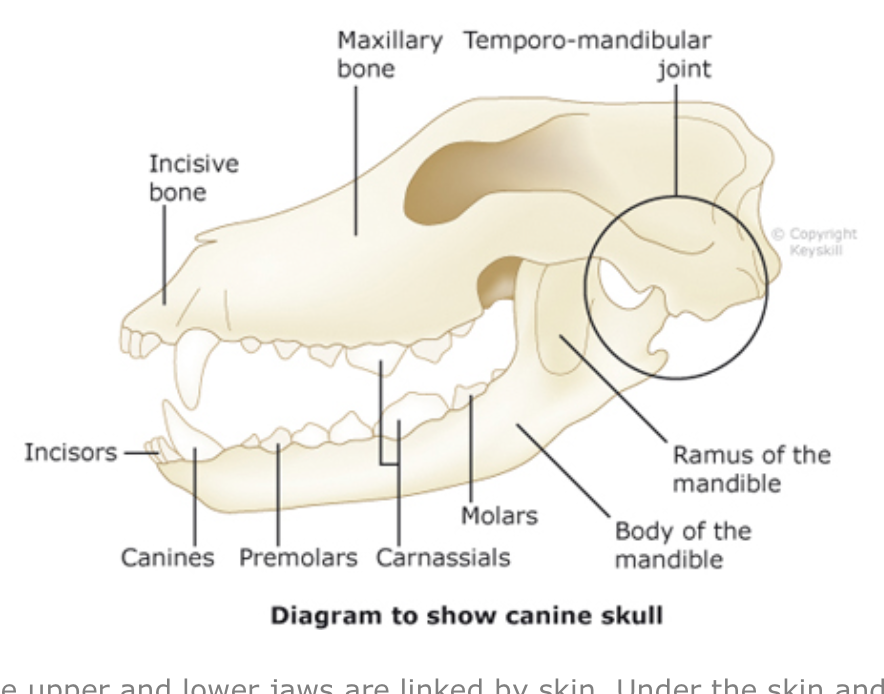
what are main part of mouth
maxilla , mandible , temporal bone , temporomandibular
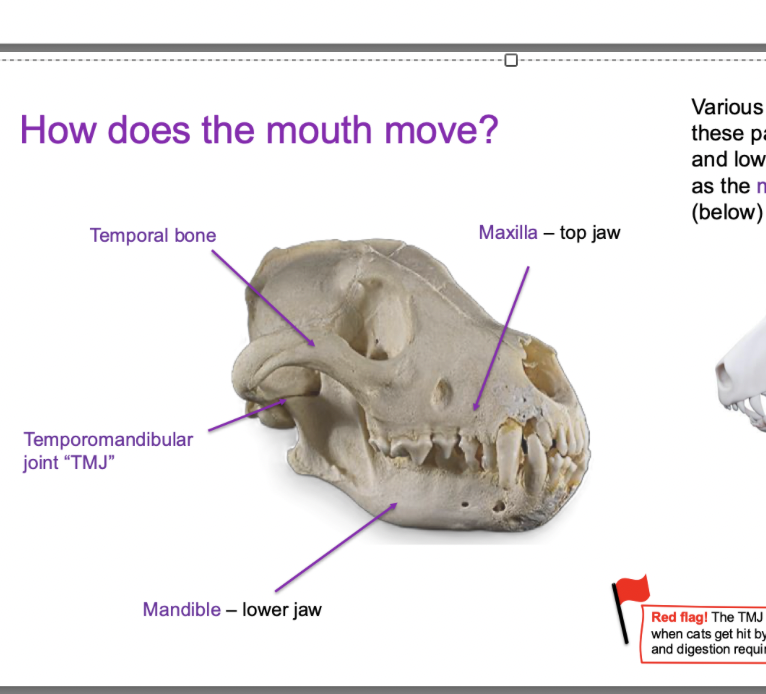
what is maxilla
top jaw
mandible
lower jaw
what are upper and lower jaws linked wit
kinked by skin
under skin and over area of temporomandular joint lies masseter muscle which forms cheeks
how many sets of teeth does dogs and cats have in their lifetime
deciduous and adult teeth
what are deciduous ??
baby teeth present at birth and erupt as animal grows
fall out as adult teeth grow and erupt
how many adult teeth do dogs have
42
How many adult teeth do cats have?
30
have less premolars and molar than dogs
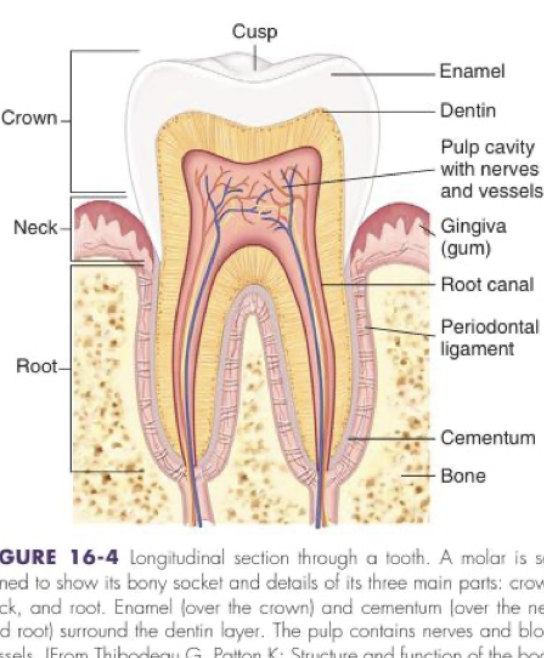
what is perodontal ligament ?
hold teeth into bone ,
important as you need teeth to be quite sturdy to be able to chew
fibrous connective tissue joining the tooth to its surrounding bone
what is periodontal
relatinf to or affecting the structurres surrounding and supporting teeth
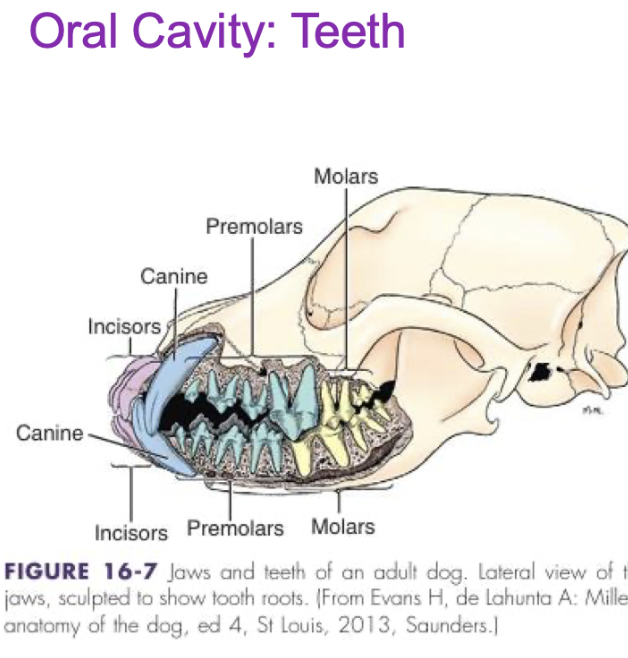
how many tooth types are there ?and their names?
5 types
incisor
canines
premolar
molars
carnassials
What is the function of the incisor ?
nibbling and cutting
(narrow edged tooth at front of mouth
what is the function of canines?
hold prey in place and tear flesh
pointed tooth
what is the function of premolars ?
for shearing and grinding flesh
tooth situated between the canine and the molar teeth
what is function of molars?
shearing and grinding flesh
what are carnassials?
first lower molar and last upper premolar on each side
what is the function of carnassials ?
slicing and cutting
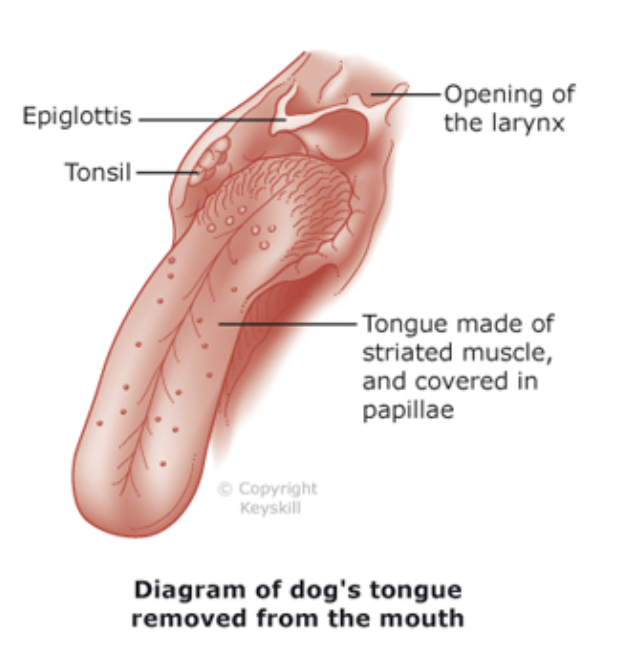
what is the tongue made up of?
striated muscle fibres running in all directions giving tongue its great mobility
the tongue is innervated by which nerve?
hypoglossal nerve which originates from brain
the tongue is supplied by blood via which artery and vein?
lingual vein and artery
very well vascularised