Research Methods
 Call Kai
 Learn
 Practice Test
 Spaced Repetition
 Match
 Flashcards
 Knowt Play
1/20

There's no tags or description
Looks like no tags are added yet.
21 Terms
Content Analysis
We can analyse public information
The main purpose is to reveal hidden meanings and purposes behind them
We can question why people produce the content they do
Mostly qualitiative
Sources for content analysis
historical documents
institutional documents
media content
physical objects
Two types of content analysis
Manifest
Latent
Manifest content analysis
surface level
easy to observe
whatever is visible to you
Latent content analysis
hidden meanings
underlying messages
subject to interpretation
Coding process
Code: A word or short phrase that symbolically assigns a summative, salient essence, capturing a portion of language-based or visual data
Purpose: helps us bring themes from raw data and understand it
Themes are more abstract than codes
Phenomenology
describing a particular phenomenon
lived experience and sharing what you’ve gone through
subjective
situated knowledge
How do we use phenology
rich, detailed descriptions
sensory data
establishing context and meaning
cultural connection
grounded theory
not technically a theory but a qualitative method
provides examples of how qualitative research works
grounded theory (definition)
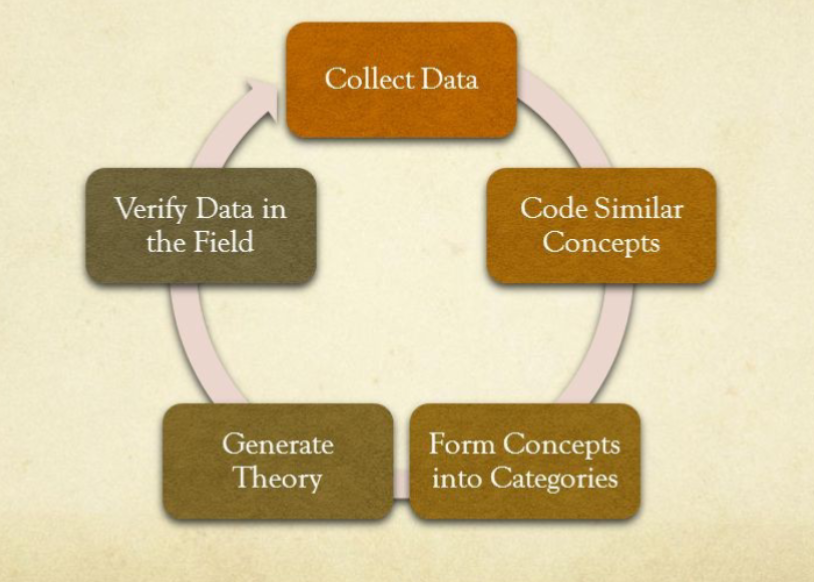
a systematic set of procedures used to explore the social processes that guide human interaction and independently develop a theory on the basis of those observations
studying process
inductive approach
social processes
inductive approach (grounded theory)
systematic process
keep going until you hit saturation point
ethnography
human culture
simple observations
studying a culture we are not familiar with
observation and participation
What does ethnography try to understand
practices (why people do what they do)
their meanings (given a specific social context)
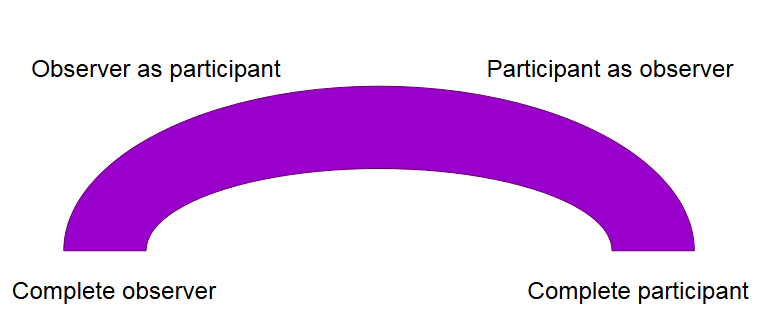
Different levels of engagement (ethnography)
complete observer
observe as a participant
participate as an observer
complete participant
complete observer (different levels of engagement (ethnography))
you do not disturb people in the setting
con: you don’t fully understand because you’re just looking
observe as a participant (different levels of engagement (ethnography))
you mostly observe but have slight participation
con: people know you’re observing, so they might change their behaviours
participate as an observer (different levels of engagement (ethnography))
paricipate more than you observe
con: your identity as a researcher is known
complete participant (different levels of engagement (ethnography))
you immerse yourself in the setting
con: cannot properly record
What data to collect in the field (various levels of observation)
Setting: location
what does it look, sound or smell like (atmosphere)
activity
what are people doing
words and speech
language
quotes
story of encounter
record what’s not obvious to you
participant action research (PAR)
Researchers collaborate with members of the community to do research
local people participating in both the community and research
collective goal and mobilise people to achieve change
NGO (non-governmental organisations)
steps of qualitative data
get to know your data
initiate the data analysis
categorize information
indefniy patterns and connections between categories
Interpret the data and bring everything together (Taylor-Powell & Renner 2003)