(Terms 2) Realism to Contemporary Art
 Call Kai
 Learn
 Practice Test
 Spaced Repetition
 Match
 Flashcards
 Knowt Play
1/16

There's no tags or description
Looks like no tags are added yet.
17 Terms

The Eight (Ashcan School)
Rejected traditional academic traditions in favor of the gritty, changing reality of everyday middle-class life. The raw depiction of living in an urban environment.
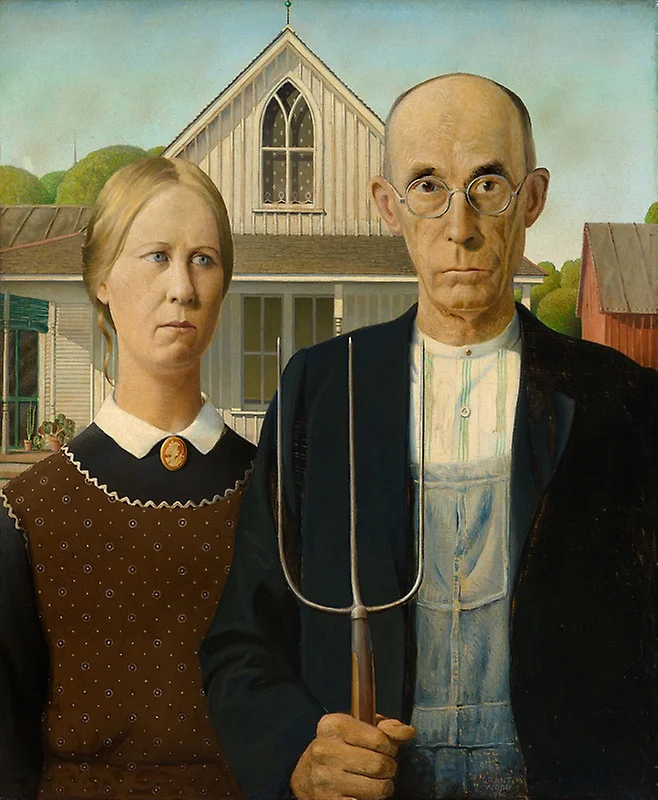
Regionalism
Artwork inspired by the politics, interests, or culture of a geographical region.
Example: American Gothic by Grant Wood

Color Field Painting
Expansive fields of flat, solid color spread across a canvas. Shows minimal brushwork and focuses on a flat plane. Artists also rejected the illusion that came with modeling/shading, as well as value.
Example: Rothko Chapel by Mark Rothko

Action Painting
A method of painting where paint is controllably dripped, smeared, or dribbled onto a canvas. The focus is on the involvement of the artist and the physical “action,” rather than the finished work.
Example - Works by Jackson Pollock

Art Brut (Outsider Art)
Art that is created outside of traditional academic training or mainstream art. Coined by Jean Dubuffet, it was usually used to describe psychiatric patients, prisoners, or social outcasts.
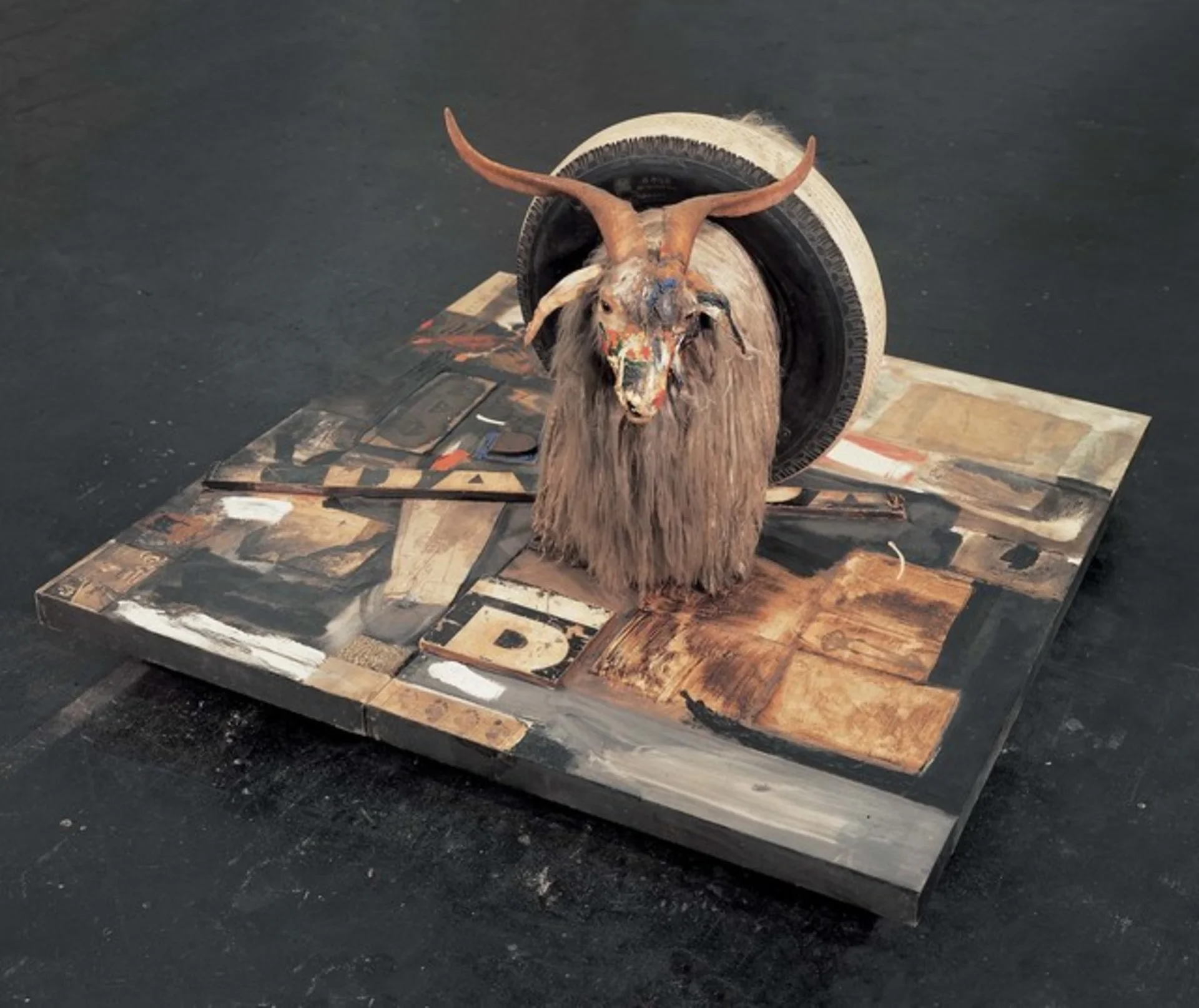
Neo-Dada
An art style from post-WWII that brings back the absurdity, humor, and playfulness of DADA. Artists would merge everyday life with art rather than isolate it
Example: Robert Rauschenberg’s Monogram

Postpainterly Colorfield Abstraction
PCA rejected the painterly brushstrokes of the abstract expressionists and focused on broad expanses of color. It also rejected modeling and shading, and focused on clean, flat planes.
Example - Mountain and Sea by Helen Frankenthaler

Minimalism
Characterized by simple geometric forms with little to no symbolism. Utilized commercially made media such as fiberglass, aluminum, steel, and more. Also removed the idea of emotion or narrative in the work. “It is what it is!”

Conceptual Art
An art movement that focuses on the concept or idea of the artwork being more important than the physical work or the skill behind it. Idea > Execution
Think Joseph Kosuth’s One and Three Chairs, and Plato’s Theory of Forms!

Body Art
In favor of live human presence and performance over traditional paintings or objects. Explored themes such as gender, body image, identity, and more. Often also overlaps with video or p
Example - Yoko Ono’s Cut Piece

Womanhouse
Founded by the Feminist Art Program, Artists used labor techniques such as electric work, painting, and refinishing to transform the house before it was destroyed. It featured 21 distinct rooms and explored themes of women’s role in households.
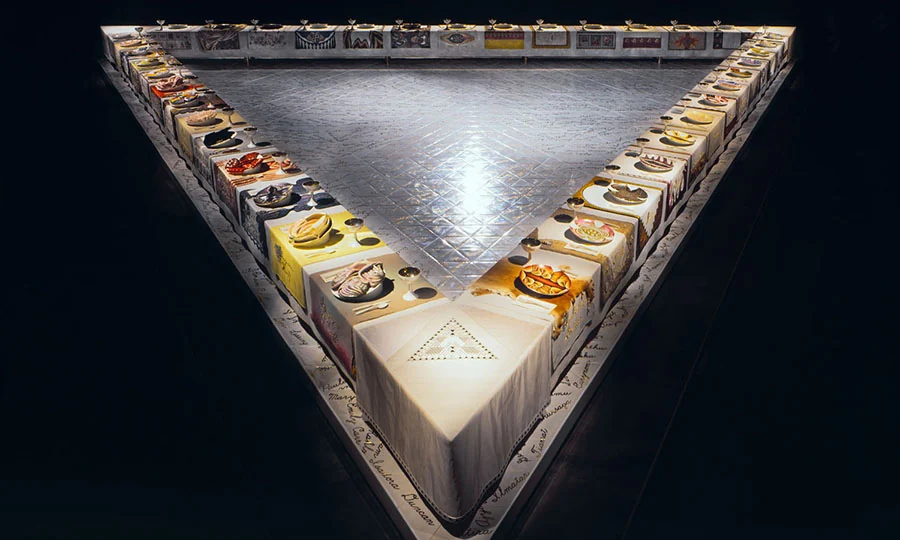
Feminist Art
A movement in the 70s that pushed for gender equality in a male-dominated society. Explored the female body and genitalia in works, as well as exploring women’s place in the household or society.
Example - The Dinner Party by Judy Chicago

Wall of Respect
A mural was taken down in 1971 after a fire, but it depicted notable Black figures from history, including Malcolm X, John Coltrane, and Muhammad Ali.
A celebration of black culture and impact.

Process Art
Shows an active change in the artwork; each form is unique. The making of the art takes priority over the finished work. Materials included (But not limited to): latex, felt, wax, molten lead
Examples include Eva Hesse, Robert Morris, and Richard Sierra.

Vietnam Veterans Memorial by Maya Lin
Design is supposed to be a “cut in the earth.” Walls are made of black granite to give a reflective surface so the viewer can see themselves.“Unheroic aesthetic” due to no representational sculptures of soldiers, and Maya Lin faced racism and backlash for it.
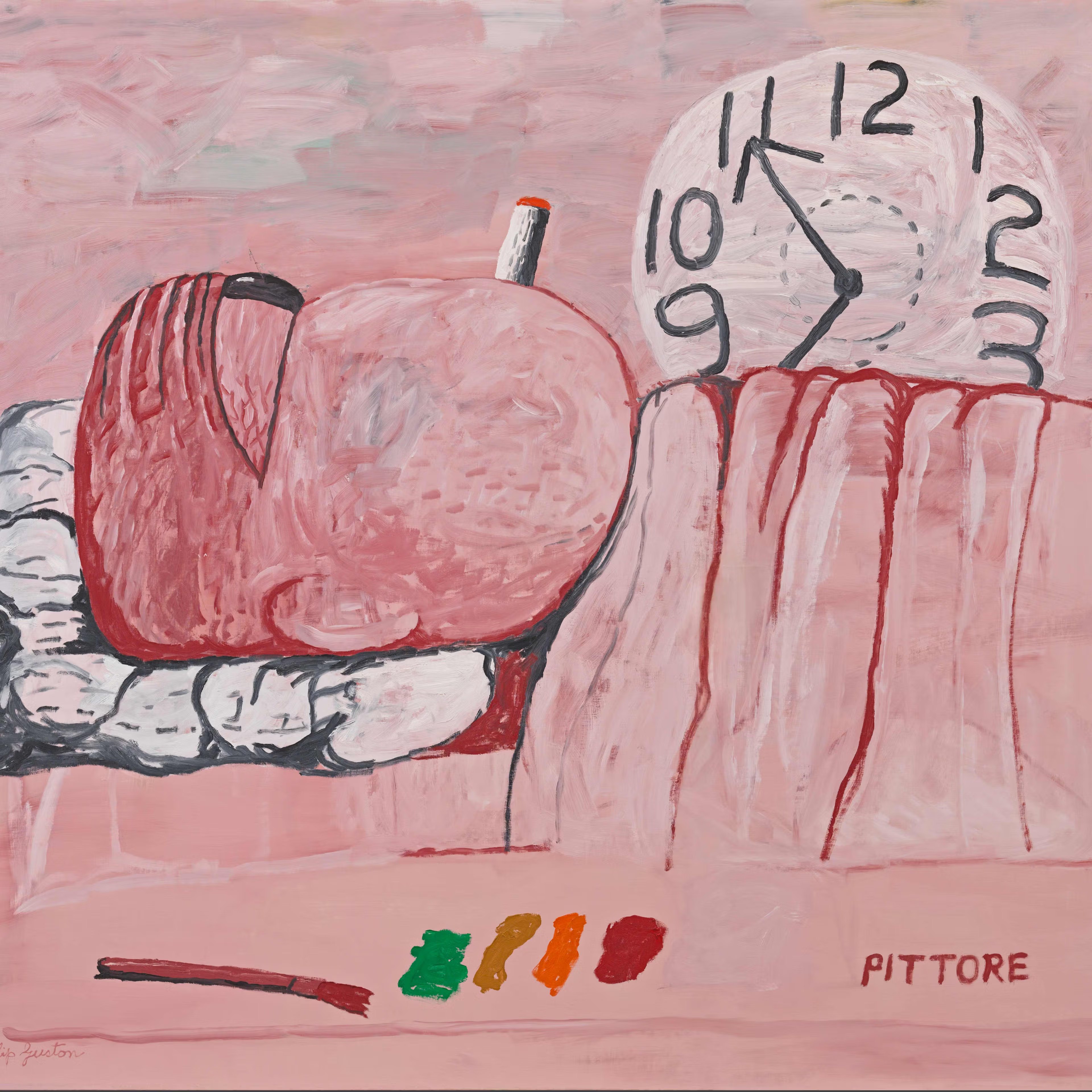
New Image Art
Artists who used recognizable imagery in their work, such as Philip Guston. Controversial for “bringing back the figure” that wasn’t seen in minimalism, abstract painting, etc.Featured raw, expressive brushstrokes and almost a “comic-strip” style motifs.
Example - Philip Guston

Chicago Imagists (Hairy Who)
Grotesque, witty, vibrant, and deeply personal. Drew heavy inspiration from comic books, and was completely opposite of Pop Art.