A&P Facial and Skull Bones
 Call Kai
 Learn
Learn Practice Test
 Spaced Repetition
 Match
Match Flashcards
 Knowt Play
1/57

There's no tags or description
Looks like no tags are added yet.
Name | Mastery | Learn | Test | Matching | Spaced | Call with Kai | Chat |
|---|
No analytics yet
Send a link to your students to track their progress
58 Terms
Frontal Bone
Forms the forehead and the upper part of the eye sockets.

Anterior Cranial Fossa
The front depression in the skull base that houses the
frontal lobes.

Frontal Sinus
Air-filled cavity within the frontal bone

Orbit
The bony cavity that contains the eyeball.

Parietal Bone
Forms the sides and roof of the cranial cavity.

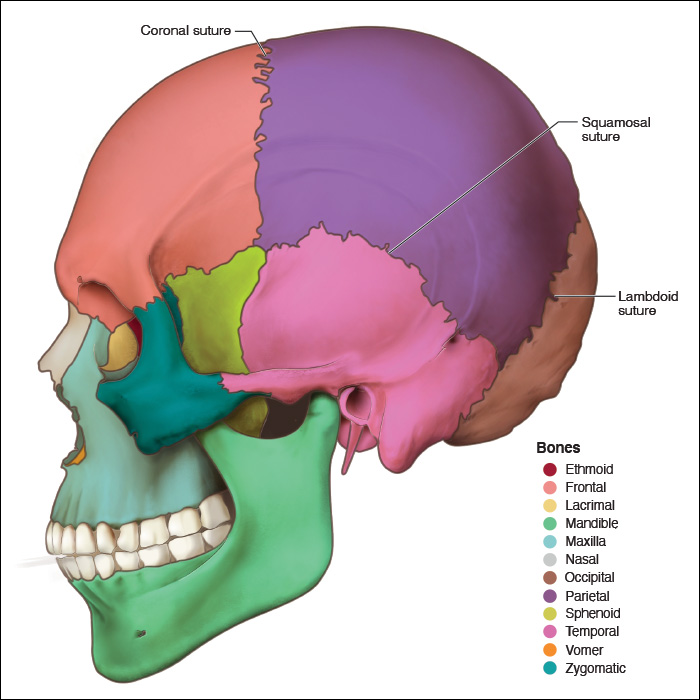
Coronal + Lamboidal Suture
Coronal: Joint between the frontal and parietal bones.
Lamboidal: Joint between the parietal bones and the occipital bone.
Sagittal Suture
Joint between the two parietal bones

Squamous Suture
Joint between the parietal and temporal bones in
fetal skulls.

Anterior Fontanelles
Soft spot on a baby's skull where the bones haven't fused yet.
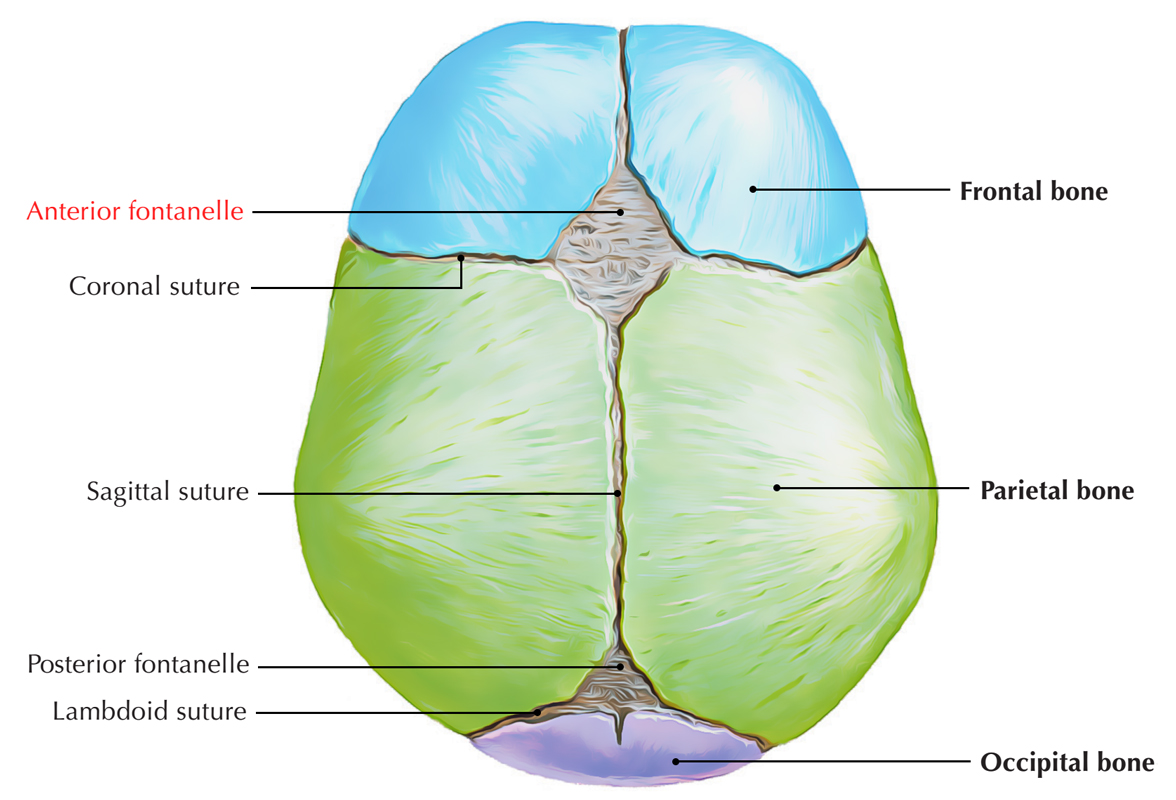
Posterior Fontanelles
Smaller soft spot at the back of a baby's skull.

Occipital Bone
Forms the back and base of the skull.

Occipital Condyles
Rounded projections that articulate with the first cervical vertebra.

Temporal Bone
Forms the sides and base of the skull.

Squamous Region
Flat part of the temporal bone.

Tympanic Region
Surrounds the external auditory meatus.

Mastoid Region
Contains air cells and is located behind the ear.

Petrous Region
Dense part of the temporal bone that houses the inner ear.

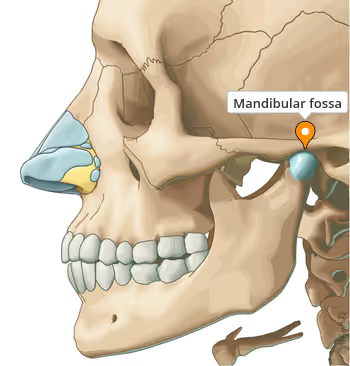
Mandibular Fossa
Depression that articulates with the mandible
External auditory meatus
Ear canal opening in the temporal bone.
Zygomatic process
Projection that forms part of the cheekbone.
Styloid process
Needle-like projection for muscle attachment.
Mastoid process
Rounded projection behind the ear.
Jugular foramen
Opening for the jugular vein and cranial nerves.
Internal auditory meatus
Canal for nerves of hearing and balance.
Middle cranial fossa
Central depression in the skull base.
Posterior cranial fossa
Back depression in the skull base.
Zygomatic Arch
Cheekbone formed by temporal and zygomatic bones.
Sphenoid
Butterfly-shaped bone at the base of the skull.
Sella turcica
Depression that holds the pituitary gland.
Lesser Wings
Smaller projections of the sphenoid bone.
Greater Wings
Larger projections of the sphenoid bone.
Superior Orbital Fissure
Opening for nerves and vessels in the orbit.
Sphenoid Sinus
Air cavity within the sphenoid bone.
Ethmoid
Bone that forms part of the nasal cavity and orbit.
Crista galli
Vertical projection for brain membrane attachment.
Perpendicular Plate
Forms part of the nasal septum.
Cribiform plates
Perforated plates for olfactory nerves.
Olfactory Foramina
Tiny holes for smell nerves.
Superior Nasal Concha
Upper curved bone in the nasal cavity.
Middle Nasal Concha
Middle curved bone in the nasal cavity.
Ethmoid Air Cells
Small cavities within the ethmoid bone
Mandible
Lower jaw bone.
Mandible Body
Main horizontal portion of the mandible.
Mandible Ramus
Vertical part of the mandible.
Mandibular Condyle
Rounded end that articulates with the skull.
Coronoid Process
Projection for muscle attachment
Maxilla
Upper jaw bone.
Inferior Orbital Fissure
Opening below the orbit.
Maxillary sinus
Air cavity in the maxilla.
Hard palate
Bony roof of the mouth
Palatine bone
Forms part of the hard palate.
Zygomatic bone
Cheekbone.
Lacrimal bone
Small bone forming part of the eye socket.
Nasal bone
Forms the bridge of the nose
Inferior nasal concha
Lower curved bone in the nasal cavity
Vomer
Forms part of the nasal septum.
Hyoid Bone
U-shaped bone in the neck that supports the tongue.
Auditory Ossicles
Small bones in the middle ear.