Midterm study
 Call Kai
 Learn
 Practice Test
 Spaced Repetition
 Match
 Flashcards
 Knowt Play
1/29

There's no tags or description
Looks like no tags are added yet.
30 Terms

This corset was made by Ines Gache-Sarratue. Dresses with these types of corsets ranged from 80,000 euro to 350,000 euro. In class we talked about how the most important part of this corset was the price, not the color of quality.

This was the first dress without a corset from 1910. This was created by Paul Poiret and he did not do it for the sake of women, he did it to set himself apart from the competition. He thought it would create buzz, good or bad.

This is Colette who we looked at for wearing an outfit inspired by the Egyptian clothing style. Here she is dressed like a man. She was a writer and a huge feminist. She was also bisexual and loved to play characters. She was the first lady to wear a male tuxedo.

This is Luisa Casai, she was the richest lady in Italy. She was influenced by Oscar Wilde. She was very skinny because she did a lot of drugs. She decided to wear only black clothes even though she was not in mourning, hence creating the gothic style. Cruella de Ville was inspired by her.

This was a look from the Christian Lacroix collection in 2004. This is one of the many examples of looks that were inspired by Luisa Casai, with a lot of emphasis on the eye makeup and the orange for her hair color.

This shows a man wearing Alexander McQueen 2017 that was directly inspired by Oscar Wilde and the dandy movement of the late 19th century. The peacock is especially important because Wilde was associated with peacocks and his aesthetic. He even stayed in the peacock room in Hotel of Paris.
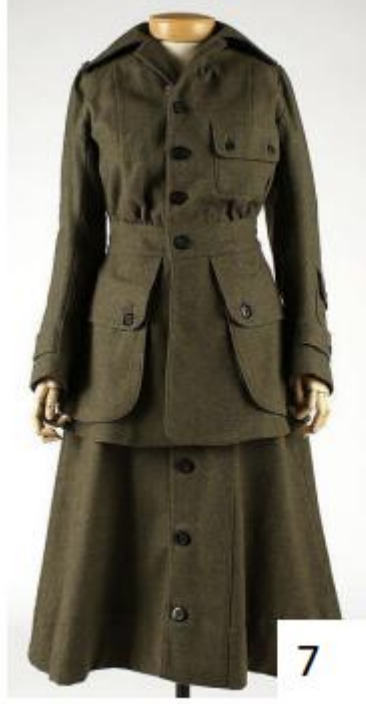
This is a 1915 costume tailleur inspired by military fabrics and outfits. This showed that in the 1915 period, women had clothes that were inspired by military uniforms. A large contrast from the embroidered dresses they wore before the war.
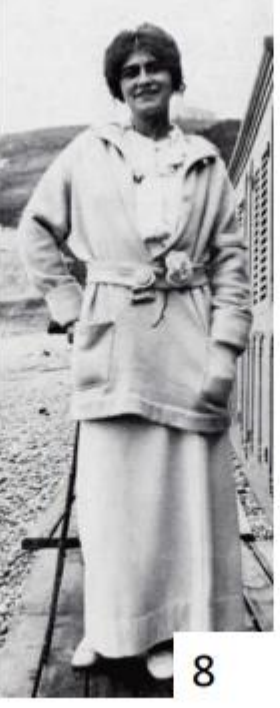
This is Coco Chanel and she created the first tailor with jersey. This type of clothes were meant to be casual and not too formal. This makes her very popular. After the war she would use the military menswear to create clothes for women.

This was the iconic lampshade dress created by Paul Poiret in 1923. This dress was sold in Paris last year for 360,000 euros making it one of the most expensive old dresses ever sold. All the fashion designers created this type of dress again and again, and it was an inspiration for the next 40 years.

This is a picture of aviators in 1916. Aviators were rich aristocratic men. This outfit shows that these men were posh and didn’t want to look like an ordinary soldier, they want to be known as rich. He is wearing a large fur coat and this coat would cost 5 years of salary for an ordinary person and 50 years of salary for a worker. They also wore high leather boots that were very expensive.

Costume designed by Kansai Yamamoto for the Aladdin Sane tour, 1973, Oscar Schilemur, anti-fascist fashion house.

Rose Selvay, Marcel Duchamp 1921, a man dressing as a woman, leader of French dandyism.

Zoot movement 1930-1940, allows to assert their identity in response to racism and poverty. Style was intended to attract attention, consisted of an American type of suit, more or less exaggerated form, and accessories.

Skeleton dress 1938, designed by Elsa Schiaparelli. One of the most prominent figures in fashion between the two world wars. Her designs were heavily influenced by surrealists, like her collaborators Dali & Cocteau.

Four leaf clover dress, 1947, Maison Charles James, he was known for his sumptuous ball gowns and the very complex cuts of his dresses and loved using fancy colors.

1937 & 1938 collaboration with Dali, the “shoe hat” designed by Schiaparelli, only three hats were sold.

Louise Brooks (1900-1985). She was a dancer & actress, famous for popularizing the bobbed haircut.

Cassati 1922, portrait of the italian heiress and muse Marchesa Luisa Casati, by Mann Ray who was a landmark surrealist photographer.

Francoise Hardy, Dior, 1968, inspired by Sonia Delunay 1925, who was a French artist.

Petite robe noire de 1926, created by Coco Chanel.

Dandy in 1823 shows the men wearing corsets.
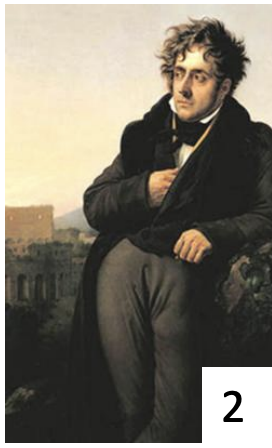
Châteaubriand by Ingres in 1815, they made their hairstyle look like Antinous in the prime of transition. (1815-1825)

Infante Luisa Fernanda d’Espagne in 1847, she wore black because in Spain and Portugal black did not mean mourning like in the rest of Europe.

Queen Victoria and her husband, her husband wore a tunic (like a long dress), the shape of her skirt was a bell shape and they are both wearing purple which is neo gothic.

Emile Zola he was a French novelist and playwright, he was in the period of Japanism.

Napoleon the third was the nephew of Napoleon the first. He was wearing a corset and was looking very elegant. He was hated by Victor Hugo who destroyed his reputation.

From costume ball in 1870, this image was to show how quickly the trains of dresses changed.

1895, Colette, she was a french writer and she was known for rebellion against gender roles and for being risque. Her clothes in that icture are largely inspired by Egypt.

Discobole sculpture, sculpteur originel: Myron Ven BC in paris Maoiro all Term (1585-1590)
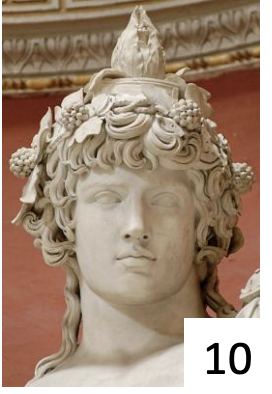
Antinous and he was the lover of the Emperor Hadrian. He drowned at 20.