MICRO EXAM 2
 Call Kai
 Learn
Learn Practice Test
 Spaced Repetition
 Match
Match Flashcards
 Knowt Play
1/323

There's no tags or description
Looks like no tags are added yet.
Name | Mastery | Learn | Test | Matching | Spaced | Call with Kai | Chat |
|---|
No analytics yet
Send a link to your students to track their progress
324 Terms
List the Important Functional Groups
Seven: hydroxyl, carbonyl, carboxyl, amino, phosphate, sulfhydryl, and methyl.

Which functional group is written –OH?
Hydroxyl; polar and found in alcohols.

Which functional group is written C=O?
Carbonyl; a polar group found in aldehydes and ketones, including sugars.

Which functional group is written –COOH or –COO⁻?
Carboxyl; functions as an acid by donating H⁺.


Which functional group is written –NH₂ or –NH₃⁺?
Amino; functions as a base by accepting H⁺.
Which functional group is written –OPO₃²⁻?
Phosphate; polar and negatively charged in many cellular molecules.

Which functional group is written –SH?
Sulfhydryl (thiol); can form disulfide cross-links in proteins.

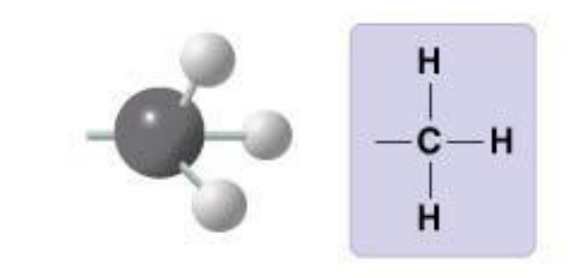
Which functional group is written –CH₃?
Methyl; nonpolar, used as a molecular tag in methylation.
How do you tell carbonyl from carboxyl by a structure?
Carbonyl is C=O; carboxyl is C=O with an additional OH (–COOH), often ionized as –COO⁻.
Which five groups does the lecture classify as polar/hydrophilic?
Hydroxyl, carbonyl, carboxyl, amino, phosphate.
Which two groups does the lecture classify as nonpolar/hydrophobic?
Sulfhydryl and methyl (lecture grouping; sulfur is only weakly electronegative).
Which functional group gives alcohols their chemical identity?
Hydroxyl (–OH).
Which group helps sugars such as ketoses and aldoses differ?
Carbonyl (C=O): ketone in ketoses versus aldehyde in aldoses.
Which functional group typically forms hydrogen bonds with water in alcohols?
Hydroxyl (–OH).
Why is a carboxyl group acidic?
It can donate H⁺, leaving a negatively charged carboxylate (–COO⁻).
Why is an amino group basic?
It can accept H⁺, becoming positively charged (–NH₃⁺).
Which group gives DNA and RNA sugar-phosphate backbones negative charge?
Phosphate groups.
Which group gives membrane phospholipid head groups polar character?
Phosphate groups.
Which group forms disulfide cross-links between cysteines?
Sulfhydryl (–SH) groups react to form covalent S–S bonds.
Which group can be added to DNA as an epigenetic molecular tag?
Methyl (–CH₃); methylation can affect gene expression.

You see a structure with C double-bonded to O and bonded to OH. Identify it.
Carboxyl, not just carbonyl.

You see a structure with P bonded to multiple oxygens. Identify it.
Phosphate group.
DELETE
DELETE

You see a structure ending in sulfur–hydrogen. Identify it.
Sulfhydryl (thiol) group.
What kind of interaction can arise because oxygen pulls electrons strongly?
Polar covalent bonds and partial charges; these allow hydrogen bonding.
What is electronegativity?
An atom's tendency to attract shared electrons in a chemical bond.
What is the difference between partial and full electrical charge?
Partial charge (δ⁺/δ⁻) comes from unequal electron sharing; full charge (+/−) comes from ions.
Four different kinds of bonds/interactions MUST KNOW
Covalent, ionic, hydrogen bonds, and hydrophobic interactions.
How does a covalent bond form?
Atoms share one or more electron pairs.

What is required for an ionic interaction?
Oppositely charged ions (full positive and negative charges).
What is required for a hydrogen bond?
Polar groups with partial charges; a partially positive H is attracted to an electronegative atom, often O or N.

What is required for a hydrophobic interaction?
Nonpolar groups clustering together away from water.

Two groups with full + and − charges attract. What is the interaction?
Ionic.
Two atoms share electrons. What type of bond is formed?
Covalent.
A δ⁺ hydrogen is attracted to a δ⁻ oxygen. What type of interaction?
Hydrogen bond.

Nonpolar side chains cluster inside a protein away from water. What interaction?
Hydrophobic interaction.
Which interaction depends on full charges rather than partial charges?
Ionic interactions.
Which interaction depends on partial charges rather than full ions?
Hydrogen bonding.
What bond chemically connects amino acids into a polypeptide?
A covalent peptide bond.
Which functional groups react to form a peptide bond?
The carboxyl group of one amino acid and amino group of another.
How is a peptide bond formed?
Through a dehydration (condensation) reaction.
What three basic parts are attached to an amino acid's central α-carbon?
Amino group, carboxyl group, and variable R group (plus H).

Which amino acid part is the variable side chain?
The R group; it determines the amino acid's chemical properties.
Which amino acid backbone group functions as an acid?
Carboxyl (–COOH/–COO⁻).
Which amino acid backbone group functions as a base?
Amino (–NH₂/–NH₃⁺).
What are the four amino acid side-chain categories for this exam?
Nonpolar, polar (uncharged), acidic (negative), and basic (positive).
What side-chain pattern suggests a nonpolar amino acid?
Mostly carbon-hydrogen bonds/hydrocarbon groups, few or no strongly polar groups.

What side-chain pattern suggests a polar uncharged amino acid?
Uncharged side chain with O- or N-containing polar bonds, often OH or amide.

What side-chain pattern suggests an acidic amino acid?
An additional carboxyl group that commonly exists as negatively charged –COO⁻.


What side-chain pattern suggests a basic amino acid?
A protonatable nitrogen-containing side chain, commonly positively charged.
A side chain is –CH₂–CH₃. What category?
Nonpolar.
A side chain is –CH₂–OH. Whats charge state and polar or non-polar
Polar, uncharged.
A side chain ends in –COO⁻. What category?
Acidic, negatively charged.
A side chain has a positively charged nitrogen. What category?
Basic, positively charged.
Why are acidic amino acids usually negatively charged at cellular pH?
They donate H⁺ from the acidic side chain.
Why are basic amino acids often positively charged at cellular pH?
Their side chains accept H⁺.
What determines a protein's primary structure?
The linear sequence of amino acids joined by covalent peptide bonds.
What stabilizes α-helices and β-pleated sheets in secondary structure?
Hydrogen bonds between peptide backbone groups.
What is tertiary protein structure?
The three-dimensional fold of one polypeptide, stabilized by side-chain interactions.
Name four interactions that stabilize tertiary protein structure.
Hydrophobic interactions, ionic interactions, hydrogen bonds, and covalent disulfide links.

What is quaternary protein structure?
Association of multiple polypeptide subunits into one functional complex.
Why did Dr. Heckel say to focus especially on tertiary structure?
It brings together all four major interactions she wants recognized.
What sort of bond is a disulfide bridge?
Covalent S–S bond between two cysteine sulfhydryl groups.
What are the four major macromolecule classes in your in-class table?
Carbohydrates, lipids, nucleic acids, proteins.
What stores carbohydrates in animal cells?
Glycogen.
What stores carbohydrates in plants?
Starch.
What carbohydrate helps build plant cell walls?
Cellulose.
What lipid stores substantial chemical energy?
Triglycerides (fats).
What lipid class makes the basic structure of cellular membranes?
Phospholipids arranged in a bilayer.
Which nucleic acid stores genetic information?
DNA.
Which RNAs participate in translation?
rRNA (ribosomal RNA) and tRNA (transfer RNA).
Name structural proteins in your class table.
Actin, keratin, and collagen.
What monomers build carbohydrates?
Monosaccharides, such as glucose.
What monomers build proteins?
Amino acids.
What monomers build DNA and RNA?
Nucleotides.
Do lipids form classic repeating-monomer polymers like proteins and nucleic acids?
No; triglycerides are built from glycerol and fatty acids and are not typical repeating-monomer polymers.
What is the difference between a monomer and a polymer?
A monomer is a smaller building block; a polymer is made from linked monomers.
What is metabolism?
The totality of chemical reactions in an organism (catabolism plus anabolism).
What is catabolism?
Breakdown of complex molecules; releases usable energy and building blocks.
What is anabolism?
Biosynthesis of cellular molecules; consumes energy and building blocks.
Give a catabolic example from lecture.
Cellular respiration.
Give an anabolic example from lecture.
Polymerizing amino acids into a polypeptide.
Which has more usable chemical energy in the professor's comparison, ATP or ADP?
ATP.
Which has higher stored electron energy, NADH or NAD⁺?
NADH.
Which has more total chemical energy per whole molecule, glycogen or glucose?
Glycogen, because it contains many linked glucose units.
What do ATP and ADP stand for?
Adenosine triphosphate; adenosine diphosphate.
What is ATP mainly used for in a cell?
Supplying energy to drive cellular work and enzymatic reactions.
What is the overall purpose of cellular respiration?
Capture energy from organic molecules such as glucose in the form of ATP.
Write the order of the four major stages of aerobic respiration.
Glycolysis → pyruvate oxidation → citric acid (Krebs) cycle → oxidative phosphorylation.

What is the first major stage of respiration?
Glycolysis.
Where does glycolysis happen?
Cytosol of prokaryotic and eukaryotic cells.
Does glycolysis directly require oxygen?
No.
What happens to glucose in glycolysis?
One 6-carbon glucose becomes two 3-carbon pyruvates.
What three main products result from glycolysis?
Pyruvate, ATP, and NADH.
What are the net products of glycolysis per glucose?
2 pyruvate, 2 ATP (net), and 2 NADH.
What is substrate-level phosphorylation?
Direct transfer of a phosphate to ADP to make ATP.
How does glycolysis make ATP? substrate-level phosphorylation?
substrate-level phosphorylation
What is the pathway immediately after glycolysis in aerobic respiration?
Pyruvate oxidation.
What does pyruvate oxidation produce per glucose?
2 acetyl-CoA, 2 NADH, and 2 CO₂.
What happens to carbon during pyruvate oxidation?
One carbon from each 3-carbon pyruvate leaves as CO₂; a 2-carbon acetyl group remains.