A&P Lab Midterm
 Call Kai
 Learn
Learn Practice Test
 Spaced Repetition
 Match
Match Flashcards
 Knowt Play
1/169

There's no tags or description
Looks like no tags are added yet.
Name | Mastery | Learn | Test | Matching | Spaced | Call with Kai | Chat |
|---|
No analytics yet
Send a link to your students to track their progress
170 Terms
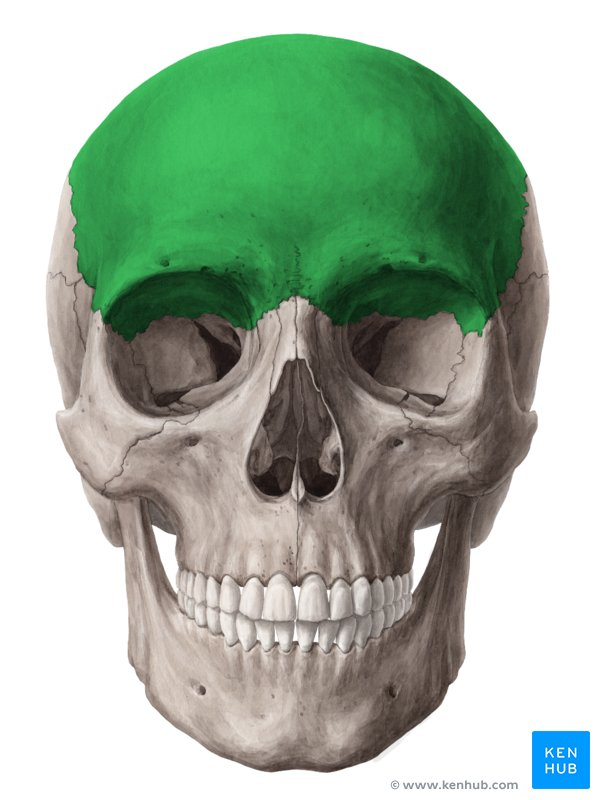
Frontal bone
Forms forehead, bony projections under the eyebrows, and superior part of each orbital

Temporal bone (external)
Inferior to the parietal bone; joins them at the squamous sutures
Features: External acoustic meatus, Zygomatic process, Styloid process, Mastoid Process, Mandibular fossa


External acoustic meatus (Temporal external skull bone)

Zygomatic process (external Temporal)
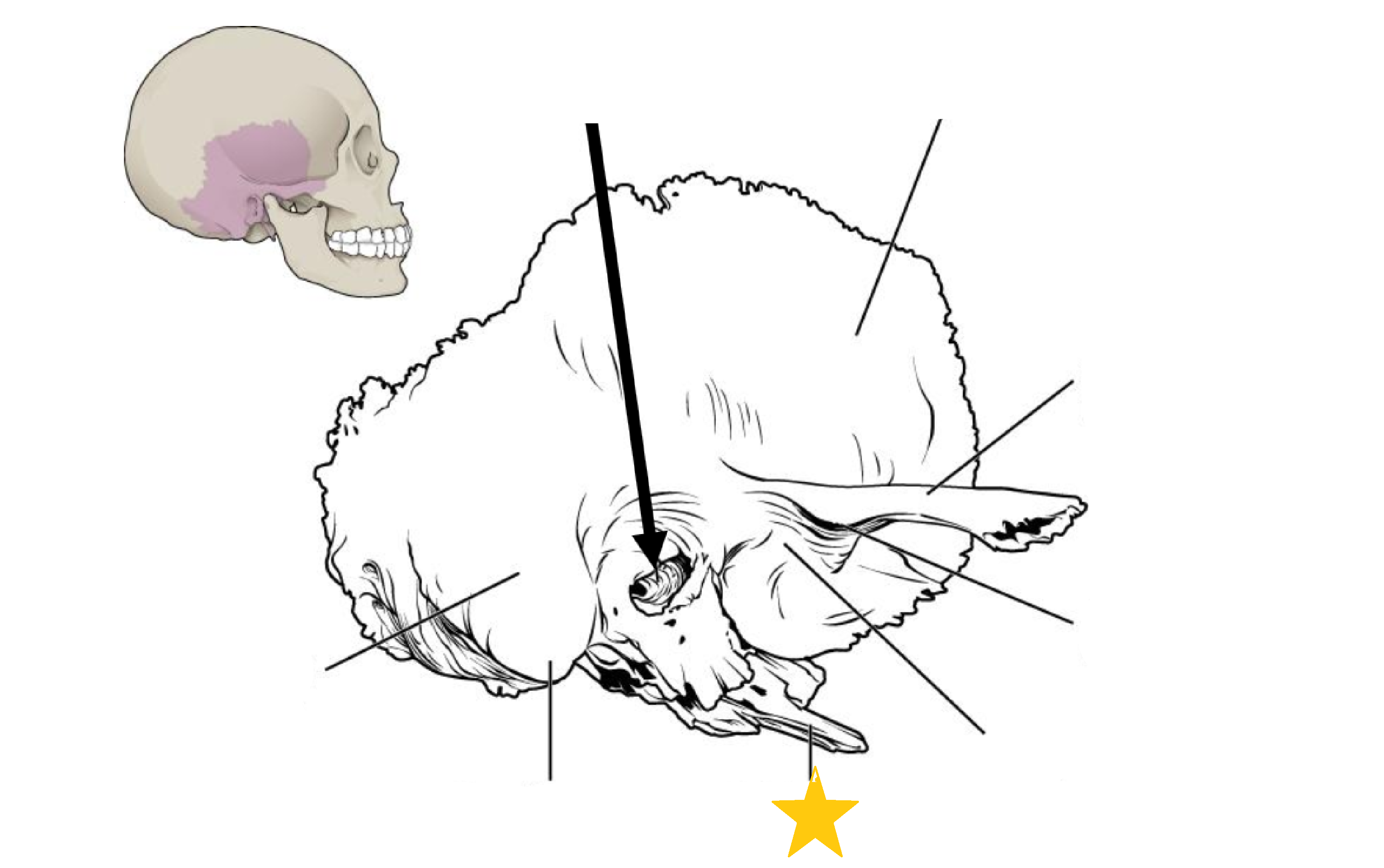
Styloid process (external Temporal)

Mastoid process (external Temporal)

Mandibular fossa (external Temporal)

pink bone is?
Temporal bone (internal)
Features: Jugular foramen, Internal acoustic meatus, Exit of carotid canal

Internal acoustic meatus (internal Temporal bone)

Jugular foramen (internal Temporal)

Exit of carotid canal

Parietal Cranial Bone
Forms superior and lateral walls of the cranium
Paired

Occipital Cranial Bone (external)
Most posterior bone of the cranium; forms base and back wall of skull
Features: Foramen magnum and Occipital condyles and Jugular foramen

Occipital Cranial Bone (internal)
Most posterior bone of the cranium; forms base and back wall of skull
Features: Foramen magnum and Occipital condyles and Jugular foramen

Foramen magnum (Occipital Cranial Bone)

Occipital condyles (Occipital Cranial Bone)
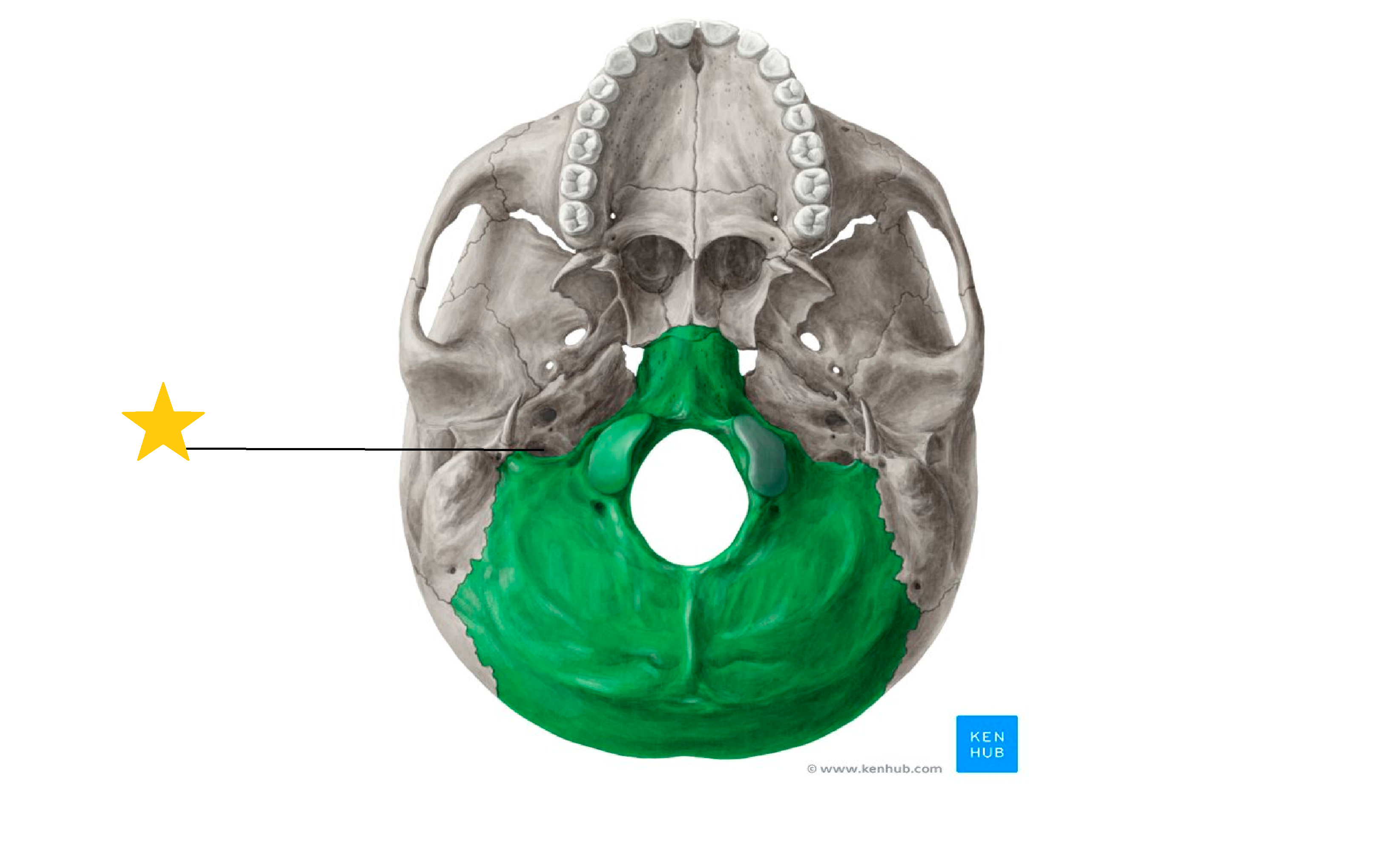
Jugular foramen (Occipital Cranial Bone)
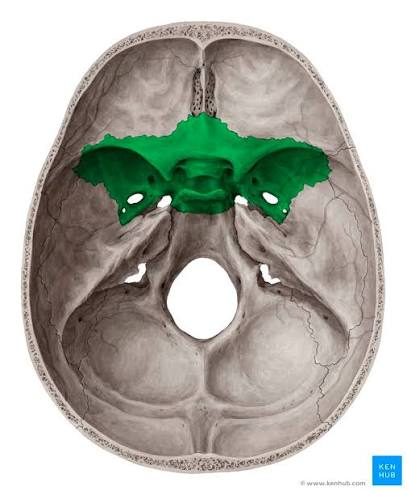
Sphenoid Cranial Bone
Bat/butterfly shaped bone spans width of the skull, forms part of the floor of the cranial cavity
Features: Sella turcica and Superior orbital fissures, optic canals

Sella turcica (Sphenoid Cranial Bone)

Superior orbital fissure (Sphenoid Cranial Bone)
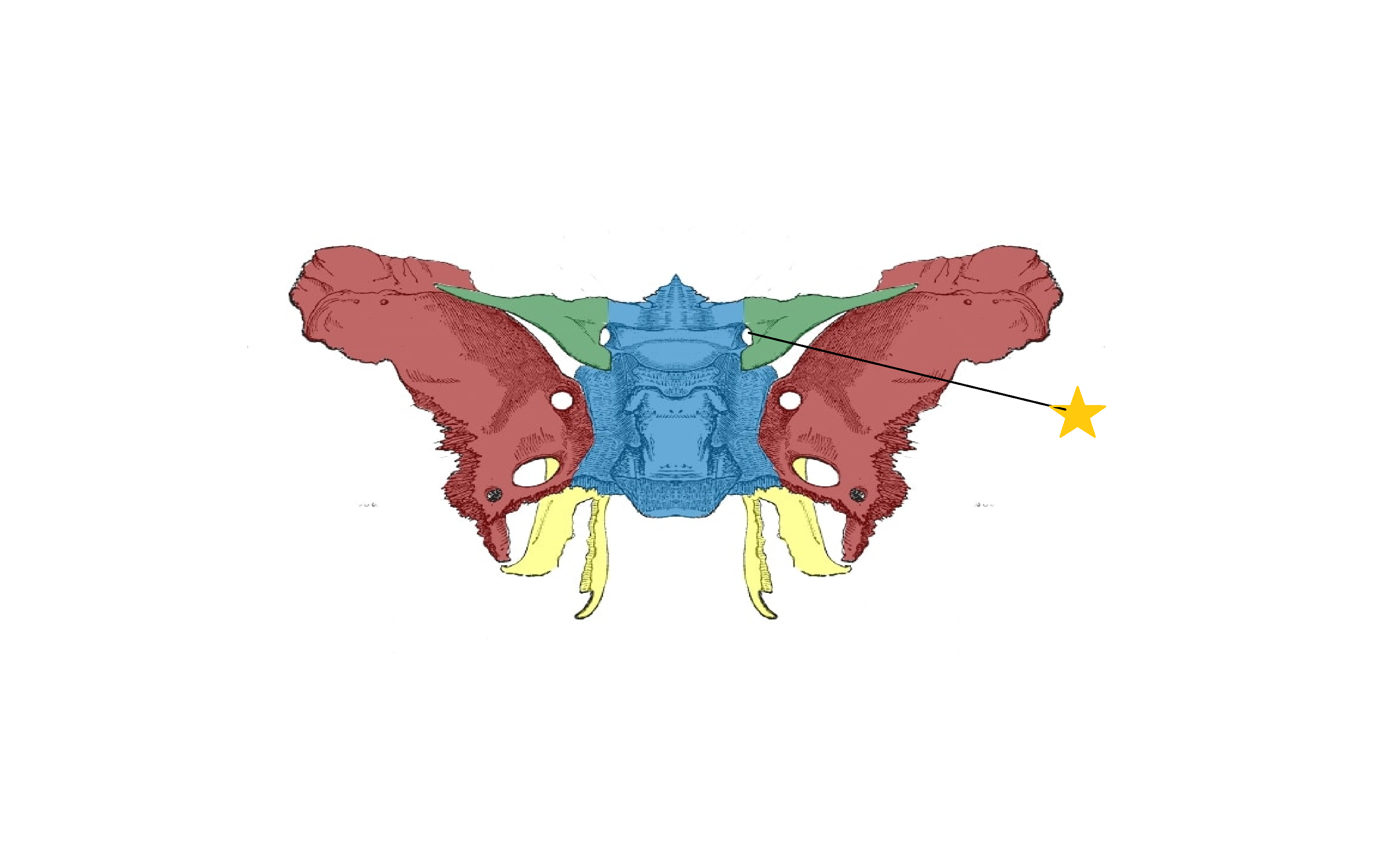
Orbital canal (Sphenoid Cranial Bone)
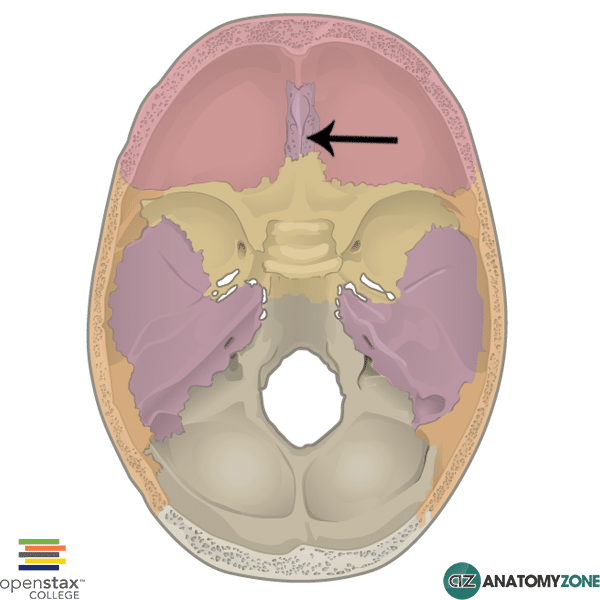
Ethmoid Cranial Bone
Irregularly shaped, anterior to the sphenoid, forms the roof of the nasal cavity and part of the medial walls of the orbits
Features: Cribiform plate, superior/middle/inferior nasal conchae

Cribiform plate (Ethmoid Cranial Bone), holey areas on each side of the crista galli

Superior/middle/inferior nasal conache
Thin, curved bones projecting medially from lateral walls of nasal cavity

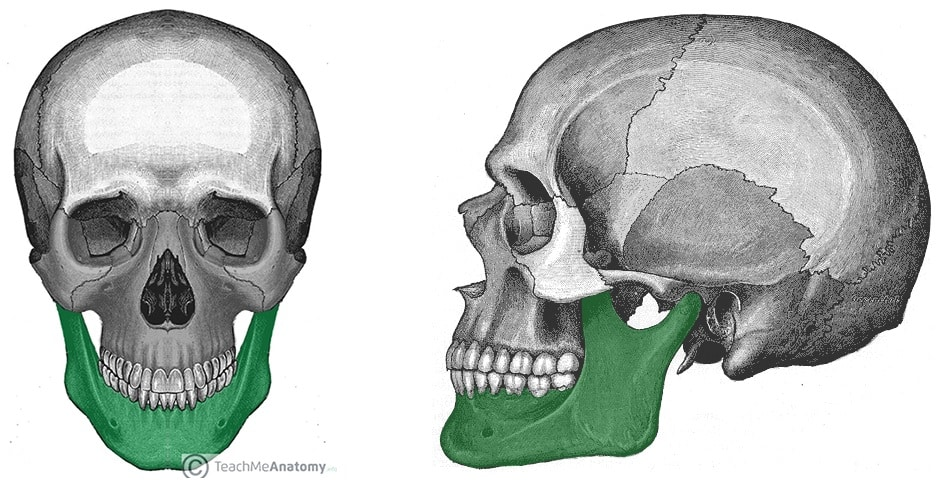
Mandible
Joins temporal bones on each side of the face; forming the only freely moving joints on the skull
Features: Mandible condyle

Mandible condyle (Mandible single facial bone)

Maxilla
Two maxillae fused to form the upper jaw
All facial bones join to the maxilla expect for the mandible

Palatine
Extension of the maxillae; forms anterior part of the hard part of the mouth
Paired

Zygomatic
Forms large portion of lateral walls of the orbits
Features: temporal process

Temporal process (Zygomatic facial bones)

Lacrimal
Fingernail sized bones forming part of the medial wall of each orbit, each bone has a groove passageway for tears (Lacrima = tears)
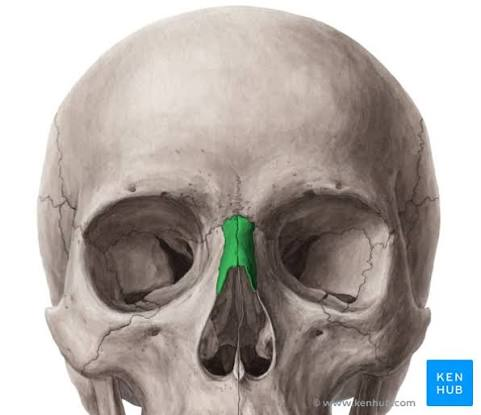
Nasal (Paired facial bone)
Small rectangular bones forming bridge of the nose

Vomer
Single bone in the median line of the nasal cavity; forms inferior part of the bony nasal septum
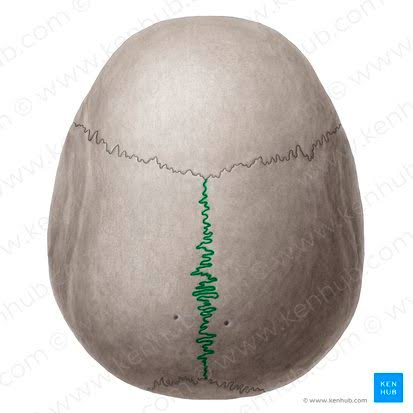
Sagittal Suture
Occurs where the left and right parietal bones meet superiorly in the midline of the cranium

Squamous Suture
Occurs where each parietal bone meets the temporal bone
2 lateral occurrences
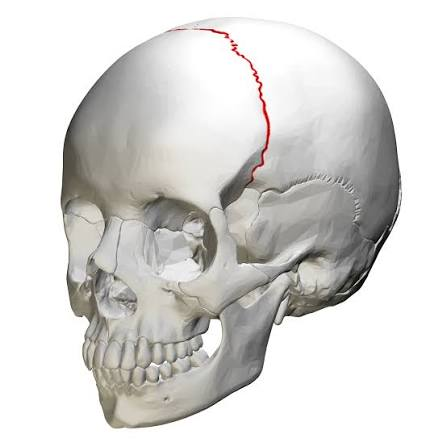
Coronal Suture
Runs through the frontal plane
Occurs anteriorly where the parietal bone meet the frontal bone
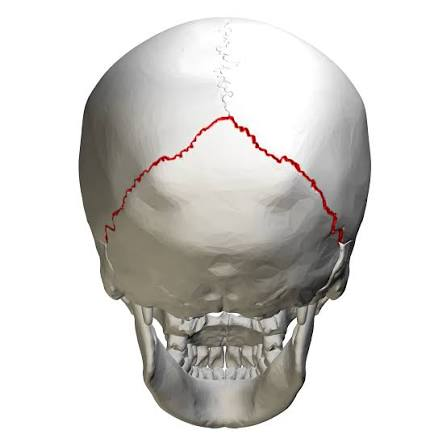
Lamboid Suture
Occurs where the parietal bones meet the occipital bone, posteriorly

Vertebral Column
Axial support of the body, supports skull and distributes the weight of the body to the lower limbs
Has 24 bones in three regions: Cervical 7, Thoracic 12, Lumbar 5
Contains vertebral foramen (protects spinal cord)
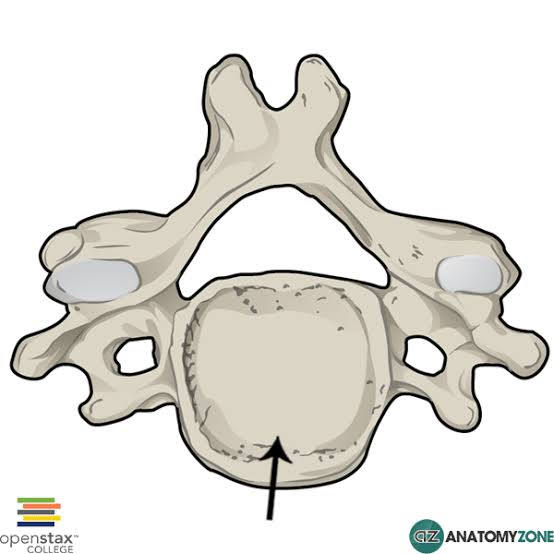
Vertebral body
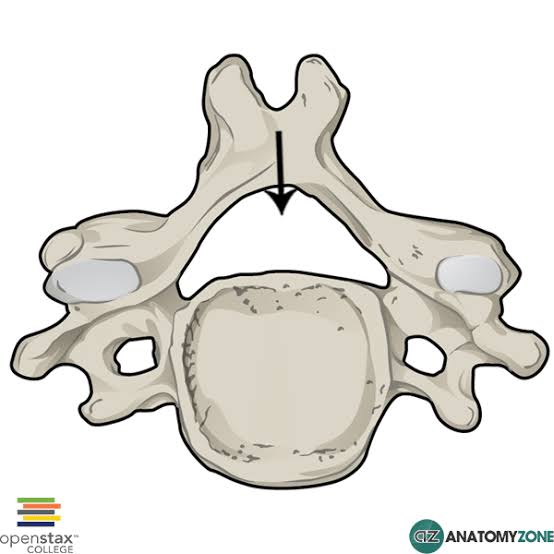
Spinal foramen

Transverse Process

Spinous Process

Superior articular process
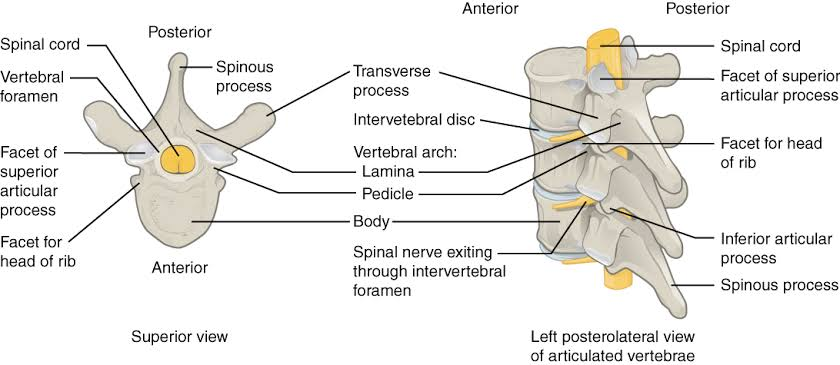

Inferior Articular Process


Intervertebral Foramina

Cervical Vertebrae
Bifurcation of Transverse Process
Atlas (C1)-nods yes and Axis (C2)-side to side movement of no

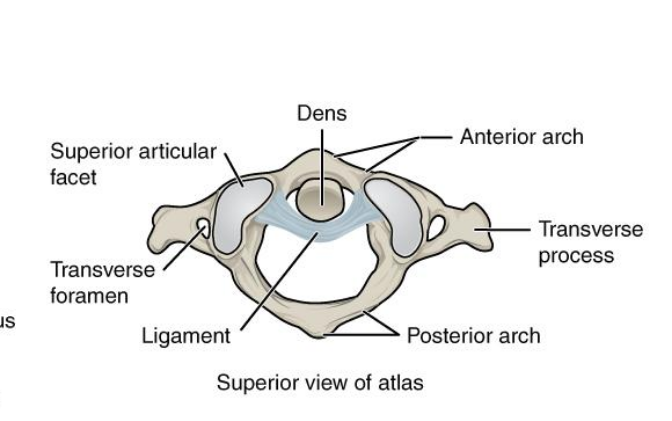
Atlas C1

Axis C2

Thoracic Vertebrae (T1-T12)
“Thoracic giraffe”
Rib articulation


Costal Facets
Smooth, flat spots on the bone that connect the spine to the ribs

Lumbar Vertebrae
“Lumbering Moose”


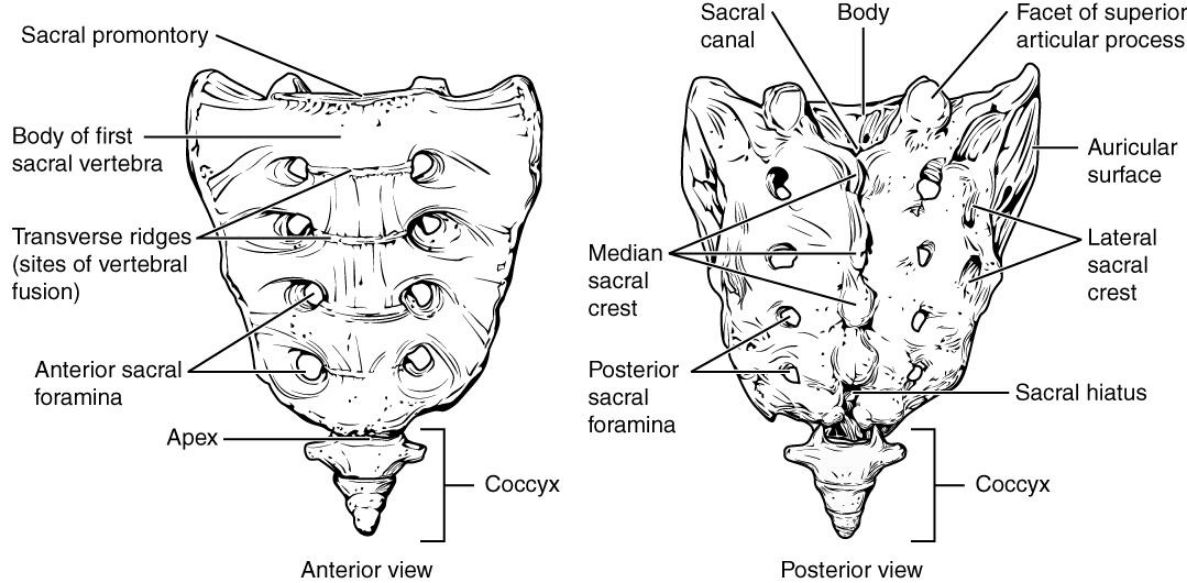
Sacrum
Fused Vertebrae (5)
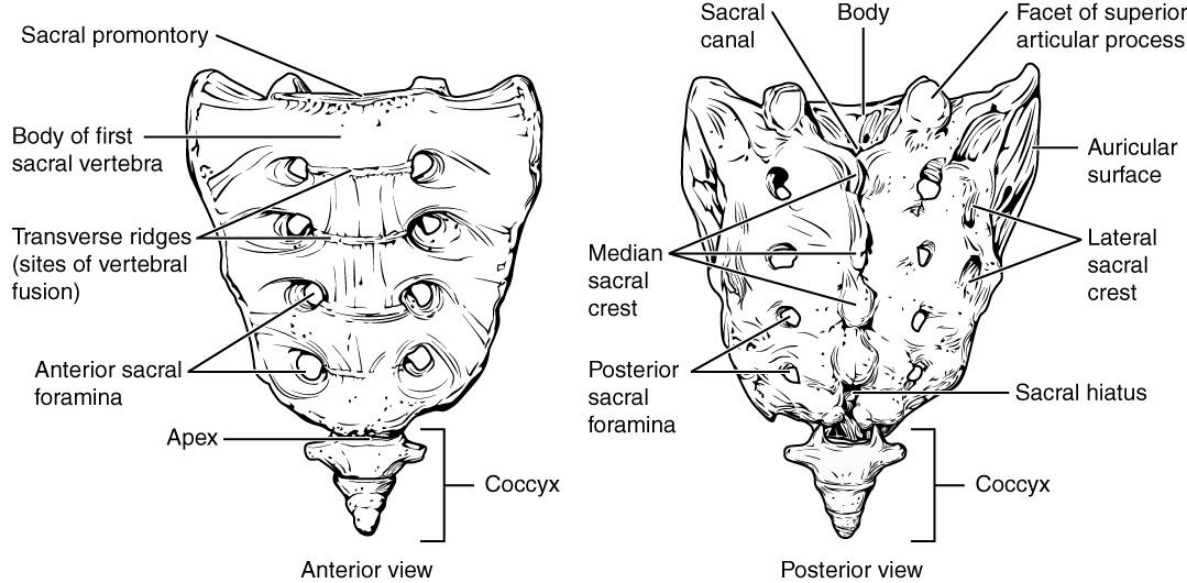

Coccyx
Fused Vertebrae (4)

Sternum
Features: Manubrium, body, xiphoid process

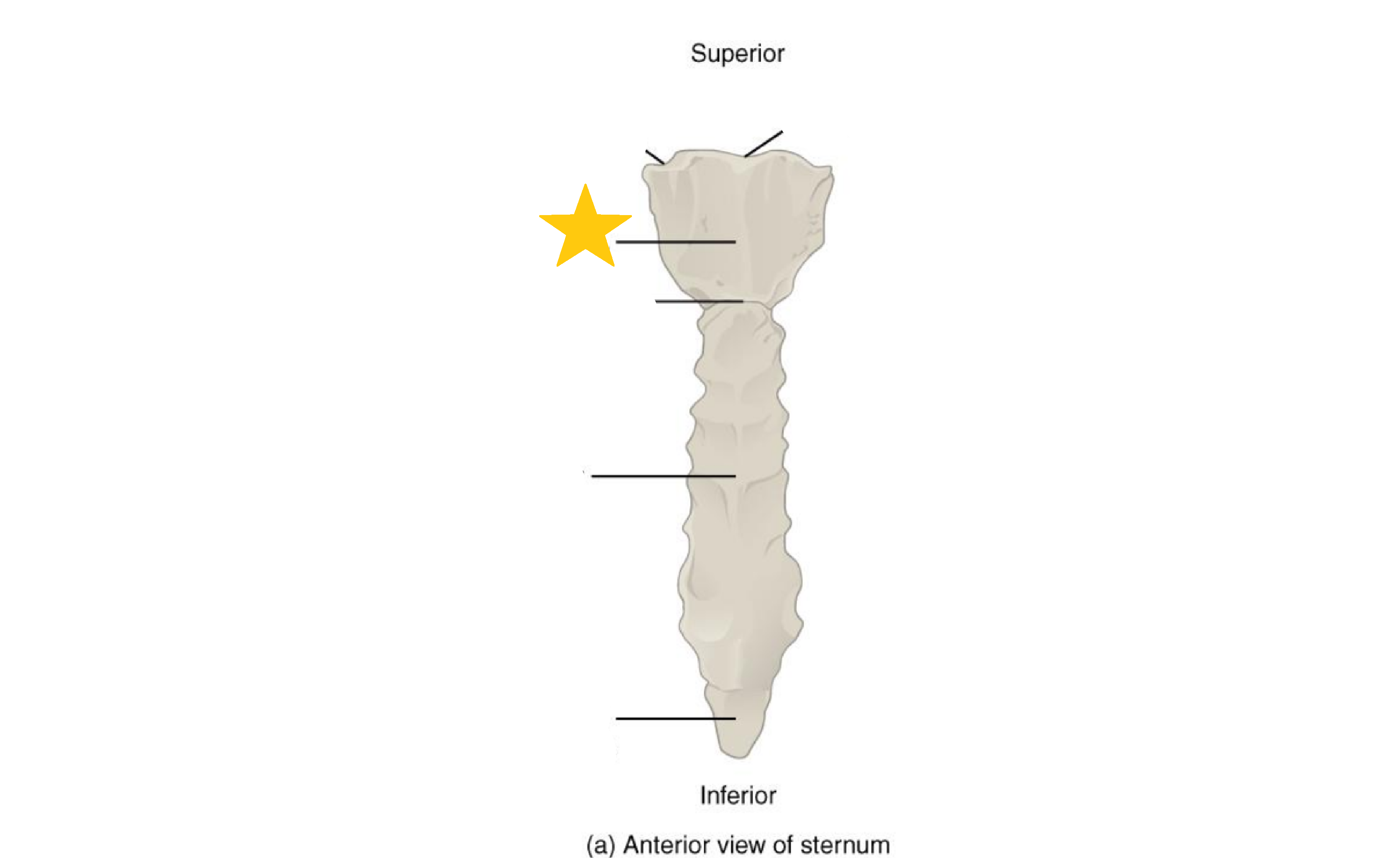
Manubrium (Sternum)

Body (sternum)

Xiphoid Process (Sternum)

True Ribs (1-7)
Directly attached to sternum
Costal cartilage

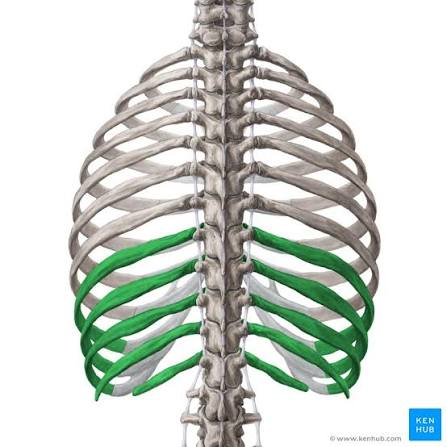
False Ribs (8-12)
Indirectly or not attached


Floating Ribs (11 and 12)
Lack sternal attachments


Frontalis Muscle (occipitofrontalis)
Raises brows
Origin: on cranial aponeurosis
Insertion: skin over eyes and nose

Orbitcularis oris
Closes mouth; protrudes lips
Origin: Maxilla and mandible
Insertion: skin and muscle around mouth

Orbitcularis oculi
Closes eyes
Origin: frontal and maxillary bones
Insertion: inside of eyelid
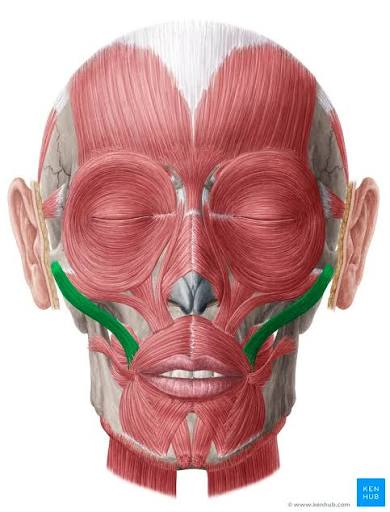
Zygomaticus
Elevates corner of mouth to smile
Origin: Zygomatic arch and maxilla bone
Insertion: Skin and muscle at corner of mouth
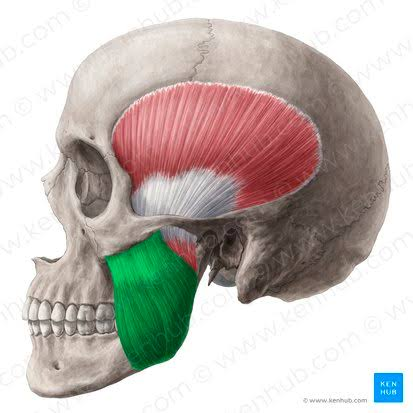
Masseter
Closes jaw, elevates mandible
Origin: Zygomatic arch and maxilla bones
Insertion: Mandible
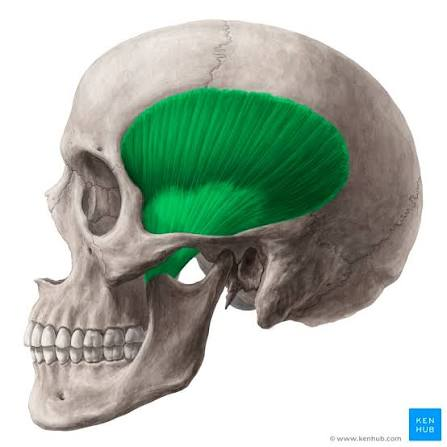
Temporalis
Closes jaw, elevates and retracts jaw
Origin: Temporal bone
Insertion:

Buccinator
Draws corners of mouth laterally
Origin: Maxilla and mandible
Insertion: Orbicularis oris

Sternocleidomastoid
Bilaterally flexes neck, unilaterally turns the head
Origin: Manubrium of sternum and clavicle
Insertion: Mastoid process of temporal bone; occipital bone

Pectoralis major
Large, fan shaped muscle covering the upper thorax
Flexes, adducts, and medially rotates arm at shoulder
Origin: Clavicle, sternum, and ribs 2-6
Insertion: humerus

Deltoid
Triangular muscle creating the curvature of the shoulder
Abduction of the arm
Origin: Acromion and spine of scapula; clavicle
Insertion: Deltoid tuberosity of humerus

Serratus Anterior
Protracts the shoulder, upward rotation of the scapula
Origin: 1-8 rib
Insertion: Scapula

Levator Scapulae
Elevates the scapula
Origin: Transverse processes of C1-C4
Insertion: Scapula

Pectoralis minor
Depresses and protracts the shoulder
Origin: 3-5th rib near costal cartilage
Insertion: Coracoid process of scapula

Trapezius
Extends head; rotates and adducts scapula, elevates/depresses the scapula
Origin: Occipital bone, ligamentum nuchae, spines of C7 and all thoracic vertebrae
Insertion: Acromion process and spine of scpaula; clavicle

Erector Spinae
Extends the vertebral column
Origin: Spinous processes of T9-T12
Insertion: Spinous process of T1 and T2

Latissimus dorsi
Extends, adducts, and medially rotates shoulder
Origin: Spinous processes of lower 6 thoracic vertebrae, L1-L5, ribs 8-12, and lumbodorsal fascia
Insertion: Humerus

Supraspinatus
Abduction at the shoulder
Origin: Supraspinous fossa of the scapula
Insertion: Greater tubercle of the humerus

Infraspinatus
Lateral rotation of the shoulder
Origin: infraspinous fossa of the scapula
Insertion: Greater tubercle of the humerus

Subscapularis
Internally rotates and adducts the humerus
Origin: Subscapular fossa of the scapula
Insertion: Lesser tubercle of the humerus

Teres major
Extension, adduction and medial rotation at shoulder
Origin: Scapula
Insertion: Humerus
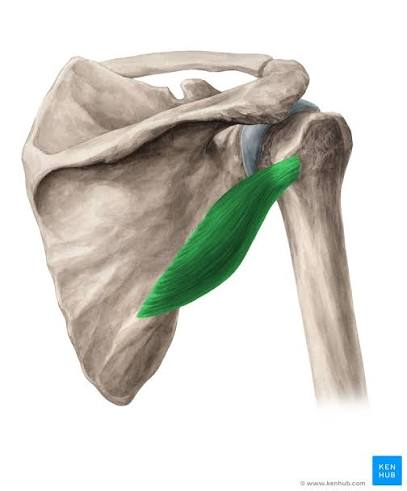
Teres minor
Laterally rotates the arm
Origin: Scapula
Insertion: Humerus

Rhomboids
Adduction and downward rotation of scapula
Origin: Spinous processes of C7, T1-T5
Insertion: Medial border of scapula
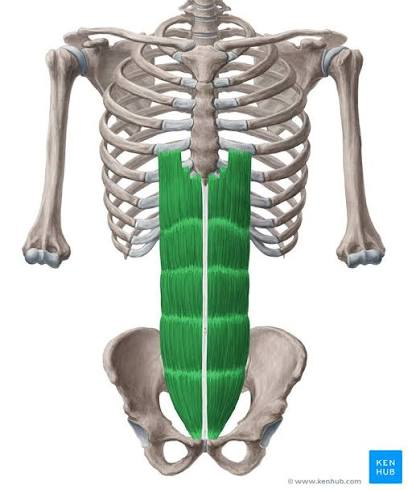
Rectus abdominis
Flexes and rotates vertebral column
Origin: Pubic crest and symphysis
Insertion: Xiphoid process of the sternum, ribs 5-7

External oblique
Flexes and rotates vertebral column
Origin: Ribs 4-12
Insertion: Iliac crest, linea alba, and pubic crest

Internal Oblique
Flexes and rotates vertebral column
Origin: Iliac crest and lumbar fascia
Insertion: Linea alba, pubic crest, ribs 9-12

Transverse abdominis | Iliac crest | Linea alba and pubic crest | Compresses the abdomen |

External intercostals | Inferior borders of adjacent rib above | Superior border of adjacent rib below | Elevates the rib cage |

Internal intercostals | Inferior border of rib above | Superior border of rib below | Depresses the rib cage |

Diaphragm
Inferior border of rib and sternum; last 6 ribs; lumbar vertebrae
Central tendon
Flattens to increase volume of thoracic cavity; prime mover for inspiration

Scapulae
Thin, triangular flat bones
• “spade” or “shovel
• Lie on dorsal surface of the rib
cage
• Articulates with humerus and
clavicle

Acromion
• Roughened triangular projection
• “point of the shoulder”
• Articulates with acromial end of clavicle
forming the acromioclavicular join

Coracoid process
• Projection from superior scapular
border
• “beak like”
• Looks like a bent finger
• Helps anchor bicep muscle

Glenoid cavity or glenoid
fossa
• “pit-shaped”
• Articulates with the humerus of the
arm forming the shoulder joint

Spine
• On posterior surface
• Easily felt through the skin

Subscapular fossa – shallow concavity formed by the entire
anterior surface

Supraspinous fossa - shallow concavity superior to the spine

Infraspinous fossa – shallow concavity inferior to the spine

Clavicles
(Collarbones)
• Slender s-shaped
bones
• Hold scapulae and
arms out laterall

Acromial/lateral end:
• Flattened
• Articulates with
scapula