bio1911 lab practical
 Call Kai
 Learn
 Practice Test
 Spaced Repetition
 Match
 Flashcards
 Knowt Play
1/86

Earn XP
Description and Tags
study guide for bio 1911 lab practical at temple university
87 Terms
what drives natural selection?
heritable trait variation, overproduction and competition, environmental pressures, random mutations, sexual selection
variation
differences in physical traits, behaviors, genetic makeups, or physical functions among individuals in the same species or different species
selection
the process where specific traits in a population become less or more common over generations based on how they affect survival and reproduction
how can morphology and genetic data be used to build a phylogenetic tree?
for morphology: they look at physical features, shared derived traits, an outgroup, can use fossils
for genetic data: they compare nucleotide sequences
what is the name of the gene that we used to build the tress in lab 2?
ITS2 gene
parsimony
selecting the simplest explanation that accounts for our observations
how do you construct and find a tree?
to construct: choose the tree that requires the fewest independence genetics events (such as the appearance or disappearance of traits) to occur
to find: select the tree that implies the minimum number of character changes summed across all the characters of interest
ancestor/ancestral
an organism from which a later organism later descended from
polyphyly/polyphyletic
a grouping of organisms that share similar traits but do not share a recent common ancestor
clade
include an ancestor and all of their descendants
MONOPHYLETIC
synapomorphy
a shared, derived character or trait that two or more taxonomic groups (taxa) have in common, which they inherited from their most recent common ancestor
fine adjustment knob
microscope part used to focus with high power objectives only
total magnification is the product of the…
ocular lens and objective lens power
compound microscopes use more than one lens
the field of view of the microscope increases with decreasing magnification
what types of objectives are there?
4x, 10x, 40x
what is a the course adjustment knob?
moves the stage up or down, which is the LARGER focusing of the image (big knob)
total magnification for 4x? 10x? 40x?
40x, 100x, 400x
what are the 4 protist supergroups we talked about in lab?
excavata
SAR
unikonta
archaeplastida
protists are usually in the marine environment
what does the Paramecium sp. look like

what are biological aspects of the Paramecium sp.
supergroup: SAR
unicellular
movement: cilia
heterotrophic
what does the Euglena sp. look like

what are biological aspects of the Euglena sp.
supergroup: excavata
unicellular
movement: flagella
mixtrophic
what does the Spirogyra sp. look like
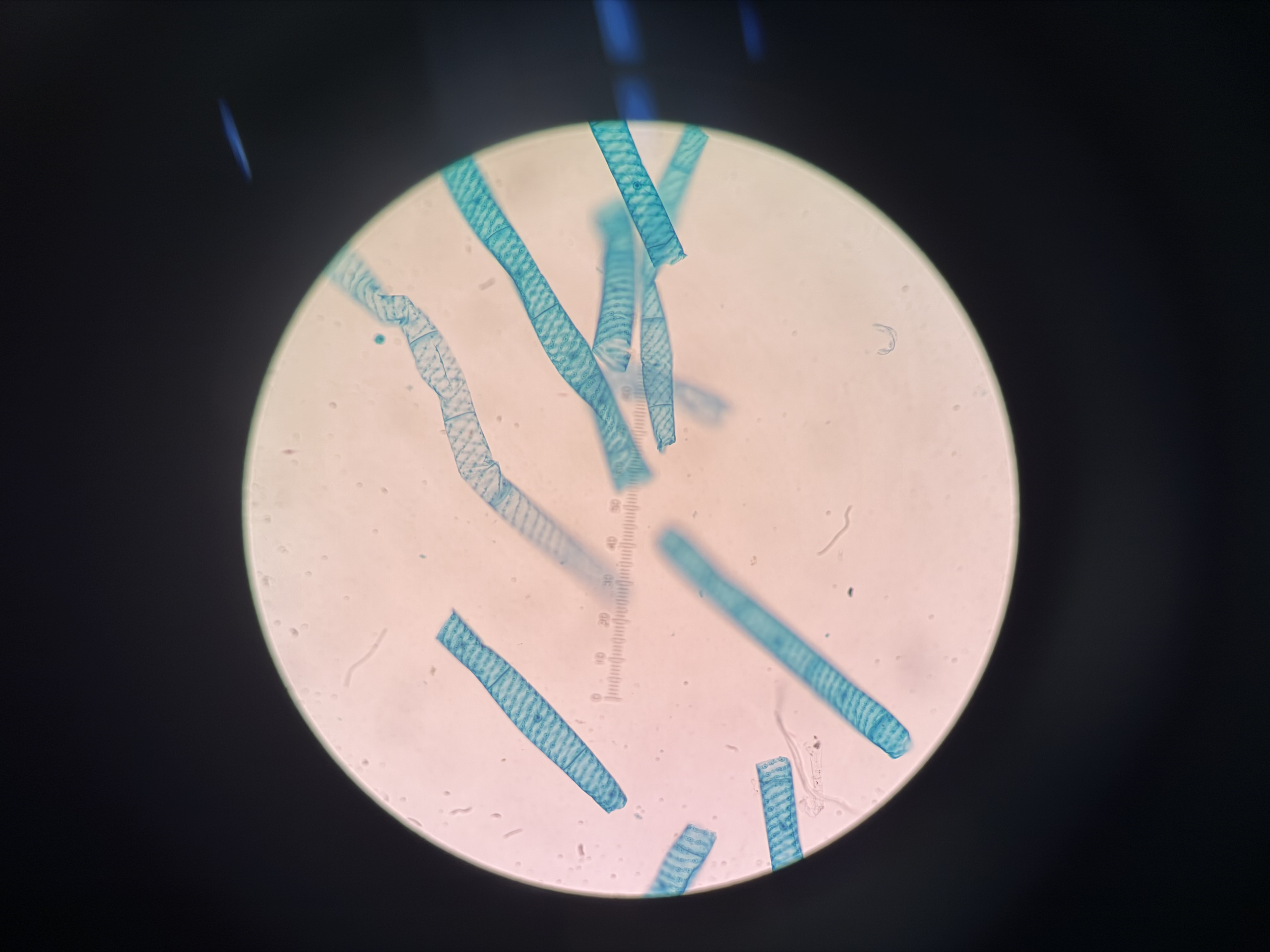
what are biological aspects of the Spirogyra sp.
supergroup: archaeplastida
multicellular with identical cells (filamentous)
movement: filaments
autotrophic
what does the Amoeba sp. look like

what are biological aspects of the Amoeba sp.
supergroup: unikonta
unicellular
movement: pseudopodia
heterotrophic
what does the Volvox sp. look like

what are biological aspects of the Volvox sp.
supergroup: archaeplastida
colonial
movement: flagella
autotrophic
what are the 4 plant phyla we covered in class?
(we learned 5 in class tho)
bryophyta
lycophyta
monilophyta
coniferophyta
anthophyta
what is the reproductive process of the phyla bryophyta
gametophyte dominant
NO seeds, nonvascular
MOSS ANTHERIDIUM & ARCHEGONIUM
what is the reproductive process of the phyla lycophyta
sporophyte dominant
NO seeds, vascular
SELAGINELLA STROBILUS
what is the reproductive process of the phyla monilophyta
sporophyte dominant
NO seeds, vascular
FERN ANTHERIDIA & ARCHEGONIA
what is the reproductive process of the phyla coniferophyta
sporophyte dominant
produces seed, vascular
PINE STAMINATE CONE
what is the reproductive process of the phyla anthophyta
sporophyte dominant
flower-bearing, vascular seed plants
LILY ANTHER
what does the Moss antheridium and archegonium look like

what are biological aspects of the Moss antheridium and archegonium
phylum: bryophyta
nonvascular
no seeds
gametophyte dominant
what does the Selaginella strobilus look like

what are biological aspects of the Selaginella strobilus
phylum: lycophyta
vascular
no seeds
sporophyte dominant
what does the Fern antheridia and archegonia look like

what are biological aspects of the Fern antheridia and archegonia
phylum: monilophyta
vascular
no seeds
sporophyte dominant
what does the Fern young sporophyte look like
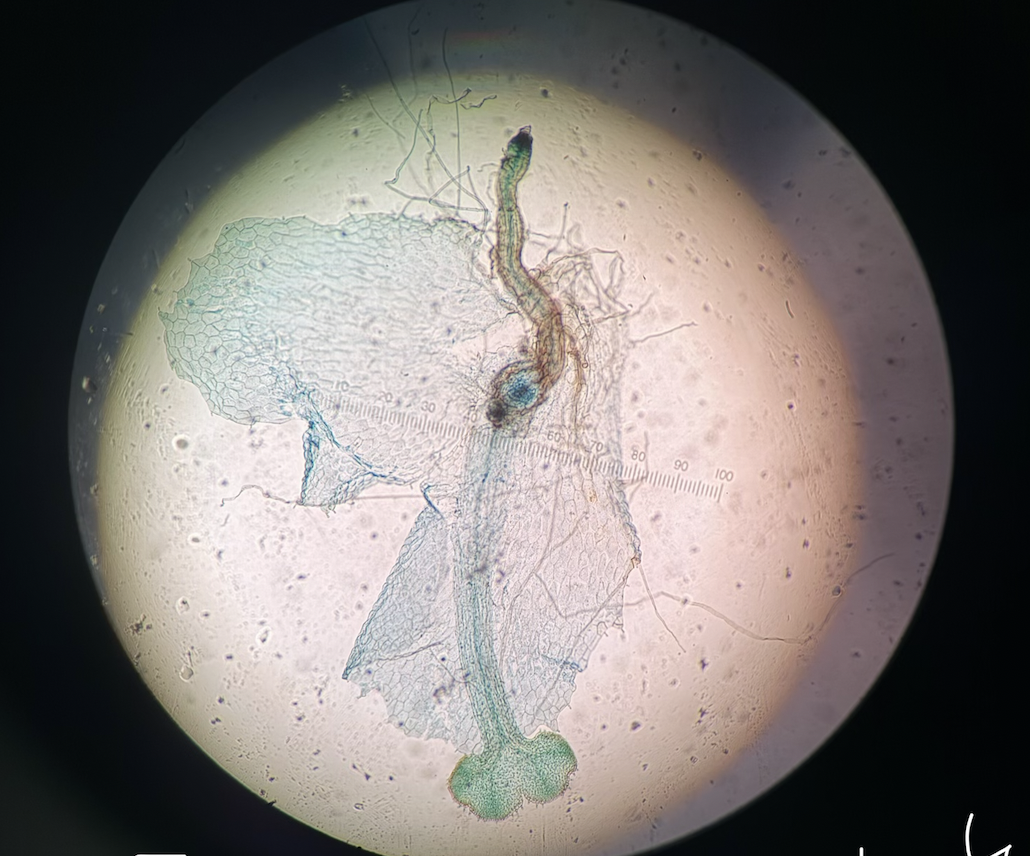
what are biological aspects of the Fern young sporophyte
phylum: monilophyta
vascular
no seeds
sporophyte dominant
what does the Pine ovulate cone look like

what are biological aspects of the Pine ovulate cone
phylum: coniferophyta
vascular
seeds
sporophyte dominant
what does the Pine staminate cone look like
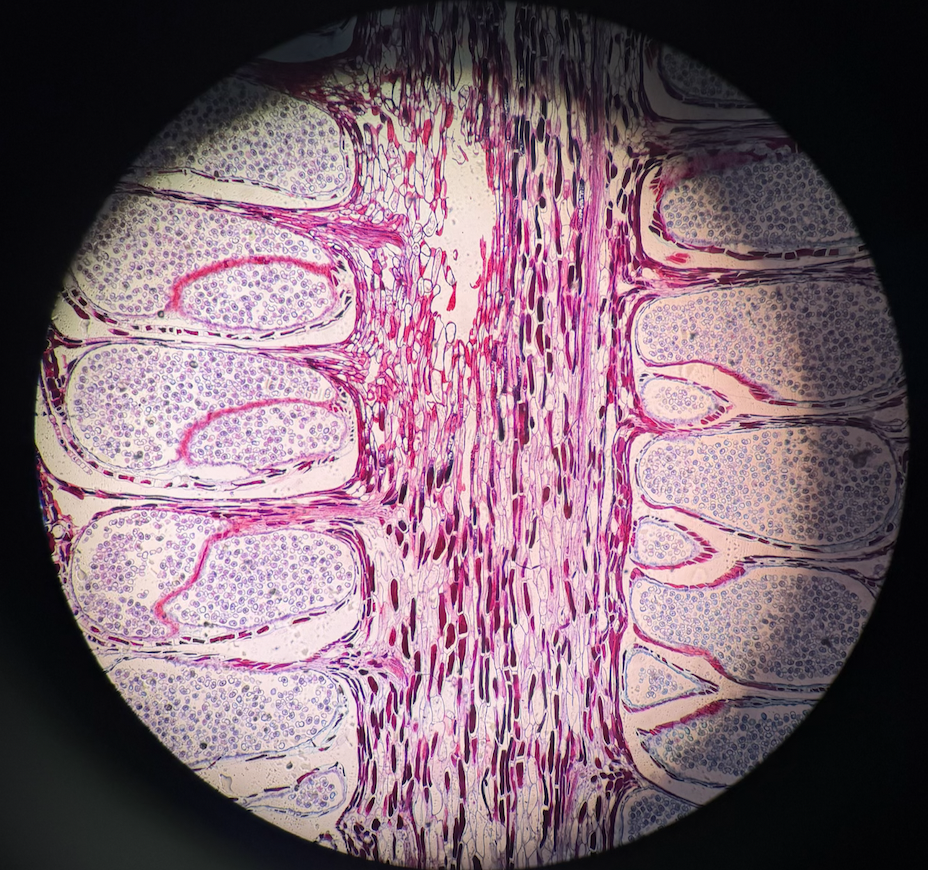
what are biological aspects of the Pine staminate cone
phylum: coniferophyta
vascular
seeds
sporophyte dominant
what does the Lily anther look like

what are biological aspects of the Lily anther
phylum: anthophyta
vascular
seeds
sporophyte dominant
what does the Lily developing embryo look like

what are biological aspects of the Lily developing embryo
phylum: anthophyta
vascular
seeds
sporophyte dominant
what are the major traits of the Phylum Annelida
metamerism (segmented bodies)
paired setae on each segment (tiny, hair-like bristles that provide traction, acting as anchors for movement and burrowing)
grooved palms (sensory appendages on the head (prostomium) used for navigation, probing environment, feeding)
most have hydrostatic skeleton (expect leeches)
what does the Alitta virens (marine sandworm) look like

label the following external anatomy for the Alitta virens (marine sandworm)
Palp
Prostomium
Peristomium
Parapodia

label the following internal anatomy for the Alitta virens (marine sandworm)
Pharynx
Esophagus
Esophageal gland
Intestine
Dorsal blood vessel

what are the biological traits of Alitta virens (marine sandworm)
phylum: annelida
bilateral
environment: seawater and burrows in the benthos
feeds by: using its pharynx, it everts its jaw (retractable jaws)
what does the Lumbricus terrestris (terrestrial earthworm) look like

label the following external anatomy for the Lumbricus terrestris (terrestrial earthworm)
Prostomium
Cranial region or “head”
this part is closest to the clitellum of the worm
Setae
Clitellum
Caudal region or “tail”
this part is farthest from the clitellum of the worm

label the following internal anatomy for the Lumbricus terrestris (terrestrial earthworm)
Cerebral ganglion
Pharynx
Aortic arches
Esophagus
Crop
Gizzard
Dorsal blood vessel
Intestine

what are the biological aspects of the Lumbricus terrestris (terrestrial earthworm)
phylum: annelida
bilateral
environment: terrestrail
feeds by: sucking in food
what are the major traits of the phylum mollusca
soft-bodied invertebrates
most species are marine
radula (two branches)
muscular foot (both complete and incomplete)
mantle (protects major internal organs)
what are the major traits of the phylum arthropoda
segmented, articulating, jointed appendages
well-developed mouth parts
exoskeleton (calcified cuticle)
metamorphosis
highly developed sensory organs
what are the major traits of the phylum echinodermata
deuterostomes organized on the oral - aboral axis
calcified endoskeleton derived from mesoderm
bony ossicles filled with living tissue (stroma)
water vascular circulatory system derived from coelom (powers from the podia (tube feet))
decentralized nerve ring + radial nerves
mutable connective tissue that can harden, soften
mostly dioecious (separate sexes)
what does the Loligo sp. (squid) look like

label the following external anatomy for the Loligo sp. (squid)
Tentacles
Arms
Head
Eye
Mantle
Fin

label the following internal anatomy for the Loligo sp. (squid)
Funnel
Stomach
Caecum
Branchial hearts
Systemic heart
Gills
Gonad (ovary or testes)

what are the biological aspects of Loligo sp. (squid)
phylum: mollusca
bilateral
environment: marine
feeds by: using its arms and tentacles to pull the prey into its beak
remember that there are 8 arms and they are shorter and have suction cups on them
there are only 2 tentacles
what does the Cambarus sp. (crayfish) look like

label the following external anatomy for the Cambarus sp. (crayfish)
Cephalothorax
Abdomen
Compound eyes
antennae/antennules
Walking legs
Swimmerets
cheliped/chelae

label the following internal anatomy for the Cambarus sp. (crayfish)
Gills
Heart
Cardiac chamber (optional)
Pyloric chamber (optional)
Intestine
Green glands
Ventral nerve cord

what are the biological aspects of Cambarus sp. (crayfish)
phylum: anthropoda
bilateral
environment: freshwater
feeds by: using their chela to catch prey
what does the Asterias sp. (sea star) look like

label the following external anatomy for the Asterias sp. (sea star)
Madreporite
Ambulacral groove
Tube feet
Mouth

label the following internal anatomy for the Asterias sp. (sea star)
Cardiac stomach
Pyloric stomach
Digestive gland
Gonads
Stone canal (Optional)
Ring canal
Radial canal

what are the biological aspects of Asterias sp. (sea star)
phylum: echinodermata
bilateral larvae, radial adults
environment: marine
feeds by: using its tube feet to open the shells of bivalves, and once it is open the sea star turns its stomach inside-out to digest the bivalve
what are the major traits of the phylum chordata
postanal tail
notochord
dorsal hollow nerve cord
pharyngeal slits
endostyle or thyroid gland
what does the Rana sp. (frog) look like

label the following external anatomy for the Rana sp. (frog)
Head
Eyes
Nares (external)
Trunk
Cloaca
Tympanic membrane
Nictitating membrane
Inside of the mouth:
Tongue
Glottis
Esophageal opening
Nares (internal)
Vomerine teeth

label the following internal anatomy for the Rana sp. (frog)
Esophagus
Heart
Lungs
Liver (3 lobes)
Gallbladder
Pancreas
Spleen
Stomach
Small intestine
Large intestine
Bladder
Gonads - Testes or Oviducts

what are the biological aspects of Rana sp. (frog)
phylum: chordata
class: amphibia
bilateral
terrestrial for food & shelter, aquatic for reproduction
feeds by: shooting out their long tongue and swallows the prey whole. the vomerine teeth secure the prey so they don’t escape
what does the Perca sp. (perch) look like

label the following external anatomy for the Perca sp. (perch)
Eye
Mandible
Lateral line
Operculum
Pectoral fin
Pelvic fin
Dorsal fin (anterior and posterior)
Caudal fin
Anal fin
Urogenital pore

label the following internal anatomy for the Perca sp. (perch)
Gills
Heart
Liver
Spleen
Small intestine
Testes (male)
Ovary (female)
Swim bladder

how to identify a female vs male Perca sp. (perch)
check the two openings on their abdomen in front of their tails
male urogenital opening is round and generally larger in circumference than anal opening
female open is V- or U-shaped that is smaller in circumference than the anal opening
what are the biological aspects of Perca sp. (perch)
phylum: chordata
class: actinopterygii
bilateral
environment: freshwater
feeds by: using their mouths to pick off food and uses specialized gill rakers to strain tiny zooplankton and micro-invertebrates out of the water