PHRM 409 Exam 2
 Call Kai
 Learn
 Practice Test
 Spaced Repetition
 Match
 Flashcards
 Knowt Play
1/157

There's no tags or description
Looks like no tags are added yet.
158 Terms
What is the goal of drug therapy?
Keep plasma concentration at a level that results in expected therapeutic effects without causing adverse side effects or toxicity

Bioavailability (F)
How much drug gets into systemic circulation and how long does it take to get there?
Fraction of administered drug reaching systemic circulation
Absorption rate » elimination rate
Unitless
What is F for intravenous (IV) injection?
FIV = 1
Volume of Distribution (VD)
Abstract volume that relates the amount of drug in the body to the drug concentration in blood
Extent to which a drug partitions between the plasma and tissue compartments

VD value and physiological space
Doesn’t usually correspond to an actual physiological space
Value corresponds to a 70 kg healthy individual
Unit: L/kg of body mass
If there is a decrease in muscle mass, what is the VD for drugs that bind to muscle?
Decreases
If there is an increase in fat stores, what is the VD for lipophilic drugs?
Increases
If there is a decrease in plasma protein, what is the VD for lipophilic drugs?
Increases
If there is a decrease in body water, what is the VD for hydrophilic drugs?
Decreases

Clinical use of VD
Used to calculate loading dose needed to achieve a target initial plasma drug concentration (Co)
Clearance (CL)
Constant, hypothetical volume of fluid from which the drug is completely removed per unit time
Reflects drug-eliminating efficiency
Unit: Volume/time

Total clearance
Sum of clearances from all drug eliminating organs/processes

Clearance vs. rate of elimination
First order kinetics
Rate/Cp highly predictable

Clearance vs. rate of elimination: Constant fraction
Fraction of drug eliminated in a given time interval

What is clearance? (answer all that applies)
A. Synonymous with elimination (process)
B. Synonymous with “Rate of elimination” (dC/dt)
C. Fraction of drug that is elimination
D. Specifies a fixed amount of drug eliminated in a given time interval
E. Proportionality factor that correlates the drug concentration with the rate of elimination
C, E
The drug concentration declines exponentially. What is the rate constant ke in the decay equation dependent on?
CL and Vd
How many half-lives does it take to completely eliminate a drug from the body?
At least 5 half lives
When is steady state Css achieved?
After at least 5 half lives
What is the key factor that relates dose to steady state Css?
CL
What are the limitation of the one compartment open model?
Drug absorption isn’t really instantaneous
Drug distribution isn’t instantaneous (multicompartment models)
Drug elimination pathways may saturate
What are the non-saturable elimination processes?
Glomerular filtration, ventilation, and uncatalyzed breakdown of drugs
What are the saturable elimination processes?
Enzymatc metabolism, transporter mediated elimination
What are some clinically important drugs eliminated by saturable kinetics (zero-order kinetics, non-linear)?
Phenytoin, Valproic acid, salicylic acid, ethanol
Personalized medicine
Medical care that is tailored to the individual patient based on their predicted response
What is the significance of the pharmacogenetic approach?
Determines effects of genetic variation on drug action
Impacts response to therapy
Narrows pharmacogenomics to more actionable info
Polymorphism
Difference in DNA code that occurs in >1% of the population
Less likely to be main cause of disease
Often have no visible clinical impact
Mutation
Differences in DNA code that occurs in <1% of the population
Often associated with rare diseases
Pharmacogenetics
Effects of a single gene on drug disposition or response
Pharmacogenomics
Effects of multiple genes on drug disposition or response
Single-nucleotide polymorphism (SNP)
DNA sequence variation when a single nucleotide (A, T, G, C) differs between members of a species
Gives rise to multiple alleles
How can SNP affect coding sequences?
May cause changes in protein structure or function
I.e., enzymes, receptors, transporters
Presence of protein isoforms between individuals
How can SNP affect non-coding sequences?
Alter gene slicing (protein isoforms)
Alter transcription factor binding (enhancers, promoters)
Alter expression of proteins
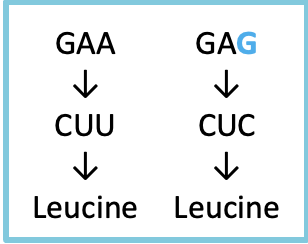
SNP: Synonymous
Silent mutation
Same polypeptide sequence despite changing letter
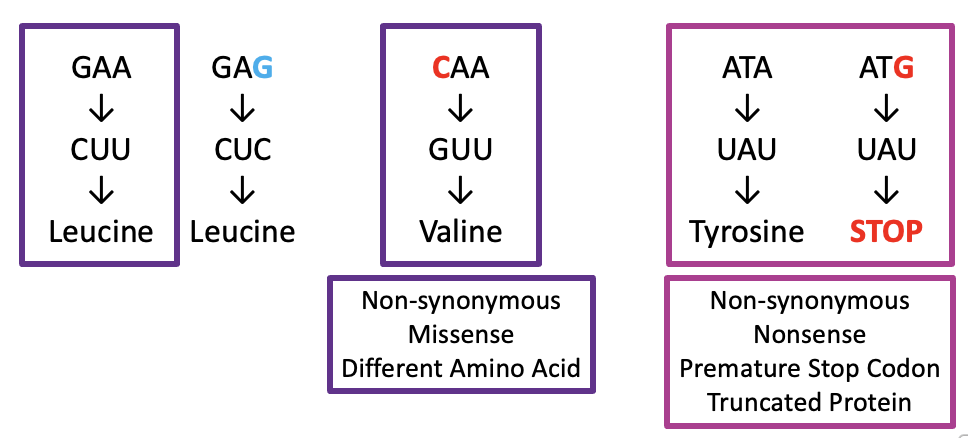
SNP: Synonymous
Misense and nonsense
Results in either a different AA or premature stop codon

Copy number variations (CNV)
Abnormal # of copies of 1+ sections of DNA
Ex
Entire gene
Insertions/deletions
Location mattes
Excess functional protein
Dysfunctional or abnormally functional fusion protein
Nonfunctional protein
Pharmacogenomic effects on drug disposition
Alter function of proteins involved in ADME
Influence drug or active metabolite concentrations
A decrease in activity of metabolizing enzyme results in an increase in plasma parent drug concentration but decrease in metabolite concentration
If parent drug is active, SNP may…
If metabolites are active, SNP may…
If parent drug is active, SNP may potentiate drug response and adverse side effects
If metabolites are active, SNP may decrease drug response
Drug metabolism ex #1: CYP2C29 and Warfarin
Warfarin is an anticoagulant drug with a narrow therapeutic window
Large variability in dosage between individuals
CYP2C9 inactivates warfarin
How can CYP2C9 affect the differences in dosage of warfarin between individuals?
CYP2C9 has many types of alleles and thus genotypes. Some people possess a genotype that causes a complete loss of metabolic activity, which means that it takes much to clear it out and can be dangerous. On the other hand, mot people possess the fully functional genotype which results in fast clearance.
Drug metabolism ex #1: CYP2D6 and antidepressants.
Highly polymorphic
Types of metabolizers:
Ultra-extensive, extensive, intermediate, poor
Nortriptyline and amitriptyline
CYP2D6 inactivates nortriptyline
Nortriptyline is the active metabolite of amitriptyline
Predict effectiveness in a patient who is a poor metabolizer?
Predict effectiveness in a patient who is an ultra-extensive metabolizer?
Predict the impact of unknown CYP2D6 status on the healthcare system? On patient outcomes?
Very effective drug but it will cause more ADR since it’s in the system longer
Not effective but less ADR
Start with standard doses and adjust from there

Drug metabolism ex #2: CYP2D6 and opioids
Opioids require bioactivation via CYP2D6
Prodrug with active metabolites
Some 2-10% of the population cannot metabolize codeine (resistant to analgesic effects)
Ex case:
Full-term healthy male infant
Uncomplicated delivery
Until D7: Intermittent difficulty in breast feeding and lethargy
D11: Issues with breast feeding resolved; regained birth weight
D12: grey skin; intake fallen
D13: baby had passed away
Morphine concentration 70 mg/mL (0-2.2 mg/mL typical)
Mother
Tylenol #3 (APAP 500mg/Codeine 30mg) PRN for pain related to delivery
Instructed to continue for 14 days following delivery
Breast milk morphine concentration 87mg/mL (1.9-20.5 mg/mL typical)
Mother has a very fast metabolizer so there is a high bioactivation rate of codeine. Since there is a high concentration in her breast milk, the baby also has a high morphine concentration after consuming breast milk.
Empiric ABX therapy
Chosen when an active infection is present, but the causative organism has not been identified
Goal: To cover all of the most likely organisms causing the infection until culprit is identified
ABX, antifungals, antivirals
Choice dependent on:
Patient related factors
Possible bacterial pathogens’ characteristics
Role is different with outpatient vs inpatient treatment
Targeted ABX therapy
Chosen once causative organism has been identified
Goal: Cover the causative organism while avoiding unnecessary ABX exposure
Choice dependent on:
Patient related factors
Causative bacterial pathogen’s characteristics
Common inpatient
After empiric therapy
After culture and susceptibly results
Spectrum of activity
Range of microbes that an antibiotic agent inhibits or kills
Gram-positive vs gram negative
Atypical pathogens
Aerobic vs anaerobic
MDR organisms
Ways to identify causative organisms
Gram-staining
Immunologic detection
Bacterial cultures
ABX susceptibilities

Minimum inhibitory concentration (MIC)
Minimum amount of antibiotic conc. to inhibit organism
If antibiotic conc increases but organisms is still there, it’s a resistant organism
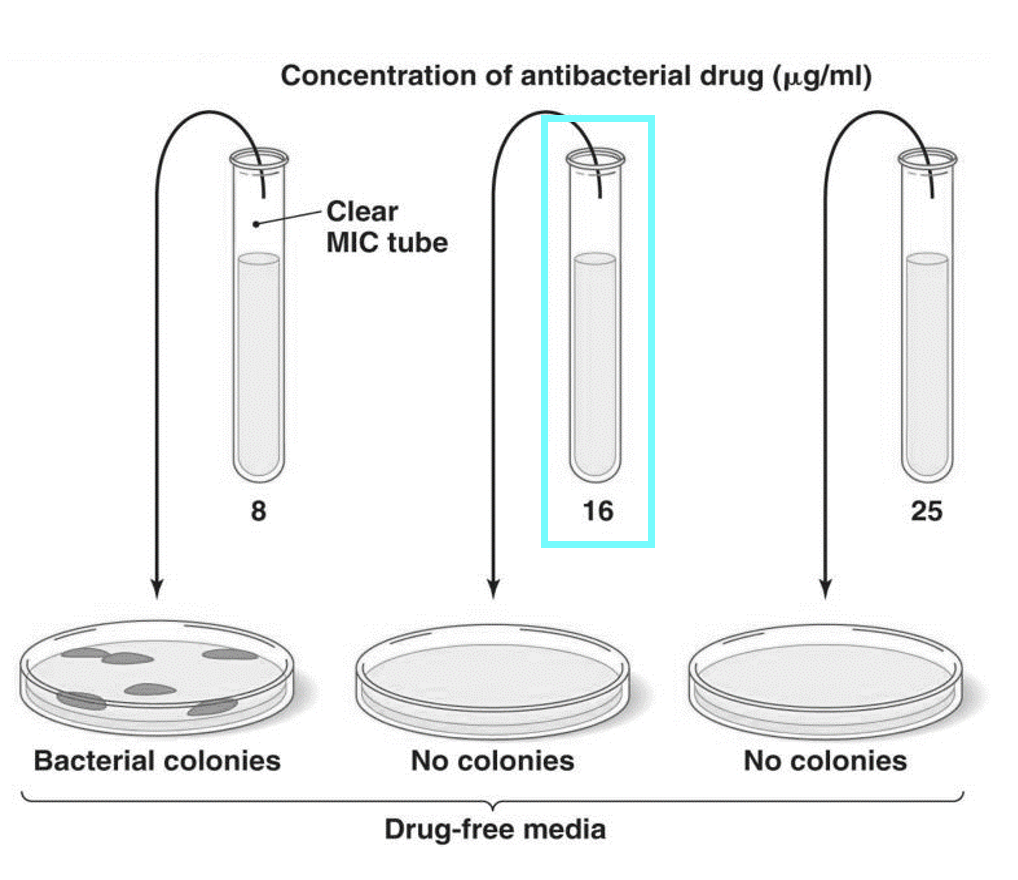
Minimum bactericidal concentration (MBC)
Testing for the lowest concentration of antibacterial drug to get rid of bacterial colonies
Bacteriostatic
Inhibits growth of causative organism but don’t cause direct cell death; immune system will eventually clear the infection
Bactericidal
Actively causes direct cell death in causative organism
ABX Resistance: Anti-ABX protein induction
Inactivating enzymes (hydrolases, catalases, etc)
Activating enzyme inhibitors (prodrug ABX)
ABX Resistance: ABX target modification
Mutations of target site
Excessive target site
Loss of target site
ABX Resistance: Limited ABX entry
Reduced cell membrane permeability
Loss of porins or active transporters
Cell wall structure
ABX Resistance: Increased ABX efflux
Induction of ABX efflux pumps (pumping out)
Spectrum of Activity: Narrow-spectrum
Cover a single or limited group of bacteria
Spectrum of Activity: Extended-spectrum
Covers gram-positive bacteria and some gram-positive bacteria
Spectrum of Activity: Broad-spectrum
Covers gram-positive and gram-negative bacteria
Activity against a wide range of pathogenic bacteria

ABX MOA: Beta-lactams
Penicillins, Cephalosporins, Carbapenems
MOA: Inhibits bacterial cell wall synthesis by binding to penicillin-binding proteins (PBPs), inhibiting peptidoglycan cross-linking
MOR:
Beta-lactamases (hydrolytic enzyme) open the characteristic beta-lactam ring of the antibiotic, rendering it inactive before it can reach its target
Efflux pumps
PBP mutations

ABX MOA: Beta-lactamase inhibitors
Addition to beta-lactam ABX
Extended spectrum
MOA: Inactivates beta-lactamases by covalently binding and inhibiting their hydrolytic activity
MOR: Newly resistant beta-lactamases
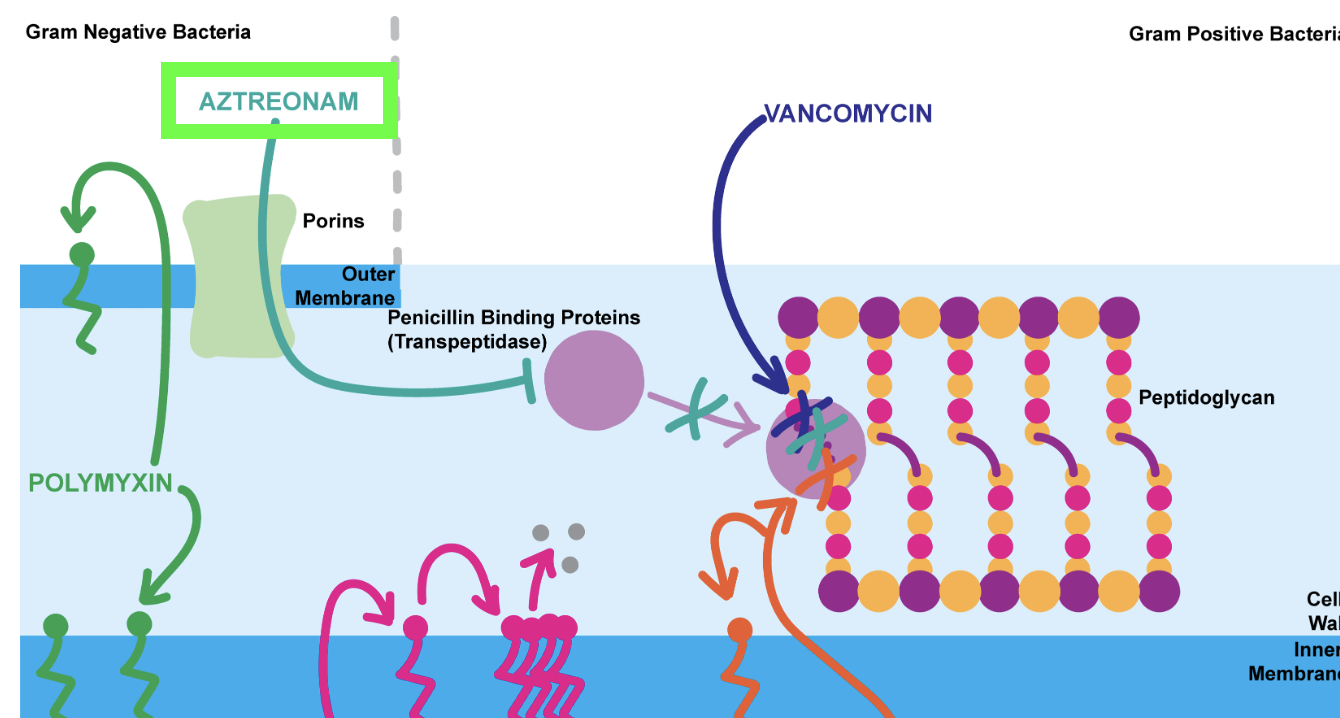
ABX MOA: Cell wall and cell membrane targets, Aztreonam
SoA: Narrow
MOA: Inhibits bacterial cell wall synthesis by binding to PBPs, similar to beta-lactams
MOR: ESBL production

ABX MOA: Cell wall and cell membrane targets, Vancomycin & Lipoglycopeptides
Glycopeptide
SoA: Narrow, Gram-positive
MOA: Inhibits bacterial cell wall synthesis by binding to peptidoglycan and preventing polymerization
MOR: Modification of peptidoglycan building blocks

ABX MOA: Cell wall and cell membrane targets, Daptomycin
SoA: Narrow, gram-positive
MOA: Inserts into bacterial cell membrane to make a pseudo-pore leading to membrane depolarization and cell death

ABX MOA: Cell wall and cell membrane targets, polymyxins
SoA: Narrow, gram-negative, last resort ABX
MOA: Displaces ions from cell membrane, hydrophobic region disrupts cell membrane integrity
MOR: Cell membrane modifications, efflux pumps
Narrow therapeutic window

ABX MOA: Nucleic acid synthesis targets, Fluoroquinones
SoA: Broad
MOA: Inhibits DNA gyrase or Topo IV, leads to double-stranded DNA breaks and downstream DNA damage
MOR: Enzyme mutations, efflux pumps, resistance (clinical overuse)

ABX MOA: Nucleic acid synthesis targets, Metronidazole and Nitrofurantoin
Metronidazole
SoA: Narrow, anaerobic
MOA: Prodrug reduced to highly reactive metabolites that disrupts bacterial DNA and inhibit nucleic acid synthesis
Nitrofurantoin
SoA: Narrow, UTIs
MOA: Prodrug reduced to highly reactive metabolites capable of disrupting bacterial DNA and enzymatic processes

ABX MOA: Nucleic acid synthesis targets, Sulfamethoxazole/trimethoprim
SoA: Broad
MOA: Each component inhibits different enzyme in folate synthesis, depleting purine amounts and inhibiting DNA synthesis
MOR: Enzyme mutation, enzyme induction

ABX MOA: Protein synthesis targets, Macrolides and Clindamycin
Macrolides
SoA: Broad
MOA: Reversibly binds the 50s ribosomal subunit to inhibit peptide chain elongation ad protien synthesis
MOR: Ribosomal mutations, inactivating enzyme induction, efflux pumps, resistance (clinical overuse)
Clindamycin
SoA: Narrow, gram-positive
MOA: Like above
MOR: Ribosomal mutations

ABX MOA: Protein synthesis targets, Chloramphenicol and Streptogramins
Chloramphenicol
SoA: Broad, last resort ABX
MOA: Like macrolides
MOR: Ribosomal mutations, inactivating enzyme induction
Narrow therapeutic window
Streptogramins
SoA: Narrow, gram-positive, for resistant infections
MOA: Like macrolide
MOR: Ribosomal mutations, inactivating enzyme induction

ABX MOA: Protein synthesis targets, Linezolid
SoA: Narrow, gram-positive, for resistant infections
MOA: Inhibits formation of initiation complex (tRNA + mRNA), preventing protein synthesis
MOR: Ribosomal mutations

ABX MOA: Protein synthesis targets, Aminoglycosides
SoA: Gram-negative, Gram-positive with synergy
MOA: Disrupts protein elongation by causing inaccurate translation of mRNA template, making inaccurately translated proteins that are truncated/dysfunctional
Narrow TW

ABX MOA: Protein synthesis targets, Tetracyclines
SoA: Broad
MOA: Binds 30S ribosomal subunit at A-site, preventing tRNA binding. so bacterial proteins can’t elongate
MOR: Ribosomal protection proteins, efflux pumps
Which of the following correctly matches the drug or drug class with an acquired MOR, if used inappropriately?
A. Vancomycin – target modification
B. Cephalosporin – hydrolytic enzyme
C. Metronidazole – target loss
D. Sulfamethoxazole – target induction
E. A and B
F. A, B, C
G: A, B, D
G: A, B, D
Which of the following antibiotics should only be used in empiric ABX regimens when a suspected susceptible pathogen(s) is/are involved?
A. Carbapenems
B. Penicillins
C. Aminoglycosides
D. Polymyxins
E. Linezolid
F.A, D, E
G.All of the above
G.All of the above
Which of the following statements is/are correct? Select all that apply.
A. Bacteriostatic ABX inhibit the growth of bacteria, but bactericidal ABX directly kill bacteria.
B. Time-dependent killing refers to ABX that do not exhibit higher efficacy as ABX concentration increases.
C. Concentration-dependent killing refers to ABX that do not exhibit higher efficacy as ABX concentration increases.
D. Bacteriostatic ABX inhibit the growth of bacteria at the MIC but bactericidal ABX directly kill bacteria at the MIC.
A, B
Time-dependent killing
ABX do not exhibit higher efficacy as ABX concentration increases
Optimal effect when concentrations above MIC
Lower, frequent dosing
Concentration-dependent killing
Higher concentrations = greater kill
Post-ABX effect: Persistent suppression of bacterial growth after [ABX] falls under MIC
Higher, less frequent dosing
Heart failure
Insufficient cardiac output to meet metabolic demands
inadequate contractility
Inadequate relaxation
Increased LV pressure
Myocardial ischemia
Leads to increased pulmonary capillary pressure
Regulation of heart function: Baroreceptors and chemoreceptors (intrinsic)
Baro = Pressure/mechanical
Baroreceptors sense pressure
Arterial baroreflexes
Feeds back pressure information from arteries
Cardiopulmonary reflexes
Feeds back pressure information form heart-lung circulation
Autonomic nervous system (ANS)
Responsible for subconscious control of organs
Heart, blood vessels, eye, bladder, lung
Sympathetic (ANS)
fight or flight
Releases Norepinephrine and epinephrine onto target organs
Increases blood pressure, shifts blood flow to muscles
Parasympathetic (ANS)
Rest and digest
Releases acetylcholine onto target organs
decrease heart rate, increase digestive functions
Chronotropy (heart rate)
Positive: increase heart rate
Epinephrine (Symp)
Negative: decrease heart rate
Beta-blockers, digoxin
Inotropic (contractility)
Positive: Increase strength, helping pump more blood
Digoxin, norepinephrine
Negative: Decrease contraction strength, reducing heart’s workload
Beta-blockers, acetylcholine
Norepinephrine (noradrenaline)
Most post-ganglionic sympathetic nerve terminals
Epinephrine (adrenaline)
Adrenal medulla (sympathetic)
Acetylcholine
Post ganglionic parasympathetic nerve terminals
Cholinergic receptors: Nicotinic
Ligand gate ion channcel
Skeletal muscle, autonomic ganglia
Cholinergic receptors: GPCR
Target organs of parasympathetic NS
Atropine
Alpha adrenergic receptors
GPCRs: a1 (post synaptic), a2 (presynaptic)
Inhibitor
Beta adrenergic receptors
GPCRs: B1, B2, B3
Epi more potent agonist at B2 receptor
Therapeutic use of Epinephrine
Cardiovascular emergencies
Anaphylaxis
Prolong action of local anesthetics
Therapeutic use of Norepinephrine
Used to raise BP in cardiovascular crisis problems
Sympathomimetic drugs
Drugs that mimic some aspect of sympathetic nervous system stimulation
Stimulation of adrenergic receptors: Inotropic/chronotropic
Increase BP
Increase heart rate (B1 agonist)
Increase vasoconstriction (a1 agonist)
Inotropic agents in cardiovascular disease: Shock states
Goal: When a patient is in shock, blood pressure drops dangerously low, threatening organ failure.
Effect: Inotropes squeeze the heart harder to increase blood pressure and restore adequate vital organ perfusion (blood flow to critical organs like the brain, kidneys, and liver).
Inotropic agents in cardiovascular disease: Acute/refractory heart failure
Goal: When the heart suddenly falls or stops responding to standard treatments, it can’t pump enough blood
Effect: Inotropes boost cardiac output, which raises BP and organ perfusion
Inotropic agents in cardiovascular disease
Act very quickly and have a short half life
Given as continuous IV infusions
IV Inotropic Agents: Beta agonists
Dopamine, dobutamine, epinephrine
Stimulate cAMP
IV Inotropic Agents: Alpha agonists
Phenylephrine