Learn: KIN 321 Biomechanics Oregon State University Midterm 1 Terminology
 Call Kai
 Learn
 Practice Test
 Spaced Repetition
 Match
 Flashcards
 Knowt Play
1/85

There's no tags or description
Looks like no tags are added yet.
86 Terms
Biomechanics
The study of forces and their effects on living systems
Mechanics
The analysis of forces and their effects
Kinematics
Description of motion
Kinetics
Deals with the forces that cause or tend to cause changes in motion
Intertia
The property of an object to resist changes in its motion
Mass
The measure of intertia
Weight
The measure of the force of gravity on an object
Force
A push or a pull, exerted an object
Internal Forces
Forces that act within the object or system whose motion is being investigated. Ex) Tensile, compression
Tensile Force
Pulling forces
Compression
The structure is under compression
External Forces
Forces that act on an objects as a result of its interaction with the environment surrounding it
Friction
The line of action parallel to two surfaces that moves or opposes movement
Static Friction
When friction acts between objects that are not moving
Dynamic Friction
Friction through movement, sliding past each other
Formula for Friction

Resultant Force
Result of vector addition between two or more forces
Net Force
Vector addition of all external forces acting on the object
Colinear Forces
Forces that have the same line of action
Concurrent Forces
Forces that do not act along the same line of action, but act through the same point
Weight Equation
W= mg
Static Equilibrium
If the object is either at rest, net force of zero or moving at constant velocity
Linear Motion
Also referred to as translation, when all points of the body are moving in the same direction, distance and at the same time. Two types: Rectilinear and Curvilinear
Rectilinear
Moving in a straight line with the same orientation, and distance. Ex) Coasting down a street on a skateboard
Curvilinear
Moving in a curved line, but the orientation of the object stays the same and distance Ex) Curveball pitch
Angular Motion
All points on a body or object move in circles about a fixed axis or line. Ex) Ballerina spinning
General Motion
Combination of linear and angular motion. Ex) Riding a bike. Upper body= linear, Legs pedaling=angular. (Most human motion is general)
Linear Kinematics
Describes linear motion using speed, distance and direction
Distance Traveled
Measure of a length that an object followed from beginning to end. Ex) following a trail up a mountain
Displacement
Straight line distance from beginning to end for an object. Ex) Going in a straight line in a helicopter from the bottom of a hill to the top, missing any curvy trails
Speed
Rate of motion/ rate of distance traveled, m/s
Average Speed
Distance object traveled divided by time to travel the distance.

Instantaneous Speed
Speed of an object at specific point in time
Velocity
Rate of motion in a specific direction, m/s
Average Velocity
Displacement of an object divided by the time it took for the displacement to occur

Instantaneous Velocity
Velocity at a specific point in time
Acceleration
Rate of change of velocity, m/s^2

Average Acceleration
Change in velocity divided by the time it took for it to occur( equation on acceleration previous slide)
Instantaneous Acceleration
Acceleration at a specific point in time
Uniform Acceleration
Net external force acting on an object is constant and unchanging
Projectile Motion
Motion of an object that is projected into the air or dropped and is acted on only by gravity and air resistance forces. Combines vertical and horizontal motion, they are independent of each other and follow the path of a parabola
Newtons First Law Of Motion: Inertia
Objects will stay at rest and objects in motion will stay in motion of no force acts upon them
Newtons Second Law: Acceleration
If a net external force is exerted on an object, the object will accelerate in the direction of the net external force. The acceleration will be directly proportional to the net external force and inversely proportional to its mass.
Net Force(sigma)= ma
Newtons Third Law: Action and Reaction
If an object exerts a force on another object, the other object exerts the same forces on the first object, but in the opposite direction.
Linear Momentum
Product of objects mass and linear velocity.
L=mv
Elastic Collision
Objects collide head on and momentum is conserved, objects will bounce off each other
Inelastic Collison
Momentum is conserved, but the colliding objects stay together after the collision and move together at the same velocity
Coefficient of Restitution
Essentially the bounciness of an object
Impulse
The product of force and time over which force acts
Impulse Momentum Relationship

Increasing and Decreasing Momentum
Increase time of force= increase momentum. Ex)Throwing in Track
Increase impact time= decrease momentum. Ex) Catching a baseball
Work
Product of force and amount of displacement in direction of that force, J.
U=F(d)
Positive Work
Force acting on object if object is displaced in same direction as force. Ex) Pushing up in a bench press
Negative Work
Force acting on object if object is being displaced in opposite direction of the force. Ex) Lower during a bench press
Energy
Capacity to do work
Potential Energy
Energy due to position. Two types: Gravitational and Strain
Kinetic Energy
Energy due to motion
Work- Energy Relationship
Work done by external forces(other than gravity) acting on an object causes an energy change of the object.
U= Change in Energy
Conservation of Mechanical Energy
Total mechanical energy of an object is constant if no external forces other than gravity act on object. Ex) Roller coaster
Not realistic because of friction
Power
Amount of work done in certain amount of time
P= W/change in time, Unit: Watts
Torque
Turning effect produced by a force. (Also called moment or moment of force). T= F x r
Centric Force
An external force directed through the center of gravity of an object
Eccentric Force
An external force not directed through the center of gravity of an object
Center of Gravity
Point in body where mass or weight is evenly distributed
Force Couple
A pair forces equal in size, but opposite in direction and not collinear, causes rotation. Ex) Rotator cuff
Net Torque
Torques acting around the same axis can be added or subtracted just like forces acting in the same direction
Stability
Capacity of an object to return to equilibrium or its original position after it has been displaced. Can be increased by, lowering COG, widen base of support, increasing weight/mass, increasing moment arm of objects weight and decreasing potential energy
Angular Kinematics
Describing angular motion
Angle
Intersection of 2 lines, 2 planes or a line and plane
Angular Position
Orientation of a line with another line or plane
Absolute Angular Position
If other line or plane is fixed and immovable relative to the earth
Relative Angular Position
If other line or plane is capable of moving
Angular Displacement
Change in absolute angular position experienced by a rotating line
Advantages and Disadvantages of Muscles
Must create a large force for modest loads, but also have a large range of motion
Angular Velocity
Rate of change of angular displacement
Average Angular Velocity
How long it takes for something to rotate through a certain angular displacement.

Instantaneous Angular Velocity
How fast something is rotating at a specific time
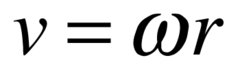
Angular and Linear Velocity Relationship
Average linear speed on a rotating object is equal to average angular velocity times the radius
Angular Acceleration
Rate of change of angular velocity

Tangential Acceleration
Component of linear acceleration tangent to the circular path on a rotating object
Centripetal Acceleration
Linear acceleration is directed toward the axis of rotation
Centripetal Force
Force causing Centripetal accelaration
Anatomical Position

Planes
Saggital, Frontal, Transverse
Axis
Anteroposterior, Transverse, Longitudinal
Sources: Crowell Lecture Slides and Biomechanics of Sport and Excercise. Third Edition. By Peter M. McGinnis