ways of studying the brain
 Call Kai
 Learn
 Practice Test
 Spaced Repetition
 Match
 Flashcards
 Knowt Play
1/9

There's no tags or description
Looks like no tags are added yet.
10 Terms
Techniques for investigating the brain are often used for m____ p___ in the d___ of i____.
The purpose of scanning in psychological research is often to for what ?
Techniques for investigating the brain are often used for medical purposes in the diagnosis of illness.
The purpose of scanning in psychological research is often to investigate localisation - to determine which parts of the brain do what function
what are the four methods of studying the brain?
four methods of studying the brain :
fMRI ( functional magnetic resonance imaging)
EEG (electroencephalogram)
ERPs (event-related potentials)
post-mortem examinations
Functional magnetic resonance imaging (fMRI)
works by detecting changes in what 2 things that occur as a result of what
When a brain area is more a____ it consumes more o____ and to meet this increased demand, what happens and what is this response called ?
MRI produces t___-d____ images (a____ maps) showing which parts of the brain are i____ in a particular m____ p___ and this has important implications for our understanding of what?
Functional magnetic resonance imaging (fMRI)
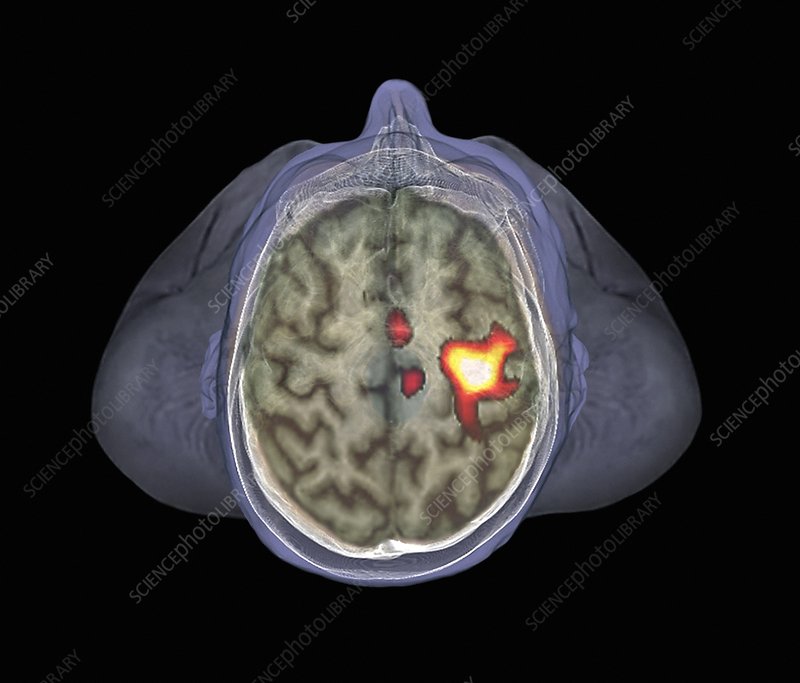
works by detecting changes in both blood oxygenation and flow that occur as a result of neural (brain) activity in specific parts of the brain.
When a brain area is more active it consumes more oxygen and to meet this increased demand, blood flow is directed to the active area (this is known as the haemodynamic response).
MRI produces three-dimensional images (activation maps) showing which parts of the brain are involved in a particular mental process and this has important implications for our understanding of localisation of function.
Functional magnetic resonance imaging (fMRI) ✓strengths and ✘weaknesses
✓
One key strength of fMRI is, unlike other scanning techniques such as P____, it does not rely on the use of r____- If administered correctly it is virtually r___-free, n____-i____ and s____ to use
It also produces images that have very high s____ r___, depicting d____ by the m____, and providing a clear picture ofwhatv. This means that MRI can s____ provide a c___ picture of brain activity.
✘
MRI is e_____ compared to other neuroimaging techniques.
It has poor temporal (time) resolution - why? This means fMRI may not truly represent what?
Functional magnetic resonance imaging (fMRI) ✓strengths and ✘weaknesses
✓
One key strength of fMRI is, unlike other scanning techniques such as PET, it does not rely on the use of radiation- If administered correctly it is virtually risk-free, non-invasive and straightforward to use
It also produces images that have very high spatial resolution, depicting detail by the millimetre, and providing a clear picture of how brain activity is localised. This means that MRI can safely provide a clear picture of brain activity.
✘
MRI is expensive compared to other neuroimaging techniques.
It has poor temporal (time) resolution because there is around a 5-second time-lag behind the image on screen and the initial firing of neuronal activity. This means fMRI may not truly represent moment-to-moment brain activity
Electroencephalogram (EEG)
measures e_____ activity within the brain via e_____ that are fixed to an individual's scalp using a s____ c____.
The scan recording represents the b_____ patterns that are generated from the action of thousands of n____, providing an o_______ a____ of brain activity.
why is EEG often used by clinicians as a diagnostic tool?
Electroencephalogram (EEG)
measures electrical activity within the brain via electrodes that are fixed to an individual's scalp using a skull cap.
The scan recording represents the brainwave patterns that are generated from the action of thousands of neurons, providing an overall account of brain activity.
EEG is often used by clinicians as a diagnostic tool as unusual arrhythmic ( no fixed rhythm) patterns of activity may indicate neurological abnormalities such as epilepsy, tumours or some sleep disorders.
Electroencephalogram (EEG) ✓strengths and ✘weaknesses
✓
EEG has been useful in studying the stages of s____ and in the diagnosis of conditions such as e_____, a disorder characterised by what that can easily be detected on s____.
Unlike MRI, EEG technology has extremely high t____ r____.
Today's EEG technology can accurately detect brain activity at a r____ of a s____ mfff (and even less in some cases). This shows the real-world usefulness of the technique.
✘
the g____ nature of the information received (that of many thousands of neurons) means that the EEG signal is also not useful for what?
Therefore it does not allow researchers to distinguish between what?
Electroencephalogram (EEG) ✓strengths and ✘weaknesses
✓
EEG has been useful in studying the stages of sleep and in the diagnosis of conditions such as epilepsy, a disorder characterised by random bursts of activity in the brain that can easily be detected on screen.
Unlike MRI, EEG technology has extremely high temporal resolution.
Today's EEG technology can accurately detect brain activity at a resolution of a single millisecond (and even less in some cases). This shows the real-world usefulness of the technique.
✘
the generalised nature of the information received (that of many thousands of neurons) means that the EEG signal is also not useful for pinpointing the exact source of neural activity.
Therefore it does not allow researchers to distinguish between activities originating in different but adjacent locations.
Event-related potentials (ERPs)
Although EEG has many scientific and clinical applications, in its r___ form it is a crude and overly g____ measure of brain activity
. However, within EEG data are contained all the what? - researchers have developed a way of t____ out and i___ these responses.
Using a s____ a___ technique, all e____ brain activity from the original EEG recording is f____ out leaving only those responses that relate to what?
. What remains are event-related potentials (ERPs) - types of brainwave that are triggered by what
Research has revealed many different forms of ERP and how, for example, these are linked to cognitive processes such as an____ and p___.
Event-related potentials (ERPs)
Although EEG has many scientific and clinical applications, in its raw form it is a crude and overly general measure of brain activity
. However, within EEG data are contained all the neural responses associated with specific sensory, cognitive and motor events that may be of interest to cognitive neuroscientists - researchers have developed a way of teasing out and isolating these responses.
Using a statistical averaging technique, all extraneous brain activity from the original EEG recording is filtered out leaving only those responses that relate to the presentation of a specific stimulus or performance of a specific task
. What remains are event-related potentials (ERPs) - types of brainwave that are triggered by particular events.
Research has revealed many different forms of ERP and how, for example, these are linked to cognitive processes such as attention and perception.
Event-related potentials (ERPs) ✓strengths and ✘weaknesses
✓
The limitations of EEG are partly addressed through the use of ERPs. ERPs bring much more s____ to the measurement of n____ p___ than could ever be achieved using r____ EEG data.
As ERPs are derived from EEG measure, they have excellent t____ r___, especially when compared to what other techniques?
This means that ERPs are frequently used to measure c_____ functions and deficits such as the allocation of a____ r___ and the maintenance of w___ m___.
✘
Critics have pointed to a lack of s_____ in ERP methodology between different research studies which makes it difficult to confirm findings.
A further issue is that, in order to establish pure data in ERP studies, what must be completely eliminated.
This is a problem because it may not always be e___ to achieve.
Event-related potentials (ERPs) ✓strengths and ✘weaknesses
✓
The limitations of EEG are partly addressed through the use of ERPs. ERPs bring much more specificity to the measurement of neural processes than could ever be achieved using raw EEG data.
As ERPs are derived from EEG measure, they have excellent temporal resolution, especially when compared to neuroimaging techniques such as fMRI.
This means that ERPs are frequently used to measure cognitive functions and deficits such as the allocation of attentional resources and the maintenance of working memory.
✘
Critics have pointed to a lack of standardisation in ERP methodology between different research studies which makes it difficult to confirm findings.
A further issue is that, in order to establish pure data in ERP studies, background 'noise and extraneous material must be completely eliminated.
This is a problem because it may not always be easy to achieve.
Post-mortem examinations
This is a technique involving the a____ of a person's brain following their d____.
in psychological research, individuals whose brains are subject to a post-mortem examination are likely to be who?
. Areas of damage within the brain are examined after death as a means of establishing the what?
this may also involve comparison with a what? in order to ascertain the extent of the difference.
Post-mortem examinations
This is a technique involving the analysis of a person's brain following their death.
in psychological research, individuals whose brains are subject to a post-mortem examination are likely to be those who have a rare disorder and have experienced unusual deficits in cognitive processes or behaviour during their lifetime
. Areas of damage within the brain are examined after death as a means of establishing the likely cause of the affliction the person experienced.
this may also involve comparison with a neurotypical brain in order to ascertain the extent of the difference.
Post-mortem examinations ✓strengths and ✘weaknesses
✓
Post-mortem evidence was vital in providing a foundation for early understanding of key processes in the brain.
Paul Broca and Karl Wernicke both relied on post-mortem studies in establishing links between language, brain and behaviour decades before neuroimaging ever became a possibility
. Post-mortem studies were also used to study HM'S brain to identify the areas of damage, which could then be associated with his memory deficits
This means post-mortems continue to provide useful information.
✘
Causation (cause and effect) is an issue within these studies - observed damage to the brain may not be linked to the subject under review but to some other unrelated trauma or decay
. A further problem is that postmortem studies raise ethical issues of consent from the individual before death. - Participants may not be able to provide informed consent, for example in the case of HM who lost his ability to form memories and was not able to provide such consent - nevertheless post-mortem research has been conducted on his brain.
This challenges the usefulness of post-mortem studies in psychological research.
Post-mortem examinations ✓strengths and ✘weaknesses
✓
Post-mortem evidence was vital in providing a f____ for e____ understanding of key processes in the brain.
which 2 people both relied on post-mortem studies in establishing links between l_____, b____ and b____ decades before n____ ever became a possibility
. Post-mortem studies were also used to study who’s brain to identify the areas of d____, which could then be associated with his m____ deficits
This means post-mortems continue to provide useful information.
✘
C___ is an issue within these studies - observed damage to the brain may not be linked to the subject under review but to some other u____ trauma or decay
. A further problem is that postmortem studies raise e____ i____ of c____ from the individual before death. - Participants may not be able to provide i___ c____, for example in the case of who who lost his ability to do what and was not able to provide such c____ - nevertheless post-mortem research has been conducted on his brain.
This challenges the u___ of post-mortem studies in psychological research.