Dental Hygiene: Chapter 13: Extraoral and Intraoral Examination
 Call Kai
 Learn
 Practice Test
 Spaced Repetition
 Match
 Flashcards
 Knowt Play
1/54

There's no tags or description
Looks like no tags are added yet.
55 Terms
Rationale for the extraoral and intraoral exam can lead to an early identification of?
abnormalities and pathologies, especially oral cancer
Rationale for the extraoral and intraoral exam can reveal signs of other conditions, diseases, disorders such as?
Sexually transmitted infections, thyroid disorders, eating disorders
Rationale for the extraoral and intraoral exam can provide an opportunity for education in?
cancer prevention
What type of examination is a thorough summary of all components of the assessment?
comprehensive
What type of examination is for emergency situations?
limited exam
What type of examination is a complete reassessment after a specific period of time?
continuing care/re-eval
What type of examination is a brief, preliminary exam for particular purpose?
screening
What type of examination is to check healing?
follow-up
What method of examination involve direct observation (ex. gait), radiographic examination, transillumination?
visual examination
What method of examination involve using the sense of touch through tissue manipulation or pressure on an area with the gloved fingers of one hand or both?
palpation
What method of examination involve use of single finger like checking for torus mandibularis?
digital

What method of examination involve use of finger and thumb of same hand like palpation of lips?
bidigital

What method of examination involve use of finger or fingers and thumb from each hand simultaneously? Such as using the index finger of one hand palpates on floor of the mouth and the fingers of other hand press on the same area from under the chin externally.
bimanual

What method of examination involve two hands used at the same time, for example to palpate TMJ area?
bilateral

What method of examination involve tapping a surface or tooth with fingers or an instrument, but needs to be avoided when the tooth is sensitive in any way?
Percussion
What method of examination involve finding the presence or absence of vital pulp tissue
Electrical test
What method of examination involve the use of a sound such as sound of clicking of TMJ when jaw is opened or closed?
Auscultation
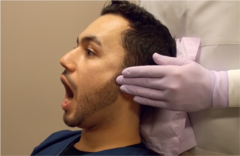
What method of examination involve the use periodontal probe, explorer, etc.?
Instrumentation
What is any objective abnormality found using things such as probe or radiograph? This can include changes in color, size, shape, consistency.
Sign
What are subjective departures from normal usually noted by the patient such as pain, tenderness, swelling, bleeding?
Symptoms
Reviewing health history, including risk factors and all assessments, and examining radiographs are steps for what? (example the procedure and relevance)
Preparation for the examination
What type of mucosa covers gingiva and hard palate? These are firmly attached to underlying tissue, except for the free gingiva, and is made of keratinized epithelium.
Masticatory mucosa
What type of mucosa covers the inner surfaces of lips and cheeks, floor of mouth, soft palate, alveolar mucosa and underside of tongue? These tissues are not firmly attached to underlying tissue and is not made of keratinized epithelium.
Lining mucosa
What type of mucosa covers the dorsum (upper surface) of tongue and composed of many papillae?
Specialized mucosa
What is the threadlike keratinized elevations that cover dorsal of tongue and has most numerous papillae?
Filiform
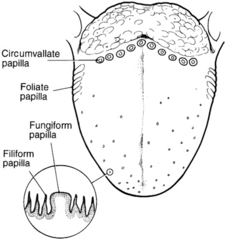
What is the mushroom-shaped papillae on tip and sides of the tongue that redder than filiform?
Fungiform

What are the large round papillae arranged in a "V" between the body of the tongue and the base?
Circumvallate

What are the vertical grooves on the lateral posterior sides of the tongue?
Foliate

Dorsal Tongue View

View of Uvula and Oropharynx

Ventral Tongue View

Major Lymph Nodes of Head and Neck

Examination of the Thyroid Gland

Cervical Node Palpation

Examination of the Tongue

Examination of the Floor of the Mouth

Using Probe to Measure a Lesion

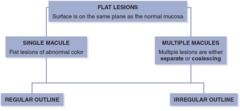
As they relate to normal level of skin/mucosa, most lesions are classified as what three descriptions?
elevated, depressed, flat
Attachment of Nonblisterform Lesions
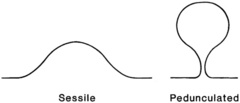
Flowchart of Depressed Soft-Tissue Lesions

Flowchart of Flat Soft-Tissue Lesions
Appearance of early cancer has five basic forms, what are they?
White areas, red areas, ulcers, masses, pigmentation
What appearance of early cancer is a white patch or plaque that cannot be scrapped off or characterized as any other disease?
Leukoplakia
What appearance of early cancer is flat or raised in red, velvety patches inside the mouth?
Erythroplakia
What is the appearance of early cancer ulcers?
flat or raised margins
What is the appearance of early cancer masses?
ulcerated areas
What is the appearance of early cancer pigmentation?
Brown or black
What is the removal and microscopic exam of a section of tissue or other material from the body for the purpose of diagnosis?
Biopsy
Biopsies can be excisional which means?
entire lesion removed
Biopsies can be incisional which means?
a portion removed
What is the gold standard for oral cancer diagnosis?
Biopsy
Indications for biopsy:
any unusual oral lesion that cannot be identified with clinical certainty, any lesion that has not healed in 2 weeks, a persistent thick, white, hyperkeratotic lesion and any mass that does not break through the surface.
An integral role in prevention of disease is the identification of risk factors for what condition?
oral cancer
What is the role of the dental hygienist in regard to patient education about what three risks?
tobacco cessation, alcohol reduction, and HPV vaccination
What is the role of the dental hygienist in regard to what two ways to increase confidence with current recommendations?
Professional continuing education and adherence to EB practice guidelines