Bacteria (unfinished)
 Call Kai
 Learn
 Practice Test
 Spaced Repetition
 Match
 Flashcards
 Knowt Play
1/37

Earn XP
Description and Tags
38 Terms
Morphology
the scientific study of form and structure
What are the morphologies of bacteria (mentioned in this lesson)?
Cocci (Spherical)
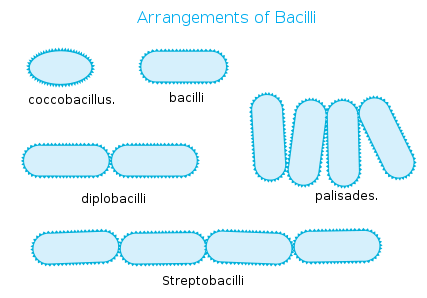
Bacillus (Rod-Shaped)
Vibrio
Spiral
Pleiomorphic
Hyphae
Mycelia
Trichomes
Cocci
spherical
single: coccus
plural: cocci

Bacillus
rod-shaped
single: bacillus
plural: bacilli
Vibrio
comma-shaped
single: vibrio
plural: vibrios

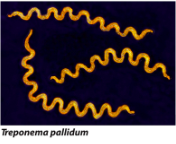
Spiral
single: spirillum
plural: spirilla
Pleiomorphic
(varied shapes)
Hyphae
branching filaments of cells

Mycelia
tufts of hyphae
Trichomes
smooth unbranched chains of cells

Are all bacteria the same size?
No!
What are the benefits of being smaller?
Higher surface area to volume ratio
greater rate of nutrient+waste exchange/unit volume
supports higher metabolic rate
supports faster growth rate, faster evolution

What are 2 bacteria that are exceptions to the size rule? What are benefits for being larger?
Thiomargarita namibiensis
Epulopiscium fishelsoni

Contents of a Bacteria’s Cytoplasm
Nucleoid
Chromosome-packing proteins
Synthesis-related enzymes
Regulatory Factors
Ribosomes
Plasmid(s)
Catabolic Enzymes
Inclusion Bodies
Gas Vesicles
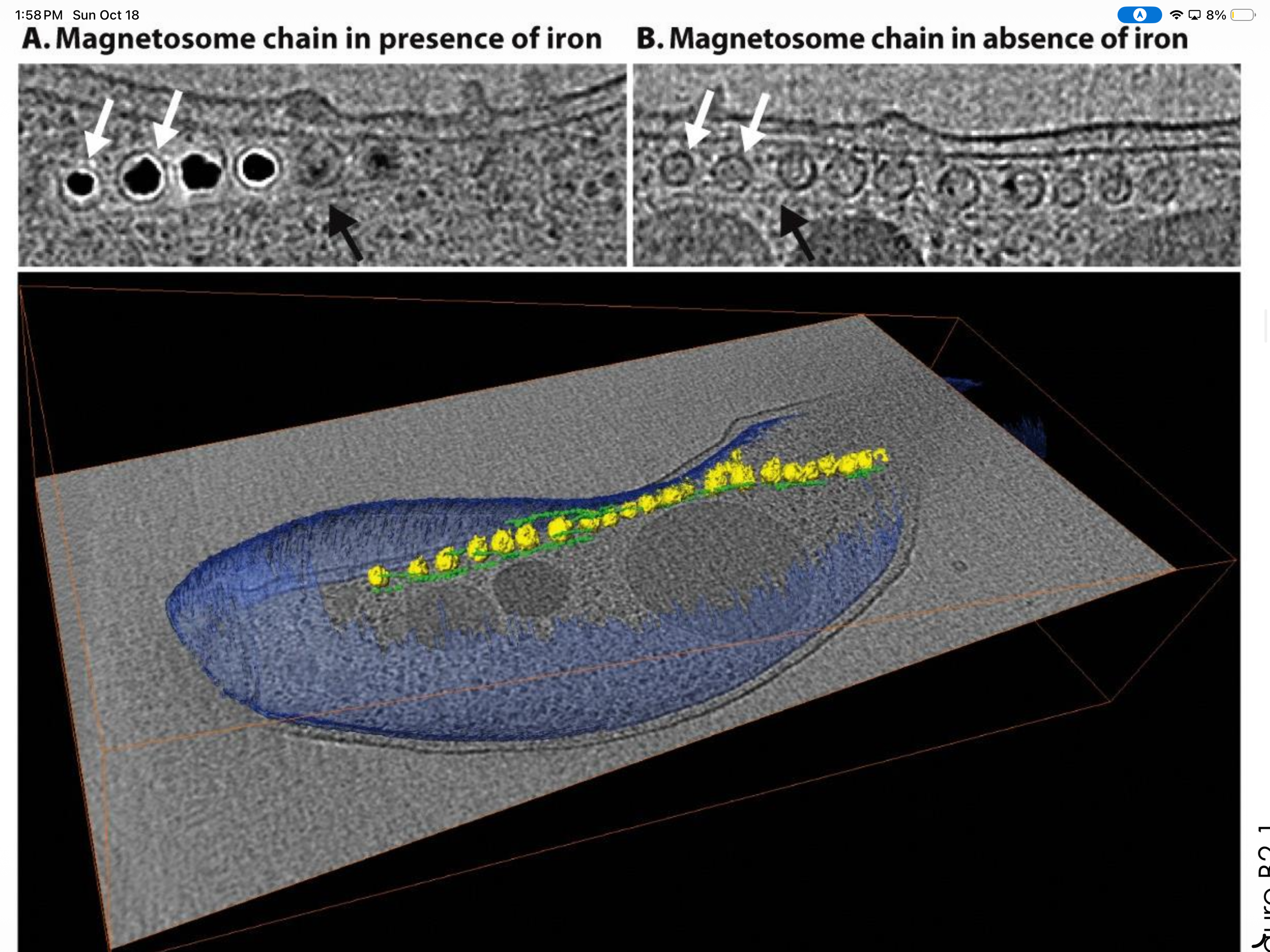
Magnetosomes
Cytoskeletal structure
Bacterium Nucleoid
largest region
houses chromosome(s) and DNA replication machinery
no surrounding membrane
no histone proteins

How does DNA compress within the nucleoid of bacteria?
N.B. DNA is -vely charged therefore are attracted to cations
cations shield -ve charges on on sugar-phosphate (PO4-) backbone
small, +vely charged proteins bind to chromosome to maintain condensed structure
topoisomerases modify structure of DNA to enable “supercoiling”
How does DNA compress within the nucleoid of bacteria?
N.B. DNA is -vely charged therefore are attracted to cations
cations shield -ve charges on on sugar-phosphate (PO4-) backbone
small, +vely charged proteins bind to chromosome to maintain condensed structure (histone-like)
topoisomerases modify structure of DNA to enable “supercoiling”
What are Microcompartments? What are examples in prokaryotes?
protein-enclosed structure
carboxysomes
gas vesicles

What are Microcompartments? What are examples in prokaryotes?
membrane-enclosed structures
magnetosomes
What are Inclusion Bodies for? What are examples?
storage
polyhydroxybutyrate granules: carbon storage
sulfur globules: sulfur storage for energy
glycogen: stored form of glucose
What are Polyhydroxybutyrate Granules for?
Carbon Storage
What are Gas Vesicles for?
Buoyancy Control
Carboxysomes
location of carbon fixation reaction
RUBISCO
Magnetosomes
organelles associated with direction finding
Some ____________ proteins are involved in cell wall synthesis during cell division
cytoskeleton
MreB
Homolog of actin - microfilaments
bacteria’s version of actin
FtsZ
Homolog of actin - microtubules
bacteria’s version of tubulin
aids in cell division
Bacterial Cytoskeleton Key Features
series of internal proteins
assist in:
structure - MreB
cell wall synthesis during cell division - FtsZ
moving internal items - plasmids

What is the Cell Envelope?
any membrane, cell wall, or outer membrane surrounding the cell’s cytoplasm
What are the roles of the Plasma Membrane?
capturing energy
Holding Sensory Systems
Permeability Barrier (but not stuctural)

Plasma Membrane Composition
usually composed of a phospholipid bilayer w/ embedded proteins
hydrophobic core
hydrophillic surfaces interact w either the external environment or cytoplasm
Phospholipids
Cytoplasmic Membrane
all cells have them
separates interior from exterior
