Anat and Phys Ch 4 Part II
 Call Kai
 Learn
Learn Practice Test
 Spaced Repetition
 Match
Match Flashcards
 Knowt Play
1/33

There's no tags or description
Looks like no tags are added yet.
Name | Mastery | Learn | Test | Matching | Spaced | Call with Kai | Chat |
|---|
No analytics yet
Send a link to your students to track their progress
34 Terms

Collagen fiber
elastin fiber
reticular fiber
ground substance
capillary
fat cell
Mast cell
neutrophil
macrophage
lymphocyte

Connective tissue proper
loose
dense
areolar
adipose
reticular
regular
irregular
elastic
cartilage
hyaline
elastic
fibrocartilage

Connective Tissue Proper: Loose Areolar
wraps and cushions organs
widely distributed in epithelia of the body

Connective tissue proper, loose adipose
provides reserve fuel
insulates against heat loss
kidneys
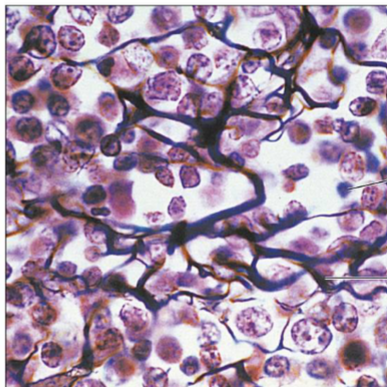
connective tissue proper, loose reticular
Fibers form a soft internal skeleton that supports other cell types
spleen
what are the 3 varieties of dense connective tissue
dense regular
dense irregular
elastic

connective tissue proper dense regular
attaches muscles to bones, bones to bones and muscle to muscle
located in tendons
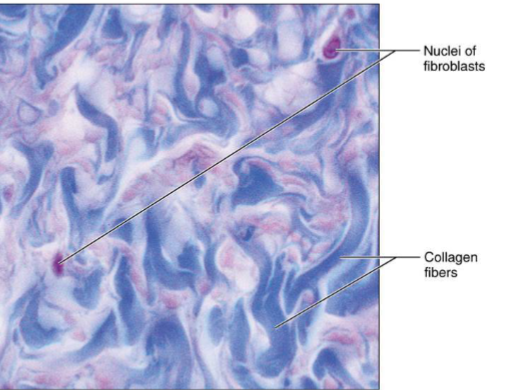
connective tissue proper: dense irregular
withstands tension
dermis of the skin

connective tissue proper dense elastic
allows tissue to recoil after stretching
walls of large arteries
Cartilage
matrix secreted from (blank) during growth and (blank) for adults
Chondrocytes are found in cavities called (blank)
Cartilage is 80% (blank), packed with (blank) fibers and (blank) proteins (chondroitin and hyaluronic acid)
tough yet flexible and lacks (blank) fibers
(blank), receives nutrients from the membrane surrounding it, the (blank)
The (blank) gives rise to chondroblasts and chondrocytes
chondroblasts, chondrocyes
lacunae
water, collagen, sugar
nerve
avascular, perichondrium
perichondrium

Connective tissue: hyaline cartilage
supports and reinforces, serves as a cushion
forms most of embryonic skeleton

connective tissue cartilage: elastic
maintains shape of a structure but with great flexibility
external ear
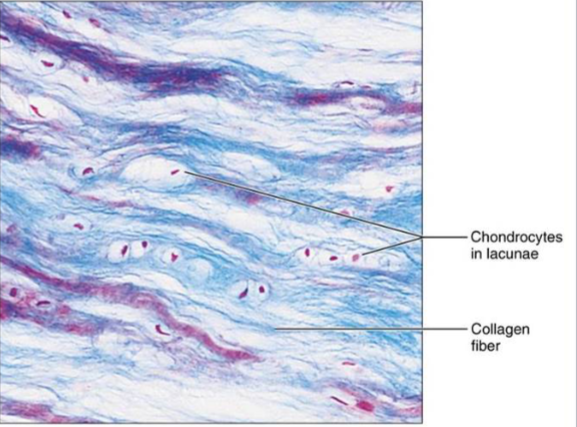
Connective tissue cartilage: fibrocartilage
Tensile strength allows to absorb compressive shock
discs of knee joints
what does avascular cartilage do as we age
loses its ability to divide, so injuries heal slowly
(over time cartilage can also ossify, causing chondrocytes to die
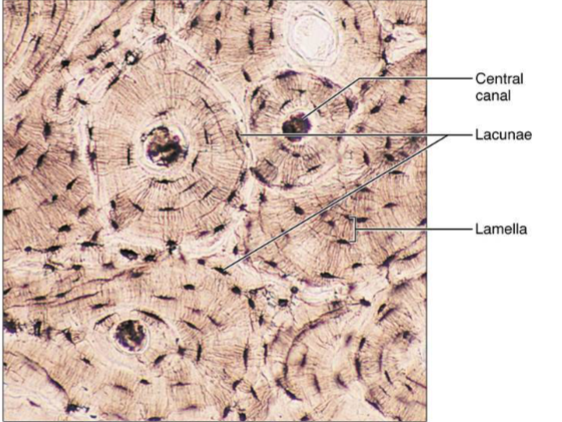
Connective tissue bone
hard, calcified matrix
supports and protects
bones
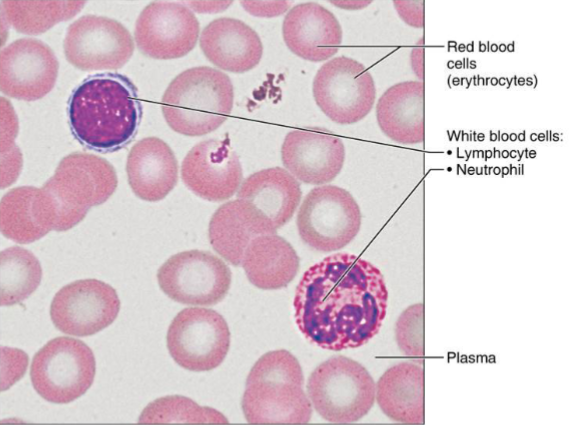
Connective tissue blood
red and white blood cells in fluid matrix
transports respiratory gases
contained within blood vessels
muscle tissue is highly (blank)
muscles contain (blank) made up of (blank) and (blank), which are proteins that facillitate contractions
three types of muscle tissue
vascularized
myofilaments, actin, myosin
skeletal, smooth, cardiac

skeletal muscle (long and cylindrical)
voluntary movement
skeletal muscle

Cardiac Muscle (involuntary)
contains intercalated discs
As it contracts, it propels blood throughout the body
walls of the heart
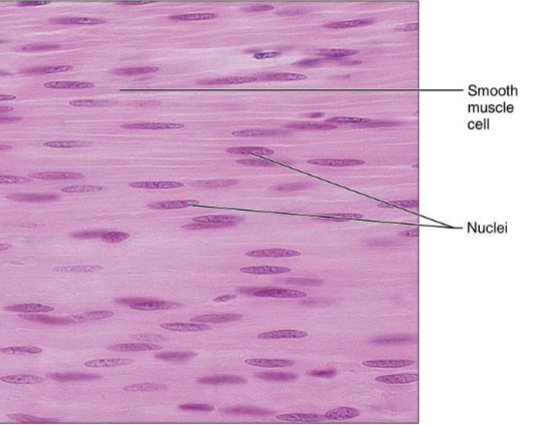
smooth muscle
propels substances or objects along internal passageways (involuntary)
walls of hollow organs
(blank) is the main component of the nervous system (brain, spinal cord, nerves) and it regulates and controls (blank) functions
two types of cells that make up nervous tissue
nervous tissue, body
Neurons
specialized nerve cells that conduct nerve impulses
Supporting cells that support, insulate and protect neurons

nervous tissue
Neurons transmit electrical signals from sensory receptors
located in brain, spinal cord and nerves
3 types of membranes
cutaneous membranes
mucus membranes
serous membranes

cutaneous membrane (skin) covers the body surface

Mucus membranes line body cavities open to the exterior (i.e. mouth and nasak cavity)
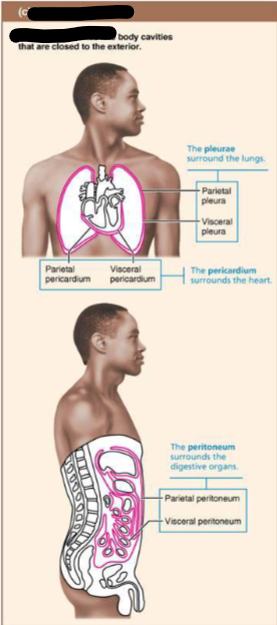
serous membranes line body cavities not exposed to the environment
visceral serosa (directly lines organs)
parietal serosa (lines outside of organs)
what happens when the body’s barriers are compromised
The inflammatory and immune responses are activated
repair (which is a function of the inflammatory process) begins quickly
10 Steps of skin regeneration from a wound (Timmy Is Coming Soon Cause Finn Made Such Epic Fudge)
Trauma causes injured tissue cells to release inflammatory chemicals
Inflammatory chemicals make blood vessels leaky, allowing WBCs and clotting proteins to seep into the area
Clotting seals off injured area preventing bacteria and toxins from spreading
surface of clot exposed to air dries and forms a scab
clot is replaced by capillaries that are characteristic of granulation tissue (restores vascular supply)
fibroblasts produce growth factors and collagen fibers that bridge the gap
macrophages phagocytize dead cells and debris
surface epithelial cells multiply and migrate over granulation tissue
epithelium thickens under scab, which detaches
fully regenerated epithelium with an underlying layer of scar tissue results
tissues that regenerate extremely well include
epithelial tissues
bone
areolar connective
dense irregular connective tissue
blood forming tissue
tissues with moderate regeneration
smooth muscle
dense regular connective tissue
Tissue with no regenerative capacity
cardiac muscle
nervous tissue
how can scar tissue that forms in organs, particularly the heart, severely impair the function of that organ
may cause organ to lose volume capacity
block substances from moving through organ
interfere with muscle’s ability to contract or impair nerve transmissions
scar adhesions
can cause scars to adhere to neighboring structures, preventing normal function
the ectoderm forms
the mesoderm forms
the endoderm forms
nervous tissue
muscle and connective tissue
inner lining of digestive system
