chem 1a ucb (second midterm)
 Call Kai
 Learn
 Practice Test
 Spaced Repetition
 Match
 Flashcards
 Knowt Play
1/17

Earn XP
Description and Tags
last minute review
18 Terms
heat capacity (C)
energy needed to raise T
extrinsic: depends on material and mass
specific heat (c)
energy needed to raise T per grams/mol
intrinsic: standardized unit of mass to move (either per g/mol) → ≠ depend on mass
degrees of freedom
rotations and vibrations
more → higher specific heat
only translations
lower specific heat
intermolecular forces (from strongest to weakest)
ion-dipole
hydrogen bonding
dipole-dipole
dipole-induced dipole
instantaneous dipole-induced dipole
aka london dispersion
REMEMBER:
bar asks for ID, ur HomeBoy is flat drunk so they ask if ur the Designated Driver and DID u drink too but then the cops come and u DISPERSE
exothermic
q < 0
ΔH < 0
reactants: high PE
products: low PE
KE increases bc energy exits system
endothermic
q > 0
ΔH > 0
reactants: low PE
products: high PE
KE decreases bc energy enters system
enthalpy (ΔH)
tells whether chemical reaction absorbs/releases heat at constant pressure
exothermic: ΔH < 0
endothermic: ΔH > 0
phase change enthalpies
1) fusion = -freeze
2) vaporization = -condensation
2 > 1 bc particles are further apart
big distance = big change —> bigger energy needed
bond energy diagram
shorter bond length shifts left
longer bond length shifts right
stronger bond shifts down
stronger if shorter, higher order, more polar
weaker bond shifts up
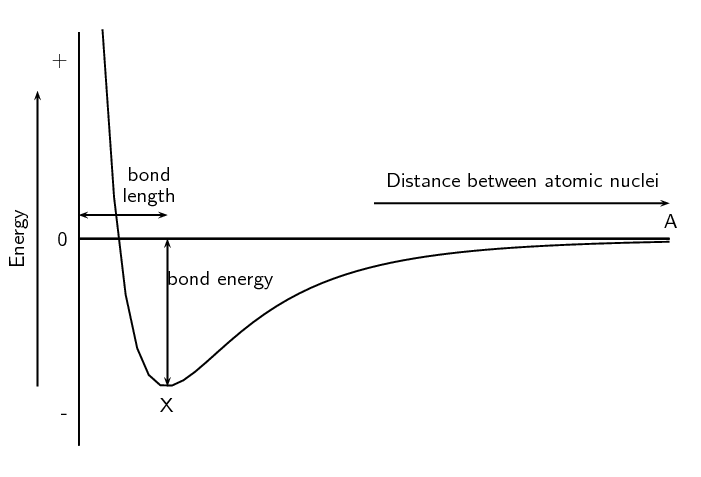

phase change diagram
flat: phase transition
PE increases, KE constant
longer means higher enthalpy
slopes: state of matter - solid, liquid, gas
KE increases, PE constant
initial heating line slope = specific heat capacity
ΔH naught reaction
sum ΔH of multiple steps
products - reactants
atoms in “most stable form” have ΔH of 0
H O N Cl Br I F are diatomic
entropy (S)
dispersion of matter & energy
measured by different ways to “arrange” a system
products - reactants
spontaneity
ΔS > 0
ΔG < 0
E naught > 0
redox reactions
reduction - oxidation
flip positive/least negative ΔG naught to become spontaneous
reduction
gains e-/becomes more negative
cathode
cations go towards
oxidation
loses e-/becomes more positive
anode
anions go towards
work (w < 0)
system loses energy “does work”
work (w > 0)
system gains energy “work done on system”