Module 16 - the Eukaryotic Cell Division Cycle
 Call Kai
 Learn
 Practice Test
 Spaced Repetition
 Match
 Flashcards
 Knowt Play
1/35

Earn XP
Description and Tags
included on exam 4
36 Terms
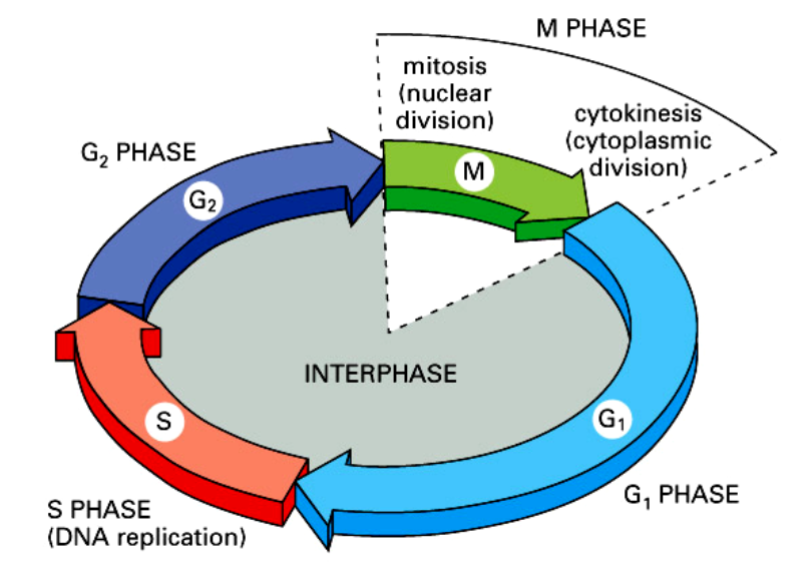
phases of the eukaryotic cell division cycle
G1: protein synthesis, growth, decision about cell division
S: DNA synthesis; nuclear DNA content doubles
G2: growth, protein synthesis in preparation for mitosis
M: mitosis and cytokinesis
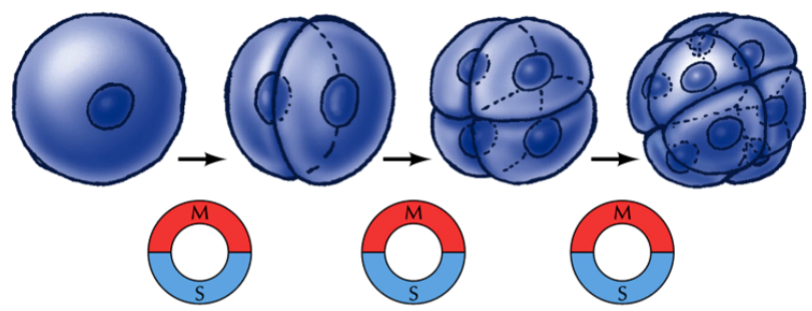
cell division in early embryos
modified: no G phases (just S and M), no expression of embryonic genes
result: rapid cell divisions with no overall embryonic growth
sustained by maternal nutrients in the yolk until mid—blastula transition
mid-blastula transition: G phases begin, division rate slows down, embryo begins to grow in size
control system of the cell division cycle
a control system drives or inhibits the events necessary for progression through each phase
(checkpoints)
each control step involves specific Cdcs, active only during specific phases
ensures that all events related to progression through the cell division cycle occur in the correct sequence and without error
Cdcs
cell division cycle proteins
active only during specific phases
involved in controlling specific steps of the cell division cycle, either driving or inhibiting
e.g. Cdc25
c-Cdk complexes
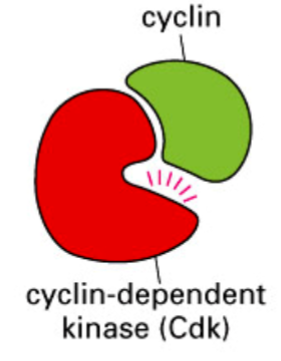
complexes made of a cyclin and a cyclin-dependent kinase
different complexes become active at different phases of the cell division cycle
e.g. S-Cdk and M-Cdk, active during S and M phases
(S- and M-Cdk: both S and M cyclin are destroyed before the end of M phase, Cdks become inactive)
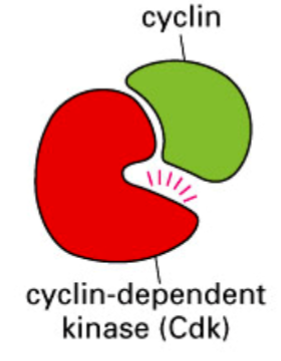
cyclins
part of a cyclin-Cdk complex
regulatory subunits
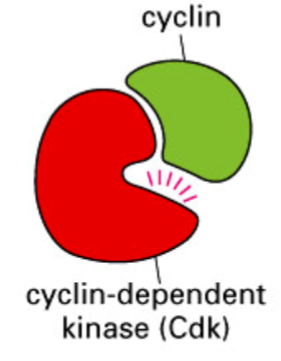
Cdks
cyclin-dependent kinases
part of a cyclin-Cdk complex
catalytic subunits
always present in the cell, but not always active
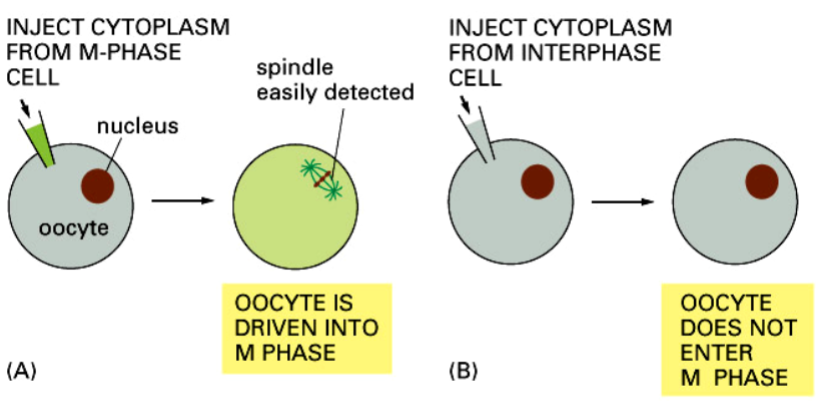
discovery of an active MPF during M phase
frog 1* oocytes: immature eggs, arrested at G2 before beginning of meiosis
G2-arrested oocyte can be driven to enter M phase by injecting cytoplasm from a donor cell in M phase
(M phase entry is not induced if the donor cell is in interphase)
conclusion: a maturation promoting factor (MPF) exists; later demonstrated to be M-Cdk
M-Cdk
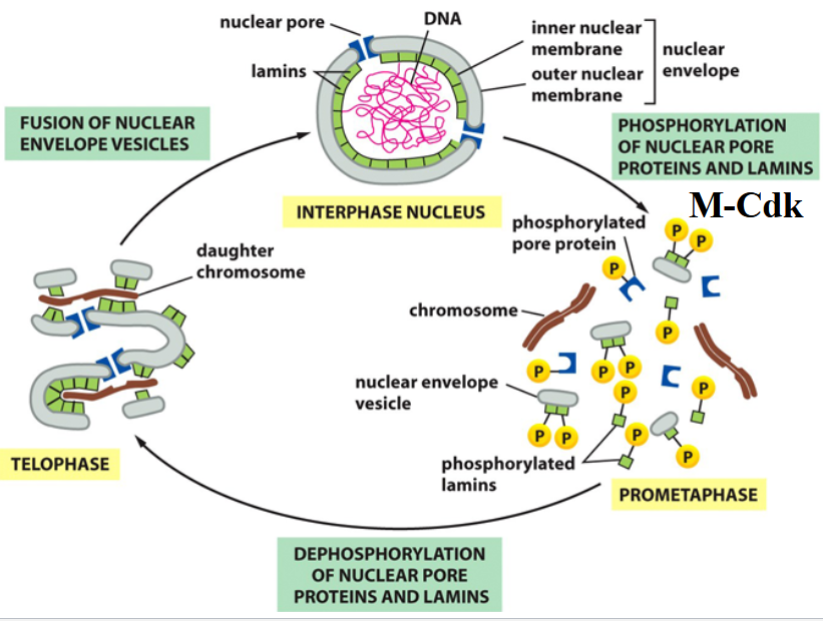
a cyclin-Cdk that, when active, is necessary for triggering events related to cell division:
chromatin condensation: phosphorylation of condensins
nuclear envelope breakdown: phosphorylation of lamins and nuclear pore complexes
fragmentation of the Golgi: phosphorylation of Golgi matrix proteins
formation of mitotic spindle: phosphorylation of centrosome and microtubule-associated proteins
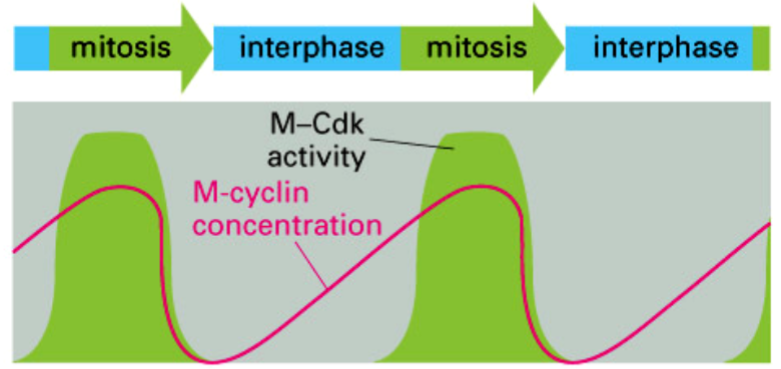
activity depends on M-cyclin accumulation
M-Cdk’s dependence on M-cyclin accumulation
M-Cdk activity peaks when M-cyclin accumulates to its highest level (during M phase)
all M-cyclin is destroyed before end of M phase → allows the cell to exit mitosis (M-Cdk activity drops)
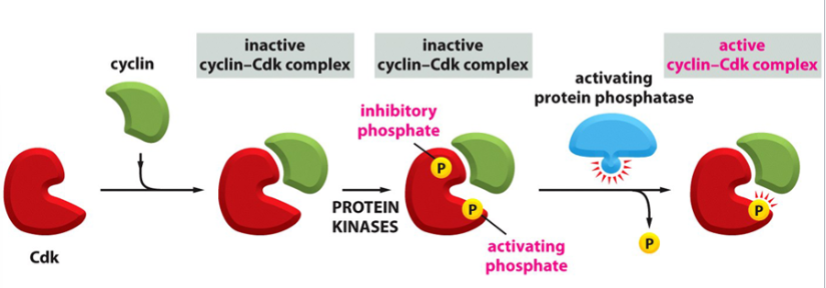
pathway of regulation of M-Cdk activity
1) synthesis of M-cyclin and formation of M-Cdk complex
2) phosphorylation of M-Cdk’s activating site by an activating kinase, and phosphorylation of M-Cdk’s inactivating site by an inhibitory kinase
3) dephosphorylation of the inactivating site by an activating phosphatase
→ M-Cdk becomes an active protein kinase
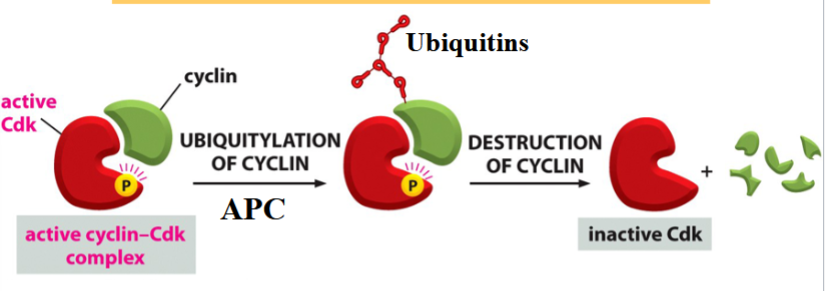
before end of mitosis, M-Cdk is inactivated by degradation of M-cyclin (degradation follows the ubiquitin pathway)
APC adds ubiquitins to cyclin and other proteins involved in mitosis regulation
APC
anaphase promoting complex
adds ubiquitins to cyclin and other proteins involved in mitosis regulation → tags them for destruction
checkpoints
points at which the cell cycle is halted if there is a problem that may prevent the cell from progressing through the cell cycle
if a problem is fixed, or there are no problems, the cell cycle can continue past the checkpoint
ensure that cell division cycle events occur in the correct sequences
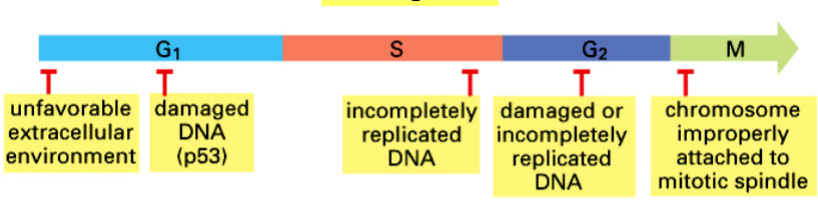
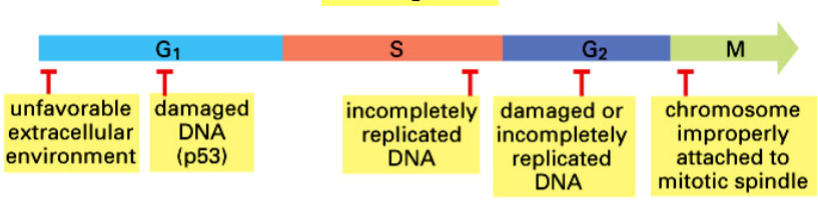
5 checkpoints in the cell cycle
beginning of G1: unfavorable extracellular environment
middle of G1: damaged DNA (p53)
end of S: incompletely replicated DNA
middle of G2: damaged or incompletely replicated DNA
beginning of M: chromosome improperly attached to mitotic spindle
p53
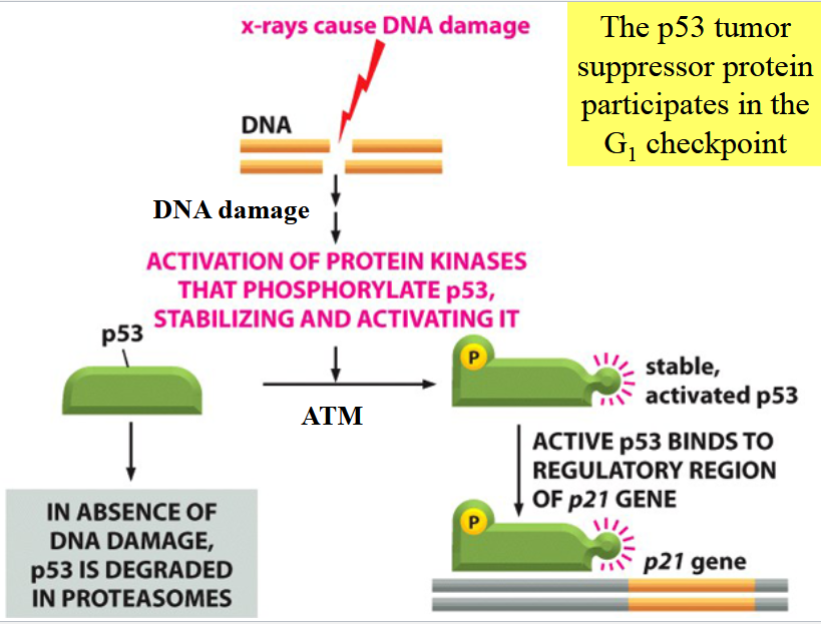
a tumor suppressor protein
participates in the G1 checkpoint for DNA integrity
G1 arrest
G1 → S progression requires activation of G1/S-Cdk and S-Cdk
if DNA damage occurs, ATM phosphorylates and stabilizes p53
p53 binds to DNA, activates transcription of p21 (a tumor suppressor gene)
p21 binds to and inactivates G1/S-Cdk and S-Cdk → results in G1 arrest
ATM
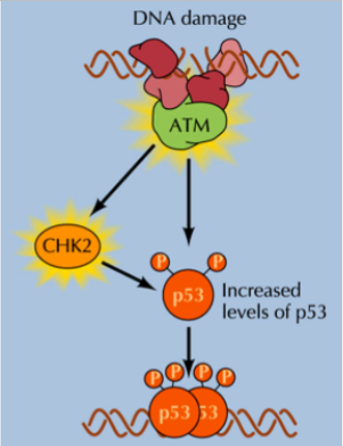
a protein kinase that can recognize double-strand DNA breaks
activates tumor suppressors e.g. p53 and Chk2
Chk2
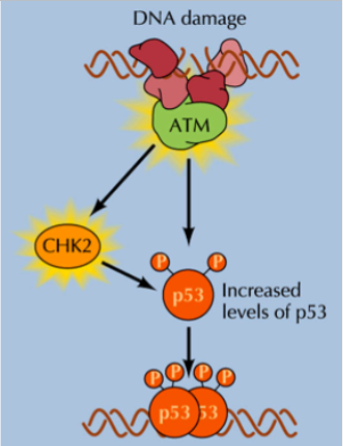
checkpoint kinase 2
when activated by ATM, inhibits Cdc25 → prevents entry into mitosis, stabilizes p53 → arrest in G1
BRCA1 and BRCA2
in some cells:
BRCA1 activates genes that code for DNA repair proteins following a G1 arrest
BRCA2 participates in repair after arrest
loss of function mutations in either tumor suppressor increases risk of breast cancer
(BRCA, BReast CAncer)
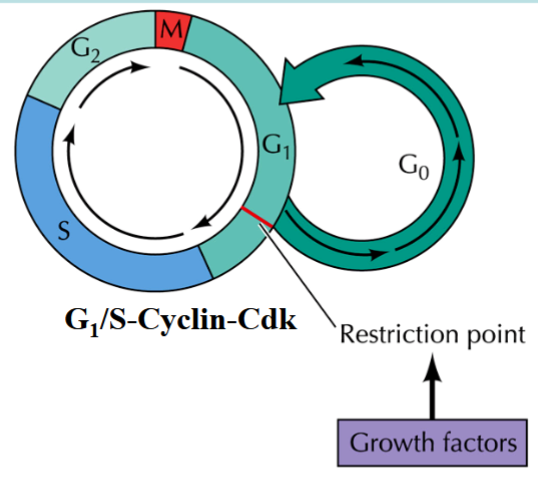
regulation of the cell division cycle in animals
regulated primarily by extracellular growth factors that signal cell proliferation (not by availability of nutrients)
before reaching the restriction point late in G1, cells may leave the cell division cycle and enter G0 (quiescence)
when restriction point is passed, cell is committed to proceeding into S phase to complete a complete round of division
mitogens and growth factors play a role
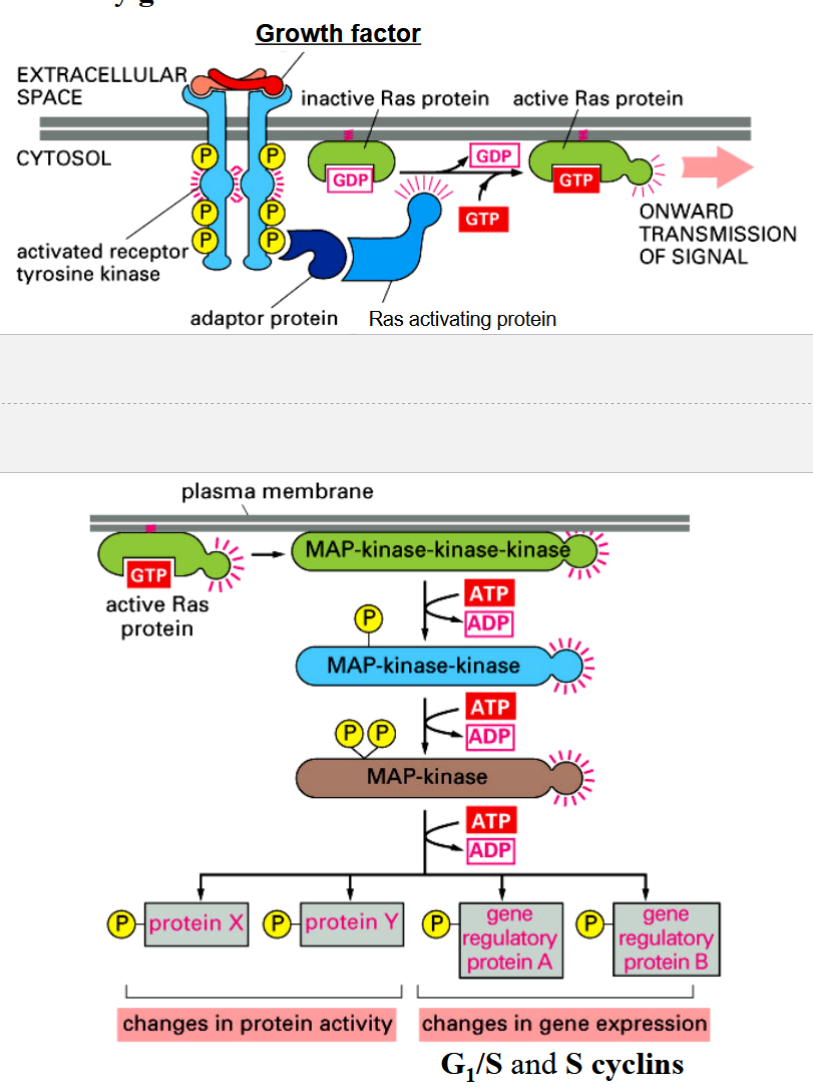
Ras-MAP pathway in cell division
activated by cell proliferation triggered by growth factors
results in synthesis of G1/S and S cyclins
^cyclins are necessary for progression through the restriction point, but unstable and rapidly degrade
cell proliferation continues as long as necessary growth factors are available
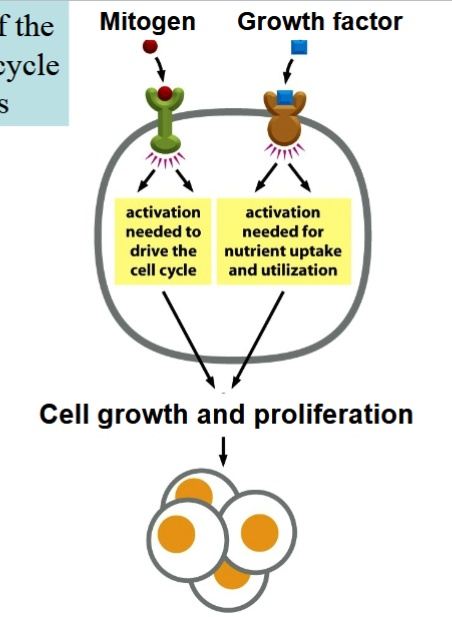
mitogens
one factor of regulation of the animal cell division cycle
stimulate cell division by overcoming the braking mechanisms that block progression through the cell division cycle
activation needed to drive the cell cycle
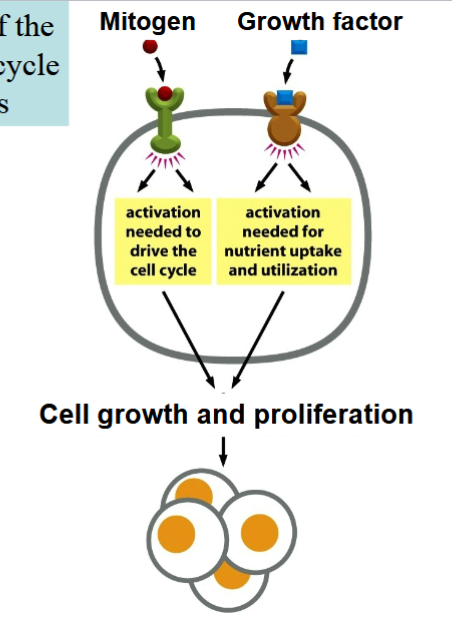
growth factors
one factor of regulation of the animal cell division cycle
stimulate cell growth (increase in cell size) by promoting synthesis and inhibiting degradation of proteins and other macromolecules
also promote cell division
activation needed for nutrient uptake and utilization
Rb, G1/S-Cdk and S-Cdk
Rb: a tumor suppressor (retinoblastoma), a substrate of G1/S-Cdk and S-Cdk
in absence of an active c-Cdk complex, active Rb binds to gene regulators (e.g. E2F) → inactivates them
genes necessary for cell proliferation remain inactive
mitogens trigger signal transduction pathways → activate c-Cdks → c-Cdks inactivate Rb by phosphorylation
active gene regulators induce gene expression, drive the cell to proceed through the division cycle
(see slides 31 and 32 for illustration)
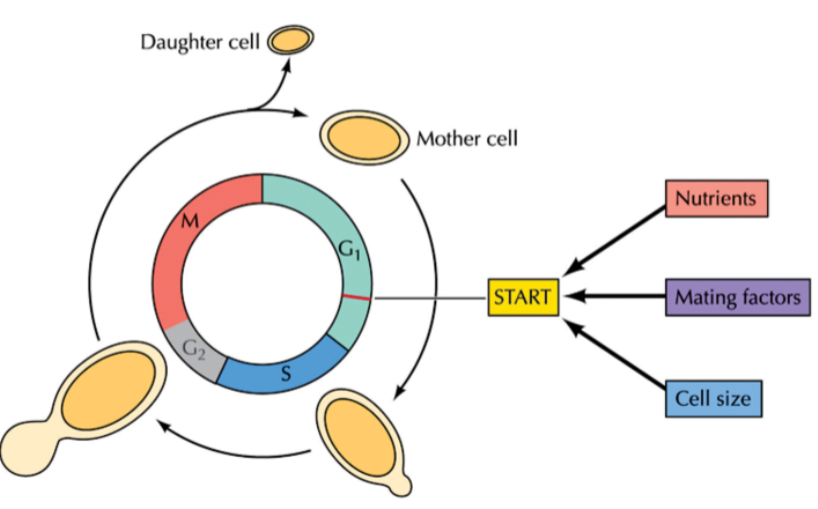
cell division cycle in budding yeast Saccharomyces cerevisiae
START: a step in the progression through G1; cell commits to proceeding into S and completing a round of cell division
passage through START is regulated by nutrient availability, signaling through mating factors, and internal regulators (e.g. cell size)
(daughter cell is smaller than mother cell)
cell division cycle in fission yeast Schizosaccharomyces pombe
primary control is regulation of the G2 → M transition
^at the transition, cell size and nutrient availability are monitored
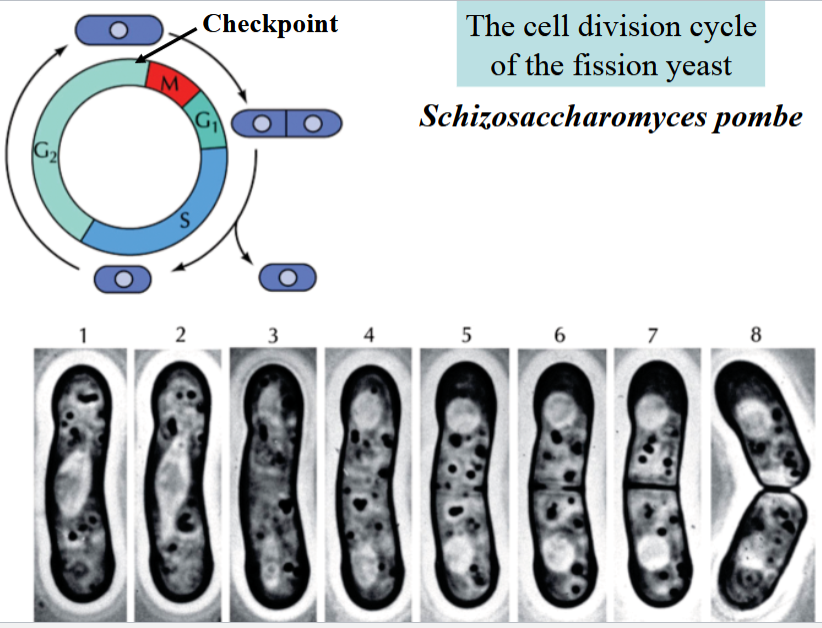
checkpoints in the fission yeast (S. pombe) division cycle
Cak (Cdk-activating kinase): activating kinase
Wee1: inhibitory kinase
if cell mass is too low, Wee1 phosphorylates M-Cdk at inactivating cite → no cell division occurs (G2 checkpoint for cell size)
Cdc25: activating phosphatase
if DNA is damaged or not completely replicated, Cdc25 is inactivated → prevents activation of M-Cdk → G2 arrest (G2 checkpoint for damaged/unreplicated DNA)
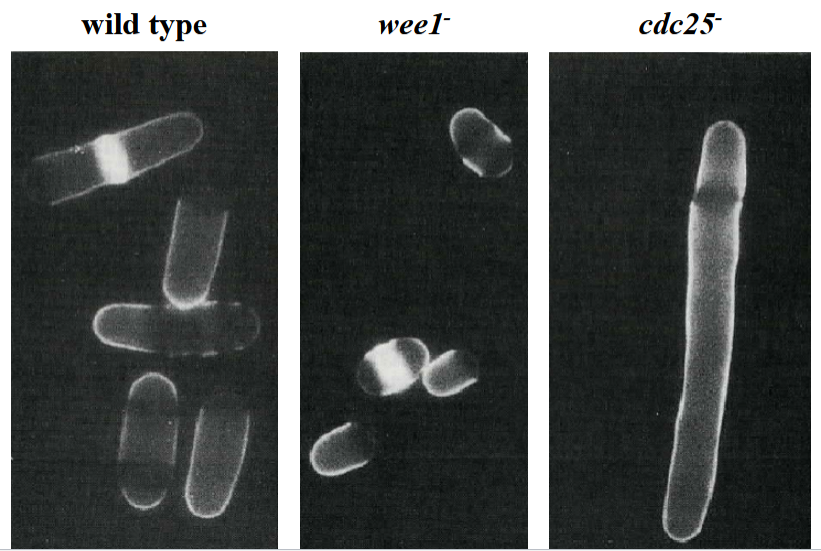
result of a loss of function mutation in Wee1 in S. pombe
no M-Cdk inactivation
cells enter M phase even if they have not grown enough
(compare left-most to middle picture)
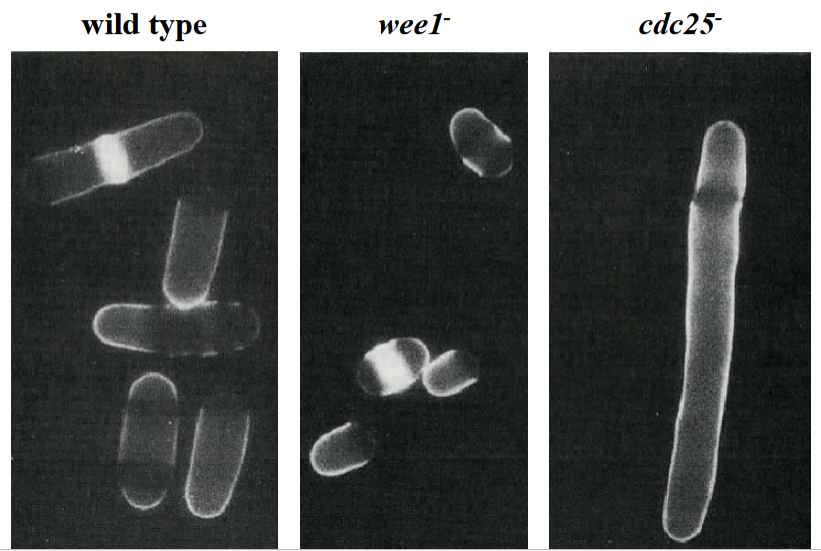
result of a loss of function in Cdc25 in S. pombe
no M-Cdk activattion
cells cannot enter M phase, but continue to grow in size
(compare left-most to right-most picture)
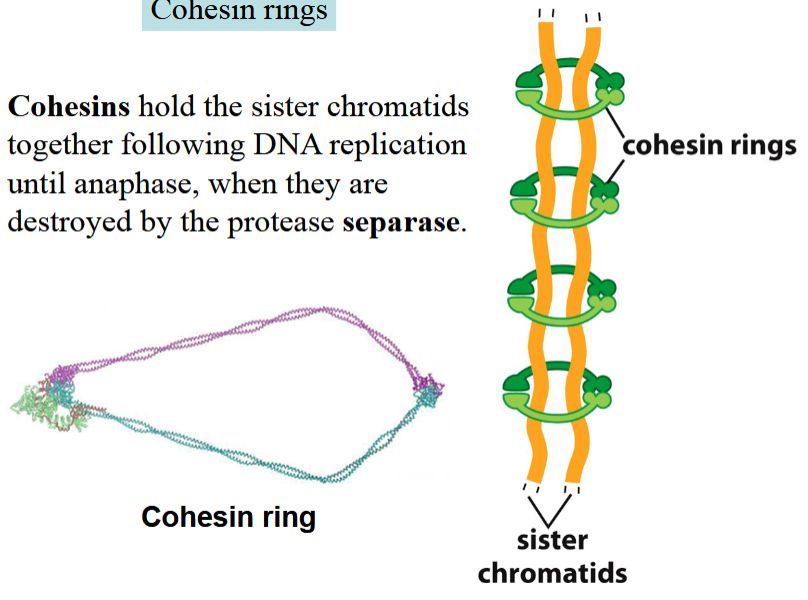
cohesins
ring-like proteins that hold sister chromatids together following DNA replication until anaphase
at anaphase, they get destroyed by separase (a protease)
spindle assembly checkpoint
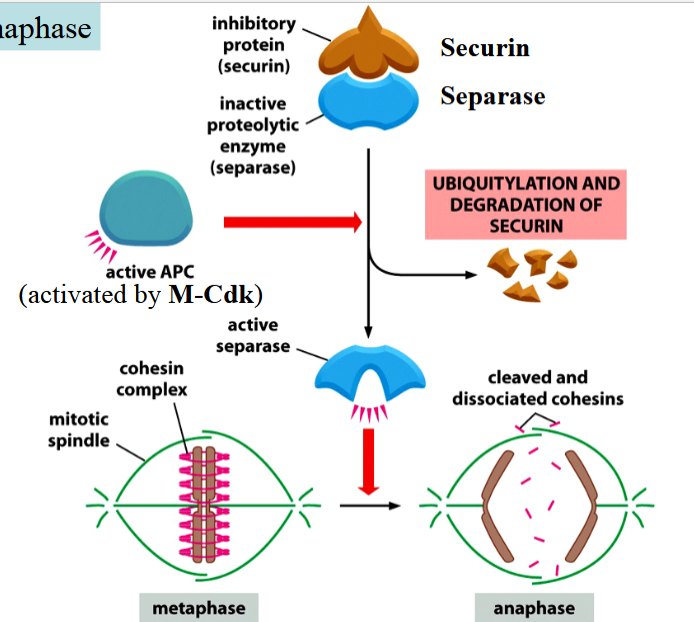
APC ubiquitylates and promotes proteolytic degradation of securin and M-cyclin
only happens if all chromosomes are attached to mitotic spindles
ubiquitylation and degradation of securin by APC
part of the spindle assembly checkpoint
causes activation of separase
separase degrades cohesins to allow chromosome disjunction and segregation (anaphase)
only happens if all chromosomes are attached to mitotic spindles
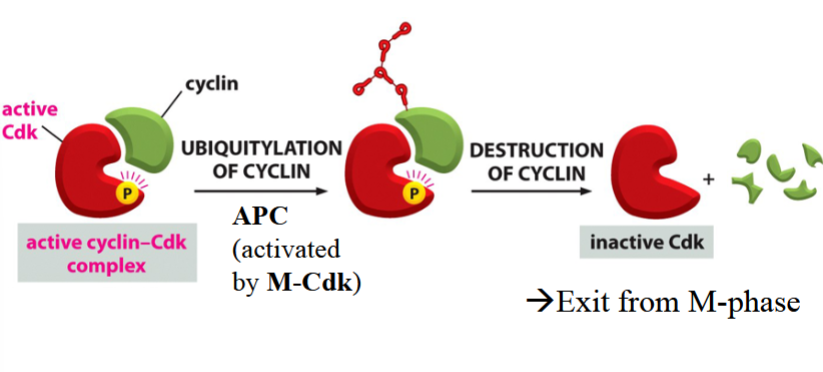
ubiquitylation and degradation of M-cyclin by APC
part of the spindle assembly checkpoint
causes inactivation of M-Cdk and exit from M phase
only happens if all chromosomes are attached to mitotic spindles
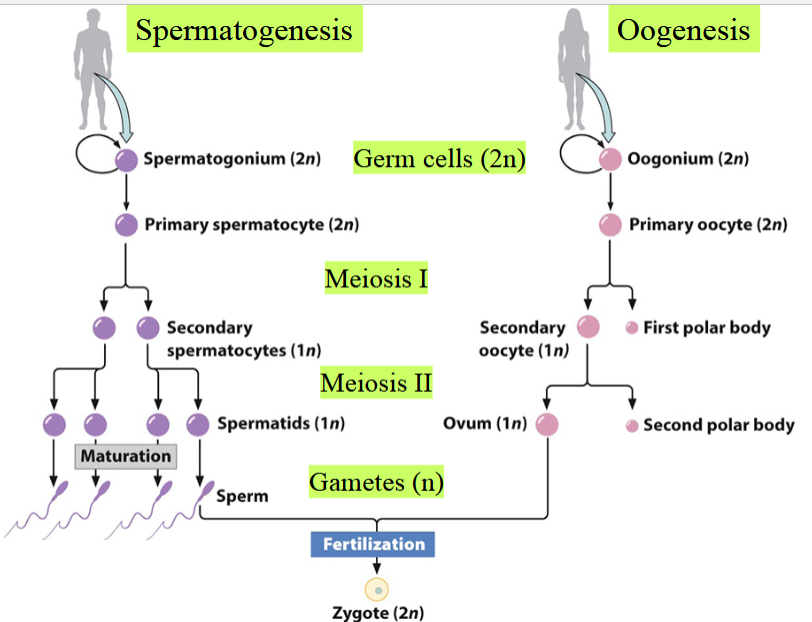
gametogenesis
spermatogenesis or oogenesis
germ cells (2n) → meiosis I → meiosis II → gametes (n) → fertilization to zygote (2n)
spermatogenesis: all primary/secondary spermatocytes and spermatids are equally sized, all mature into sperm
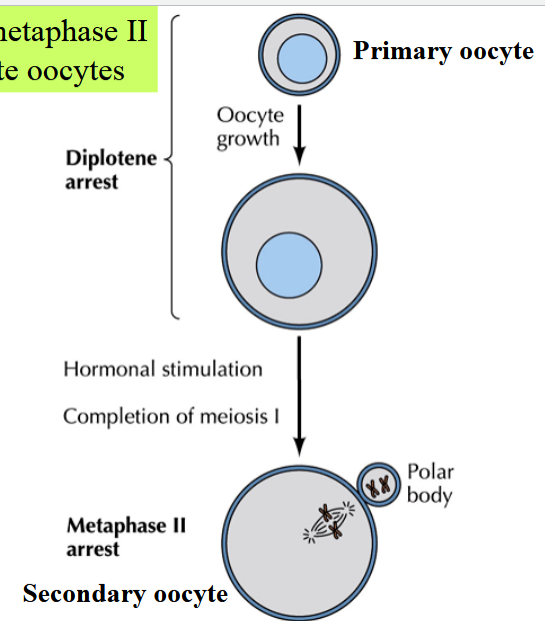
oogenesis: oocyte division is uneven; secondary oocyte gets almost all cytoplasm (will become an ovum), polar body will not become an egg
diplotene arrest
all eggs in a human female are produced in month 7 of gestation
diplotene arrest: first regulatory step in oocyte meiosis (may last up to 55 years in humans)
in arrest, chromosomes decondense, gene expression occurs → oocyte grows, accumulates yolk
meiosis resumes upon hormonal stimulation prior to fertilization (starting at puberty, prior to ovulation in humans)
second arrest occurs at metaphase II until fertilization
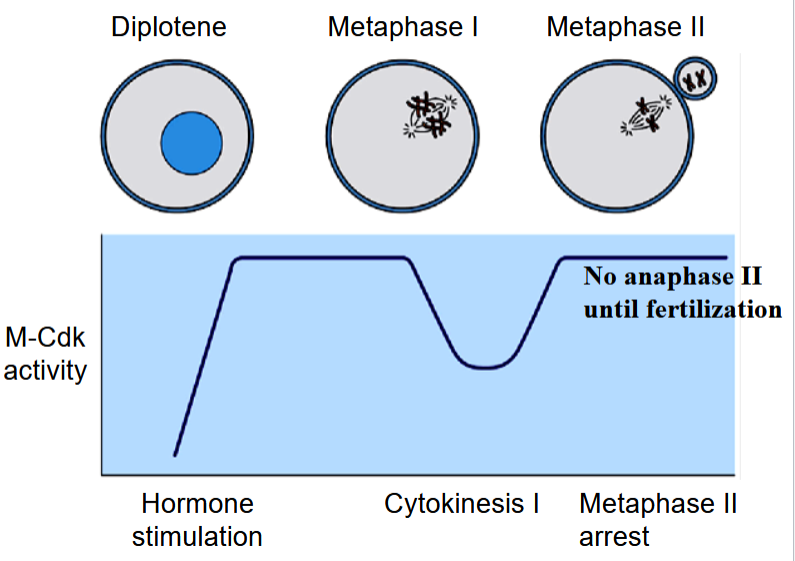
M-Cdk activity during oogenesis
exit from diplotene arrest is triggered by activation of M-Cdk (chromosome condensation and nuclear envelope breakdown are induced) (similar to G2 → M transition in somatic cells)
only partial decrease in M-Cdk activity following meiosis I (unlike in somatic mitosis)
result: meiosis I → meiosis II transition occurs without decondensation of chromosomes or reassembly of nuclear envelope
M-Cdk activity remains high during the metaphase II arrest