2A1 Chapter 10 Friction
 Call Kai
 Learn
Learn Practice Test
 Spaced Repetition
 Match
Match Flashcards
 Knowt Play
1/50

Earn XP
Description and Tags
2nd Class Power Engineering
Name | Mastery | Learn | Test | Matching | Spaced | Call with Kai | Chat |
|---|
No analytics yet
Send a link to your students to track their progress
51 Terms
What is a force that prevents or inhibits relative motion between two surfaces in contact, acting opposite to the direction of motion?
Friction
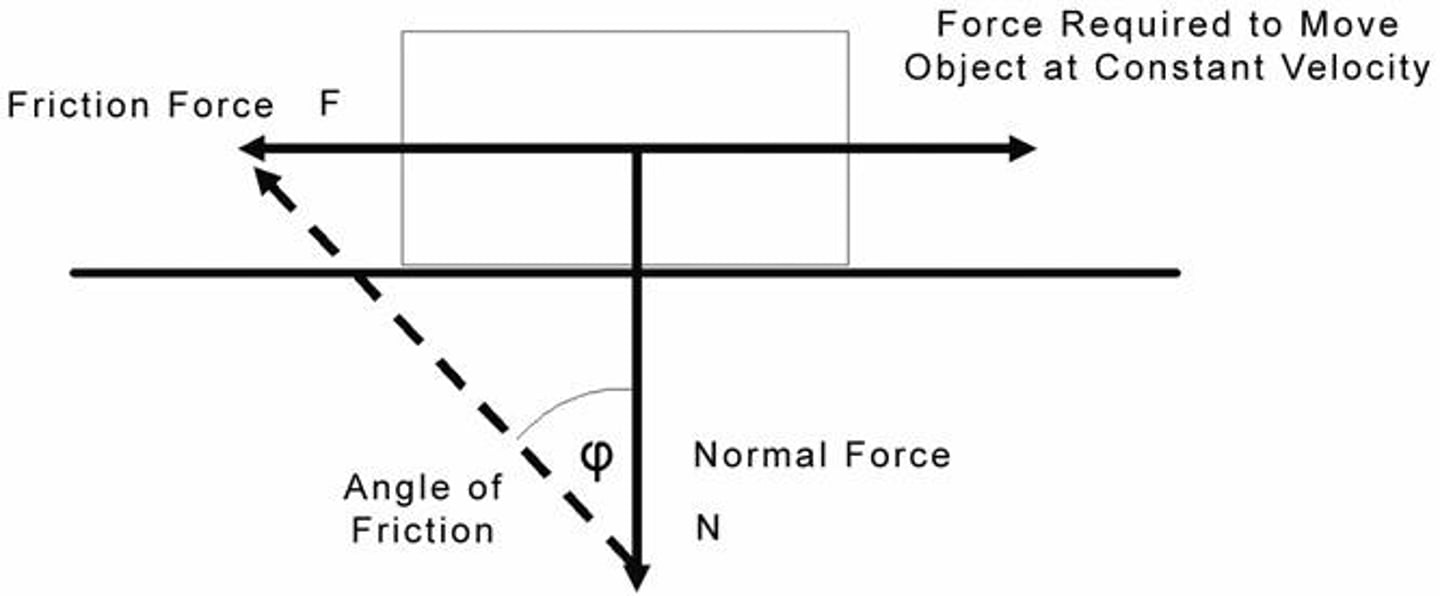
Static, Sliding (kinetic), Limiting, Rolling, Fluid, and Internal are
Types of friction
What is the force exerted between two bodies that are not moving relative to each other?
Static friction
What is the force acting against the direction of motion when two surfaces are moving relative to each other?
Sliding (or kinetic) friction
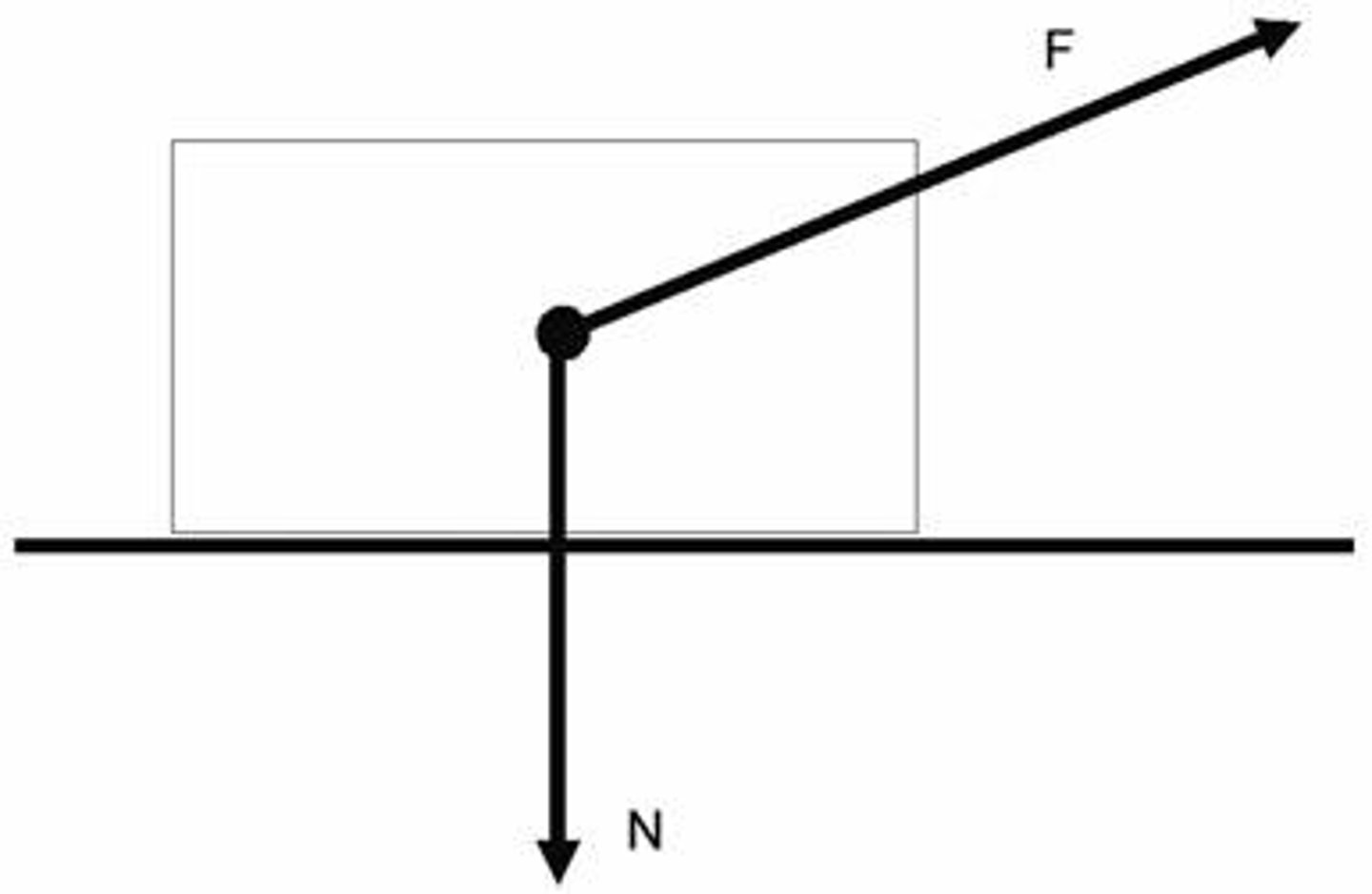
How does the coefficient of kinetic friction compare to static friction?
The coefficient of kinetic friction is less than the coefficient of static friction, meaning it takes more force to start an object sliding than to keep it sliding.
What is the maximum force necessary to overcome static friction and to cause sliding motion?
Limiting friction
What is the resistance to motion when a wheel rolls along a surface, typically much lower than sliding friction?
Rolling friction
What is the ratio of the friction force (F) to the normal force (N) acting on the surfaces?
Coefficient of Friction (µ)
What is the formula for the coefficient of sliding friction?
µ = F/N, where F is the friction force and N is the normal force.
What is the relationship between friction force and normal force?
Both sliding and limiting friction are proportional to the normal (or perpendicular) force that presses the two surfaces together.
What does the force of friction depend on?
The type and roughness of the two surfaces in contact.
Is the amount of friction dependent on the area of contact?
No, the amount of friction is independent of the area of contact.
How does sliding speed affect friction?
Friction is independent of sliding speed at low speeds, but at higher speeds, increased surface temperature may decrease friction.
What is the angle formed between the normal force and the resultant contact force acting on an object?
Angle of friction (ϕ)
What is the resistance to motion in a fluid, such as lubrication in bearings?
Fluid friction
What causes an increase in temperature due to deformation in solids, such as rubber?
Internal friction
What is the equation for calculating the normal force (N)?
N = mg, where m is mass and g is acceleration due to gravity.
How do you calculate the force required to start an object moving on a horizontal surface?
F = µN, where µ is the coefficient of friction and N is the normal force.
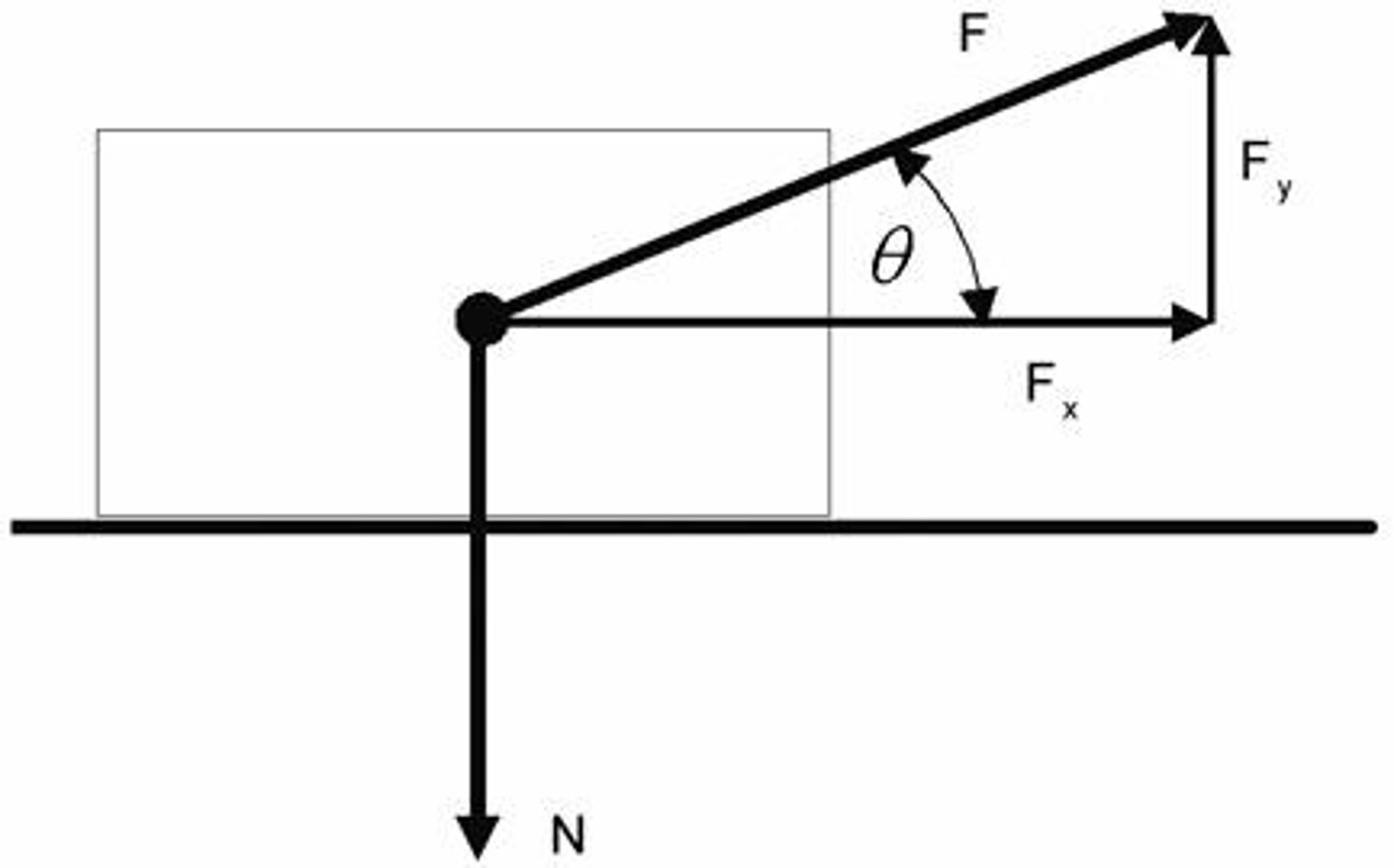
What happens to the normal force when an upward force is applied to an object?
It decreases because the vertical component of the applied force counteracts gravity.
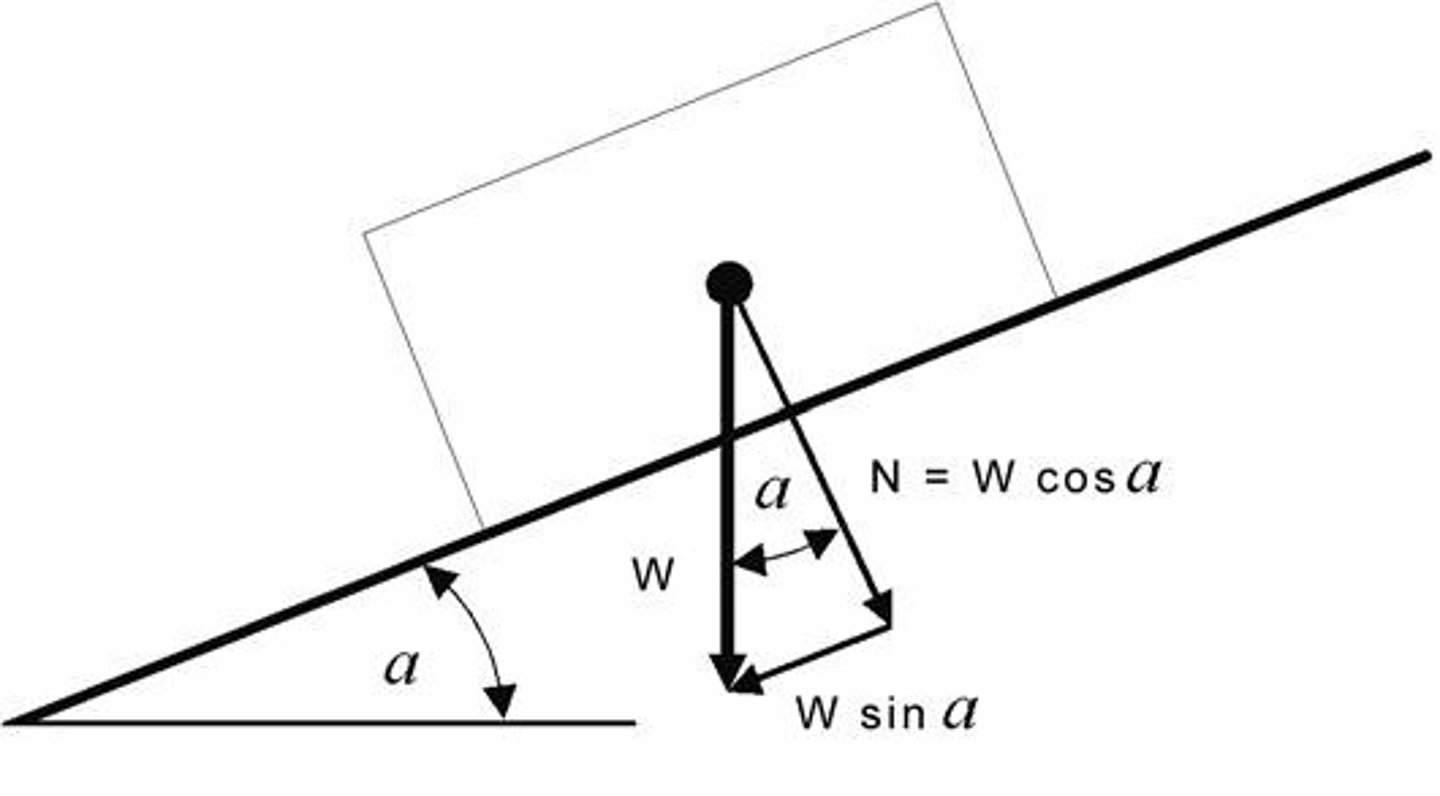
What is the angle at which the force of static friction equals the force of gravity acting on an object on an incline?
Angle of repose
What can be determined using the angle of repose?
Coefficient of static friction
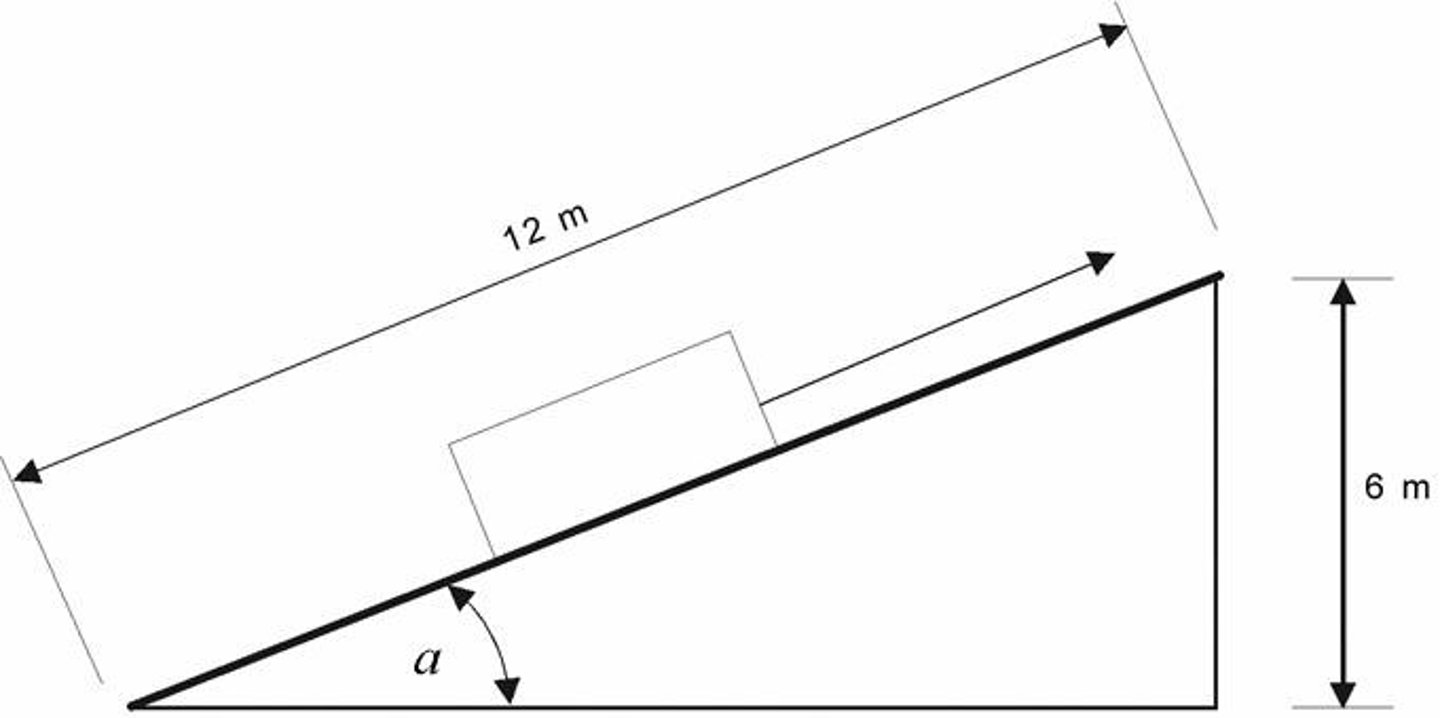
What is the equation for the total force required to move an object up an inclined plane?
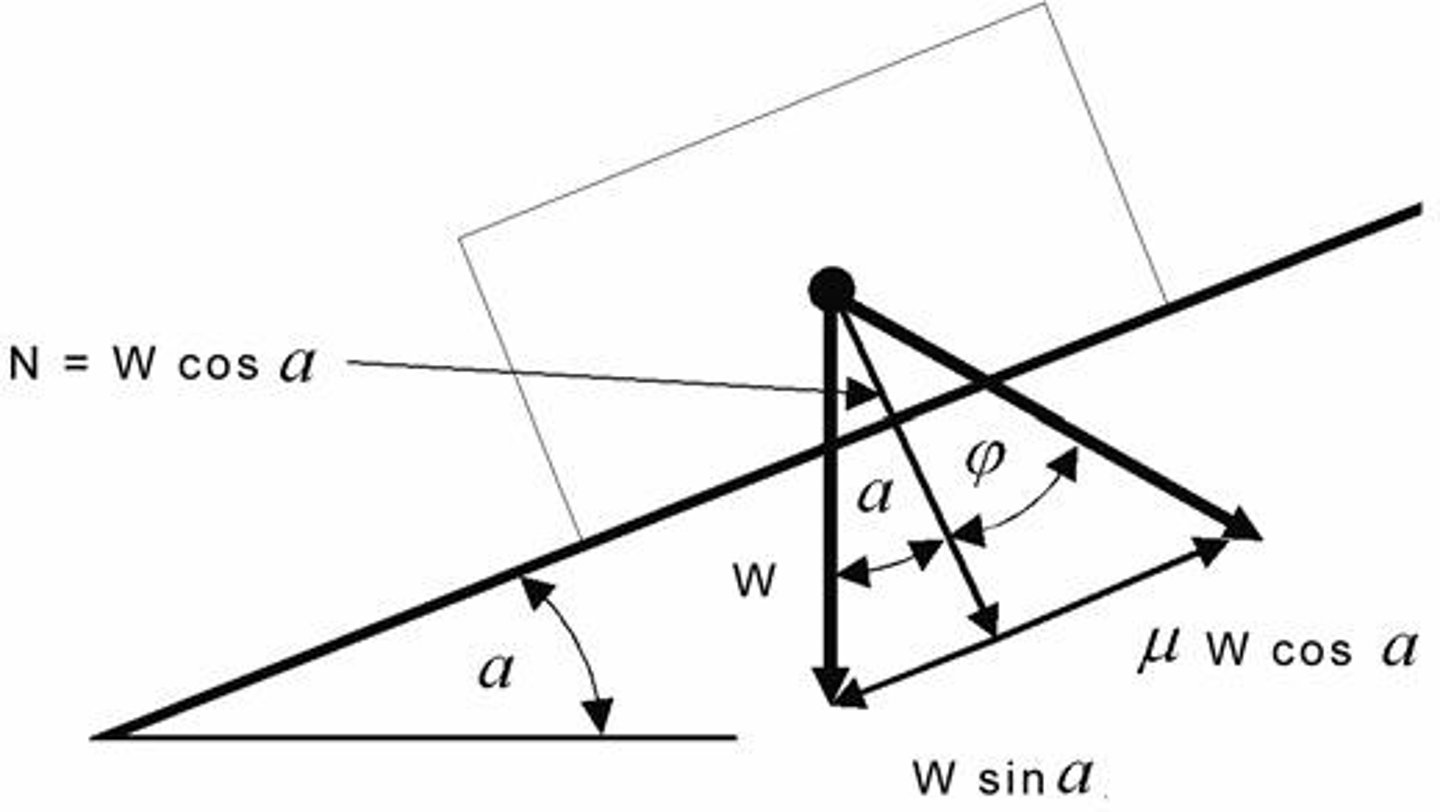
F = Wsin(α) + µWcos(α), where W is the weight of the object and α is the angle of incline.
What is the equation for the force required to keep an object stationary on an inclined plane greater than the angle of repose?
F = Wsin(α) - µWcos(α), where W is the weight of the object and α is the angle of incline.
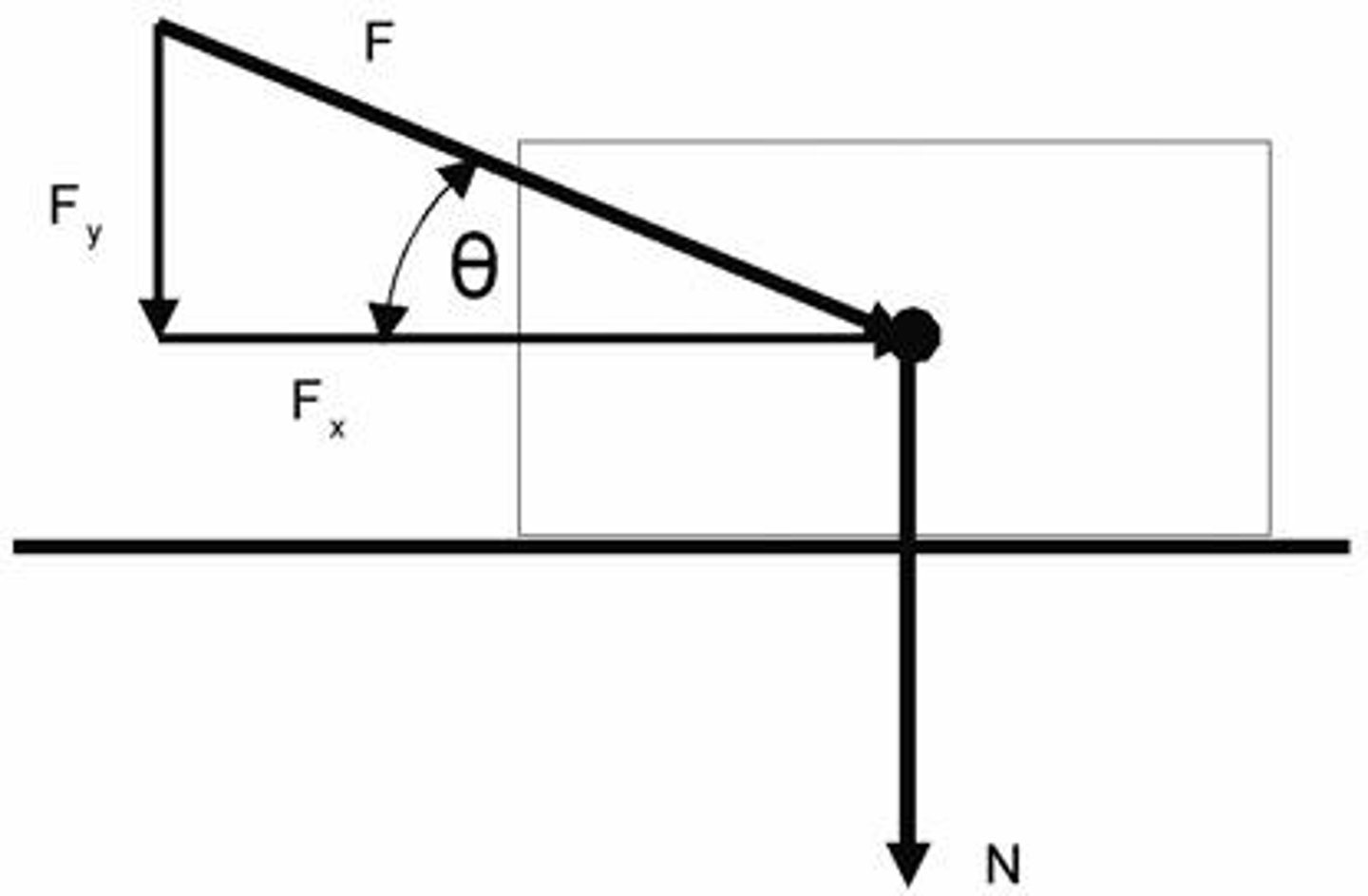
What is the formula to calculate the normal force when a force is applied at an angle downwards?
N = mg + Fsin(θ), where F is the applied force and θ is the angle of application.
What is the normal force when a force is applied at an angle upwards?
N = mg - Fsin(θ), where F is the applied force and θ is the angle of application.
What is the relationship between the angle of incline and the force of static friction?
The force of static friction counteracts the force of gravity until the angle exceeds the angle of repose.
What is the equation for the coefficient of static friction in terms of the angle of repose?
µ = tan(α), where α is the angle of repose.
What is the formula for normal force when an object rests on an inclined plane?
N = mg * cos(α), where α is the angle of incline.
What is the effect of increasing the incline on the coefficient of sliding friction?
The incline can determine the coefficient of sliding friction, requiring a light tap to overcome limiting force.
How do you resolve vectors when a force is applied at an angle?
Calculate the horizontal and vertical components using sin(θ) and cos(θ) respectively.
What is the force available to overcome friction when a force is applied at an angle?
The horizontal component of the applied force is available to overcome friction.
What is the equation for the force required to move an object up an inclined plane?
F = Wsin(α) + µWcos(α), where W is the weight of the object.
What is the formula for the force required to keep an object stationary on an incline less than the angle of repose?
F = μW cos α − W sin α
What is the total force required to move an object up an inclined plane?
The total force is the sum of the force of gravity and the force of friction.
What is the formula to calculate the force of gravity on an object?
W = mg, where W is the weight, m is the mass, and g is the acceleration due to gravity.
What is the force required to move an object down an inclined plane?
F = W(sin(α) - µcos(α)), where W is the weight, α is the angle of incline, and µ is the coefficient of friction.
How is the angle of repose defined in relation to friction?
The angle of repose (α) is defined by the equation tan(α) = µ, where µ is the coefficient of friction.
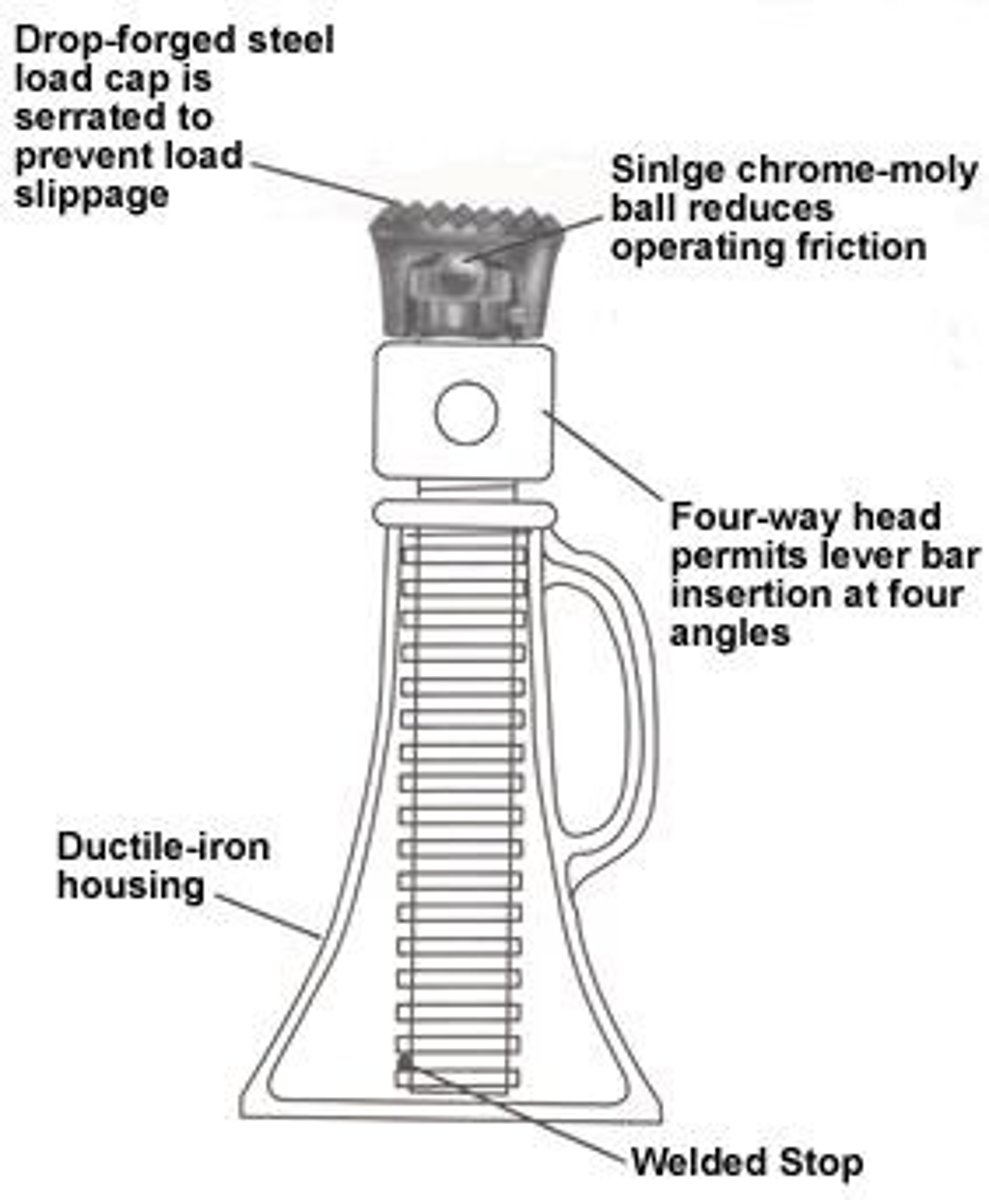
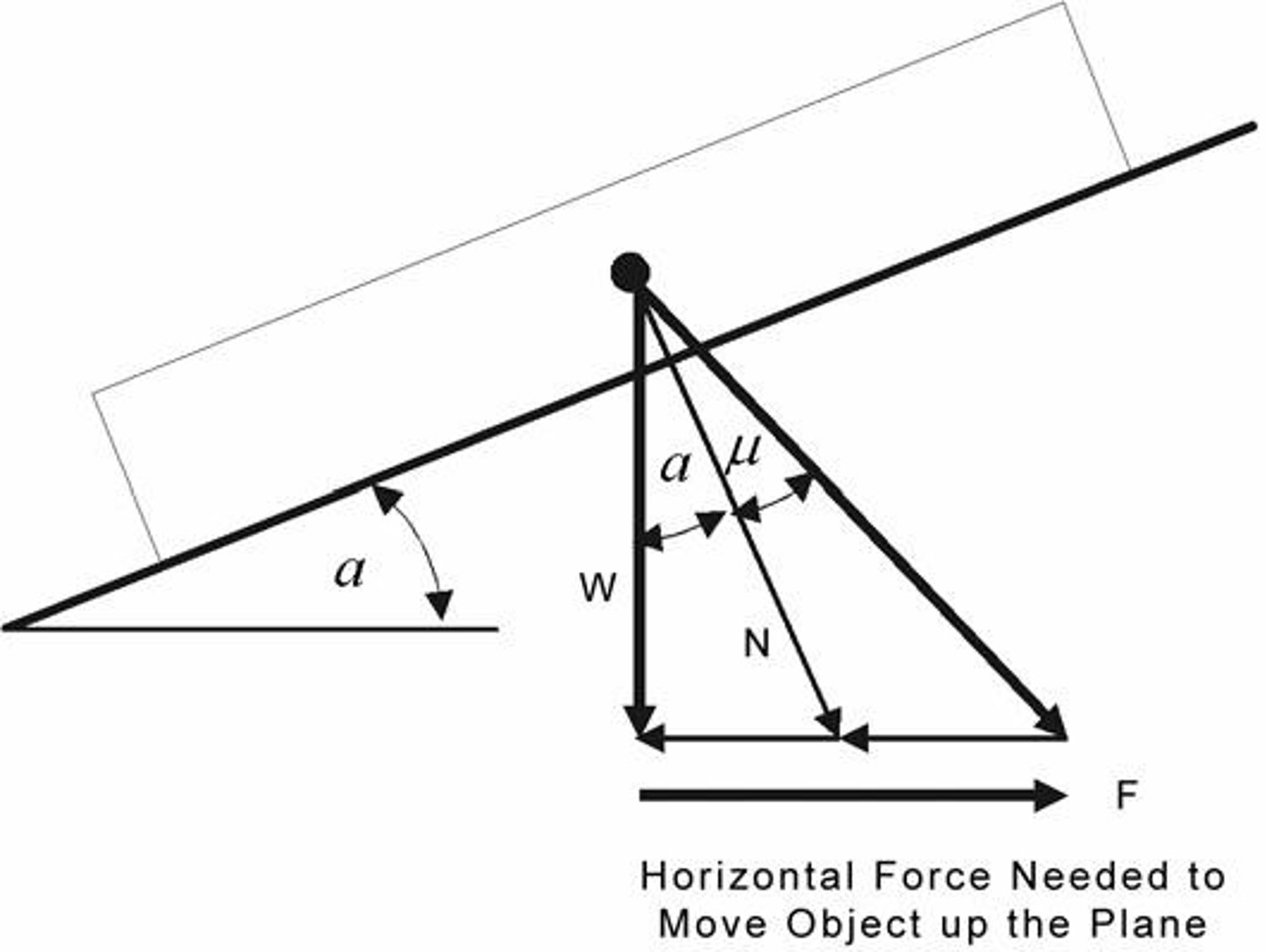
What is a screw jack used for?
Lifting, exerting pressure, or adjusting the position of a machine part.
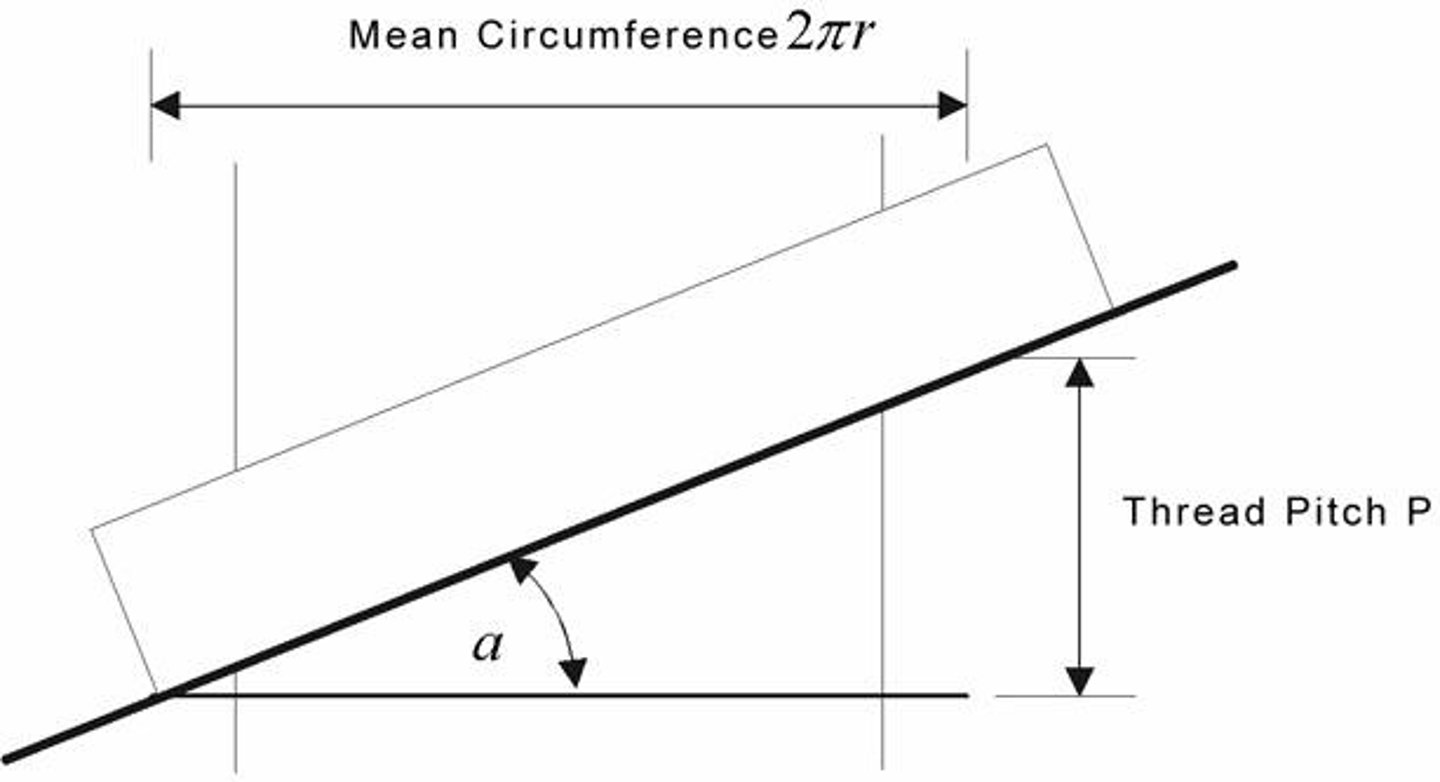
What is the equation use to determine the angle of the incline for a screw jack?
α = tan-1(P/(2πr)), where P is the thread pitch and r is the mean circumference.
What is the equation for the horizontal force required to move a screw jack upwards?
F = W(tan(α) + tan(ϕ)), where W is the weight, α is the angle of the incline, and ϕ is the angle of friction.
What happens when the force of gravity exceeds the friction force on an inclined plane?
The object will slide down the incline.
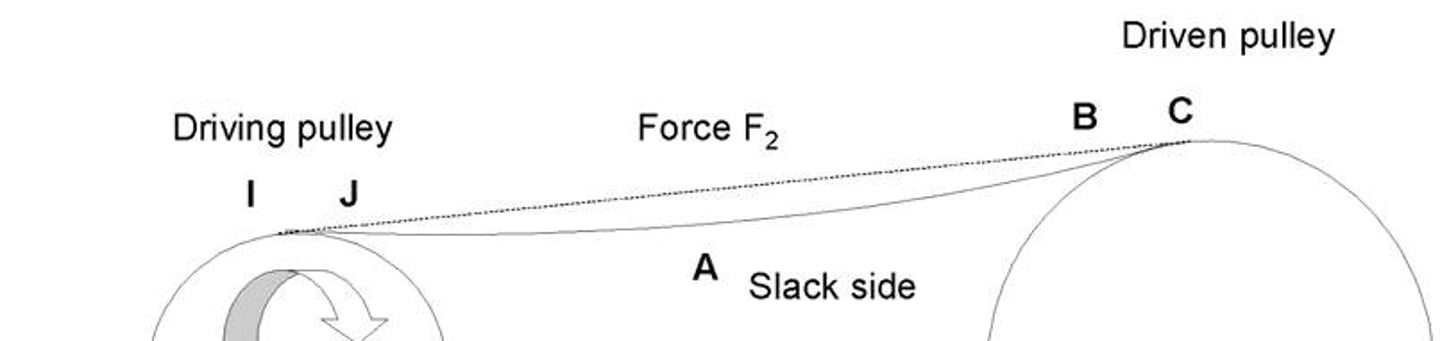
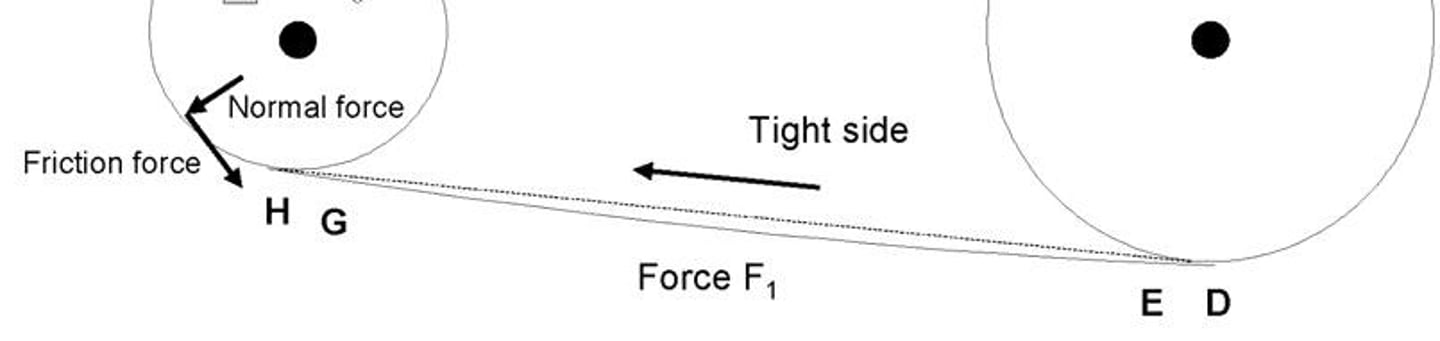
What is the maximum torque on a belt drive defined by?
The maximum torque is defined by the equation F1 = F2eµα, where F1 is the tension on the tight side, F2 is the tension on the slack side, µ is the coefficient of friction, and α is the angle of wrap.
What is the relationship between the angle of wrap and the maximum torque in a belt drive?
As angle of wrap (α) increases, the maximum torque before slippage also increases.
What is the formula for calculating the frictional force on a block moving on a horizontal surface?
Ffriction = µ * N, where N is the normal force.
What is the significance of the angle of friction in the context of a screw jack?
A smaller pitch thread results in a smaller angle of friction, making the screw jack safer and easier to turn.
What is the effect of excessive pre-tension on a belt in a belt drive?
It decreases the life of the belt due to continual stretching and releasing.
How does the friction force change as a belt moves from the tight side to the slack side?
There are sharp jumps in tension as the belt moves onto each pulley, causing corresponding drops in tension when the belt leaves the pulley.
What is the formula for the force of gravity acting on an object on an incline?
Fgravity = W * sin(α), where W is the weight and α is the angle of incline.
What is the formula for the normal force acting on a block on a horizontal surface?
N = W, where W is the weight of the block.
How do you calculate the horizontal force required to move a jack screw upwards?
F = W(tan(α) + tan(ϕ)), where W is the weight, α is the angle of the incline, and ϕ is the angle of friction.
What is the relationship between the coefficient of friction and the angle of repose?
The angle of repose is equal to the arctangent of the coefficient of friction.