02anatomy of the nervous system
 Call Kai
 Learn
 Practice Test
 Spaced Repetition
 Match
 Flashcards
 Knowt Play
1/40

There's no tags or description
Looks like no tags are added yet.
41 Terms
How is the human nervous system structurally divided?
Central Nervous System (CNS): Brain and Spinal Cord.
Peripheral Nervous System (PNS):
Somatic NS: Voluntary motor and sensory nerves (have to think about it)
Autonomic NS (breath, sweat,…): Involuntary regulation via Sympathetic (fight/flight) and Parasympathetic (rest/digest) divisions

Explain in easy words what is the nervous system?
An organized network that communicate with each other
What are The two primary cell types in the nervous system and their basic roles?
Glia cells (gr. glue): Form functional networks with neurons, modulate neural activity, and remove "waste material", as well as viruses, fungi, and other microorganisms.
Neurons (gr. bowstring): Receive information and transmit it to other cells (~100 billion, varies per person (and studie))
Why is the combination of glial cell and neuronal activity essential for brain function?
Researchers assume that the combination of glial cell and neuronal activities is crucial for all brain functions, such as thinking, emotions, and other functions defining human nature
What is the construction of a neuron?
cell body: metabolic Center of the neuron
Dendrites: receive most of the information from other neurons
Axon hillock: junction between axon and the cell body
Axon: long process that projects from the cell body
Synapses: chemical signal transmission

What are the main intracellular structures/organelles of a neuron and their specific functions?
Cytoplasm: Clear internal fluid of a cell.
Nucleus: Contains DNA ("boss of the cell").
Mitochondria: Perform metabolic activities and aerobic (oxygen-consuming) energy release ("energy factory").
Ribosomes: Synthesis of proteins; located on endoplasmic reticulum.
Endoplasmic reticulum: Synthesis of proteins and fats; transport to other locations

Differentiate between unipolar, bipolar, multipolar neurons, and interneurons based on their structure.
Unipolar: One process extending from the soma.
Bipolar: Two processes extending from opposite sides of the soma.
Multipolar: More than two processes emanating from the soma (most prevalent in the CNS).
Interneurons: Short or absent axons; function to integrate local neural activity within a single brain structure

What are the three different types of neurons and what type has the biggest part?
sensory neurons (afferent): carry sensory impulses from sensory organs toward the central nervous system; situated in the dorsal (back) root ganglion of the spinal nerve
Interneurons (BIGGEST PART): transfer station or the decision making neurons
Motor neurons (efferent): carry motor impulses from the central nervous system to specific effectors; situated in the ventral (front) root ganglion of the spinal cord
How does a neuron's shape influence its role in the nervous system?
Neurons vary in size, shape and function
The shape of a neuron determines its connections with other neurons and thereby its contribution to the nervous system. Wider branching allows for more connections with other neurons

What is the primary function of Microglia as part from a glia cell?
Microglia respond to disease/injury by multiplying entire cells and triggering inflammatory responses
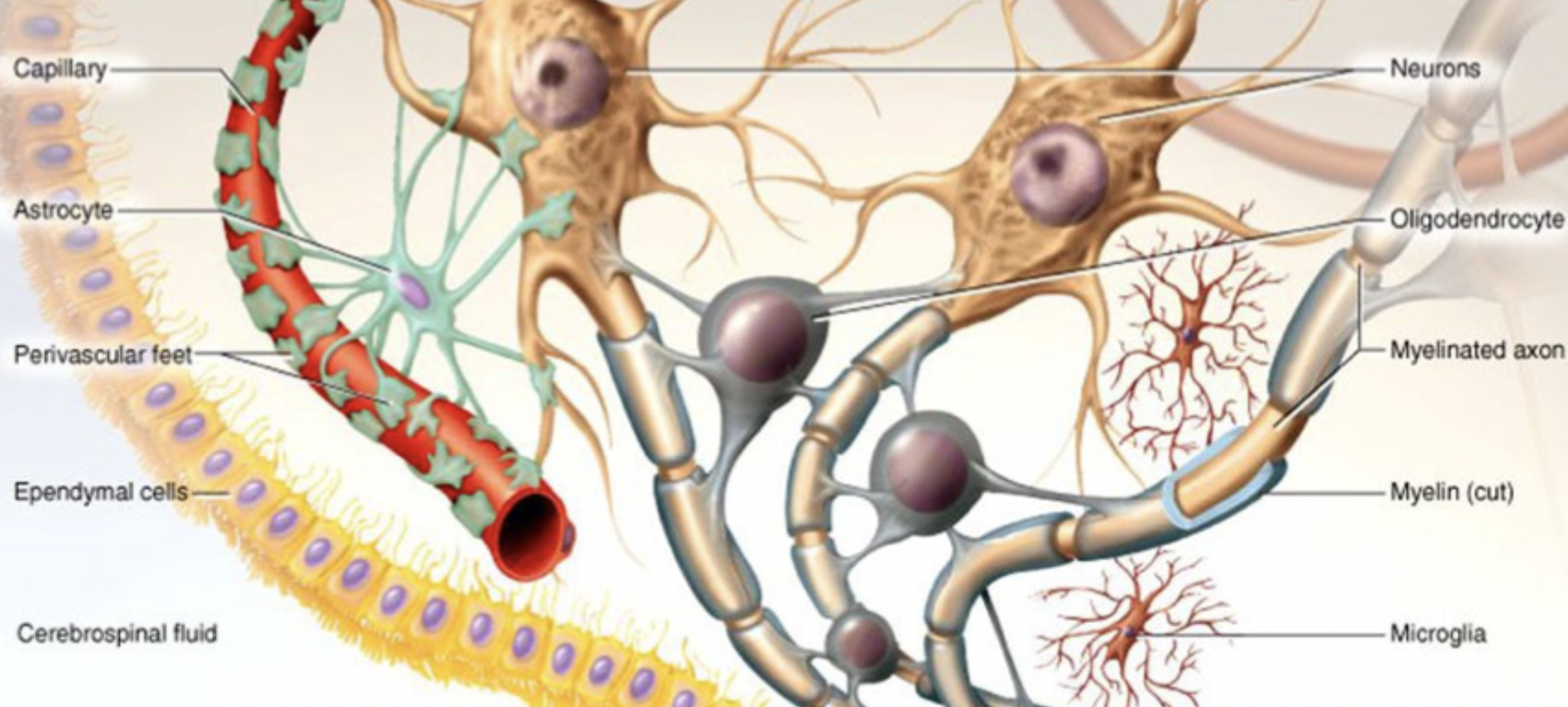
What is the primary function of Astrocytes?
Astrocytes make contact with neurons and contract or relax blood vessels based on the demands of specific brain regions

Which glial cells produce myelin in the CNS vs. PNS, and what is their role?
CNS: Oligodendrocytes
PNS: Schwann cells
Role: They produce myelin and are responsible for high-speed information processing in vertebrate axons

Why do nerve cells depend almost entirely on glucose for nourishment?
Because glucose is practically the only nutrient that crosses the blood-brain barrier
What are the most protected organs of the human body?
Brain and spinal cord (CNS)
Name the three meninges shielding the CNS from outer to inner layer and describe their vascularity/thickness.
Dura mater (outer layer): Vascularized, thick, tough, and inextensible.
Arachnoid mater (middle layer): Layers of connective tissue, avascular (no blood vessels), and receives no innervation.
Pia mater (inner layer): Very thin, highly vascularized, and is the only covering that follows the contours of the brain
Dura mater = though mother
Pia mater = soft mother

What are the main functional roles of Cerebrospinal Fluid (CSF)?
CSF supports and cushions the brain, and acts as a reservoir of hormones and nutrition
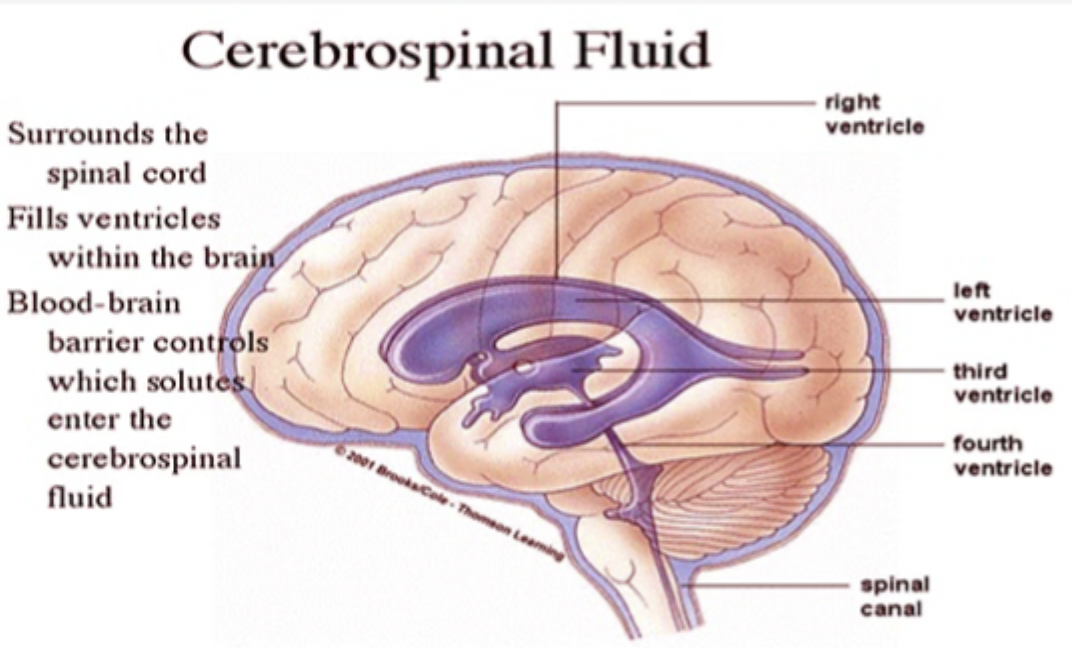
What is Hydrocephalus (Wasserkopf) and what causes it?
Hydrocephalus is the buildup of cerebrospinal fluid (CSF) within the cerebral ventricles (Hirnkammern)
Causes:
blockage (e.g. tumor) that prevents CSF from flowing normally
Decrease in the ability of blood vessels to absorb it
Brain produces an excess amount of it

What are symptoms of hydrocephalus?
chronic headaches
Loss of coordination, difficulty walking
Bladder problems, vision problems, poor memory, difficulty concentrating
What is the Blood-Brain Barrier (BBB) and what properties block entry?
Function: A wall that keeps out most viruses, bacteria, and harmful chemicals.
Properties blocked: Substances that are too highly charged, too large, or not lipid-soluble cannot enter the brain

Which viruses and chemicals can break through the BBB and by what is disruption possible?
herpes simplex virus-1; can emerge even decades later
Heroin, marijuana, antidepressant drugs
Disruption possible by: stroke, cancer, traumatic brain injury, multiple sclerosis
Protection of the brain: Short summary
Physical protection: → skull, meninges (Hirnhaut), cerebrospinal fluid (CSF)
Chemical protection: → BBB
What are the key neuroanatomical direction pairs in the human CNS?
Anterior (Rostral) vs. Posterior (Caudal).
Dorsal (Superior) vs. Ventral (Inferior).
Medial vs. Lateral

What are the 3 major neuroanatomical planes of section?
Horizontal plane .
Frontal / Coronal / Transverse plane .
Sagittal plane (Midsagittal section down the midline)

What constitutes Gray Matter vs. White Matter in the CNS?
Gray matter: Composed mostly of cell bodies and unmyelinated interneurons .
White matter: Composed mostly of myelinated axons

What structure forms the Myelencephalon (Hindbrain) and what is its function?
The Medulla (Medulla oblongata), which controls vital reflexes including breathing, sneezing, and coughing

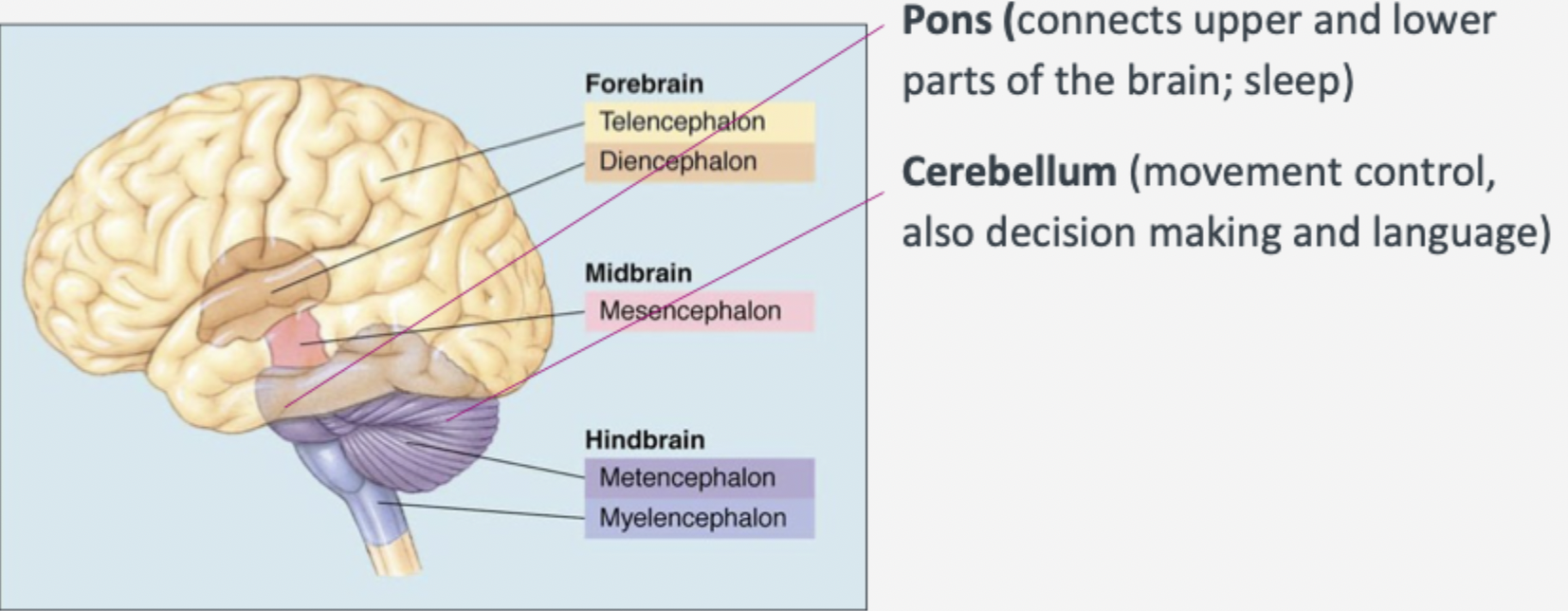
What main structures form the Metencephalon (Hindbrain) and their roles?
Pons: Connects upper and lower parts of the brain; involved in sleep .
Cerebellum: Movement control, as well as decision making and language
What functions are controlled by the Reticular Formation in the Hindbrain (Myel- and Metencephalon)?
Sleep, attention, movement, muscle tone, and cardiac reflexes

What structures make up the Tectum (lat. roof) of the Midbrain (Mesencephalon)?
Inferior colliculi: Auditory function .
Superior colliculi: Visual-motor function .
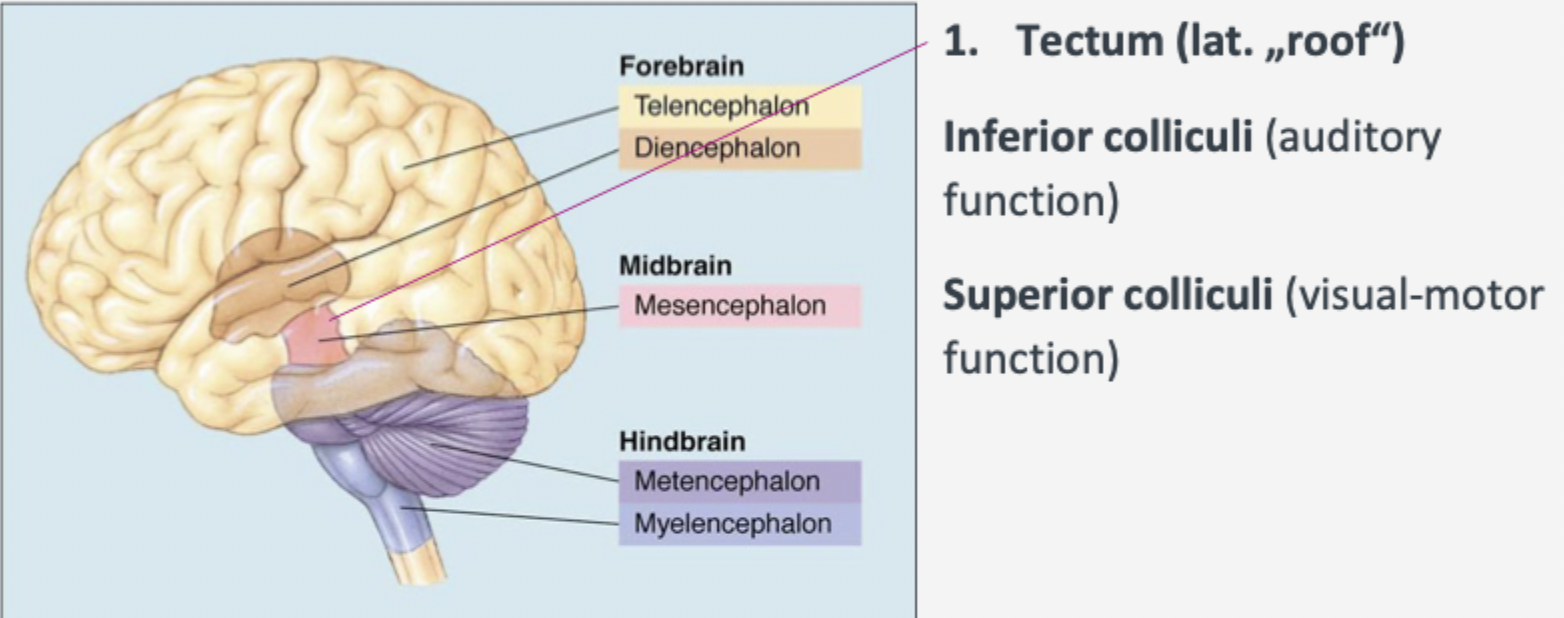
What structures make up the Tegmentum (lat. covering) of the Midbrain (Mesencephalon)?
Periaqueductal gray (PAG): Pain-reduction, fear, and flight reflexes
Cerebral aqueduct: Connects ventricles and controls CSF flow
Substantia nigra: Sensorimotor functions; dopamine-containing pathway

What are the two major structures of the Diencephalon (Forebrain-Diencephalon) and their roles?
Thalamus (gr. inner chamber): Sensory relay center → perception and simple information processing (tasting, hearing, vision; except olfaction)
Hypothalamus: Regulates homeostasis and motivated behaviors (eating, sleeping, sexual behaviors) .

Name the four lobes of the cerebral cortex
frontal lobe (complex cognitive function)
Parietal lobe (locating objects, attention)
Temporal lobe (hearing, language, memory)
Occipital lobe (vision)

What are two key structures of the Limbic System and their functions?
Amygdala: Emotional processing, fear
Hippocampus: Memory

What is the function of the limbic system?
Regulation of emotion and motivation behaviours (eating, sleeping, fighting, sexual behavior)
What is the Spinal Cord and what are its 4 anatomical regions?
Definition: Part of the CNS that communicates with sense organs and muscles below head level .
4 Regions:
Cervical: C1–C8
Thoracic: T1–T12
Lumbar: L1–L5
Sacral spine

Differentiate between the Dorsal Root and Ventral Root of the spinal cord.
Dorsal root (Afferent): Sensory information entering the spinal cord; contains the dorsal root ganglion
Ventral root (Efferent): Motor commands exiting the spinal cord

How do spinal cord injury levels determine Tetraplegia vs. Paraplegia?
Tetraplegia: Cervical injuries (e.g., C4 or C6 injury) .
Paraplegia: Thoracic or Lumbar injuries (e.g., T6 or L1 injury)
What factors influence recovery from a spinal cord injury?
Incomplete vs. Complete: Incomplete injuries retain some function and often show faster recovery progress
Injury location: Higher injury level makes recovery more difficult
Overall health: Complications like infections hinder progress (can complicate recovery process)
Quality of medical care
Patient's commitment to (physical) therapy
What are the annual incidence rate and the leading causes of spinal cord injuries?
Incidence: ~17,000 new cases each year.
Leading Cause: Vehicular accidents (38%).
Other Causes: Falls (30.5%), Violence (13.5%), Sports (9%)
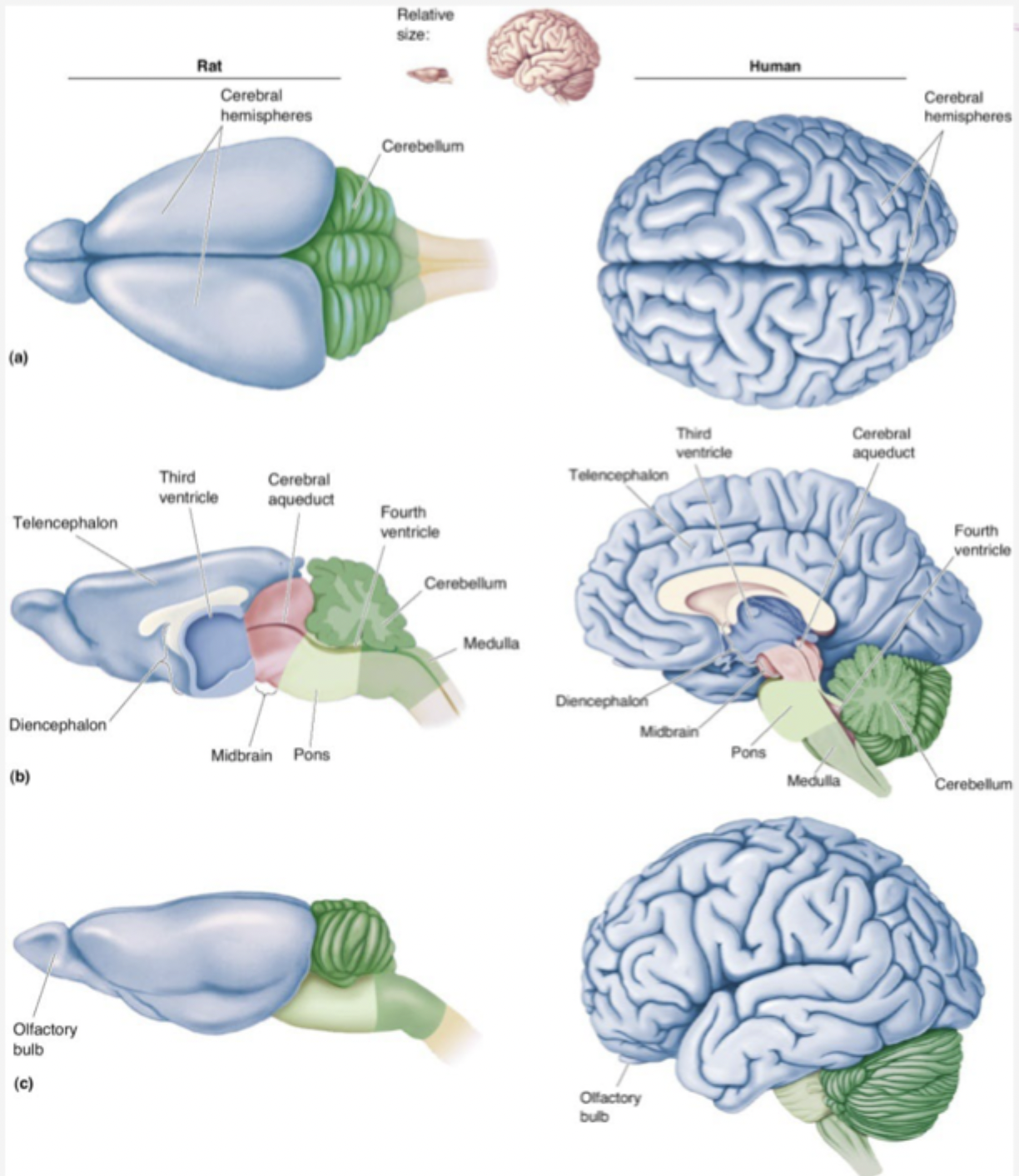
What is the primary similarity between the rat brain and the human brain?
Both species share the same basic arrangement of neuroanatomical structures (including telencephalon, diencephalon, midbrain, pons, medulla, cerebellum, and ventricles), despite differences in overall size and cortical complexity
What are the major cerebral lobes and anatomical landmarks shown in the "Gross Anatomy Detailed" slide?
Four Lobes: Frontal lobe, Parietal lobe, Temporal lobe, Occipital lobe.
Major Landmarks & Structures: Central sulcus, Sylvian fissure, and Cerebellum
Fissure is inward going like a valley (Tal)
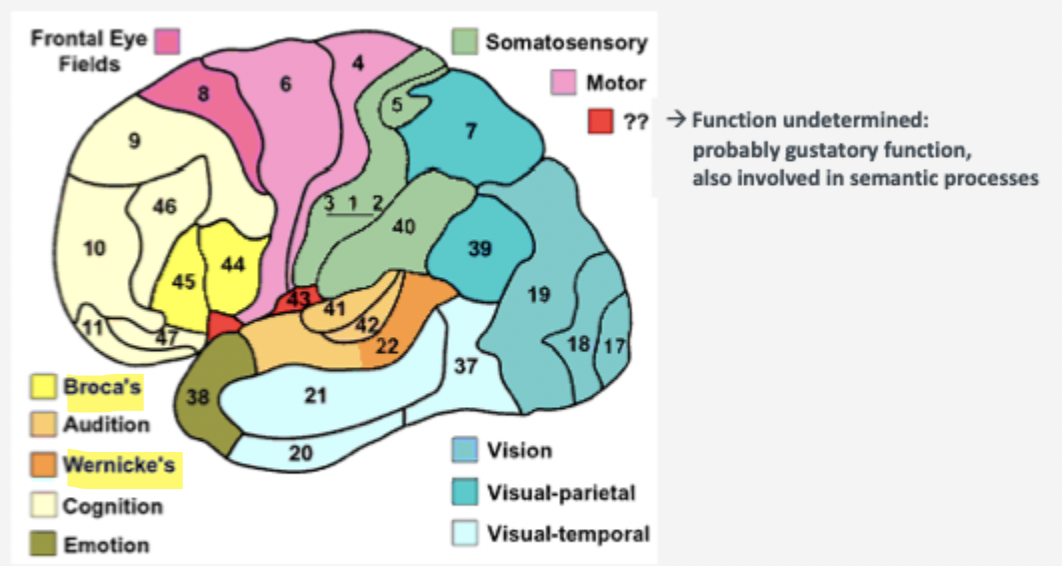
What core concept is illustrated by Brodmann’s cortical map (1909)?
Different brain areas are related to different functions (mapping specific cortical areas to domains like Motor, Somatosensory, Vision, Audition, Broca's area, Wernicke's area, Cognition, and Emotion)
language, speak production → Broca‘s and Wernicke‘s area